South Africans gathered for memorial runs, vigils and protests on Saturday after the deaths of nine women in Ekurhuleni, east of Johannesburg, intensified public concern over violence against women and renewed demands for stronger protection and accountability.
Police have found the bodies of nine women in the municipality over the past two months. Investigators are examining similarities between the cases, but authorities have not concluded that all of the killings were committed by the same person or group.
Reuters reported on 19 September that the victims were mostly women in their 20s and 30s and that some showed signs of sexual violence. The report said the deaths have deepened fear in communities around Johannesburg and reignited national debate over gender-based violence.
Memorial run honours Elizabeth Moselakgomo
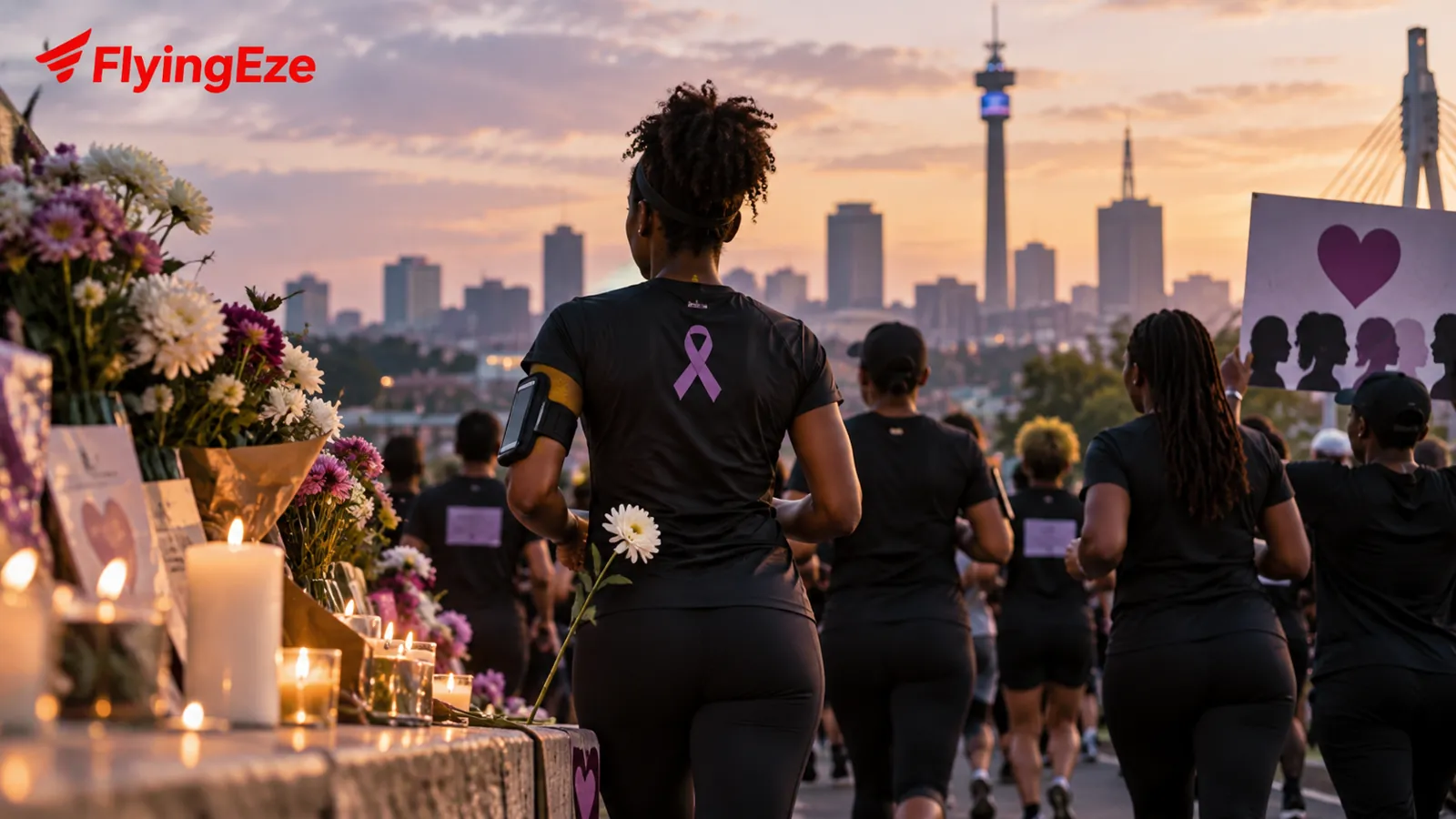
A memorial run in Johannesburg honoured Elizabeth Moselakgomo, who disappeared after going out for a run and was later found dead. Participants dressed in black, lit candles and carried messages demanding safer public spaces for women.
The gatherings were not only commemorative. Campaigners used them to press for better policing, faster investigations and wider measures to reduce violence against women.
Community organisations and women’s rights groups have also challenged advice that focuses mainly on asking women to alter their routines or avoid certain activities. Their argument is that the responsibility for preventing violence should fall on institutions, offenders and society rather than on potential victims.
Police have not confirmed the killings are linked
The discovery of the ninth body prompted an expanded investigation, but police have been careful not to make conclusions before forensic and investigative work is complete.
Associated Press reported that all nine bodies were found in Ekurhuleni and that similarities between several cases were serious enough to trigger a high-level investigation and public warnings. However, police have not confirmed that a serial offender is responsible.
That distinction is important. Public concern has grown rapidly, but the available evidence does not yet establish whether the killings are connected, whether more than one offender is involved, or whether some cases are unrelated.
National pressure for answers
President Cyril Ramaphosa has said the deaths should be investigated thoroughly and that authorities should not become accustomed to such violence. The comments came as public pressure increased for stronger action against gender-based violence and violent crime more broadly.
South Africa has struggled for years with high levels of violence against women. The latest deaths have again placed policing capacity, investigative resources, victim support and community safety under scrutiny.
For families and communities in Ekurhuleni, the immediate priority remains identifying those responsible for each killing and establishing whether the cases are connected. For campaigners, the concern is wider: they say women should be able to run, travel, work and live without having to organise their daily lives around fear of violence.
What happens next
Police investigations are continuing, including forensic work and efforts to determine whether there are meaningful links between the nine deaths. Authorities have appealed for information from the public, while memorial events and protests are expected to keep pressure on officials to produce answers.
FlyingEze will update this report if police establish a confirmed connection between the cases, announce arrests or release further verified findings.