WITH the news that hundreds have been sickened and one person has died from a Salmonella outbreak, there are five key signs Brits must look out for.
Most cases of are mild, but some groups of people – such as young children and pregnant women – are more likely to suffer from severe symptoms.
 A salmonella outbreak in the UK has killed one Brit and sickened over 200 Credit: Getty
is a group of bacteria that cause infection, and in the UK, this is typically food poisoning or .
The bug tends to be caught by eating contaminated food including poultry, meat, eggs, raw fruit and vegetables, as well as unpasteurised milk products.
Infection can also occur through close contact with infected people and by cross-contamination in the kitchen, for example when utensils are used for both cooked and uncooked foods.
The UK Health Security Agency (UKHSA) today that one Brit has died and more than 200 have been sickened in a Salmonella outbreak thought to be linked to contaminated eggs “imported from outside the UK”.
It comes after officials detected a surge of food poisoning cases at the end of May, all of which were caused by a single strain of the bug.
This suggests that there is a common source of infection.
As of August 13, UKHSA said it had detected 207 cases, including one death.
More than a third of people affected (38 per cent) in the outbreak were admitted to hospital, with two people developing potentially life-threatening blood stream infections, it added.
Commenting on the outbreak, Hannah Charles, Lead Epidemiologist, Gastrointestinal Infections at UKHSA, said: “We’re working with Food Standards Agency and other public health agencies to investigate a salmonella outbreak that may be linked to eggs imported from outside of the UK.
“Anyone who is concerned about symptoms should contact their or out of hours service in the first instance.“
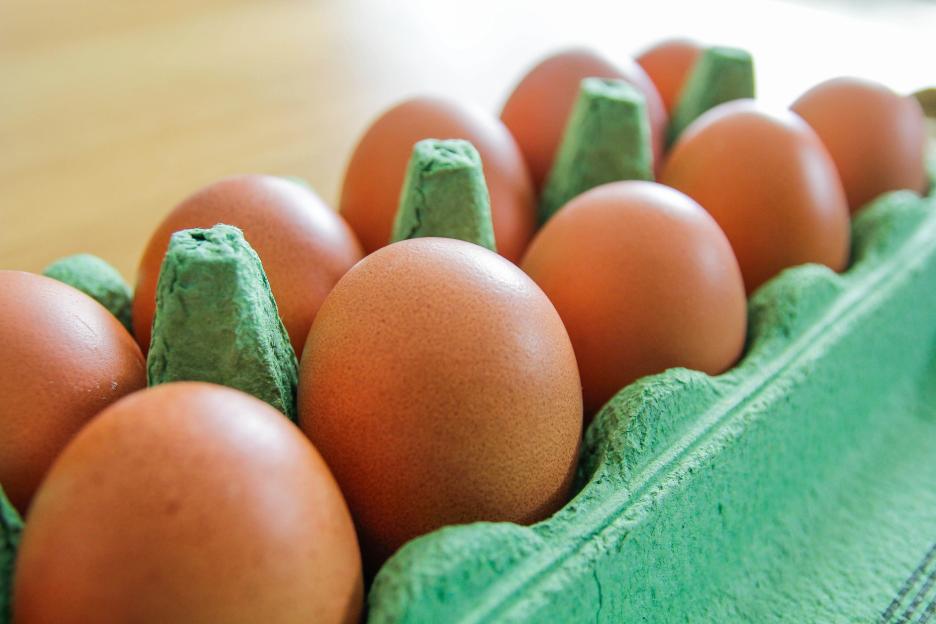 The outbreak is thought to be linked to contaminated eggs imported from outside the UK Credit: Getty
 What to know about Salmonella
Salmonella is a group of bacteria that cause infection, typically food poisoning or gastroenteritis in the UK.
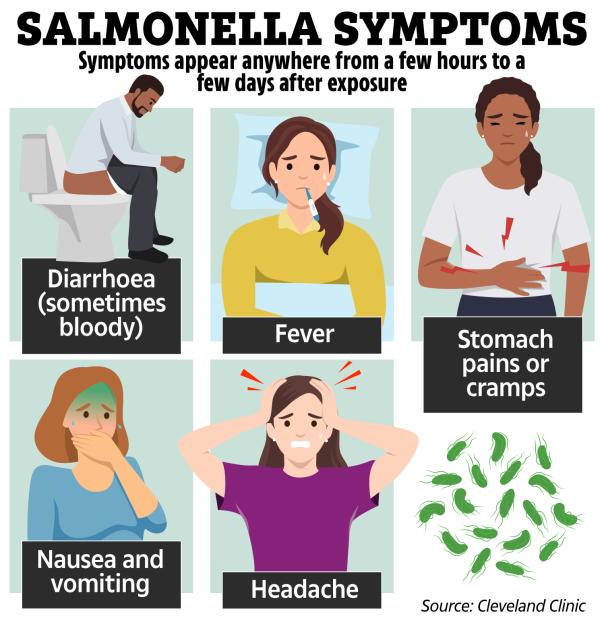
The five typical symptoms of the illness are:
- Diarrhoea, which can sometimes be bloody
- Stomach cramps
- Feeling sick (having nausea) and being sick (vomiting)
- A high temperature (fever)
- Headache
These symptoms tend to come on within 12-36 hours of eating contaminated food or being in contact with an infected animal.
Most cases are mild and improve within 4-7 days without specific treatment.
When should you seek medical advice for kids?
- If your child is under the age of 6 months
- If your child has an underlying medical condition (for example, heart or kidney problems, diabetes, history of premature birth)
- If your child has a high temperature (fever)
- If you suspect a lack of fluid in the body (dehydration) is developing
- If your child appears drowsy or confused
- If your child is being sick (vomiting) and is unable to keep fluids down
- If there is blood in their diarrhoea or vomit
- If your child has severe tummy pain
- Infections caught abroad
- If your child has severe symptoms, or if you feel that their condition is getting worse
- If your child’s symptoms are not settling (for example, vomiting for more than 1-2 days, or diarrhoea that does not start to settle after 3-4 days)
- If there are any other symptoms that you are concerned about.
When should you seek medical advice for adults?
- If you suspect that you are becoming dehydrated
- If you are vomiting a lot and unable to keep fluids down
- If you have blood in your diarrhoea or your vomit
- If you have severe abdominal pain
- If you have severe symptoms, or if you feel that your condition is becoming worse
- If you have a persisting high fever
- If your symptoms are not settling; for example, vomiting for more than 1-2 days, or diarrhoea that does not start to settle after 3-4 days
- Infections caught abroad
- If you are elderly or have an underlying health problem
- If you have a weakened immune system because of, for example, chemotherapy treatment
- If you are pregnant
- If your job involves preparing food for other people
- If there are any other symptoms that you are concerned about
Source: Patient Info
So, with the source of the outbreak not certain yet, here are the five key symptoms to know.
In the UK, salmonella usually causes gastroenteritis or food poisoning.
The illness can spread from person to person if proper hygiene measures are not followed.
The main symptoms are diarrhoea – which can sometimes be bloody – stomach cramps, feeling sick or being sick, having a fever and a headache.
These tend to come on within 12 to 36 hours of eating contaminated food or being in contact with an infected animal.
In most people, symptoms are relatively mild and should improve within four to seven days with no treatment required.
But if you become seriously ill, you may need hospital care as from symptoms of the infection can be fatal unless treated quickly.
There are also certain symptoms in children that require medical attention.
This includes if they’re under six months, they have a fever, they appear drowsy or confused, they’re unable to keep liquids down or if you feel they’re getting worse.
To prevent getting salmonella, the Food Standards Agency emphasises the ‘four Cs’: cleanliness, cooking, chilling and cross-contamination.
 Keeping work surface and utensils clean can help prevent the spread of salmonella Credit: Getty
 Symptoms of the sickness include feeling sick, vomiting and diarrhoea Credit: Getty
Keep work surfaces and utensils clean, wash and dry your hands regularly, regularly clean your toilet with disinfectant, and changedishclothss and tea towels regularly.
When , make sure meat is cooked thoroughly, don’t reheat food more than once, wash raw fruit and veg before eating it and don’t drink water thought to be unsafe.
It is also important to refrigerate food that needs to be, as bacteria may multiply when it is left out of the fridge.
In the current outbreak, 114 of the 207 cases have undertaken food surveys that identified different food businesses.
Ms Charles said: “Food chain investigations to date have identified that these premises are supplied by eggs from multiple sources, including egg importers,” the UKHSA said.
“At this time there is no identified link to UK-produced eggs or poultry.”
And Nick Allen, Chief Executive of the British Egg Industry Council, also said: “It is deeply concerning that imported eggs are once again under scrutiny in connection with a serious Salmonella outbreak.
“We have repeatedly raised concerns about the risks associated with imported eggs and egg products with Government.”