Table of Contents
During the festive season, you may find yourself indulging a bit too much while neglecting your exercise routine – and who can blame you?
While this change in routine might leave you feeling somewhat sluggish, it can also trigger a few other changes, particularly in your gut health.
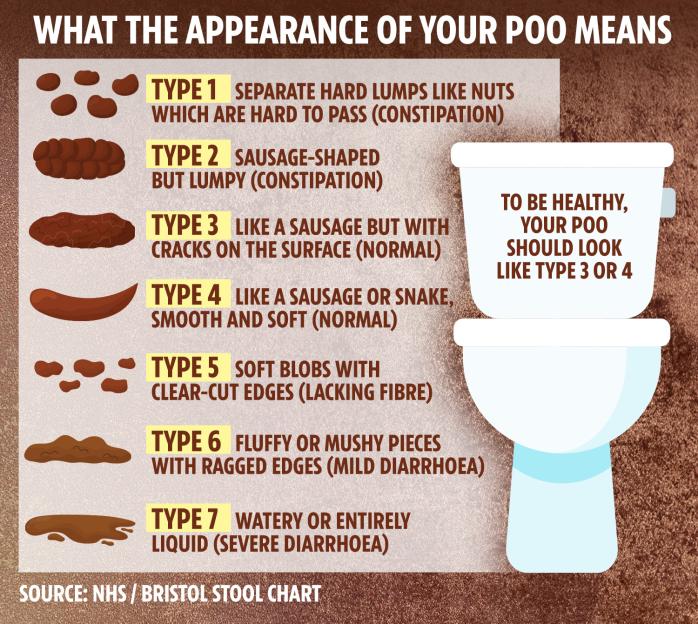
Most changes in your bowel habits will resolve themselves within a couple of weeks once your diet and lifestyle return to normal.
However, certain changes lasting three weeks or longer could indicate a problem with your health.
Dr. Deborah Lee from Dr Fox Online Pharmacy shared with Sun Health some crucial changes to be aware of.
Firstly, consuming less water and fewer fruits and vegetables during the Christmas season increases the likelihood of constipation, resulting in hard, pellet-like stools.
Additionally, indulging in high-fat foods—such as rich desserts and pigs in blankets—can lead to digestive issues, as excess fat slows down gastric emptying.
Undigested fat is broken down in the large intestine, which draws water into the colon—leading to diarrhea.
Dr. Lee added: “High-sugar foods and some artificial sweeteners can also cause diarrhea.
“A high sugar intake alters intestinal permeability and disrupts the gut microbiome.
“This can lead to inflammation in the intestinal walls.
“As a result, food moves through the intestines too quickly, leaving insufficient time for water absorption, which causes more frequent and loose bowel movements.”
Irritable bowel syndrome (IBS) is another condition that may flare up during the festive season.
High-fat foods, spicy dishes, alcohol, caffeine, and fizzy drinks can all trigger unpleasant symptoms, including bloating, constipation, or diarrhea, according to Dr. Lee.
The Christmas period is also a high-risk time for foodborne illnesses, which can lead to bowel problems.
Dr. Lee explained: “Salmonella, E. coli, and Campylobacter are common culprits.
“This is a time when the fridge is often packed with food, and family members may contribute dishes.
Many factors affect your bowel habits, including getting enough exercise and sleep.
Dr. Deborah Lee
“It may not be possible to keep meat and vegetables on separate shelves in the fridge, increasing the risk of contamination.
“There’s also always a risk of food poisoning when reheating turkey and other meats.
“Maintaining clean kitchen surfaces, preparation areas, and utensils can be challenging.
“Food poisoning can cause stomach aches, cramps, diarrhea, and fever.
“Stools may appear watery and green and could contain blood.”
The Best Treatments
For constipation, Dr. Lee recommends increasing your water intake and incorporating more fiber into your diet.
She explained: “Fiber adds bulk to intestinal contents, creating pressure on the intestinal walls and stimulating peristalsis, the muscular contractions that move food through the intestines.
“High-fiber foods include all fruits and vegetables, whole grains, legumes, nuts, and seeds.
“Many other factors influence your bowel habits, including adequate exercise and sleep.”
Diarrhea often indicates a dietary issue, such as a high-fat or high-sugar diet, or excessive alcohol consumption.
Dr. Lee advised: “In the short term, this will resolve when you return to a normal diet.
“For good gut health, we need a balanced diet with the right mix of protein, fat, and carbohydrates.”
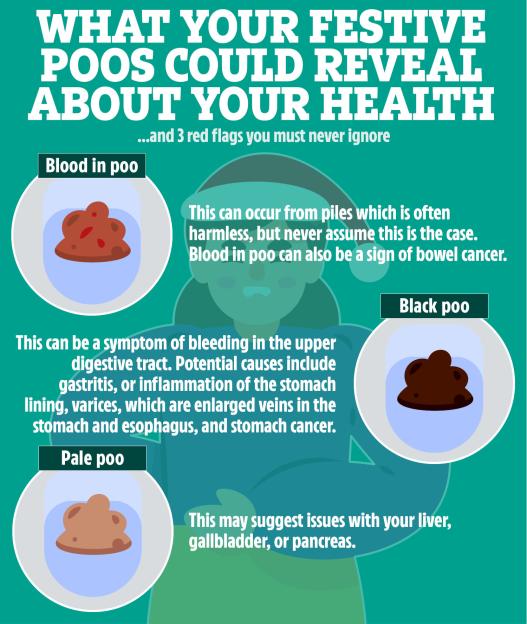
Red-Flag Bowel Changes to Watch For
Most changes in your stool during Christmas are not concerning and will improve as your routine normalizes.
However, Dr. Lee emphasized that you should be vigilant for the following three changes:
1. Blood in your stool
Seeing blood in your stool is never normal.
This can occur from hemorrhoids (piles), which are often harmless, but you should never assume this without proper assessment and diagnosis by a doctor.
Blood in your stool can indicate a serious condition.
2. Black stool
Your stool should not be black. This may suggest bleeding higher up in the gastrointestinal tract, as black blood is old blood—referred to as melaena.
This can be a side effect of taking non-steroidal anti-inflammatories (NSAIDs) like ibuprofen, which may cause stomach and duodenal ulcers, esophageal varices, or cancers of the upper GI tract.
Keep in mind that iron supplements can also dark