POLICE have revealed seven ways parents could be putting their child in danger when posting back-to-school snaps on social media.
As thousands of kids are set to return to classrooms this week, enforcement has shared why proud mums and dads should think twice about sharing these kinds of photos.
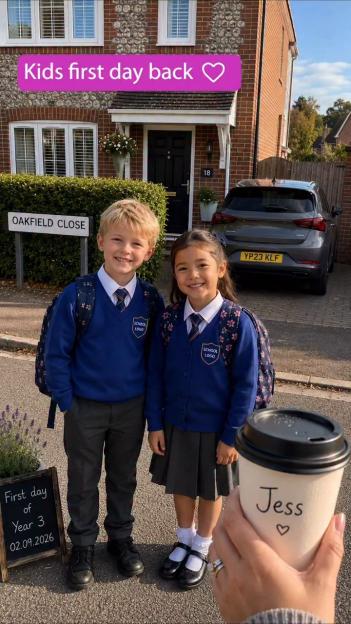 The snap gives away loads of private details about your child Credit: Unknown
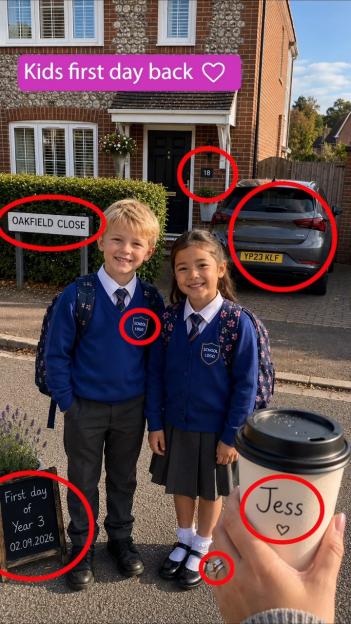 The force highlighted all the ways parents are giving away harmful details about their kids Credit: Unknown
Sussex has warned against the seemingly innocent practise, warning that pictures of your little one could be misused and turned into illegal child abuse imagery.
A chilling post, shared by the force, shows a harmless mock photo of two children in their school uniforms, standing outside their home.
To the untrained eye, it looks like one of the countless posts, parents will view and post this week as kids head .
But, the force advises against sharing these kinds of photos as it could give away deeply personal information about your children.
As the shows, posting your kids in their uniform, gives away where they go to school and posing for the pic outside your home establishes where you live.
Keeping your car registration in full view can also allow for criminals to establish your vehicle.
People can also figure out whether parents are married or not by posting details such as your wedding ring.
Novelty chalk boards or other banners celebrating what year your kids are entering was also advised against sharing online in case it falls into the wrong hands.
Earlier this year, the National Agency (NCA) warned parents against online due to the growing threat of children’s images shared online being manipulated into .
It came after the Internet Watch Foundation (IWF) and the National Crime Agency (NCA) saw an increase in online offenders exploiting openly available images of children to create realistic sexualised content.
IWF analysts found 3,440 AI-generated videos of child sexual abuse in 2025, compared to just 13 in 2024, and the NCA have increasingly seen offenders exploiting AI technologies to children in new ways.
AI child sexual abuse material is illegal and causes real harm, even where an image has been artificially created or manipulated.
Kerry Smith, chief executive of the IWF, warned back in June: “We don’t want to say don’t share your children’s images with the people you love and trust, but we want everyone to be aware of the potential risks and make an informed decision with the full facts at their disposal.
“These are not hypothetical threats, they are real.”
Tips on social media sharing for parents
Sharenting can put your kids at risk online – follow this guide to stay safe…
- Master the privacy settings – Check who can see your posts and make sure they aren’t public. Find out how in our guide to Facebook privacy . On Instagram, consider setting your profile to private.
- Think twice before posting – Could this post prove embarrassing for my child when they’re older? Could this comment be taken out of context? If in doubt, don’t share.
- Talk to your child – When your child is old enough to grasp social media, ask if they are okay with you sharing a post or photo.
- Don’t share – One of the best ways to keep your child safe online is not to share photos and posts about them.
- Check online sfatey guides – The NSPCC , Internet Matters and Childnet all have social media protection resources for parents that you can consult.