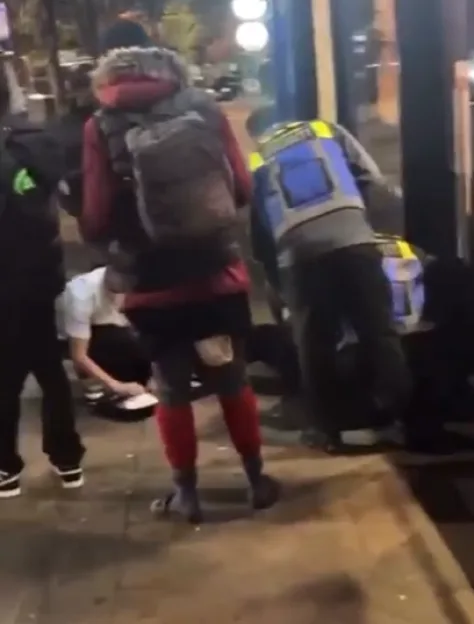
HAULIER Michael Horan fears his century-old family business may be reaching the end of the road.
Since the , his diesel bill to run five lorries delivering grain across — which need 15,000 litres of fuel a month — has rocketed by over £6,500.
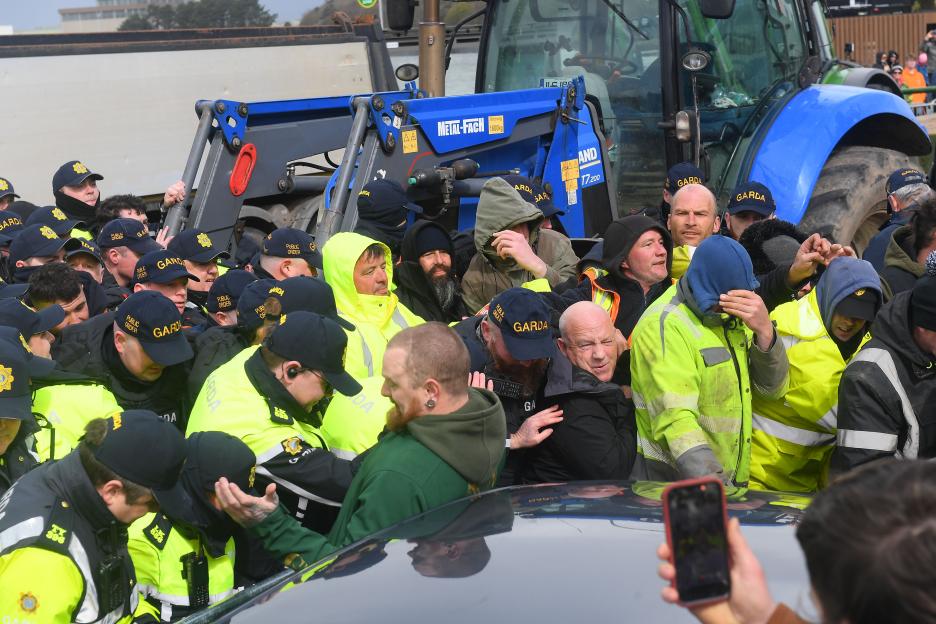 Police using pepper spray try to shift protesters at Cork’s Whitegate oil refinery
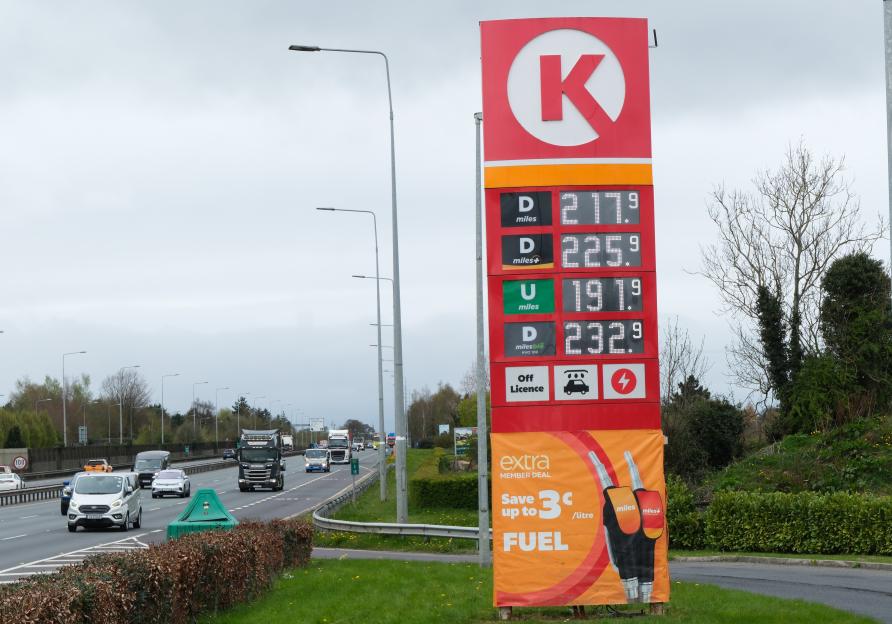 Unleaded petrol was priced at almost €2 (£1.74) per litre with premium diesel just under €2.28 (£1.98) at a garage on the N7 motorwayCredit: Paul Edwards
“We’re barely surviving,” the dad-of-two tells me.
“We’re on the floor.
“There’s no future in this business.”
Shaking his head, he blames crippling tax rates — including green levies — which make up around half .
It’s why the Irishman has joined hundreds of other hauliers, farmers, coach drivers, contractors and motorists on protests that have paralysed Ireland in the last week.
Angry demonstrators blockaded the Whitegate Oil Refinery in Cork , picketed ports and caused tailbacks on motorways with tractor convoys.
Holidaymakers were forced to trudge down the M50’s hard shoulder lugging their suitcases after protesters blocked the motorway leading to Dublin Airport .
O’Connell Street in the heart of the capital was closed by HGVs and tractors bearing placards No Fuel, No Food and Can’t Afford to Move.
Farming contractor Christopher Duffy told fuel protesters in : “We have the country by the balls.”
A panicked Irish government called out the army before announcing tax cuts on petrol and diesel.
Now are threatening fuel protests unless Chancellor slashes taxes.
William Taylor, co-ordinator of the UK’s Farmers For Action, raised the spectre of the 2000 British fuel protests when farmers blockaded six of the country’s largest refineries.
The farmer said: “Farmers For Action was born out of the fuel strike of 2000, where the UK was brought to a standstill for five days until Government listened.
“A lot was learnt.”
, founder of lobby group , said British demos won’t target fuel depots or block roads.
2024 candidate for London mayor added: “I am in discussions to hold fuel protests across the UK.
“They will be peaceful demonstrations by farmers, small businesses, taxi drivers and motorists who are being punished by Rachel Reeves’ inaction to help motorists during a cost-of-living crisis.”
The shock waves from the are now reverberating 3,700 miles away from the dust-bowl amid the emerald-green fields of .
In this idyllic patchwork of thoroughbred stud paddocks and cattle meadows, many have been radicalised by what they say is a fight for their livelihoods.
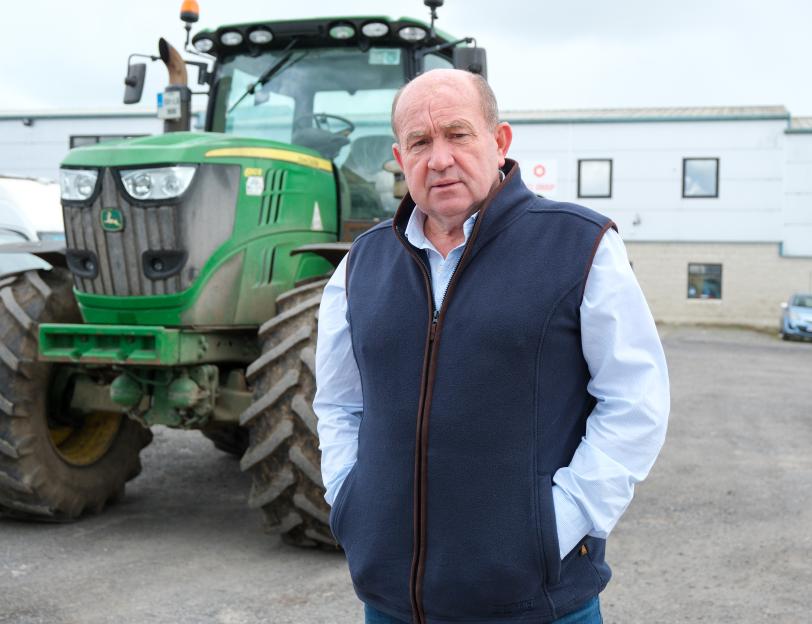 Beef farmer John Dallon said: ‘The people of this country are crying out to the government to save our economyCredit: Paul Edwards
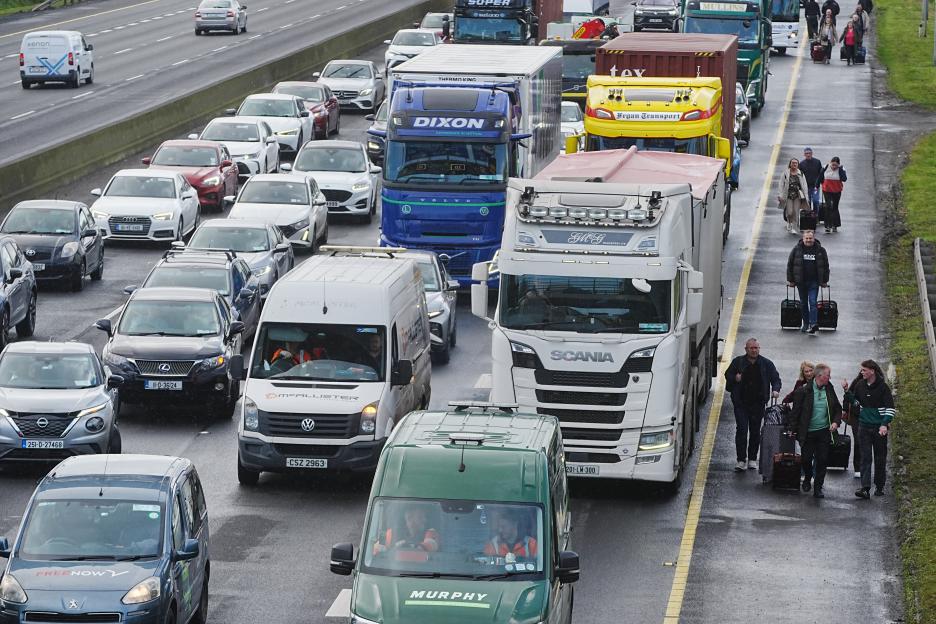 Holidaymakers were forced to trudge down the M50’s hard shoulder lugging their suitcases after protesters blocked the motorway leading to Dublin AirportCredit: PA
Farmer and agricultural contractor John Dallon, 61, has been one of the most prominent voices in the protests which began on April 7.
John, who farms beef cattle in Crookstown, County Kildare, told me: “We don’t know where the diesel price is going to finish up.
“It is escalating and escalating.
“The cost of living is going through the roof.
“It’s affecting people from the farming sector to the haulage sector, the building industry and the bus companies bringing the children to school.
“The people of this country are crying out to the government to save our economy.”
The Irish protests have been likened to the gilets jaunes (yellow vests) grassroots fuel demonstrations which rocked in 2018.
Fourth-generation beef farmer John says of his new-found campaigning zeal: “I’m not a political man but I’ve become so angry at the way our government is going.
“They’re disconnected from ordinary people.”
He also raised the spectre of the demos migrating across the Irish Sea as English farmers are “under atrocious pressure”.
And he added that the British government needs to remember that “farmers are the people who put food on the table three times a day”.
The global fuel crisis shows little sign of abating.
On Monday the US announced it would after closed the to most shipping.
to over $100 a barrel and prices at the fuel pump have rocketed across the world.
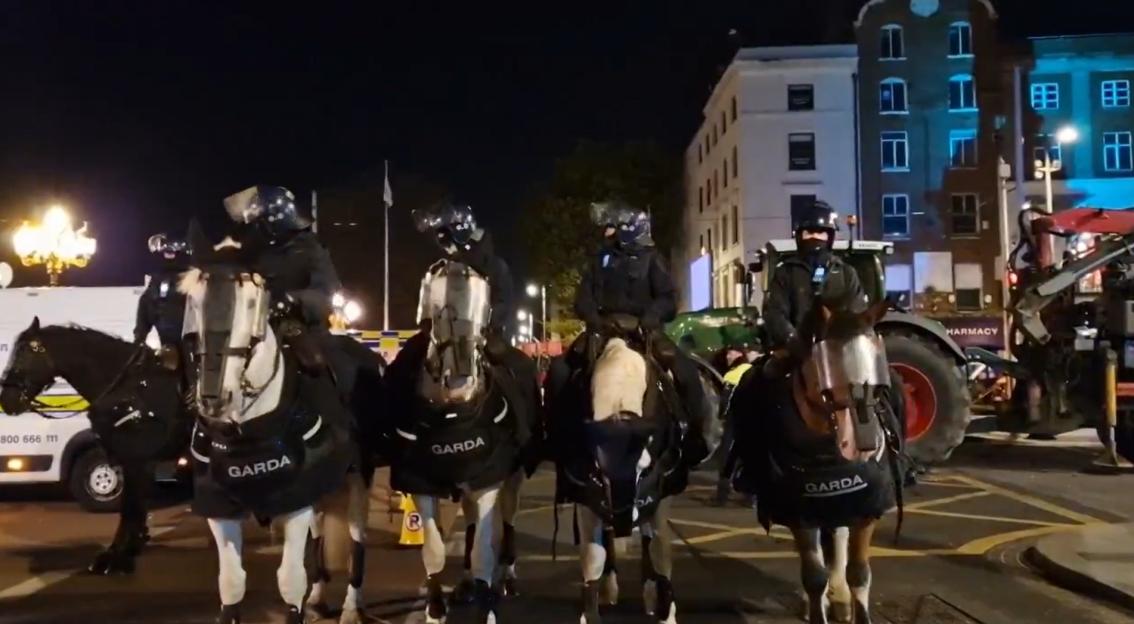 Cops on horses ready to face disorder in Dublin’s O’Connell StreetCredit: PA
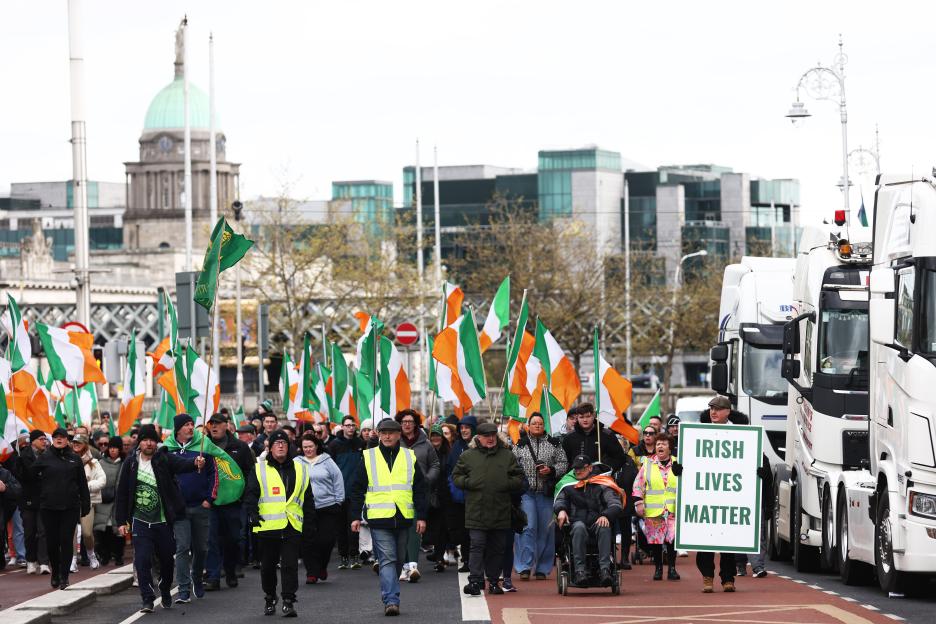 Protesters march with flags in DublinCredit: AP
Rural Ireland — which relies on diesel for its tractors and lorries as well as kerosene to heat many remote homes — began to buckle as diesel prices rose by more than 20 per cent.
Any rise in prices means more tax revenue for the Irish exchequer.
Yesterday at a garage on the N7 motorway , unleaded petrol was priced at almost €2 (£1.74) per litre with premium diesel just under €2.28 (£1.98).
Farmers and lorry drivers recently began to organise to protect their livelihoods.
WhatsApp groups and social media turned it into a nationwide protest.
Their demands included a cap on fuel prices at around €1.85 (£1.60) for regular diesel and €1.10 (96p) for kerosene home heating oil, the axing of carbon fuel tax plus energy credits for households and businesses.
A poll by the Sunday Independent newspaper showed that 56 per cent of voters back the protesters.
Convoys of slow-moving tractors led to motorway gridlock, and the country’s only major fuel depots — in — were blockaded.
For five days, farmers, hauliers and taxi drivers blocked Cork’s Whitegate refinery which produces all of Ireland’s petrol and diesel.
Panic buying spread like wildfire, and 600 out of Ireland’s 1,500 petrol stations ran dry.
Irish Finance Minister Simon Harris called it a “very dangerous moment”, while Prime Minister Micheal Martin said the blockade was “damaging Ireland’s economy and society”.
The leader of the centre-right Fianna Fail party added that “self- appointed” groups do not have a right to “close down the country”.
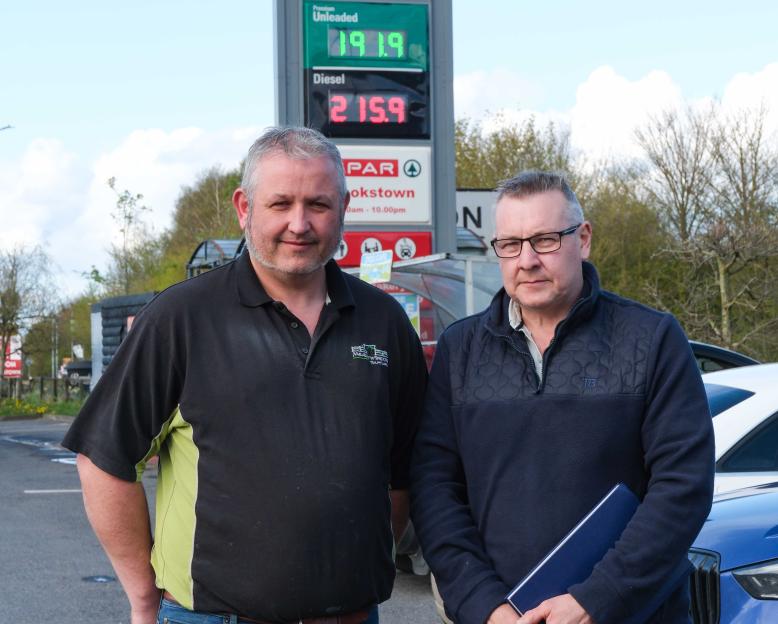 Hauliers Kevin Doody, left, and Michael HoranCredit: Paul Edwards
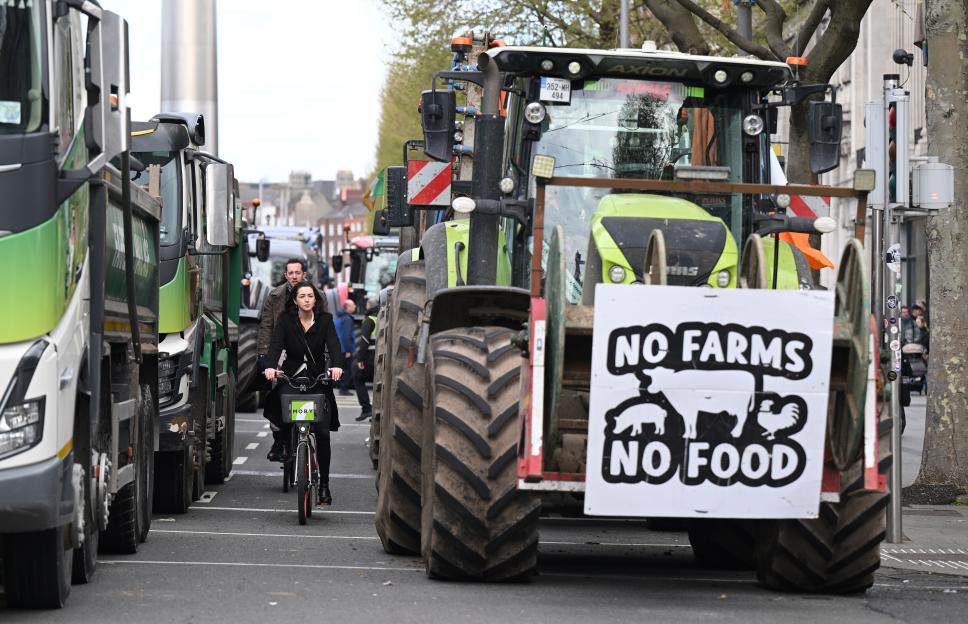 A tractor in the Irish capital during the five-day road block last weekCredit: Getty
Ireland’s government was forced to act, and on Saturday police — backed by army engineers with heavy-lifting trucks — moved to clear the Whitehaven refinery blockade.
Tensions flared as officers used pepper spray on protesters with video footage showing at least one demonstrator being dragged from a tractor.
Cops said they broke up the blockade to protect “emergency public services, including ambulance and fire services” from fuel shortages.
In the early hours of Sunday morning, riot police and mounted officers broke up the protest in O’Connell Street as a helicopter hovered above.
Farmer John Dallon, who was present, told me: “I thought I was in Beirut.
“A swarm of police came in.
“Everyone was frightened.
“I’ve never seen anything like it.
“You’re allowed under constitutional right to have peaceful protests.”
Other blockades across the country were also broken up, and on Sunday the Irish government announced a £440million package of measures to tackle the crisis.
It includes tax cuts of around 9p to both petrol and diesel until the end of July, delaying carbon tax increases until October and millions in subsidy for the worst-hit industries.
Yet the convoy go-slows continued to cause traffic jams on a number of Irish main roads on Monday, with tractor protests spreading to on yesterday.
In the coffee shop at a Texaco garage in Crookstown I met local haulier Kevin Doody, 48, who says his latest fuel bill is rising by more than the government’s tax cut.
The dad-of-three from Grangecon, County Wicklow, whose 13 trucks and 17 staff ferry refrigerated beef across Ireland, said: “The tax break has already disappeared.
“They need to get rid of the carbon tax altogether.
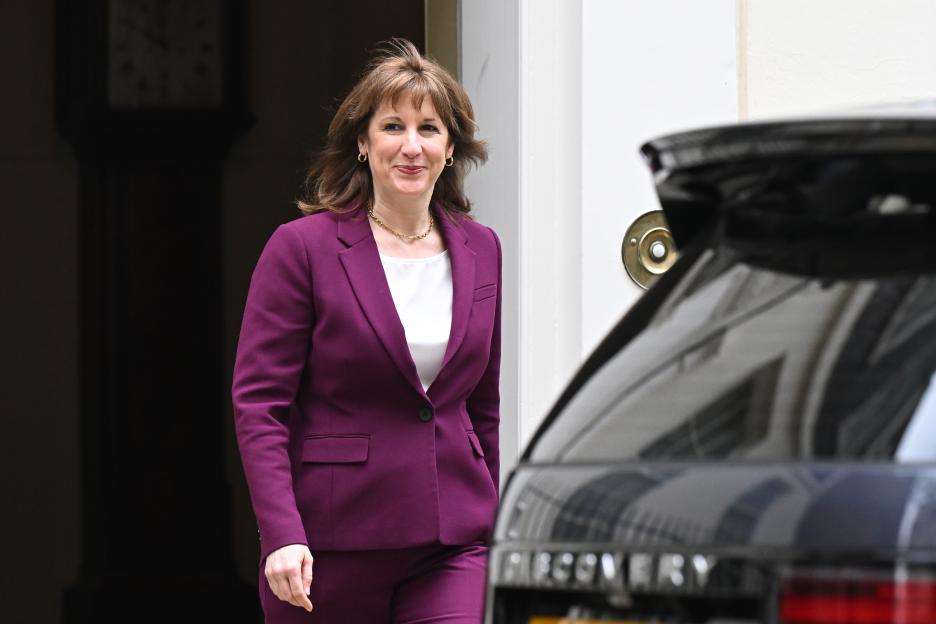 British farmers are threatening fuel protests unless Chancellor Rachel Reeves slashes taxesCredit: Getty
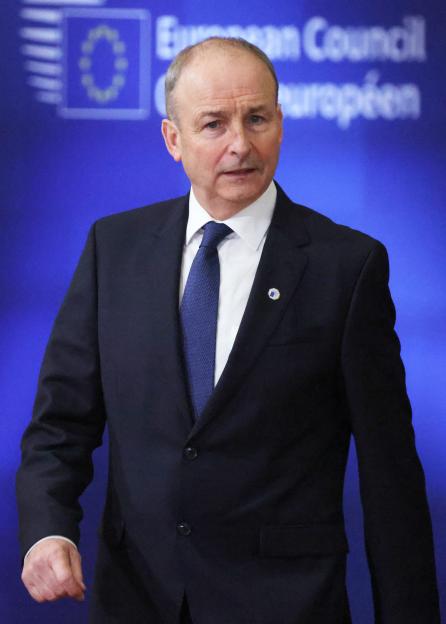 Prime Minister Micheal Martin said the blockade was ‘damaging Ireland’s economy and society’Credit: AFP
“I bought my first truck aged 22.
“I’ve done nothing else all my life.
“We’re barely surviving.
“Rising fuel costs will mean higher prices on the shelves.
“This affects everyone.”
Yesterday Ireland’s government survived a confidence vote over its handling of the crisis.
There have been reports in the Irish media that some involved in the demos have far-right sympathies.
Kildare county councillor Tom McDonnell, 63, a builder and fuel campaigner who has been branded with that label, said: “I’m not against immigrants, just illegal immigration.”
The dad-of-eight believes the fuel demos will spread to the UK, adding: “We’ve inspired Britain to protest.”
On the other side of the Irish Sea, FairFuelUK’s Howard Cox insisted: “I have always been against direct action, but I am being bombarded with requests to co-lead protests over the next few weeks.”
Britain, too, may soon be facing gridlock.
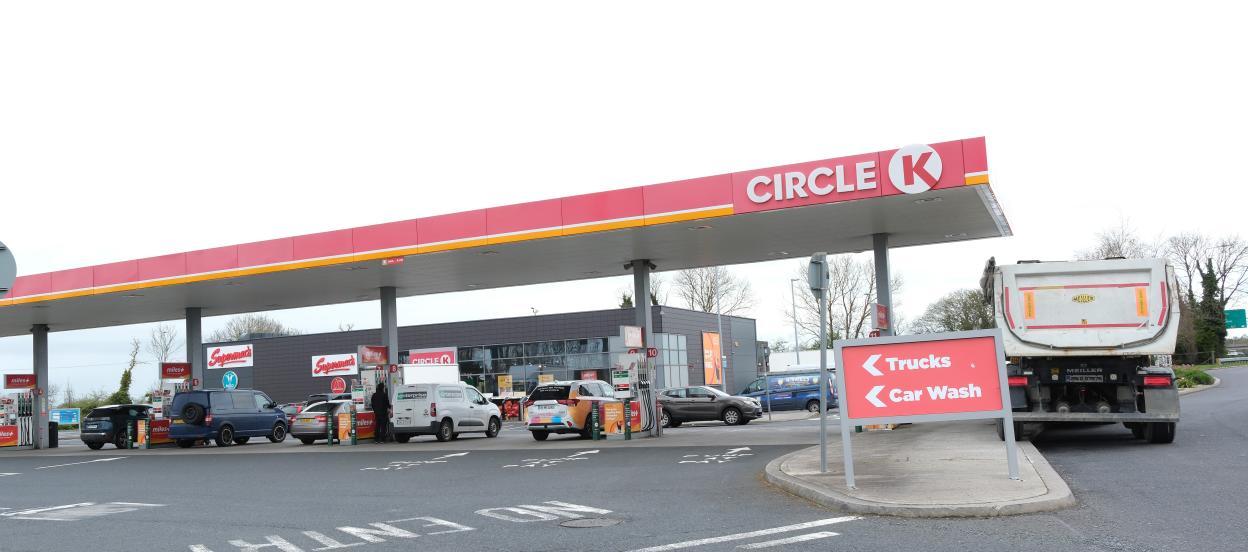 The high pump prices are causing outrage and sparking protests across the countryCredit: Paul Edwards