
THE next time you flush the toilet without looking, you could be flushing away the only early warning sign your body is trying to give you.
Checking your stool – and talking about it – is something most of us avoid. But it provides invaluable clues into your – from the colour, shape, whether it sinks or floats and its shape… and can alert you to some serious, life-threatening conditions.
 Checking your stool could give you clues to your health, from the colour and shape to whether it sinks or floats Credit: Getty Images – Getty
 Dame Deborah James died of bowel cancer in June 2022 at the age of 40 Credit: Dan Williams – Commissioned by The Sun
Dame Deborah James , who died of bowel cancer in 2022, helped to smash the poo taboo through her honest conversations and campaigning about the disease, always urging people to ‘Check your poo’.
In doing so, The Sun columnist helped of NHS bowel cancer screening and in turn, saved lives.
More than a third of UK adults have ‘unusual’ poo, according to past research by Benenden Health, yet only 60 per cent of UK adults would speak to a doctor about consistent problems with their .
Dr Chun Tang, GP at Pall Mall Medical says: “It’s worth knowing what your stools look like as sometimes it can signal different health issues and diseases.”
From to Parkinson’s , infections and internal bleeding, we look at the symptoms that show up in the toilet bowl, and how to decode them.
1. Pebble poos
 The Bristol Stool Chart compares poo to different objects
STRUGGLING to relieve yourself? Having fewer than three bowel movements a week?
Or when you do go, are you straining hard, only to push out small, round ?
“Little hard pellets usually mean constipation, and that’s often from dehydration or low fibre,” says Dr Tang.
One in seven adults in the UK are suffering from constipation at any one time, says NHS data.
And Dr Tang says that chronic constipation is common in conditions such as Parkinson’s, sometimes appearing years before movement symptoms such as shaking or stiffness, which is why doctors take constipation seriously, as an early clue.
Parkinson’s disease is a neurological condition affecting around 166,000 people in the UK .
“Parkinson’s and constipation are connected because Parkinson’s doesn’t just affect movement in the arms and legs, it can also affect a person’s nerves and muscles that move food through the gut,” explains Dr Tang.
“In particular, the disease can slow the autonomic nervous system (ANS), which is the part that runs your bowel movement automatically, so the intestines can’t push your stool along as well.”
Men with fewer than one bowel movement per day had a 2.7-fold higher risk of developing Parkinson’s disease compared to those who had daily bowel movements, The Honolulu-Asia Aging Study found.
and bloating are also common symptoms of Parkinson’s.
“You should see a GP if it’s ongoing for a few weeks, painful, or new and unexplained. They may your diet, meds, blood tests , or suggest laxatives,” says Dr Tang.
2. Strange-coloured poo
 A strange coloured poo could be due to something you’ve eaten, but it could also be the sign of something more serious
TYPICALLY, your stool should be a light to dark brown colour and any variations from this are often linked to diet.
“Green stools are often harmless and can be caused by eating leafy greens or food moving too quickly through the gut,” says Ade Williams MBE, Pharmacist Ambassador for Pancreatic Cancer Action .
Purple or red stools can also be caused by beetroot ; orange stools are sometimes caused by foods high in beta-carotene like carrots; and black poo can sometimes be linked to liquorice or iron supplements .
In some cases, changes in stool colour can signal an underlying health issue.
“Pale or clay-coloured stools can indicate a problem with bile flow, which may be linked to the liver, bile ducts, or pancreas,” says Ade.
Bile is a liquid that helps to break down fats in your body.
“Orange stools are usually diet-related, but can occasionally point to issues with bile too,” says Ade.
“The key thing is persistence. If a colour change continues or is accompanied by other symptoms, it’s worth seeking medical advice.”
3. Pencil poos
IF your stool is less like a sausage and more like a pencil, it could be a warning sign of .
are those that are squeezed through a smaller opening.
Dr Marie Edison , Head of Medical Policy at Vitality Health , says: “If a tumour grows into the bowel, it can narrow the space that stool passes through.
“This can slow things down, causing people to go less often, strain, feel blocked, or feel like they haven’t fully emptied their bowel.”
Bowel cancer can also cause .
Dr Edison says: “You might notice bright red blood on the stool itself, on toilet paper or in the toilet bowl.
“Dark red or black, tarry stools, may indicate bleeding higher up the bowel.
“ can change how the bowel works, which is why people may notice a change in their bowel habits.
“That change can go in either direction: diarrhoea , constipation or sometimes a mixture of both.
“Part of the confusion comes from what people mean by diarrhoea. Some mean going to the toilet more often, while others mean looser stools. But bowel cancer can affect both frequency and consistency.”
Diarrhoea tends to pass after a few days or weeks. If it doesn’t, it should be seen to by a GP.
is the fourth most common cancer in the UK with 49,300 new cases diagnosed each year, according to Research UK.
It can affect people of any age, although 94 per cent of cases are diagnosed in those over 50 and four out of ten people are diagnosed over the age of 75.
In the UK, the NHS bowel cancer screening programme invites people aged 50 to 74, registered with a GP, to send a small poo sample to a lab – make sure you do it.
NHS chiefs have previously praised for the campaigning she did to boost awareness of the bowel cancer screening, along with her encouragement of Brits to come forward for the test.
The Sun’s campaign, spearheaded by Debs, called for the starting age to be lowered from 60 to 50 and the expansion was completed last year.
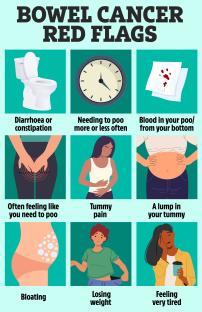
9 other symptoms of bowel cancer
Symptoms of bowel cancer may include:
- Changes in your poo, such as having softer poo, diarrhoea or constipation that is not usual for you
- Needing to poo more or less often than usual for you
- Blood in your poo, which may look red or black
- Bleeding from your bottom
- Often feeling like you need to poo, even if you’ve just been to the toilet
- Tummy pain
- Bloating
- Losing weight without trying
- Feeling very tired for no reason
Source: The NHS
4. Floating poo
STUBBORN poo may float on the surface of the toilet water, refusing to flush.
We joke about these ‘floaters’, often caused by from fizzy drinks , or a high fibre diet.
But, Ade says: “Stools that are often pale, greasy and difficult to flush could be a sign of .
“They can look clay-coloured or yellowish, appear oily and may float due to a higher fat content.
“This happens because the pancreas isn’t producing enough enzymes to properly digest fat, so it passes through the body instead.
“People might also notice that their stools are looser, bulkier and have a particularly strong, unpleasant smell.”
Bowel changes are a key symptom of pancreatic cancer , which affects 30 new people every day, according to Cancer Research UK. It’s more common in females than males, with most people being over 65 when diagnosed.
Other symptoms of pancreatic cancer include tummy or back pain , yellowing of the skin or whites of your eyes and unexplained weight loss.
“It’s not uncommon for early symptoms of pancreatic cancer to be misdiagnosed as IBS or even a bout of food poisoning , particularly when people experience changes in bowel habits or stomach discomfort,” says Ade.
“It’s important to pay attention to anything that persists or doesn’t feel normal for you.”
5. Poo mucus
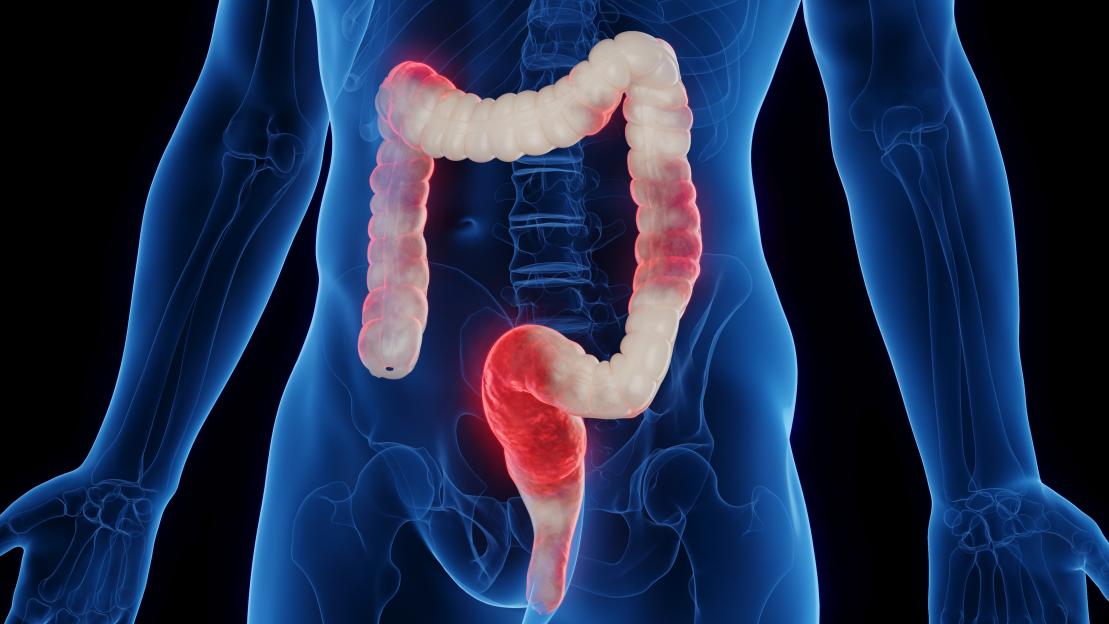 Large amounts or frequent mucus in your poo can be a sign of inflammation of irritation in the gut Credit: Getty
A CLEAR, white or yellowish, slimy mucus in your poo can be alarming. But this can be normal.
“The bowel naturally produces it to help things pass through,” says Ade.
However, larger amounts or frequent mucus can be a sign of inflammation or irritation in the gut.
“This could be linked to conditions like IBS, infections or inflammatory bowel diseases such as colitis,” warns Ade.
Inflammatory bowel disease (IBD) is an umbrella term for various conditions such as Crohn’s disease and ulcerative colitis .
He recommends visiting your GP if mucus becomes persistent, increases over time, if you spot any blood in your mucus or if it’s accompanied by other symptoms like pain, weight loss or changes in bowel habits.
Any combination of symptoms is always more significant than a single change on its own.
Your GP will usually ask about symptoms and may request a stool sample.
“They might also arrange blood tests , and if needed, refer for further investigations such as a colonoscopy,” adds Ade.