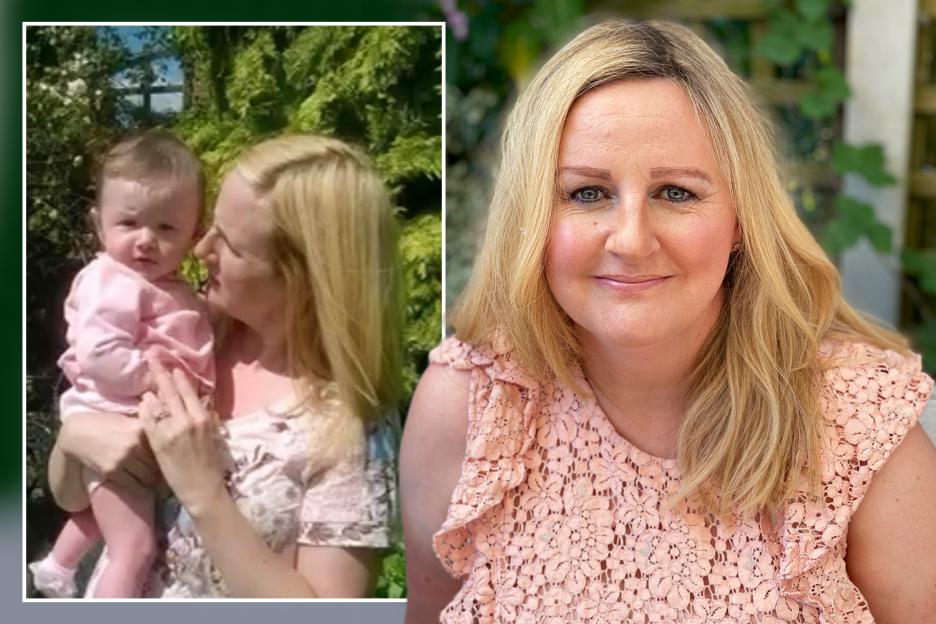
WHEN Kirsty Hapgood, 47, begged her husband to take her to A&E, she was suicidal at the thought that she’d harmed her baby.
“I basically presented saying I wasn’t sure whether I’d abused my daughter, but instead of stigma and shock, I was treated with compassion, which was life-changing,” she tells Sun .
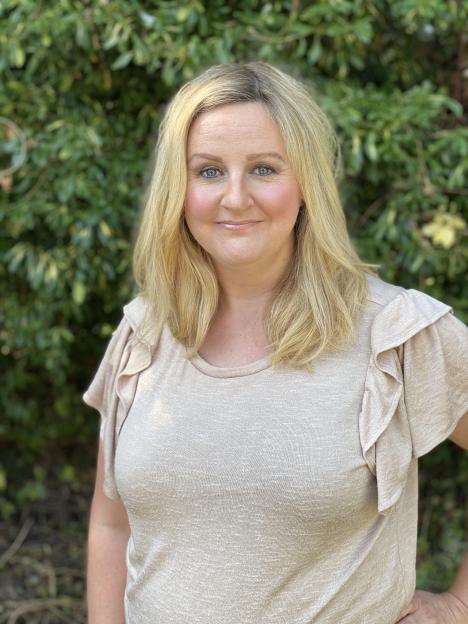 Kirsty Hapgood, 47, experienced terrifying paedophilic thoughts after the birth of her third child Credit: Supplied
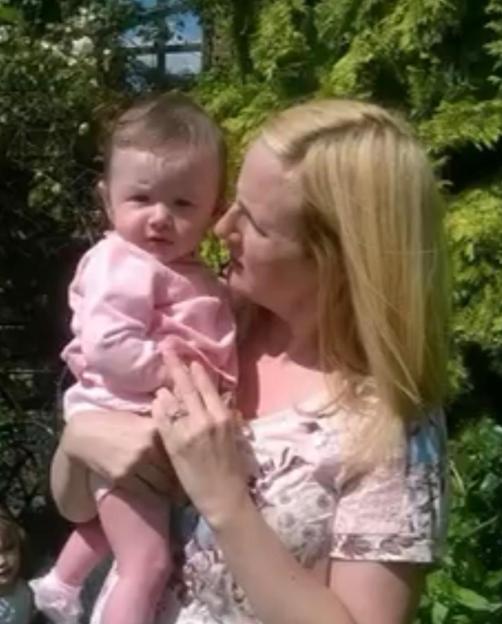 She’d suffered from OCD from a young age but a terrifying relapse after the birth of her third daughter had her convinced she’d harmed her Credit: Supplied
The mum-of-five, from Warrington, suffered a resurgence of her (OCD) when her third baby, a daughter, was born.
Intrusive thoughts led her to believe she was a paedophile, or that she had harmed her little girl, born in 2013.
“I remember shaking and telling staff that I wanted to die because I couldn’t live with thoughts like these anymore,” Kirsty says.
“Thankfully, the mental health team recognised what was happening immediately.
“They already knew I had OCD and explained that these intrusive thoughts weren’t intentions; they were symptoms of the illness.”
An extreme type of anxiety disorder, OCD affects 12 in every 1,000 people, with an estimated one million Brits thought to be living with it.
The obsessive aspect involves thoughts, feelings and urges that sufferers can find impossible to ignore.
They cause a huge amount of , particularly when they involve harming others.
 Kirsty has had OCD for 40 years, though she was first diagnosed in her 20s Credit: Supplied
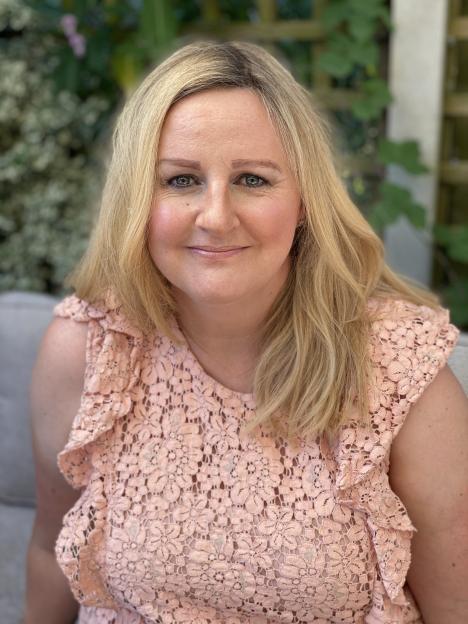 People think of OCD as repetitive cleaning or handwashing, but Kirsty suffered different subtypes of the condition, saying ‘OCD attacks the thing you value most’ Credit: Supplied
Kirsty has suffered with OCD for 40 years and was diagnosed in her twenties.
Though most people think it is just repetitive cleaning, OCD has many different forms.
Kirsty has experienced subtypes including contamination fears, health anxiety, relationship OCD, sexual identity OCD and an overwhelming sense of responsibility for other people’s safety.
Kirsty, who has her own channel Stuck In The Mud: OCD and Anxiety , explains OCD as: “It chooses your greatest fears, not your secret desires.
“What people don’t understand is that OCD always attacks the thing you value most.”
It was in her twenties that the very rare and little talked about subtype of (POCD) almost broke her.
Those with the subtype – like Kirsty – experience distressing, unwanted, and intrusive thoughts about being sexually attracted to children.
Kirsty says people with POCD have absolutely no desire to harm children and are often so terrified of their thoughts that they avoid them entirely.
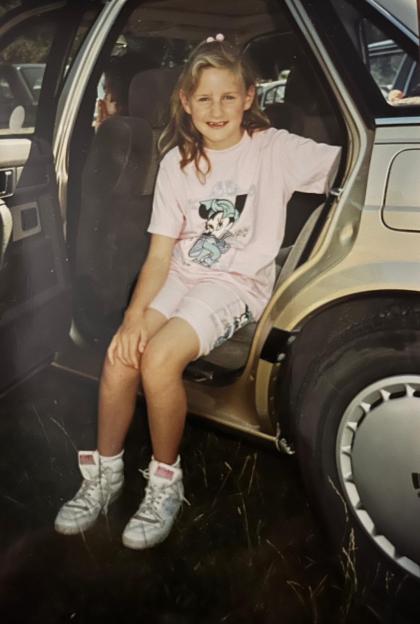
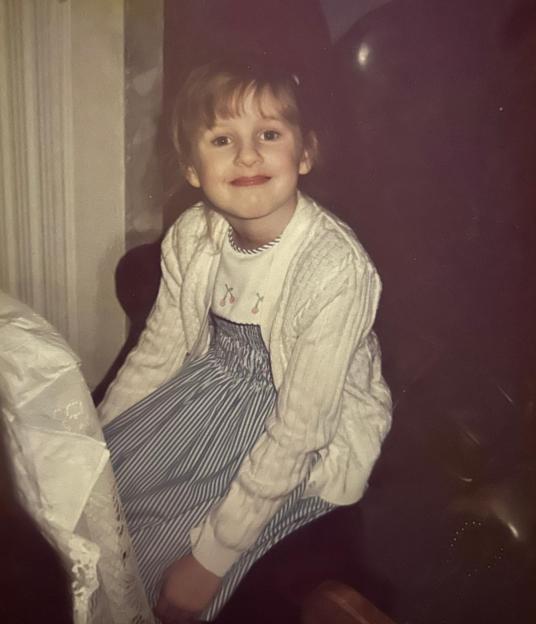 Kirsty’s earliest OCD memory was from the age of five Credit: Supplied
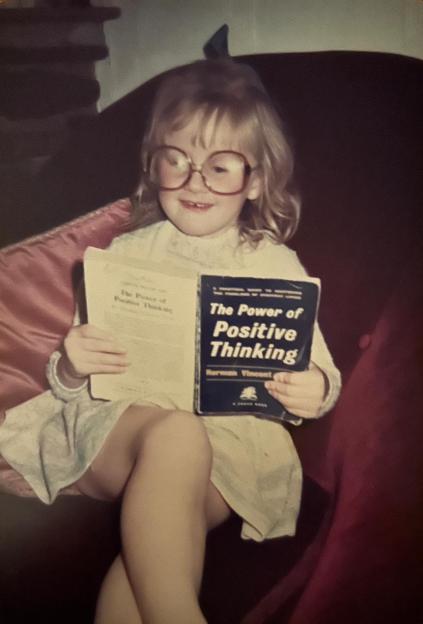 She developed rituals, fearing something bad would happen if she didn’t complete them Credit: Supplied
“The first time I experienced paedophile OCD was when my sister had her first baby,” says Kirsty.
“She was changing a nappy at my parents’ house and I suddenly felt uncomfortable being in the room.
“For most people, that feeling would simply disappear. For me, OCD immediately twisted it into something horrifying.
“I thought, ‘Why do I feel uncomfortable? Does that mean I’m attracted to children? Does that mean I’m attracted to my niece?’
“That single intrusive thought became an obsession. The harder I tried to prove to myself that I wasn’t, the more my brain became convinced I needed an answer.”
Kirsty’s earliest OCD memories are from five years old, sitting in school assembly.
“I was incredibly attached to my mum and hated being separated from her,” she says.
“I’d sit there cross legged quietly repeating, ‘Mummy, Mummy, Mummy,’ over and over again because I believed that if I kept saying her name, she’d stay safe while we were apart.”
 OCD causes repetitive and unwelcome thoughts, prompting behaviours that aim to reduce distress Credit: Getty
 What is Obsessive Compulsive Disorder (OCD)?
Obsessive-compulsive disorder (OCD) is a mental health problem. It has two main parts that are connected, obsessions and compulsions.
Obsessions are unwelcome thoughts, feelings, images, urges, worries or doubts that keep coming into your mind.
They may feel stuck in your mind, no matter what you do. You may worry what they mean or why they won’t go away, and feel very distressed by them.
Compulsions are repetitive things that you do to reduce the distress or uncertainty caused by obsessions.
Compulsions can be things you do physically, like repeatedly checking a door is locked. Or they can be things you do in your head, like repeating a specific word to yourself. Or they may involve others, such as asking people for reassurance.
Treatment can involve talking therapies such as Cognitive behavioural therapy (CBT) with Exposure and response prevention (ERP).
You may be offered the following medications for OCD, either on their own or alongside talking therapy:
- Selective serotonin reuptake inhibitors (SSRIs) – this is a type of antidepressant. Research has shown that it can also help to treat OCD.
- Clomipramine – this is a tricyclic antidepressant. You may be offered this if you try an SSRI but it doesn’t help.
If you think you might have OCD, visit your GP, and you can find further information at mind.org.uk/
When Kirsty was diagnosed with OCD, she had rituals that, if she didn’t complete, she feared something bad would happen.
As a teenager, despite not being sexually active, Kirsty was terrified she’d catch from touching a stranger.
“I also developed a fear of wearing sandals in case I would accidentally step on a needle left out in the streets, even a blade of grass could convince me I’d been jabbed and contracted something,” she says.
But as she got older, her OCD became more mental than physical, something called Pure O.
She says: “I became trapped analysing every thought I had.
“I developed an obsession with accidentally hurting someone’s feelings, leading to them committing suicide.
Her brain would trick her into ‘remembering’ that she’d called them a hurtful name and she’d “repeatedly check their reaction because if I didn’t, I would fear them going home and killing themselves”.
This is called ‘false memories’, and it would also leave Kirsty re-walking past strangers fearing that she had pushed them over.
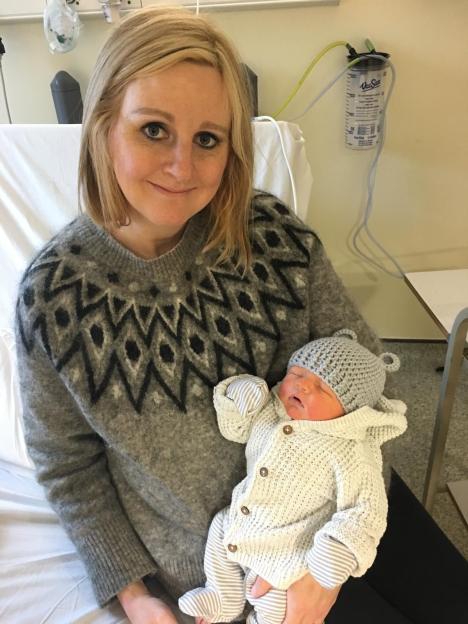 Kirsty pictured with her son Credit: Supplied
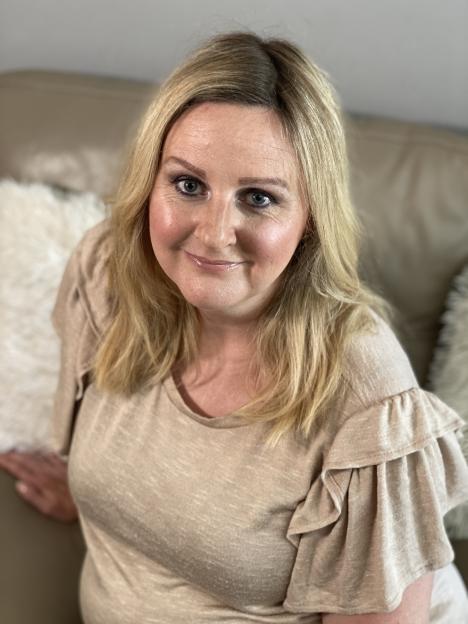 The mum was tormented by false memories of her daughter, and was terrified the same would happen with her next kids Credit: Supplied
“Most of my obsessions revolved around causing harm to others,” says Kirsty, who describes her illness as “insanely exhausting”.
She says: “OCD is always at the extremes of everything and it thrives and survives in worst case scenarios.”
Her OCD would evolve as she grew older, so when children entered her life, first with the of her niece, POCD took hold.
Kirsty was tormented, and she started avoiding situations involving children altogether.
Kirsty says: “I’d think to myself, ‘what’s the worst thing that could happen to a child?’
“And that’s when I found myself obsessively fearful that I could be capable of something so horrendous like hurting a child physically.
“The fear was indescribable. I felt overwhelming shame, disgust and self-hatred.
“I thought if these thoughts existed in my mind, perhaps they meant I was capable of acting on them.”
Kirsty became a mum herself in 2009, giving birth to her first daughter and thankfully her POCD didn’t return.
She says: “I struggled with OCD around the time of her birth but nothing like I’d experienced when my sister gave birth.”
She had another daughter in 2011, and then with her third in 2013, her POCD returned with a vengeance.
“Around six months after she arrived, the intrusive thoughts returned,” says Kirsty.
“This time they were accompanied by false memories, which was terrifying.
“Instead of asking, ‘What if I do something?’, my brain asked, ‘What if you’ve already done something and you just can’t remember?’
“That was torture. I genuinely couldn’t tell what was real anymore.
“I became convinced I might have abused and harmed my own baby and forgotten it.
“It got to a point I would only change her nappies and bathe her with family members around so I could get reassurance from others that nothing bad had happened and I hadn’t done anything.
“Obviously deep down I knew I was incapable of such abhorrent disgusting behaviour.
“In June 2013, I told my husband I couldn’t cope anymore and took myself to Trafford hospital A&E because I honestly believed I was a danger.”
Kirsty was prescribed clomipramine, one of the gold-standard medications for OCD, and for the first time, she heard about false-memory OCD – which is what she’d been experiencing when she believed she might have harmed her own daughter.
She says: “Learning there was actually a name for what I was experiencing was life-changing.
“I wasn’t secretly evil. I wasn’t hiding some dark desire, I hadn’t hurt or abused my daughter; I was desperately ill.”
Kirsty, who says she feels lucky that doctors recognised her OCD, moved in with her parents for two weeks while her medication kicked in.
“Mental health teams visited me daily because I was suicidal,” says Kirsty.
“I began specialist therapy alongside medication and Exposure and Response Prevention (ERP), which is an OCD specific therapy that completely changed my life.
“Medication didn’t remove the thoughts, but it turned the volume down enough for me to stop believing every single one of them; that’s the best way I can describe it.
“The thoughts were still there, but they no longer screamed, and once the volume was lower, I could finally recognise them for what they were – meaningless intrusive thoughts rather than evidence about who I was.”
When it came to having her fourth child in 2019, a little boy, Kirsty’s fears ramped up – but her POCD didn’t return.
“I was terrified of having my first little boy after my third daughter because I believed him being a boy with different body parts that this would make it more likely that the POCD would return,” she says.
“I ended up really fearing the birth and I felt no bond in the pregnancy; in fact I didn’t even want to acknowledge him.
“The thought of giving birth just filled me with dread and terror.
“The anticipation of a return of the POCD was unfounded as my bond slowly grew with my little boy, my husband had so much patience while I gained confidence as a fourth time mum.
“People may wonder why would I have another child after the POCD with my [third] daughter but I honestly thought it wouldn’t come back again.
“OCD always finds a way to attach itself to something else and it’s always something that matters to you.”
Kirsty had her fifth child, a girl, in 2020.
She says she is “much better”, is speaking out because she wants to remove the stigma around the condition and bring it out of the shadows.
She says: “Everybody has intrusive thoughts. The difference is that people without OCD dismiss them almost instantly, people with OCD become frightened by them and start searching for certainty, and that’s where the illness traps you.
“I finally feel like I’ve broken the cycle.
“That’s why I started my YouTube channel; I want people sitting alone with these terrifying thoughts to know they are not monsters. They’re not alone. And they’re certainly not the only person who’s experienced this.
“If I’d heard someone else’s story when I was suffering, instead of believing I was uniquely broken, I’d have realised there was hope.
“Looking back though, I’m so proud of how far I have come and I feel so grateful that I can now help other people suffering in shame and silence.”
How to get help
EVERY 90 minutes in the UK a life is lost to suicide
It doesn’t discriminate, touching the lives of people in every corner of society – from the homeless and unemployed to builders and doctors, reality stars and footballers.
It’s the biggest killer of people under the age of 35, more deadly than cancer and car crashes.
And men are three times more likely to take their own life than women.
Yet it’s rarely spoken of, a taboo that threatens to continue its deadly rampage unless we all stop and take notice, now.
If you, or anyone you know, needs help dealing with mental health problems, the following organisations provide support:
- CALM, www.thecalmzone.net , 0800 585 858
- Heads Together, www.headstogether.org.uk
- HUMEN www.wearehumen.org
- Mind, www.mind.org.uk , 0300 123 3393
- Papyrus, www.papyrus-uk.org , 0800 068 41 41
- Samaritans, www.samaritans.org , 116 123