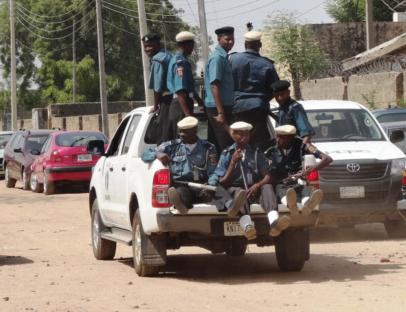
The Sokoto State Hisbah Board has denied reports claiming that it introduced restrictions on Christian worship and religious activities in the state.
The denial came after claims circulated on social media alleging that the board had issued new rules affecting Christian worship services and the organisation of religious gatherings.
The Commandant of the board, Dr Usman Jatau, described the reports as false and misleading, warning that they could create religious tension in Sokoto State.
In a statement issued on Saturday, Jatau said the allegations did not represent the duties or activities of the Hisbah Board.
The controversy followed claims that the board was interfering with Christian worship.
Among the claims was that churches could no longer hold gatherings where men and women worship together. It was also alleged that male and female Christians were required to hold separate services.
Another claim suggested that pastors would not be allowed to sit with their wives during church services.
The reports further alleged that the supposed restrictions were part of a plan to Islamise Nigeria, starting from Sokoto and spreading to other parts of the country.
Jatau, however, rejected the claims, saying, “The law establishing the Sokoto State Hisbah Board applies only to Muslims.”
He explained that the board had no legal power to regulate Christian worship or control how people of other religions practise their faith.
“The law establishing the Sokoto State Hisbah Board, as enacted by the Sokoto State House of Assembly, applies only to Muslims,” Jatau said.
He added that the board had no authority to decide how Christians organise their worship, conduct mixed gatherings or interact with their spouses during religious activities.
According to him, linking the alleged restrictions to the Hisbah Board was a distortion of facts that could damage peaceful relations between religious communities in the state.
“Our response is not intended to please or offend anybody, but to correct factual inaccuracies, challenge unsupported assertions, and distinguish facts from malicious and fictitious misinterpretations,” he said.
Jatau also warned against connecting the Hisbah Board to political claims, especially allegations of a wider plan to Islamise Nigeria.
He said such claims had nothing to do with the board’s legal responsibilities.
“The blogger should continue his campaign for whichever party he is working for, but should not link the Sokoto State Hisbah Board with his assertions on the political fortune or misfortune of the country,” Jatau said.
The board urged members of the public to ignore the allegations and stop spreading unverified information that could create distrust or hostility between religious groups.
It also appealed to residents to promote peace, unity and mutual respect among the different faith communities in Sokoto State.