AN organ that was once labelled useless may actually be essential for women and their fertility.
Doctors had dismissed the organ – a small structure on the ovary – for over a century, believing it didn’t have a specific function in the body.
Called the rete ovarii, it was first discovered in humans in 1870 and was not seen to be crucial in the adult female anatomy.
But now, researchers have found that it could be much more essential to ovary development and than previously thought.
A recent study explored the rete ovarii and observed that along with playing a role in ovarian function, it may also communicate with the nervous and circulatory systems.
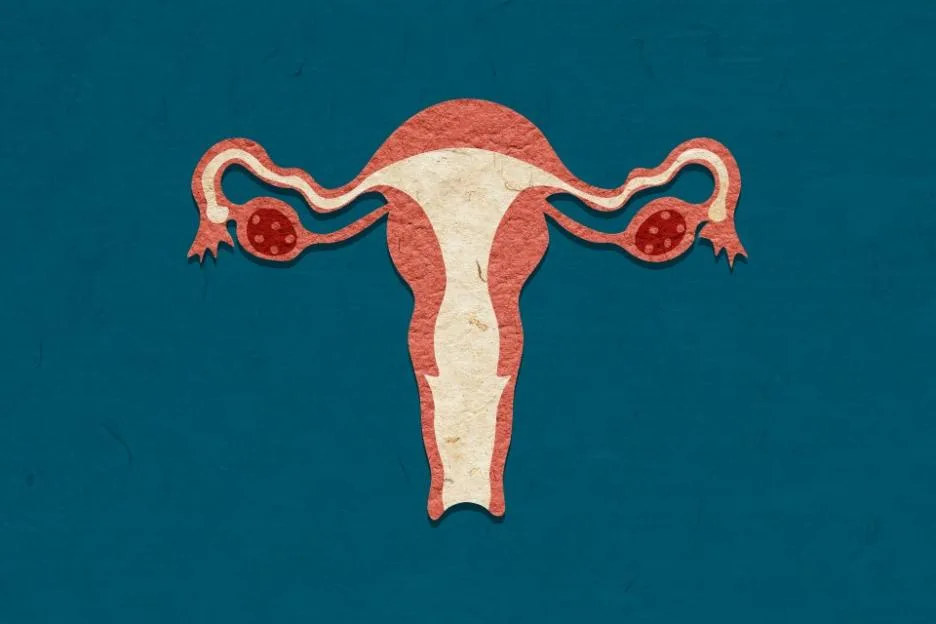
Writing in the paper, researchers said : “The is often thought to consist of the vulva, vagina, cervix, uterus, oviduct, and ovaries.
“We suggest that the rete ovarii be added to this list and investigated as an additional component of female reproductive function.”
While the study was based in mice, scientists think it is likely to apply to humans too as the structure is also present in other mammals including cows, cats, , sheep and pigs.
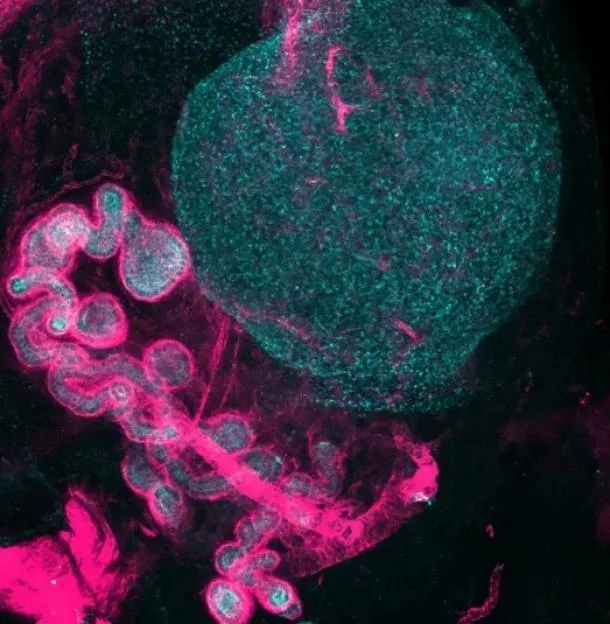
The rete ovarii is a horseshoe-shaped network of tubes nestled beneath the ovary, where blood vessels and nerves enter the organ.
Speaking about the organ, Adam Taylor, a professor of anatomy at Lancaster University who wasn’t involved in the study, told Live Science : “When this structure was first discovered in the late 1800s it was assumed that it had no purpose because scientists couldn’t see its function within the body.”
But this recent research now suggests otherwise.
The rete ovarii connects to three distinct regions that are present from birth and persist into adulthood.
These are: the intraovarian rete (IOR), which is located in the ovary itself, the extraovarian rete (EOR) and the connecting rete (CR).
Researchers injected fluid into the EOR and found that it flowed toward the ovary, suggesting the structure may play a role in ovarian function.
They also discovered evidence that the EOR may communicate with the as its cells are closely associated with blood vessels that supply the ovaries and receive direct connections from nerves.
What’s more, researchers also found receptors for including oestrogen and progesterone in the structure.
These play an important role in reproduction, along with several other aspects of women’s .
The scientists noted that some of the proteins released by the rete ovarii are involved in egg maturation and maintaining ovarian follicles.
As oestrogen levels rose, their activity increased, suggesting it may respond to hormonal changes during the reproductive cycle.
Researchers now hope to further investigate the function of the rete ovarii and how they contribute to fertility.
Dilara Anbarci, study lead author and a developmental biologist at the University of , said: “There’s still so much we can’t even begin to comprehend about female anatomy.
“I hope this encourages more in reevaluating what we don’t already know about the ovary.”