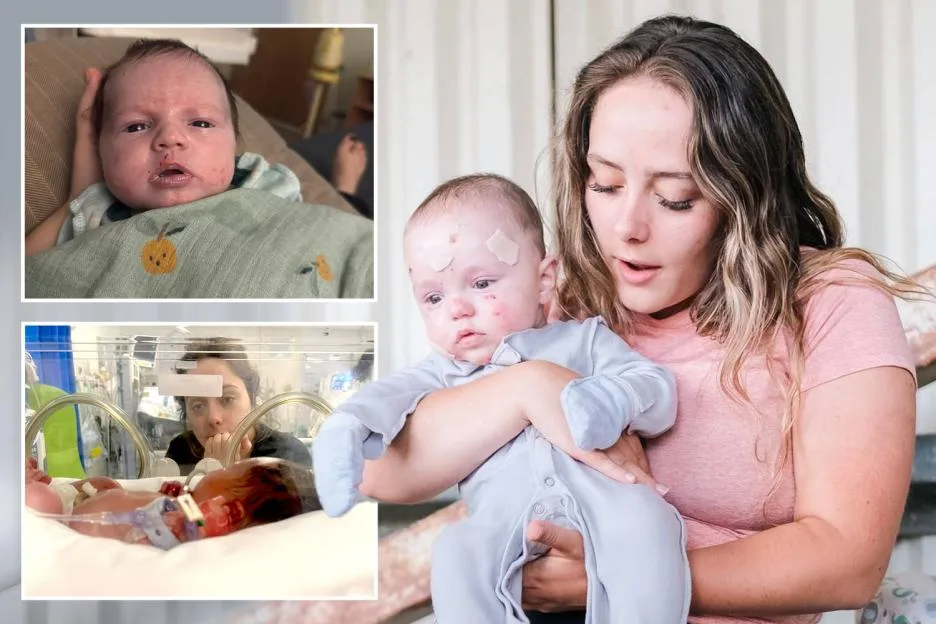
CIARA Burnside gave birth to son Ralph but something was immediately wrong – inside her womb the helpless baby’s skin had peeled off and gathered at his feet like a glove.
Exhausted from the labour, the new mum watched on as her tiny tot was whisked away – and even more worrying, doctors say there is no cure.
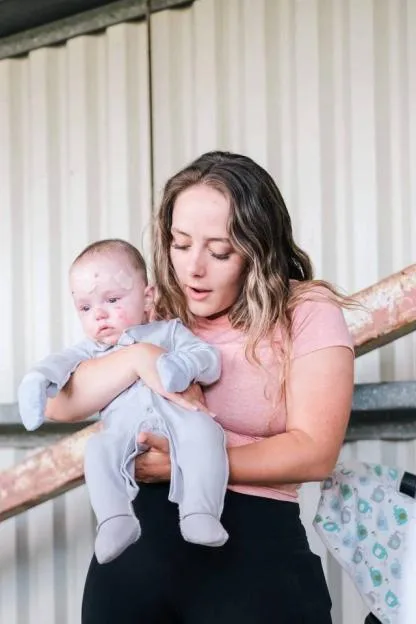
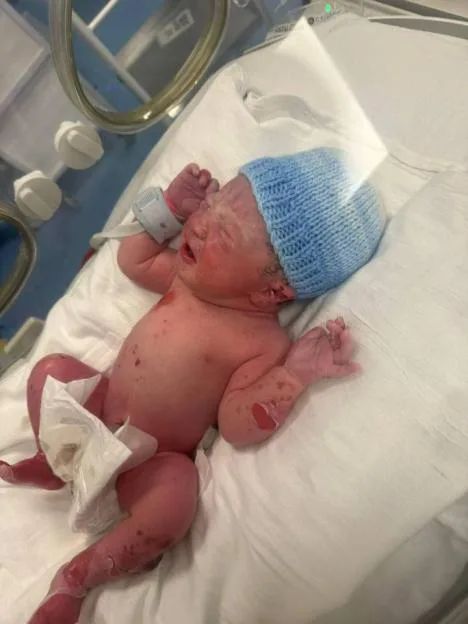
Ciara, 30, from Hitchin, Bedfordshire, gave birth at Lister Hospital in Stevenage on March 25 2026, with fiance Lewis Archer, 29, at her side, and there were “no complications” – but it was quickly clear something wasn’t right.
“The pregnancy and labour were absolutely fine,” she told The Sun.
“All the tests, all the scans, everything told me that my baby would be perfectly healthy.
“Then he was born without skin on his feet and his hands.”
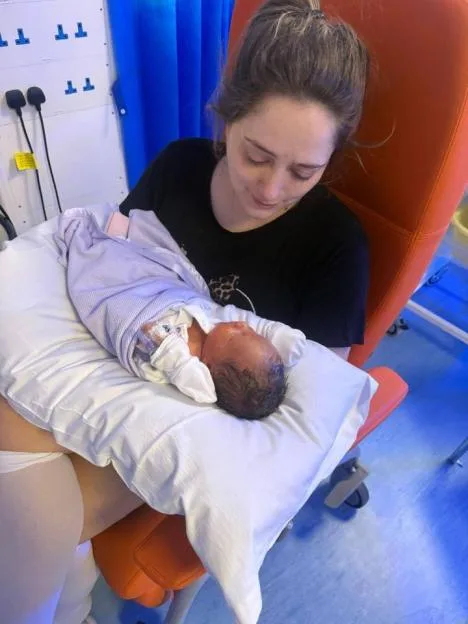
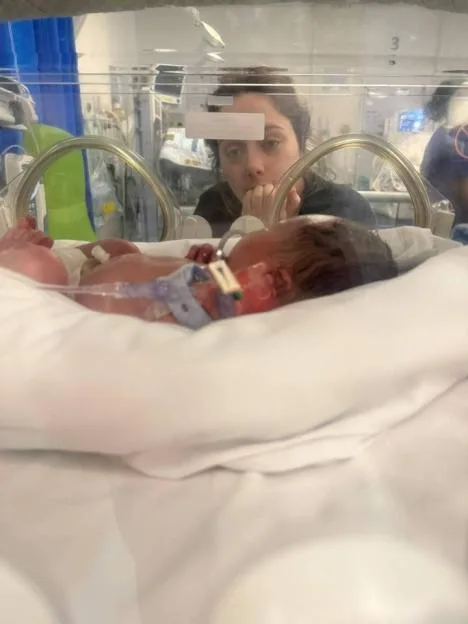
Ciara, a technical director, continued: “It’s graphic, but it was almost as if you had a glove and you rolled it down, so his skin had rolled down and was bunched up at the tips of his fingers and toes.”
Ralph was five weeks premature, and so was taken into intensive care and placed into an incubator – but his mystery skin condition was further exacerbated.
Ciara said: “By the time I’d got to him, his whole body had broken out into blistering.”
What followed was several weeks of testing before Great Ormond Street provided a diagnosis: Junctional Epidermolysis Bullosa (JEB).
It’s so ultra rare that it affects roughly one in one million people in the UK.
Ralph’s skin is so fragile that everyday friction can cause painful blisters and open wounds.
Prior to birth, just rubbing against the amniotic sac and the birth itself had resulted in his skin shedding completely off.
But going forward, dressing, feeding, bathing and even hugging the poor baby is fraught with potential danger.
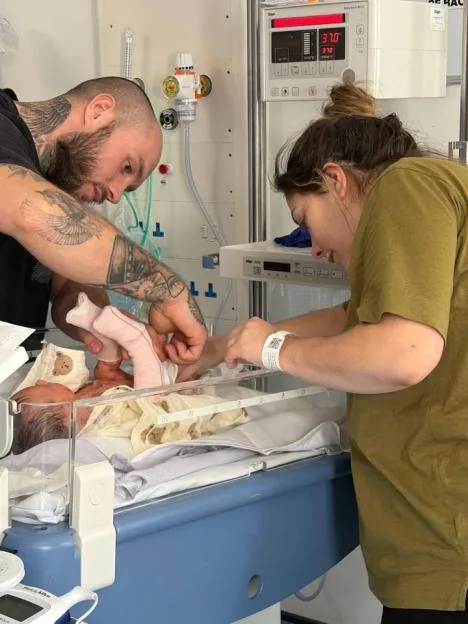
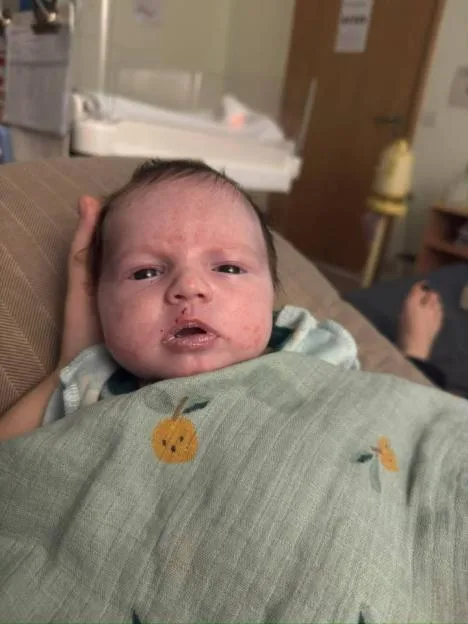
Ciara – who spoke to The Sun as part of a campaign to raise awareness of the condition and help raise funds for further research and treatment, said: “At Stevenage, one nurse had seen it before about 15 years prior, but otherwise no one else had seen it, and had no idea how to deal with it or care for him – so that was when Great Ormond Street nurses came up quite quickly.”
She continued: “There is currently no cure, and treatment largely focuses on managing wounds, preventing infection and controlling pain.”
Ciara explained that Ralph’s skin that had peeled off in the womb healed “relatively well”, but not as quickly as a person without the condition.
“And the healed skin is not as durable as our skin because of the genetic defect,” she said.
“And the wounds on his feet were so bad at birth that they scarred.”
She said with different types of EB the main danger is “chronic wounds” that don’t close and can simply stay open for months or even years.
Luckily, Ralph is yet to suffer with those, but is regularly covered in blisters and scabs.
“A little bit more friction and they do reopen,” Ciara added, who says worrying about Ralph has meant she rarely goes out.
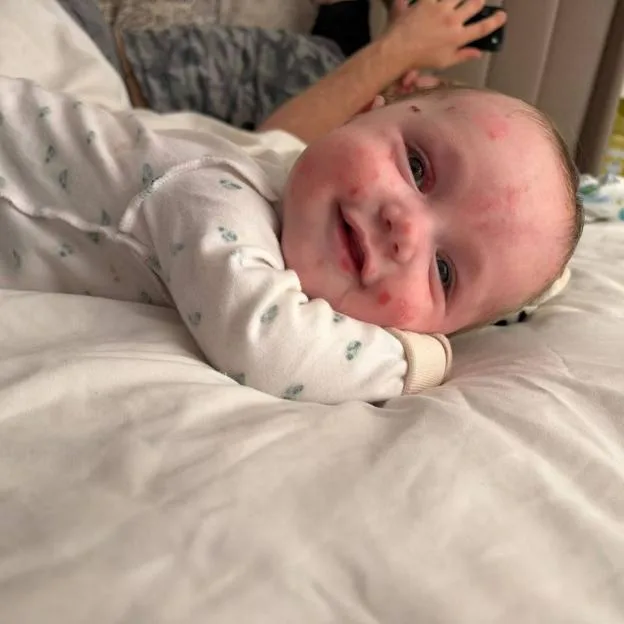
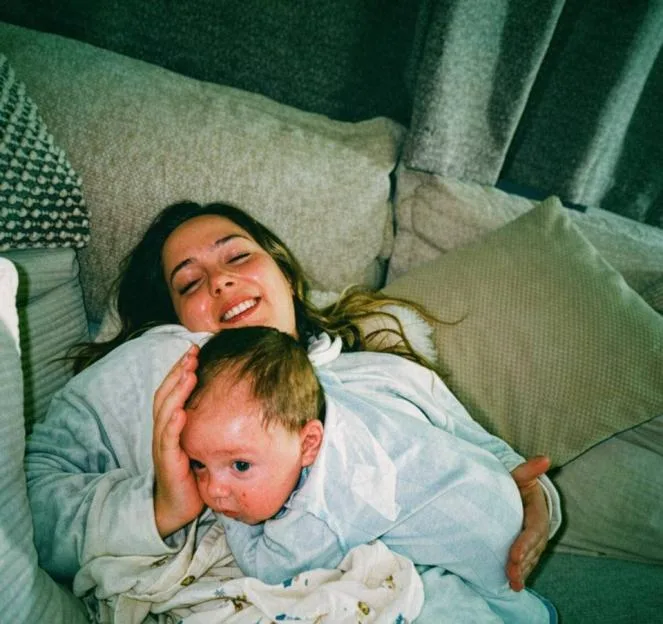
“We have to be really careful how we pick him up, how we hold him. How we feed him, even the bottle,” she continued.
She has to grease the end of his bottle with coconut oil so it doesn’t rub inside Ralph’s mouth.
“It’s not just the skin on the outside, it’s actually the skin on the inside also,” Ciara explained. “So his mouth can blister.”
And rather than risk his skin rubbing on car seats and pushchairs, when they do leave the house, she opts to carry him almost everywhere.
She said putting little Ralph briefly in a car seat had caused a blister to emerge hours later.
“When a blister comes, you have to drain it so that it doesn’t actually spread because the skin isn’t strong enough to limit it,” she said.
“So it just spreads and spreads. And then it will either pop and open into an open wound or it will heal itself.
“And this one, it just spread and spread and the skin came off. So there was a huge raw patch across his back. And that was just from the car seat.”
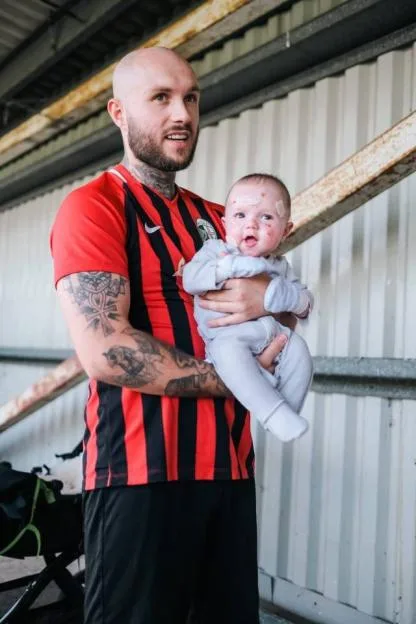
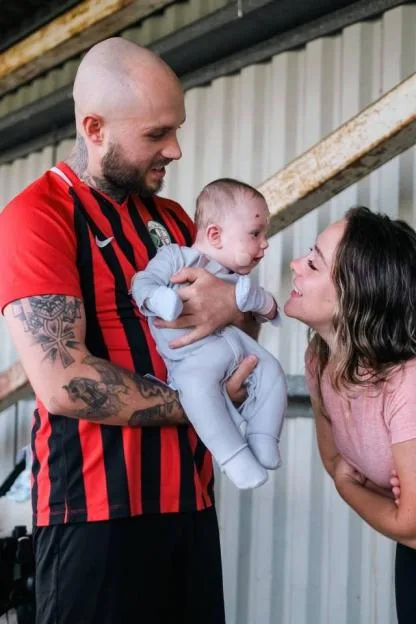
Milestones like Ralph being able to crawl and pull himself up could result in painful injuries – and he will likely have to wear protective padding.
“That normal movement can result in another wound,” said Ciara.
Before the official diagnosis, and with the new mum suffering from health anxieties herself, she had been frantically researching what might be wrong with Ralph.
“At Great Ormond Street, they said they really believed he had EB, but couldn’t be sure,” Ciara said.
“They had to do biopsies and tests and things like that, but we were just in a complete state of shock because, I mean, the condition itself is so rare, and then when we got his official diagnosis, his subtype of EB is even rarer, so we just couldn’t believe that that had happened.”
Ciara said her and Lewis were “in a state of shock for weeks trying to process everything and still are”.
“But we knew early on that we would have to become sort of the experts in his care,” she added.
What followed was more research and speaking to other families online whose children have similar conditions.
What causes Junctional Epidermolysis Bullosa (JEB)?
EB is a genetic condition. Genes determine characteristics such as eye colour and also our health.
A genetic mutation means a change similar to a spelling mistake has happened and this change makes the gene faulty.
We have two copies of every gene. If somebody has a one faulty copy and the other is unaffected they are a carrier of the condition, in this case a carrier of junctional EB.
If their partner is also a carrier for junctional EB there is a 25 per cent (1 in 4) risk in every pregnancy that the baby will inherit both faulty copies of the gene and therefore have junctional EB.
There are three main types of junctional EB:
- Junctional EB severe (previously called Herlitz junctional EB)
- Junctional EB intermediate (previously called Non-Herlitz junctional EB)
- Junctional EB with associated pyloric atresia
All forms of junctional EB reflect mutations (new changes) in genes which help to bind the different components of the skin together. Most types of junctional EB intermediate result from a defect in important proteins called laminin 332 and type XVII collagen.
Laminin 332 is made from three glue-like proteins, which help to stick the layers of the skin together.
In addition to the skin, type XVII collagen is present in the lining of the mouth, the surface of the eye, upper oesophagus (swallowing tube) and lining of the bladder.
These organs can therefore be affected in individuals with junctional EB.
“The community themselves have the best advice as opposed to the medical experts because they live with it every day,” Ciara explained.
“EB is such a trial and error condition, you never know what’s going to work and what’s not, you just have to do it and find out.”
Ralph’s form – JEB – is “intermediate” and his parents must manage his pain as best they can, as well as his wounds and keep him away from infection, while ensuring his nutrition is spot on.
Ciara said they use prescription medication to ease his pain, but are reluctant to give him pain relief regularly at such a young age.
Other treatments to ease her tot’s discomfort include creams and non-stick dressings – and a successful day is often Ralph acting like a normal baby and not causing another blister.
While his response to any such wounds can vary from crying fits to putting on a brave face.
“He will need lifelong rigorous care to make sure that the condition doesn’t progress and get worse,” said Ciara.
“He will always have the condition because it’s part of his genetic DNA makeup.
“We’re just hoping that a treatment or a cure comes around in his lifetime.”
The NHS say there is currently no cure – and there is a “long way to go” in terms of research.