
GOING for wee is something we do automatically, without even thinking about it.
But mum-of-two Kirstie Scothern, 29, wishes she’d never taken this simple act for granted, as she’s been for five years.
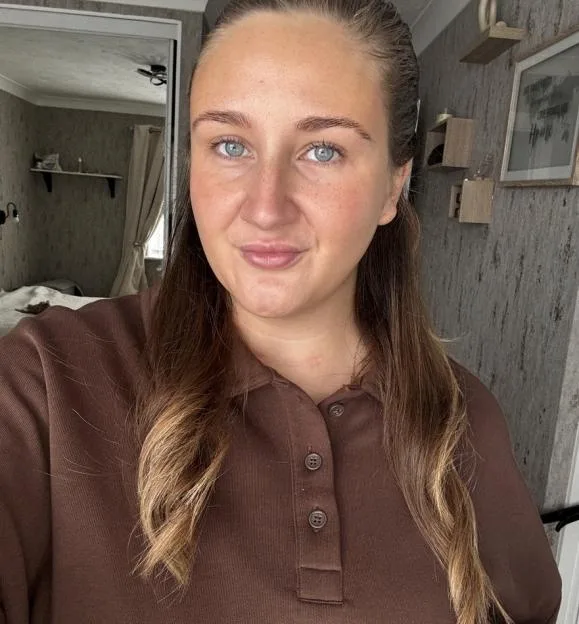

Kirstie was suffering from a in April 2021, when she realised that she hadn’t peed since the night before – despite drinking plenty of water.
She ran the tap to help her wee, but still couldn’t go.
Kirstie realised her stomach looked swollen, so her husband, Justin, 33, a vehicle technician, called an ambulance.
She was taken by ambulance to Queen’s Medical Centre, , where she had 2.5 litres of urine drained from her bladder.
The mum was given an MRI of her head to see if her bladder problem was related to her migraine, but medics said it was not.
She was sent home with a catheter – a tube inserted into her urethra to drain her wee into a bag – but still couldn’t wee when it was removed two weeks later.
Kirstie hasn’t been able to wee since and doctors have no idea why.
She has to self-catheterise, meaning she inserts tiny tubes into her bladder through the urethral opening at the genitals, so urine can empty.

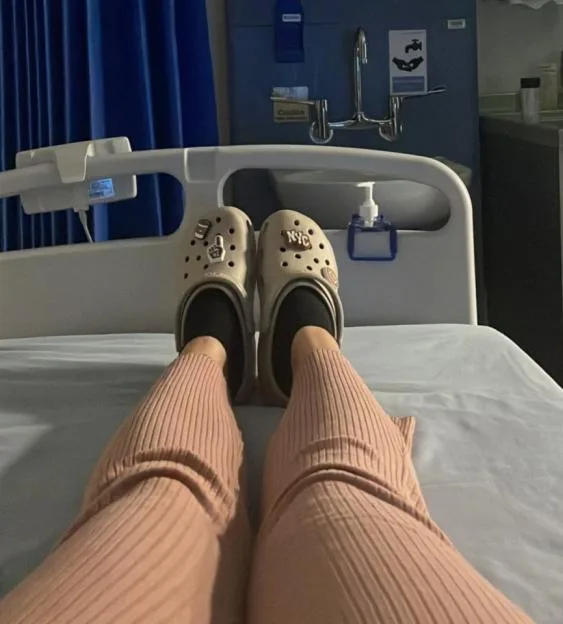
It replaces a long-term catheter. Kirstie has to go through this process four times a day, and if she wakes at night.
She had to quit her beloved healthcare job for a more office and home-based role while she learned how to self-catheterise at home.
She says: “It was incredibly painful and it’s extremely difficult to even find your urethra, let alone insert a tiny tube into it.
“I’d be there for up to half an hour with a mirror: it was very upsetting and very inconvenient.
“My muscles would all seize up, and I wouldn’t be able to put the tube in, which was very, very stressful.
“When I was first told that my bladder may never work normally again and that I’d have to self-catheterise, I felt devastated.
“I was only young, a and suddenly something as simple as going to the toilet had become something I could no longer take for granted.
“I felt scared and wondered how I was going to live like this.


“The discomfort and always having to think about where the nearest toilet is has a huge impact on my life.”
Kirstie believes she has a condition called , a little-known cause of urinary retention (inability to pass urine normally) in young women.
Some patients manage the condition with a special device like a bladder pacemaker – they can empty their bladder at the push of a button on a phone-like box that is connected to an implant at the bottom of the spine.
But despite her belief that she has Fowler’s syndrome, Kirstie said doctors are still not sure what is causing the problem.
She said: “I think doctors are reluctant to diagnose Fowler’s syndrome because it’s not well known.”
Kirstie tried to relax muscles to allow her bladder to release, but this didn’t help.
She has to set reminders to empty her bladder every four hours because she only feels the urge to wee when it is very full.
Before she learned to self-catheterise straight into the loo, Kirsty had to carry around a bag for her urine.
What is Fowler's syndrome?
Fowler's Syndrome was first identified by Professor Clare J Fowler.
It describes difficulty in passing urine and urinary retention due to the bladder’s sphincter muscle failing to relax.
Fowler’s typically affects younger women in their 20s and 30s, up to half of whom have polycystic ovaries, according to Bladder Health UK.
The severity of symptoms varies from person to person.
Some experience complete retention while others struggle to pass urine, with a residual amount left in the bladder.
Frequent urinary infections may be a problem for people suffering from Fowler’s Syndrome due to the bladder not emptying properly.
Others may also experience back, kidney and lower-abdomen pain, together with blood in the urine. Bladder spasms may also be an issue.
Those suffering from Fowler’s Syndrome are at an increased risk of sepsis due to infections they suffer.
They are also at risk of developing antibiotic resistance due to the frequency with which they need antibiotics.
Source: Bladder Health UK

Once her catheter bag leaked at work and another time in a colleague’s car.
“This was extremely upsetting and embarrassing”, she said.
This – and the pain she sometimes experiences – also prevented her from being intimate with Justin.
“Having any difficulties with weeing doesn’t make you feel attractive,” says Kirstie
“I’m very young to be managing something like this.
“I just can’t get my head around how this can happen, and nobody can tell me why.
“Apparently, this is quite common, but you don’t hear much about it, which makes you feel very alone.”
Kirstie has undergone numerous tests and exams, including CT scans and special urodynamics bladder tests, where doctors fill your bladder with liquid to see when you feel the urge to wee and how easily you’re able to pass the liquid.


But doctors are still no closer to a diagnosis, which has left Kirstie “frustrated”.
She says that, although she can now quickly self-catheterise without looking, it was really difficult when she was pregnant with her second child, now eight months old, because her belly got in the way.
Kirstie has a special key, called a radar key, to access disabled toilets, and also a ‘can’t wait’ card to explain to people if she isn’t able to wait in a queue.
But she said people do sometimes tell her to go to the back of the queue.
Kirstie said: “It’s very difficult and upsetting, particularly since it takes all my courage to ask if I can go ahead of them.
“It’s really distressing when people don’t understand: I often feel I get strangers looking at me when I enter the disabled toilet, as they’re probably thinking I look ‘fine’.”
She said she sometimes feels like the “world is not designed for me”, but has found a great support network on and .
Kirstie said: “I’ve had a really horrible time, and there’s no cure or treatment.
“People think it’s uncommon, but that’s because we don’t talk about it; I want to break that silence.
“We take being able to wee for granted.
“I would like others going through this to know that, even though it feels scary and isolating, they are not alone.
“You do adapt, and it does get easier.”