FEARS of a second mass “invasion” are mounting in Ceuta after Spanish intelligence chiefs went on high alert over calls of a march to “liberate” the enclave.
National security forces are scrambling to monitor a Moroccan social media campaign urging crowds to descend on the Spanish territory on September 20.
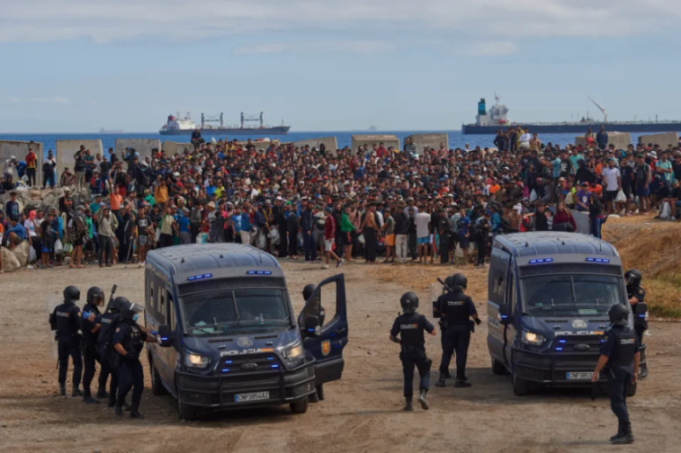 Migrants who crossed from Morocco into Spain in July are rounded up on a beach in Ceuta
 Posters and messages written in Moroccan Arabic began spreading online earlier this month Credit: Not known, clear with picture desk
The fresh threat comes as the border breach on July 30 was also fuelled by a wave of social media messages calling on migrants to head for Ceuta.
Posters and messages written in Moroccan Arabic have began spreading online earlier this month, calling for a “march of anger” against Ceuta, Melilla and Spanish-held islands off the North African coast.
Campaigners are rallying supporters to “recover” the territories they claim are occupied by .
The mobilisation is planned just days before Morocco’s legislative elections on September 23, with messages urging followers to take advantage of being tied up at polling stations.
Moroccan journalist Mustapha El Asri has helped amplify the incendiary campaign, sharing posters calling for the recovery of “occupied” territories.
One message reads: “To recover Ceuta and Melilla and all the occupied territories.”
El Asri has also shared a video showing fans of MAS Fez displaying a banner declaring: “Ceuta and Melilla, two cities, one homeland: Morocco”.
Spanish intelligence agencies are now watching the online frenzy to establish whether it will remain a digital campaign or spill onto the border.
The National Intelligence Centre (CNI) and military intelligence agency CIFAS are both monitoring the threat.
Intelligence sources told Spanish newspaper El Español they are “on top of the issue” and working to contain the danger.
But the absence of an official organiser has left authorities facing a chilling question over how the September 20 mobilisation could unfold.
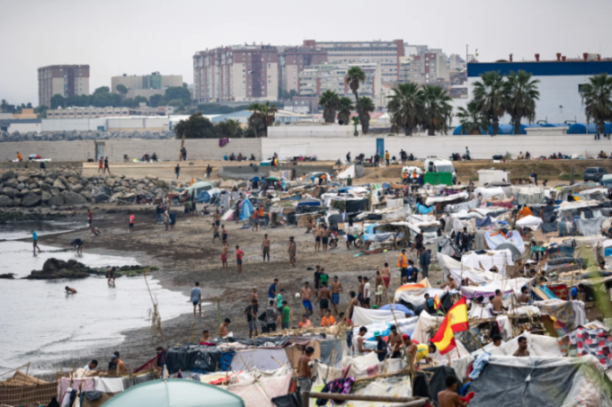 An estimated 5,000 migrants remain in Ceuta and have been staying in makeshift tents on the beaches
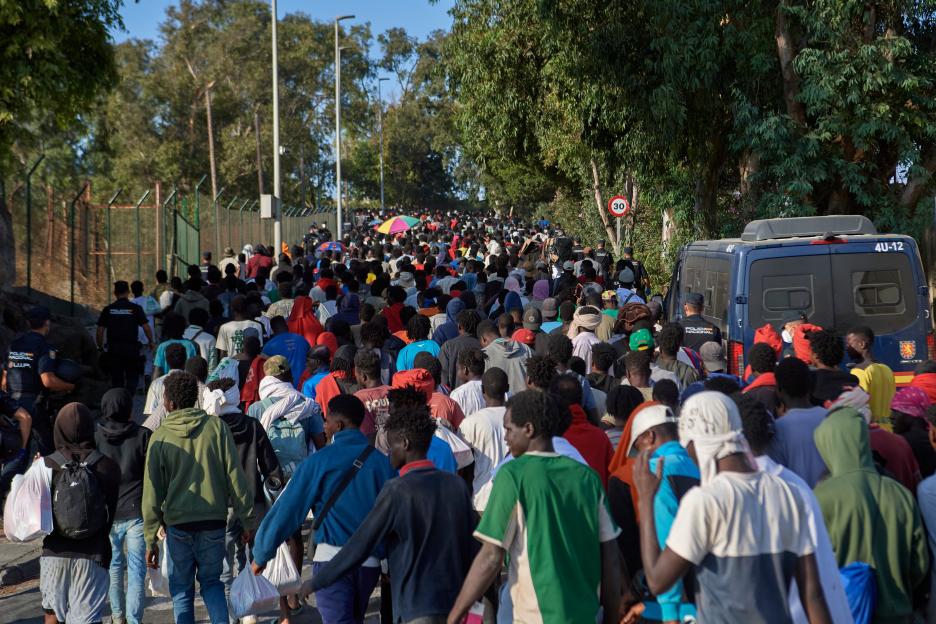 Migrants who crossed from Morocco into Spain are escorted by Spanish police to temporary shelters Credit: AP
The poster gives no route or meeting point, raising fears the protest could suddenly mutate into an attempt to breach the border.
It comes just weeks after a huge influx into Ceuta which Spanish authorities later described as a planned operation rather than a spontaneous migration crisis.
A report by Spain’s National Centre for Immigration and Borders (CENIF), prepared at the request of the National Court, described the July 30 and 31 entry as “planned”.
The report also pointed to the presence and actions of Moroccan security forces, including what it described as the “active guidance” of migrant flows towards crossing points.
Now authorities are desperately watching for signs that the latest online calls are turning into concrete instructions, movements or fresh attempts to overwhelm the border.
The latest scare comes as thousands of migrants are still believed to be in Ceuta after the chaotic July breach.
Around 5,000 are estimated to remain in the enclave, with some sleeping on beaches, in parks, squares and on the streets.
The crisis has already triggered fury among residents, protests and a major security operation.
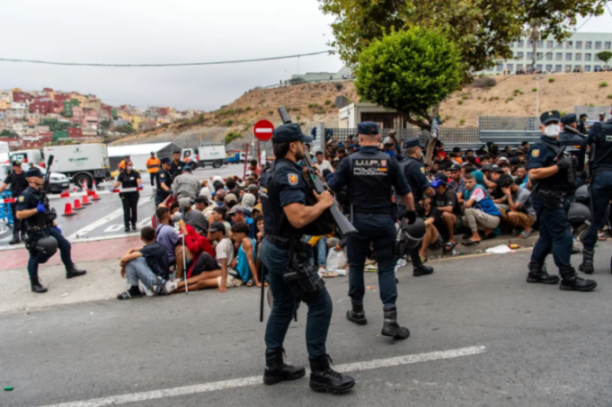 Police officers control a large group of migrants outside the entrance of the Loma del Colmenar reception centre in Ceuta
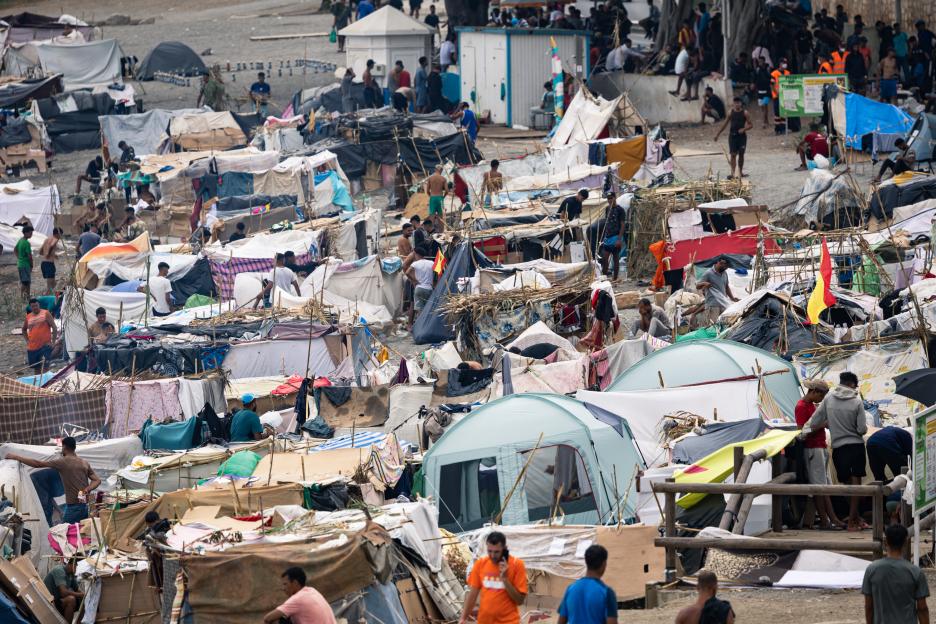 Migrants camped on the beach Credit: Getty
Spain has responded by deploying 500 additional Civil Guard officers to its 1,100-strong force in the enclave.
Tensions have also boiled over into violence.
More than 20 migrants were arrested after allegedly hurling rocks at a military patrol on Trampolín beach.
Police said a fight broke out before a group allegedly began pelting a nearby military patrol with stones.
Civil Guard officers were called in for support and were also reportedly targeted.
Just days earlier, two Moroccan nationals, aged 20 and 30, were arrested after allegedly attacking law enforcement officers trying to break up a violent fight on the same beach.
The crisis has also been linked to a string of shocking allegations, with Spanish prosecutors saying 23 sexual assaults have been reported in Ceuta since the end of July.
Nine of the alleged victims were children, while both local women and migrant girls have reportedly been among those targeted.
Several arrests have been made, with Ceuta chief prosecutor Silvia Rojas saying the majority of suspects were Moroccan or Spanish.
One man was also accused of breaking into a woman’s flat and creeping into her bed wearing only his underwear.
Meanwhile, horrific scenes on Trampolín beach have sparked outrage after a baby dolphin was allegedly dragged from the sea and beaten to death.
Footage reportedly shows migrants surrounding the distressed calf after it was pulled onto the rocks.
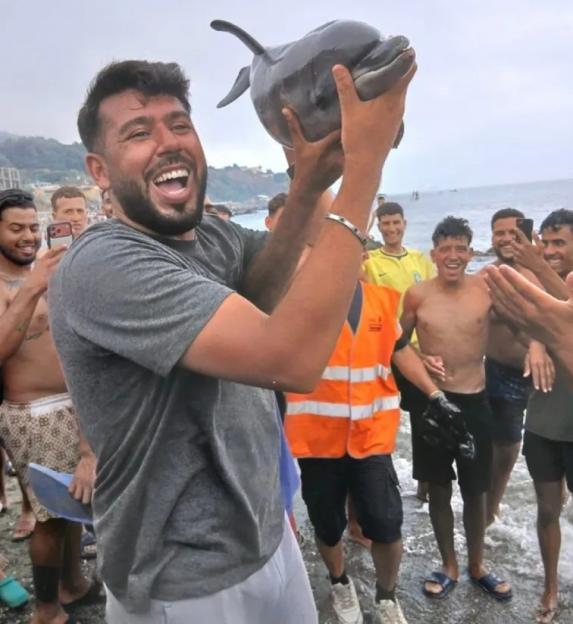 Shocking footage shows the crowd of laughing migrants after pulling the baby dolphin out of the sea
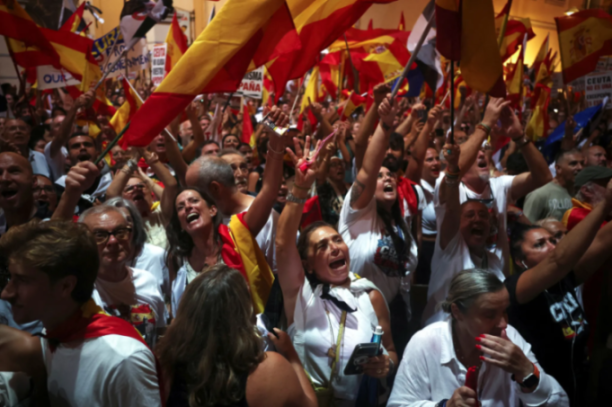 People attend a demonstration in support of Ceuta residents in Spain
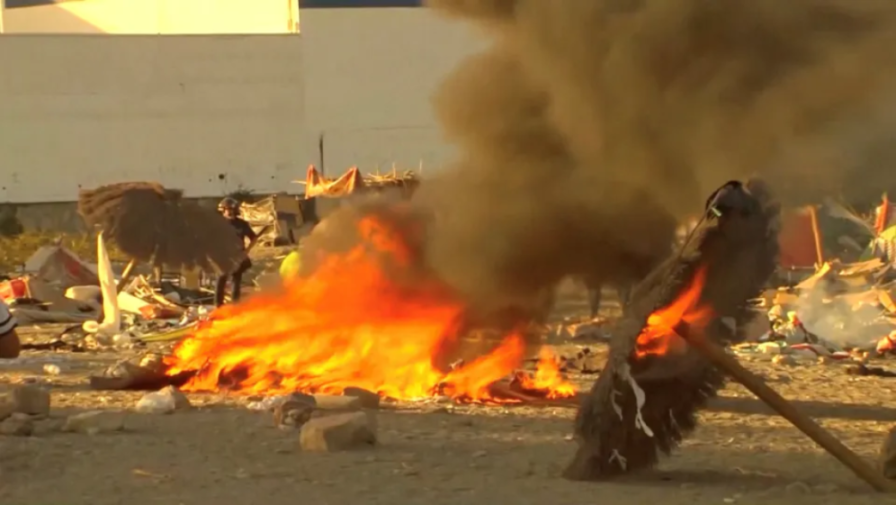 Weeks of protests followed the chaos in Ceuta as migrant camps were set on fire
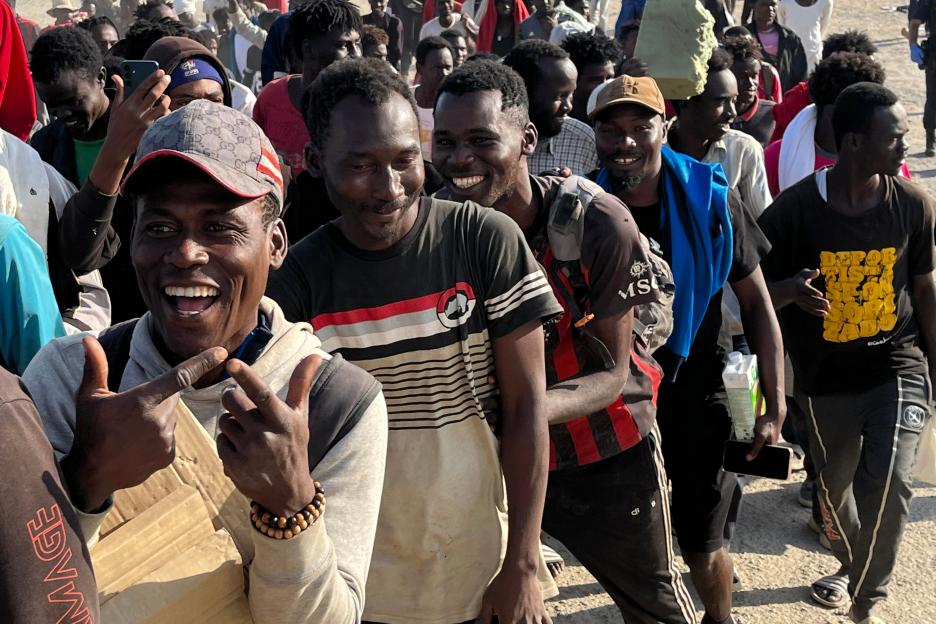 Authorities described the last descent as a planned operation rather than a spontaneous migration crisis Credit: EPA
One man allegedly dragged the animal by its face before lifting it above his head as others gathered around.
A high-vis worker reportedly pleaded with him to put the dolphin down.
Local reports said the animal was allegedly struck on the head with a stick before it later died.
The incident prompted an online petition demanding those responsible be identified and prosecuted for animal cruelty.
It has added another explosive flashpoint to a crisis that has already left Ceuta residents fearing their city is spiralling out of control.
The July influx saw tens of thousands cross into the Spanish enclave, with migrants arriving on foot via the breakwater and across Tarajal beach.
At least 145 migrants reportedly died during the crossing, triggering panic across the territory.
Many of those who entered later returned to , while others were rounded up by the army and placed in makeshift camps.
Those camps subsequently became targets of furious protests, with some set alight as residents demanded the authorities restore order.
The crisis has also ignited a political storm across Spain.
Mass rallies have been held across the country, with more than 200 cities reportedly hosting demonstrations over the government’s handling of the chaos.
The biggest crowds gathered in Madrid and Barcelona, where protesters waved Spanish flags and brandished anti-government signs.
PP leader Alberto Núñez Feijóo claimed more than 50,000 people packed into Madrid.
At the Madrid rally, Feijóo accused Prime Minister Pedro Sánchez of abandoning Ceuta, declaring: “A Spanish city has been invaded, occupied and, unfortunately, this happened with the knowledge of the Government of Spain.”
Vox leader Santiago Abascal meanwhile accused Sánchez of acting like “a lackey of the Moroccan regime”.
The Spanish Government has repeatedly rejected claims that it failed to respond quickly enough to the July crisis.
But with a fresh mobilisation now being whipped up online, authorities face a tense countdown to September 20.