For years, Nigerian electricity consumers have complained about arbitrary estimated billing by utility providers, with millions of households and businesses enduring the burden of unmetered energy estimates. The practice has steadily eroded public confidence and constrained growth across the country’s power sector.
A vivid illustration of this widespread frustration was captured in a post on X, formerly known as Twitter, by an aggrieved consumer.
Posting via @Lagos_Merchant, the user wrote: “I was barely home for two weeks this month, yet my DisCo served me an estimated bill of ₦145,000 for a 2-bedroom apartment! No light for days, but the bill keeps skyrocketing. We need prepaid meters now! This extortion must stop. #EstimatedBillingIsAScam #PowerSectorReform.”
Seeking to address the longstanding challenge, President Bola Ahmed Tinubu approved the Presidential Metering Initiative (PMI) in November 2023 as a major intervention aimed at closing Nigeria’s significant electricity metering gap.
The initiative is designed to deploy smart end user meters and distribution transformer (DT) meters nationwide to improve billing accuracy, strengthen transparency, boost customer confidence and reduce collection losses across the electricity value chain.
The drive towards universal metering, however, suffered a significant setback after an injunction secured by the Association of Meter Manufacturers of Nigeria (AMMON) halted the bidding process across key government metering intervention programmes.
The legal dispute suspended the procurement of more than 1.55 million smart meters, bringing initiatives such as the Distribution Sector Recovery Programme (DISREP) and the Meter Acquisition Fund (MAF 3) to a standstill.
That impasse has now been resolved following recent interventions by the Minister of Power, Joseph Olasunkanmi Tegbe, paving the way for the resumption of the metering programme and raising expectations that the era of arbitrary estimated billing may soon come to an end.
The resolution marks a significant milestone for Nigeria’s electricity sector.
Through a Notice of Discontinuance filed before the Federal High Court in Kano, AMMON formally withdrew its lawsuit after high level mediation facilitated by the Minister of Power, Chief Joseph Tegbe.
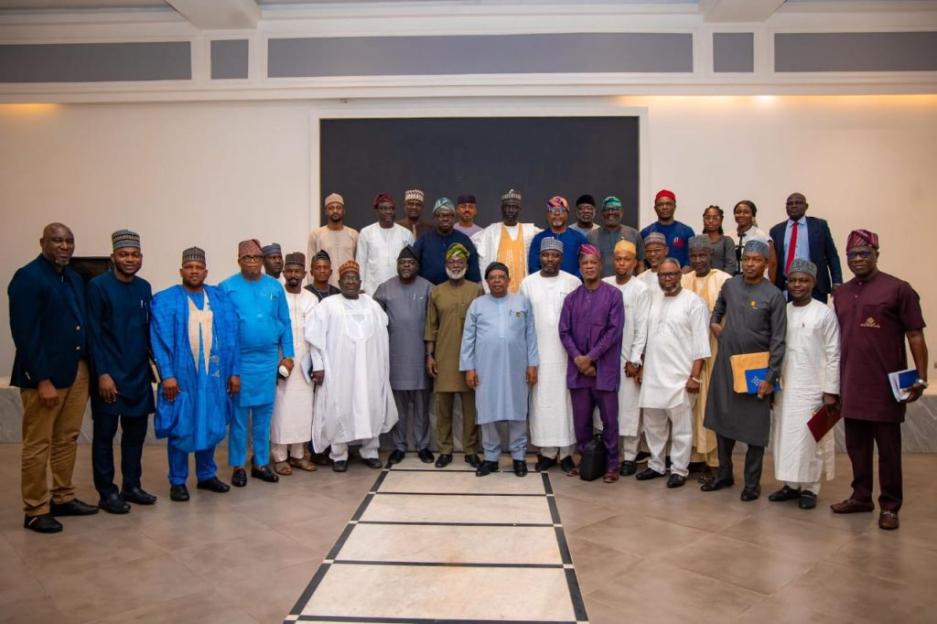
Working alongside key institutions, including the Bureau of Public Enterprises (BPE) and the Transmission Company of Nigeria (TCN), Tegbe steered negotiations that ultimately produced a settlement acceptable to all parties.
Rather than allowing prolonged litigation to stall critical reforms in the power sector, the minister facilitated a compromise that addressed the concerns raised by domestic meter manufacturers while remaining within the framework of both local and international competitive procurement guidelines.
By preserving the Federal Government’s “Nigeria First” policy on local industrial participation while maintaining the integrity of established procurement standards, the minister succeeded in reopening the stalled smart meter supply chain.
Expanding access to electricity meters is widely regarded as a critical step towards improving fairness and accountability across the sector. Smart meters allow consumers to pay strictly for the electricity they consume, reducing disputes over estimated bills and strengthening confidence in the billing system.
Greater transparency is also expected to improve revenue collection by Distribution Companies (DisCos), while reinforcing commercial discipline and creating a more sustainable operating environment for electricity providers and consumers alike.
With the legal obstacles now cleared, the nationwide rollout of smart meters under the Presidential Metering Initiative is expected to gather pace. The renewed momentum is anticipated to deliver the financial relief envisaged by the Federal Government, shielding vulnerable consumers from unfair billing practices while giving small businesses greater certainty over their electricity costs.
The benefits of the breakthrough are expected to extend beyond the national grid.
The Rural Electrification Agency (REA) has continued expanding interconnected mini grids and off grid solar solutions to supply electricity to underserved rural communities and economic clusters. For mini grid developers and host communities, accurate automated metering remains essential for commercial sustainability and efficient operations.
The resumption of national smart meter procurement is expected to strengthen local supply chains, reduce equipment costs and promote greater standardisation of technical infrastructure across the country.
Consequently, REA’s interconnected mini grid projects are expected to benefit from smoother implementation, improving electricity access for underserved communities while supporting rural industrialisation under a more transparent and accountable billing framework.
Through sustained engagement, pragmatic negotiations and a commitment to advancing structural reforms, the Minister of Power has helped restore momentum to Nigeria’s electricity transformation agenda. With the legal barriers to the Presidential Metering Initiative now removed, the Federal Government is positioned to accelerate the nationwide deployment of smart meters and advance its objective of delivering reliable electricity supported by transparent and accurate billing for millions of Nigerians.Mathew Ibiyemi, an energy journalist writes from Lagos, Nigeria. He can be reached via patoibiyemimathew@gmail.com , 07037204815.