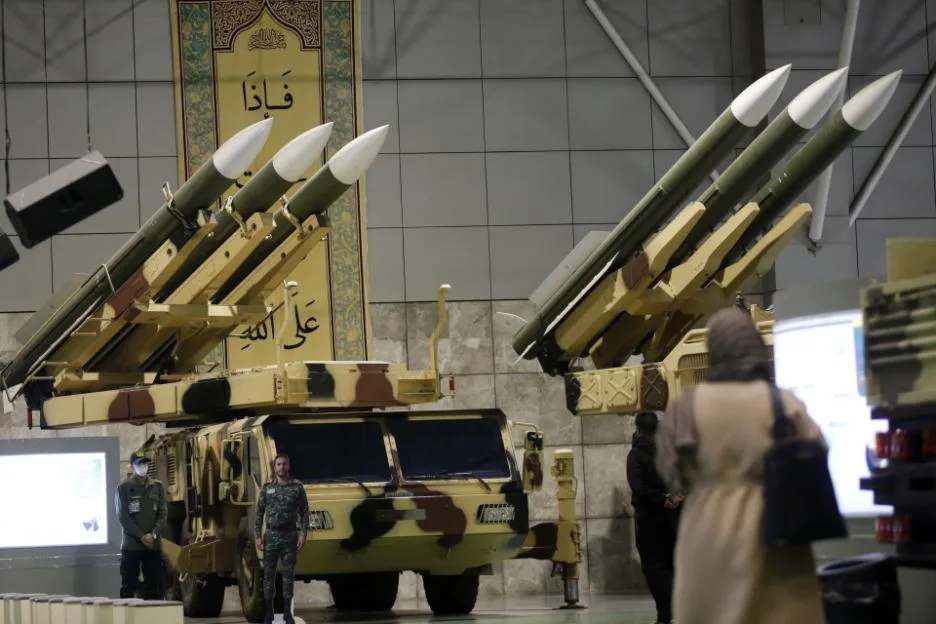
HOUTHI rebels have paraded captured US weapons chanting “death to America” after seizing a key global shipping strait.
The danced with their stolen weapons by the Red Sea shipping lane as Saudi-backed government fighters were forced to retreat.


The Houthis have made rapid gains against the Saudi-backed Yemeni government in recent months, grabbing large areas of .
And they now , a key stretch of water at the mouth of the Red Sea that leads through to the .
$1 trillion worth of goods pass through the waterway each year.
Yemen’s government pulled back from the vital strait on Sunday, to defend Aden, their interim capital.
The bitter fighting has been ongoing for more than a decade, since the rebels seized capital Sanaa in 2014.
But after years of relative calm, truces were shattered during the US-Israeli war in Iran as the rebels traded blows with the internationally recognised government and even blasting airports in Saudi Arabia.
As the rebel group took the Bab al Mandab strait Saudi Arabia ditched the commander leading its assault in the Houthis.
Lieutenant General Fahd bin Hamad Al-Salman was moved out to work as an adviser to the defence minister for military affairs.
Chief of the General Staff General Fayyad Al-Ruwaili was put in charge of commanding the joint forces, according to Saudi state media.
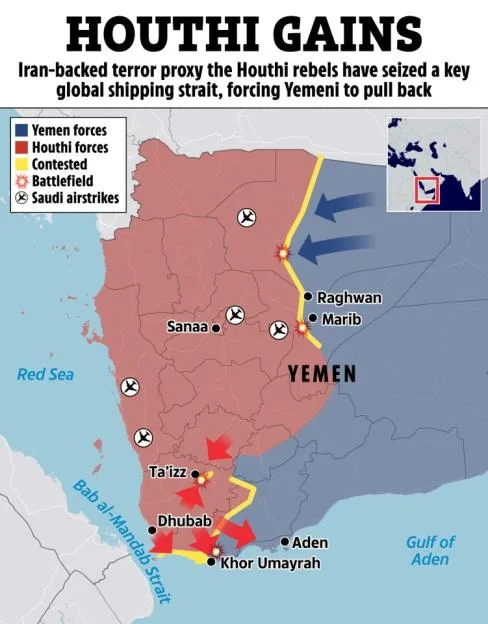

Yemeni military sources said the Houthis had advanced to the southern coastal area of Khor Omairh, some 62 miles west of Aden.
The rebels are just 16 miles from government lines at Qawah, another coastal area.
It comes after the Iran-backed militia have seized a cluster of strategic Red Sea islands , working in tandem with Tehran to squeeze off trade routes to the West.
A huge network of submarine fibre-optic cables carrying internet traffic between Europe and Asia also runs through the Red Sea.
Maritime security expert Dr. Ian Ralby warned that the Houthis growing control in the region could pose an existential problem for digital life.
He told The Sun: “You’re looking actually at a third of the world’s internet in that group of cables.”
From multi-trillion pound banking systems to your Friday night Netflix binges, the UK’s online life hangs by a thread in this corridor.
Seventeen submarine cables traverse the Red Sea, handling around 90 per cent of digital traffic between Europe and Asia.
Data centres clustered along the Gulf rely on them, powering cloud infrastructure for multi-national corporations like Apple, Amazon and Google.
But despite how critical they are for everyday life, the cables are surprisingly vulnerable.
Dr. Ralby said: “When it comes to the capability to disrupt, most of us can buy a pair of bolt cutters.”