GREENWICH Mean Time (GMT) dates back to an era before Britain had a single standard time.
The after spending the warmer months on British Summer Time (BST).

What does Greenwich Mean Time mean?
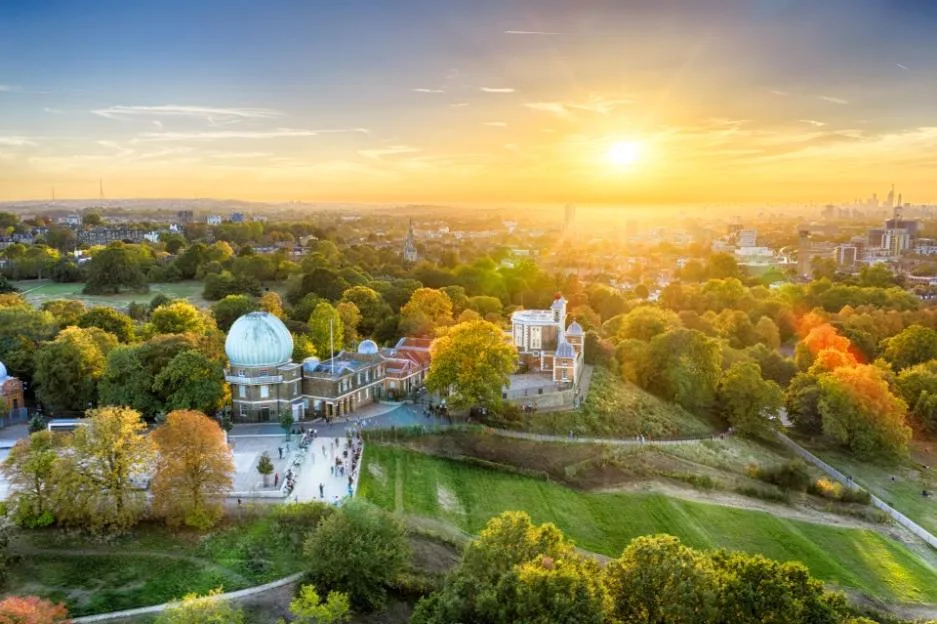
GMT takes its name from the , London.
The Observatory became a major centre for astronomy, navigation and timekeeping after it was founded in 1675.
The “mean” in refers to an average.
This is because the apparent length of a solar day varies slightly during the year.
So used the average length of a day to create a consistent timekeeping system.
Before standardised time, towns and cities across Britain set their clocks according to the position of the Sun, and the local time changed as you travelled east or west.
The arrival of the made the system increasingly impractical because operators needed a single time to organise timetables across the country.
By the 1840s, most railway companies were using GMT, which became Britain’s legal standard in 1880.
In 1884, an international conference selected the Greenwich Meridian as the world’s Prime Meridian – zero degrees longitude – helping establish Greenwich at the .
Why do the clocks change twice a year?
Britain moves away from GMT during the to make better use of the longer daylight hours.
On the last Sunday in March, the clocks move forward by one hour to BST.
The idea was famously championed by British builder , who argued in 1907 that people were wasting daylight by sleeping through bright summer mornings.
His original idea was much more complicated than the system eventually adopted.
It involved the clocks moving forward by 20 minutes on four separate occasions in spring before reversing the process in four stages in .
The UK eventually introduced BST during , when the received Royal Assent on May 17, 1916.
When do the clocks go back in October 2026?
The again at 2am BST on Sunday, October 25, 2026, moving back one hour to 1am GMT.
Sunrise and sunset will both be an hour earlier according to the clock, and most people will enjoy an extra hour in bed.
The change takes place on the last ; the early-hours weekend switch is intended to minimise disruption to schools and businesses.
When do the clocks go forward again?
The UK will stay on GMT through the winter before the again on Sunday, March 28, 2027.
The clocks will jump forward an hour from 1am GMT to 2am BST.
While the switchover brings lighter evenings as the country heads towards the summer, it does mean losing an hour in bed for many of us.