The Federal Government has launched a sensitisation programme to help Nigerian businesses access trade opportunities under the Economic Community of West African States (ECOWAS) and the African Continental Free Trade Area (AfCFTA).
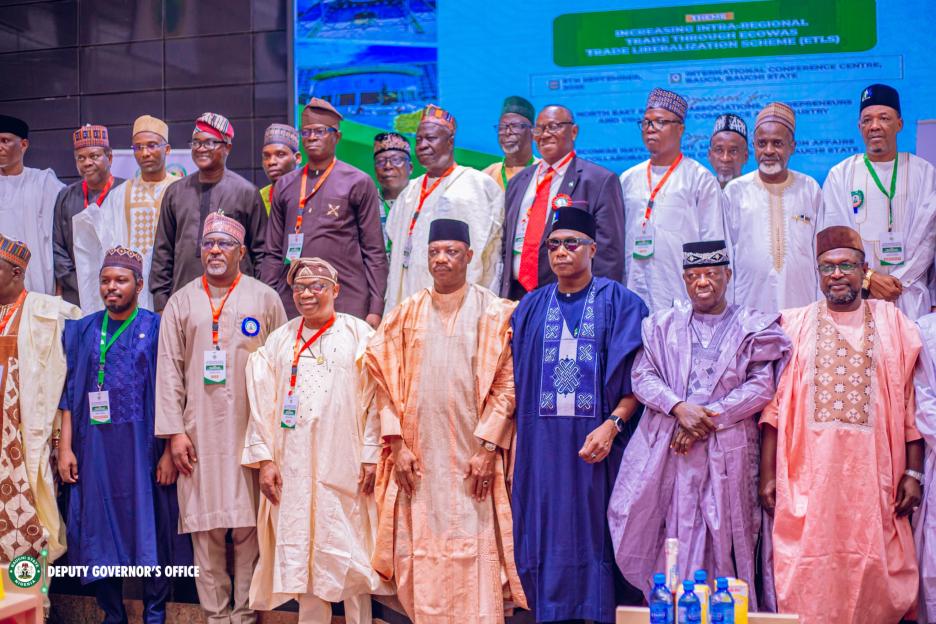
The programme, implemented through the ECOWAS Trade Liberalisation Scheme (ETLS), began in Bauchi with a workshop for business owners, entrepreneurs and chambers of commerce from the North-East.
Speaking at the workshop, the Minister of State for Foreign Affairs, Ambassador Sola Enikanolaiye, said the initiative was designed to bring the benefits of Nigeria’s foreign policy closer to citizens, particularly businesses and entrepreneurs at the grassroots.
The workshop, themed “Increasing Intra-Regional Trade through ECOWAS Trade Liberalisation Scheme (ETLS),” is part of the government’s 4D foreign policy agenda, which places Nigerians at the centre of the country’s foreign relations.
Enikanolaiye said, “The initiative will educate Nigerian businesses on opportunities within ECOWAS and the African Continental Free Trade Area.”
He added that the programme would be taken to the six geopolitical zones, beginning with the North-East, with emphasis on increasing production, adding value to local products and creating jobs, especially for young Nigerians.
Regarding Nigeria’s economy, the minister said reforms by the President Bola Tinubu administration had brought greater economic stability, while inflation was gradually declining. He also said the country’s foreign reserves were approaching $40 billion.
In his welcoming address, Bauchi Governor Bala Mohammed, represented by his Deputy Governor, Auwal Jatau, pledged the state government’s support for the ETLS programme.
Mohammed said Bauchi was ready to use the scheme to promote economic diversification and private-sector development, adding that “government alone cannot create sustainable prosperity.”
He said the private sector needed to be supported to produce, invest and innovate, while creating jobs and expanding economic opportunities.
The governor commended the Ministry of Foreign Affairs for bringing the sensitisation programme to the North-East, saying it would strengthen trade links among producers, processors, traders, transport operators and business associations.
The President of the Bauchi State Chamber of Commerce, Industry, Mining and Agriculture (BASCIMA), Aminu Mohammed Danmaliki, expressed the chamber’s readiness to embrace the scheme.
Danmaliki, however, said businesses still faced challenges, including border delays, multiple checkpoints, unofficial charges, conflicting customs interpretations and difficulties with trade documentation.
He said, “Many small and medium-sized enterprises do not even know that the scheme exists or how they can benefit from it.”
The BASCIMA president called for the ETLS process to be simplified and fully digitalised, with a single platform allowing businesses to apply, track applications and verify certificates.
He also urged ECOWAS to establish a rapid-response system for businesses to report unlawful detention of approved goods and called for adequate funding for the scheme.
Danmaliki further recommended the establishment of a permanent North-East ETLS Help Desk through chambers of commerce in the six states to assist businesses in accessing the scheme.