THE chilling mystery of Everest’s most infamous frozen body has finally been solved after 30 years – with the climber’s identity revealed ahead of a daring mission to bring his remains home.
Known as “Green Boots” because of the distinctive lime-green footwear still protruding from the ice, the dead mountaineer has become one of the world’s most haunting landmarks.
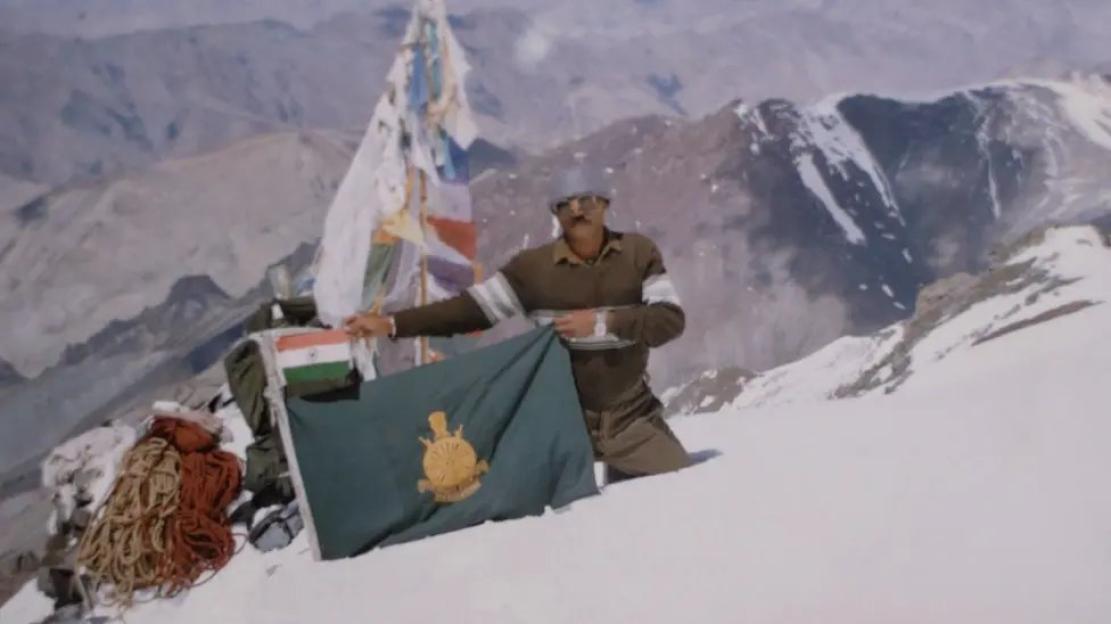 Indian authorities believe the body belongs to Dorje Morup, an Indian climber who died in a savage blizzard Credit: X/@EmmanuelInvest
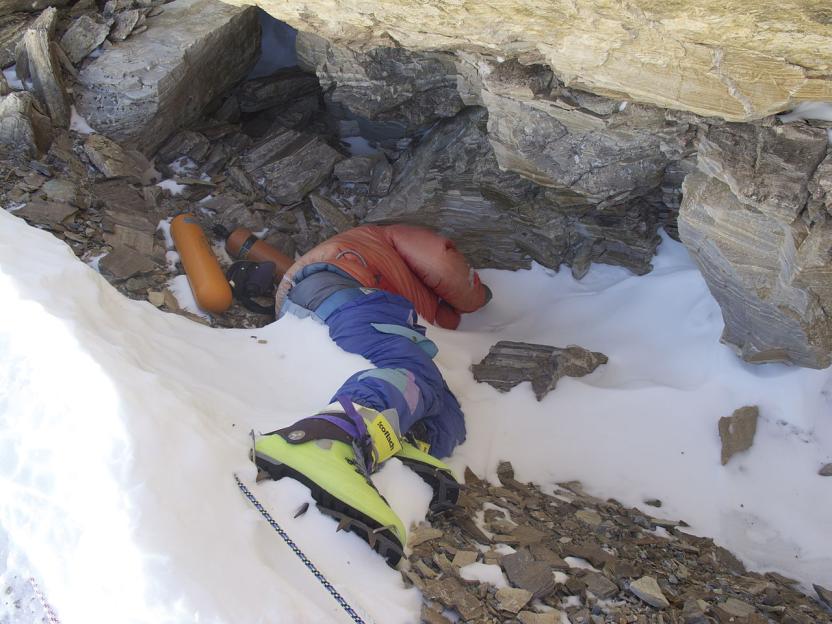 The man has only ever been known as Green Boots Credit: Not known, clear with picture desk
Now Indian authorities believe the body belongs to Dorje Morup, an Indian climber who died in a savage blizzard while descending in 1996.
His remains have been frozen in the mountain’s deadly “death zone” ever since – more than 26,000ft above sea level.
But after three decades of mystery, a high-altitude rescue team is now being sought to attempt the perilous mission of bringing him down.
Dorje’s identity was finally established through evidence including his clothing and climbing equipment.
Authorities now hope testing can provide definitive confirmation.
The Indo-Tibetan Border Police (ITBP), which is funding the operation, wants his remains returned by September.
For Dorje’s family, it could finally end an agonising wait that has lasted three decades.
His wife, Konchak Yangskit, never fully accepted that her husband was dead.
She told the BBC: “On some days, before I went to sleep, I would think that there’d be a knock on the door tonight and that when I opened, he would be there.
“When he comes home, I will ask him: ‘Where were you all these years?’”
Dorje had left home in Ladakh in 1996 with a heroic promise.
He told his wife he would return from Everest as a hero and make his country proud.
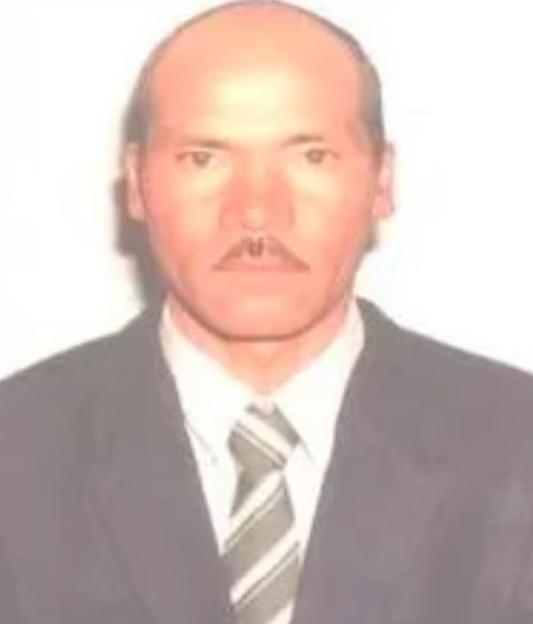 Resvue teams are now being sought to attempt the perilous mission of bringing him down Credit: Indo-Tibetan Border Police
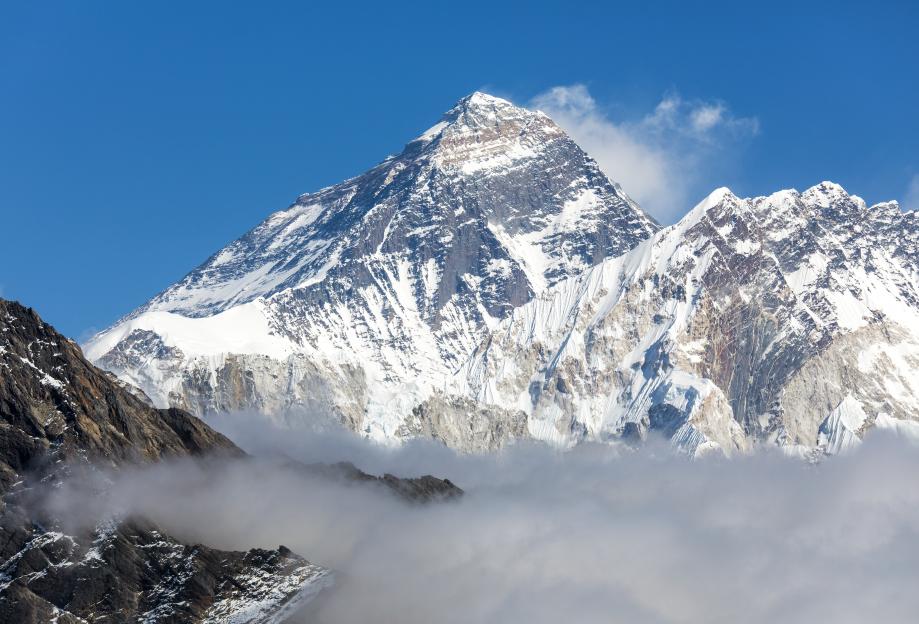 Dorje’s body lies in Everest’s notorious ‘death zone’, where temperatures can plunge to -40C Credit: Getty
Konchak told the BBC: “He asked me to take care of the kids and come to the airport to greet him on his return.
“I wondered if I was ever going to see him again.”
Dorje was a 48-year-old lance naik, or lance corporal, in the ITBP and an experienced Himalayan trekker.
He was one of six climbers attempting to make history by reaching Everest’s summit from the treacherous Chinese side.
Three members of the expedition turned back when a savage snowstorm swept across the mountain.
Dorje continued towards the 8,849m summit with fellow climbers Tsewang Smanla and Tsewang Paljor.
The trio eventually radioed their team leader at around 3.45pm Nepal time, reporting that they had reached the summit.
Poor visibility may have made it impossible to establish exactly where they were.
There was a terrifying possibility they were still around 430ft below the cap.
Howling winds ripped across Everest, temperatures plunged and visibility collapsed.
From below, members of the expedition spotted two headlamps moving above the Second Step at around 28,000ft.
It was the last time the three men were seen alive.
All three were killed by the mountain.
For years, however, the frozen body known as Green Boots was assumed to belong to Paljor.
Now testimony from surviving members of the expedition, the location of the climbers’ final radio contact and Dorje’s clothing and equipment have led authorities to believe the remains are his.
An ITBP official, speaking anonymously because he was not authorised to speak to the media, told BBC News Hindi that the evidence helped identify Dorje in recent years.
“We never forgot him. It was only a matter of time,” the official said.
Dorje’s body lies in Everest’s notorious “death zone”, where temperatures can plunge to -40C and oxygen levels are around a third of those at sea level.
The Tibetan side of the mountain is particularly treacherous, with steeper terrain and fewer rescue facilities than the southern route.
“The weather and snow conditions are going to be crucial,” said Tshiring Jangbu Sherpa, a prominent Nepalese mountaineer who has taken part in other recovery missions.
“The north side has fewer crevasses, but it is riskier. If something bad happens from the Nepalese side, you get quickly evacuated by helicopter. But there is no such system from the Chinese side,” he told BBC Hindi.
Sherpa sources told BBC News Nepali that the lack of support on the Chinese side makes the recovery even more daunting.
Mountaineering guide Pemba Ongchu Sherpa said bringing the body down would be brutally difficult even in the more favourable season.
“It’s really tough to get that body down even in popular spring season, let alone the autumn [which has more unpredictable weather]. That’s the simple reason it is still there for so many years,” he said.
“There would need to be 10 to 12 climbers who are capable of making summits, just to fix [support] ropes to reach that point.”
The frozen remains would then have to be physically hauled down the mountain to an altitude where they could be collected by helicopter or possibly transported by yaks.
Bodies trapped in iced-up climbing gear can weigh several times the average man and become brutally difficult to move across Everest’s unforgiving terrain.
The remains can also begin to defrost and decompose once they reach lower altitudes.
Indian climber Kuntal Joisher warned the first stage of the descent could be the most dangerous of all.
“It’s going to be very, very risky endeavour. It’s extremely steep ground with lots of rock. Logistically, this [first] 1000m is going to be a humungous challenge.
“The main thing is to not put Sherpa lives at risk for a dead body.”
Experts say even relatively straightforward recoveries can cost between $40,000 and $80,000.
Recovering bodies from Everest has become more common over the past decade, but many of the hundreds who have died on the mountain remain where they fell.
Some have instead been moved out of sight.
Explorer Francys Arsentiev, dubbed the “Sleeping Beauty of Everest”, was moved to a more private resting place in 2007, almost a decade after her death.
Dorje, however, could soon be coming down from the mountain for good.
The ITBP is now looking for a specialist mountain rescue group capable of taking on the dangerous mission.
If successful, his remains will be taken back to India for DNA testing – and if the tests confirm his identity, his family will finally be able to bury him.
For three decades, Dorje’s family have struggled with the agonising uncertainty surrounding his disappearance.
Now around 75, Konchak struggles to remember even the day she was married.
“I only knew there was a storm on the mountain. Even though we organised cremation prayers at home, my heart refused to believe he had died,” she says with tears rolling down her face.
“I didn’t see his dead body, so it was difficult for me to believe it.”
For years, the family had only medals, trophies and a handful of photographs from Dorje’s mountain adventures to remember him by.
They also kept a certificate from the Chinese government stating that at 17:30 on May 10, 1996, Dorje reached the summit of Everest.
His son Punchok Dorjai says that if his father is finally brought home, the family will hold a funeral near Martyrs Park in Ladakh’s capital Leh.
“My father gave his life for the country and he should be remembered as a martyr,” Dorje said.
He said Dorje’s teammates who died alongside him deserve the same honour.
And the family already knows what they will do with one extraordinary reminder of the man who became an Everest mystery.
“We are planning to keep the Green Boots.”