MORE than 3,000 patients a day are being treated in corridors or cupboards because no beds are available in overstretched A&Es, damning figures have revealed.
An average of 2,432 patients received “corridor care” for more than 45 minutes in emergency departments in last month, data shows.
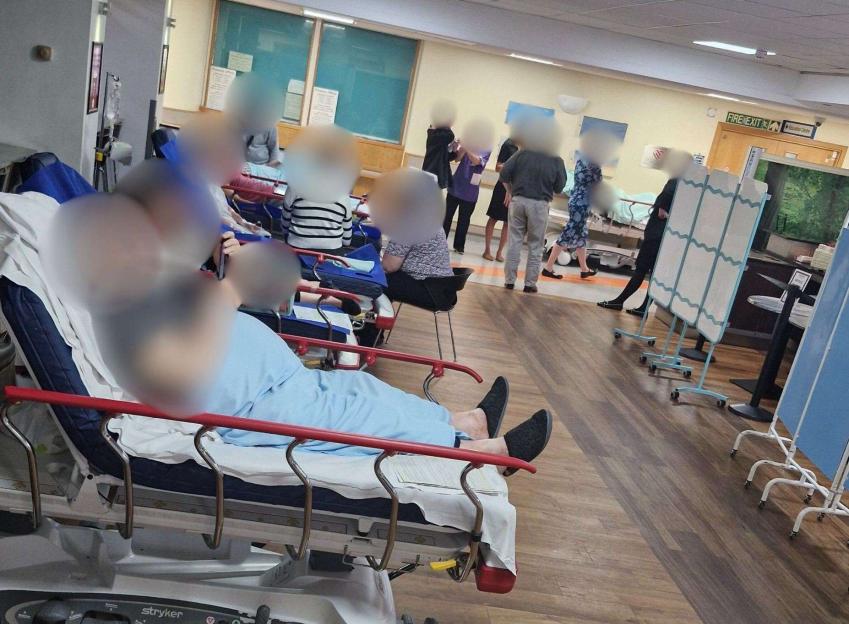 Patients have previously told how they have been treated in hospital corridors and cafes Credit: Cover Images
 Credit: PA
A further 749 patients received care within a ward but not within a designated bed space on average each day in June.
By comparison, a total of 2,900 patients received such care in May.
It comes as officials today warned that the was facing a “ onslaught”, with A&Es experiencing their busiest month on record in June amid record heatwaves and the World Cup.
Average daily A&E attendances exceeded 81,000 for the first time ever in June – setting a new daily attendance record – after the record was broken in May.
Professor Frankie Swords, NHS national medical director, said: “These figures show that summer is now putting the NHS under just as much pressure as , with staff facing an onslaught of demand – and we have to prepare for it in the same way.
“Staff are currently experiencing the busiest months of their career, but they are delivering for patients despite this record demand.”
Prof Swords added that Mondays have been particularly busy for emergency departments amid weekend heatwaves and the World Cup.
“What we’re seeing on the ground is really busy Mondays following weekends of and sunshine, so please don’t delay coming forward for care when you need it, even if it’s in early hours on a weekend,” he said.
 Credit: PA
 TIMELINE OF THE NHS WAITING LIST
THE NHS waiting list in England has become a political flashpoint as it has ballooned in recent years, more than doubling in a decade.
The statistics for England count the number of procedures, such as operations and non-surgical treatments, that are due to patients.
The procedures are known as elective treatment because they are planned and not emergencies. Many are routine ops such as for hip or knee replacements, cataracts or kidney stones, but the numbers also include some cancer treatments.
This is how the wait list has changed over time:
August 2007: 4.19million – The first entry in current records.
December 2009: 2.32million – The smallest waiting list on modern record.
April 2013: 2.75million – The Conservative and Liberal Democrat coalition restructures the NHS. Jeremy Hunt was Health Secretary.
April 2016: 3.79million – Junior doctors go on strike for the first time in 40 years. Theresa May is elected Prime Minister.
February 2020: 4.57million – The final month before the UK’s first Covid lockdown in March 2020.
July 2021: 5.61million – The end of all legal Covid restrictions in the UK.
January 2023: 7.21million – Prime Minister Rishi Sunak pledges to reduce waiting lists within a year, by April 2024.
September 2023: 7.77million – The highest figure on record comes during a year hit with strikes by junior doctors, consultants, nurses and ambulance workers.
February 2024: 7.54million – Ministers admit Rishi Sunak’s pledge to cut the backlog has failed.
August 2024: 7.64million – List continues to rise under Keir Starmer’s new Labour Government.
December 2024: 7.46million – The list has fallen for four consecutive months – a glimmer of hope.
May 2025: 7.36m – The lowest for two years, since 7.33m in March 2023.
October 2025: 7.4m – Increased in June, July, August and October.
November 2025: 7.31m – A decline of 86,000 compared to October.
February 2026: 7.22m – Continues to fall, now the lowest since February 2023.
“In the continuing warm , please take precautions like staying hydrated, and check in on loved ones or those who are vulnerable, and as always, please dial 999 in an emergency, and otherwise use 111.”
Bea Taylor, fellow at think tank Nuffield Trust, said there is “no doubt” that heatwaves are putting additional strain on the health service.
“The health service is used to dealing with the extra pressure that winter brings each year, but climate change means hospitals are now facing multiple shocks throughout the summer months too,” she said.
The figures released by NHS today mark the second time data has been published on patients who receive corridor care for at least 45 minutes.
This means care did not take place in a clinically appropriate and safe setting where patients have privacy, access to food, water and toilets, and lights can be turned off and noise levels minimised to allow .
This is based on a snapshot of patient numbers at 8am each morning.
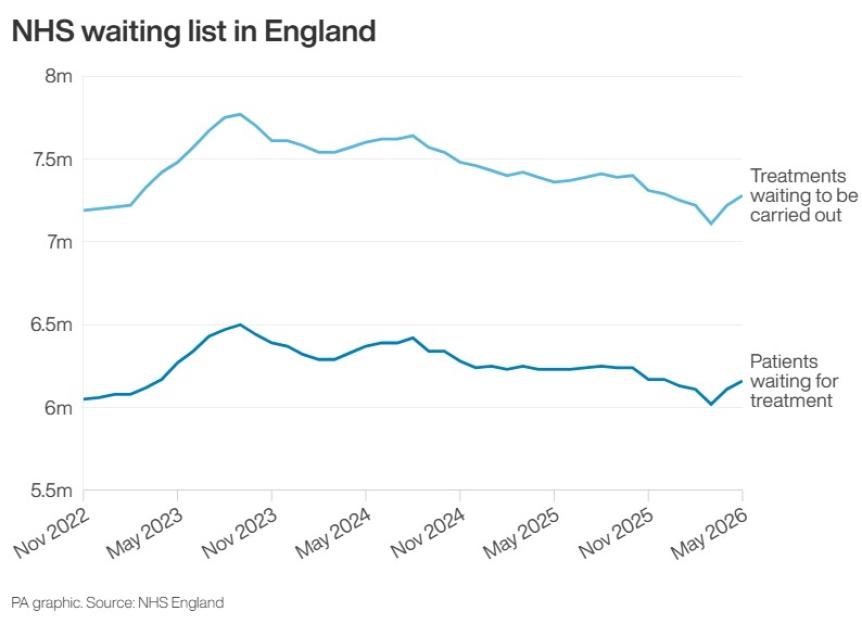
Meanwhile, an estimated 7.28 million treatments were waiting to be carried out at the end of May, relating to 6.16 million patients in England.
These include procedures like hip and knee replacements.
The figure is up from 7.22 million treatments and 6.11 million patients left waiting at the end of April.
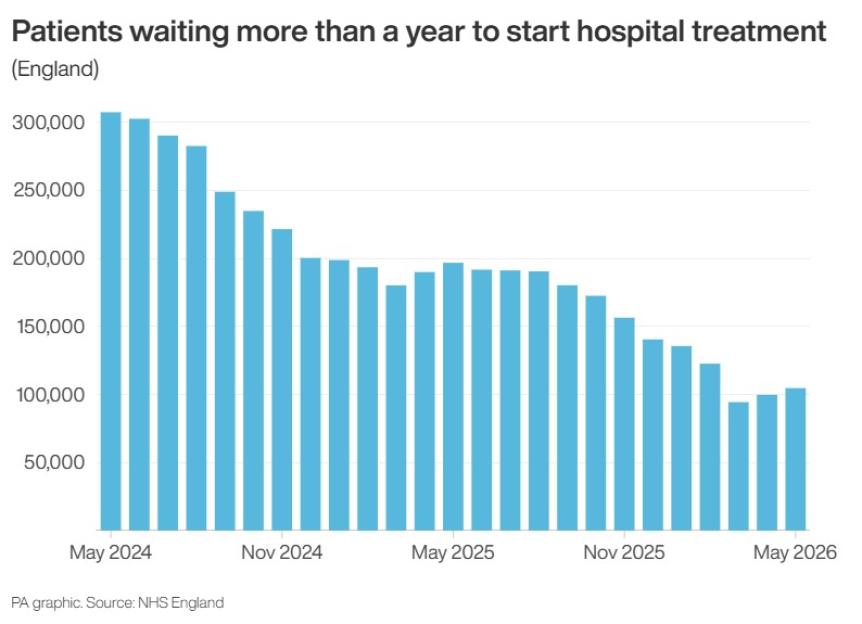
There was also a rise in the number of people facing long waits for treatment, with 104,734 waiting more than a year at the end of May, up from 99,781 at the end of April.