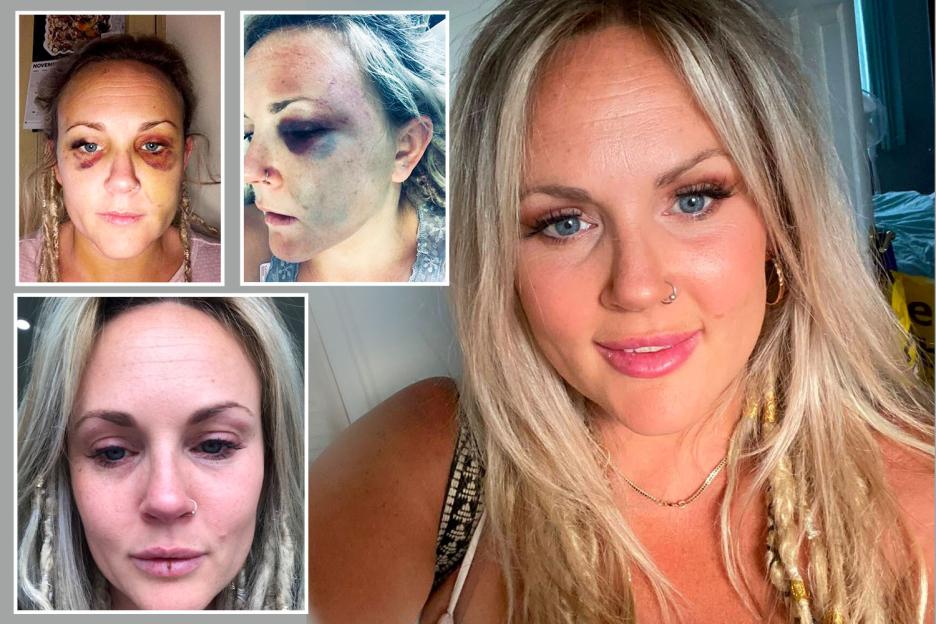
A MUM-of-two has spoken of the horror she faced at the hands of her ex-partner for two years before he was put behind bars.
After months of escalating emotional and physical abuse, Lucy Winter suffered an hour-long attack that saw him stamp on her head and beat her with a bannister pole, leaving her covered in blood and fearing for her life.
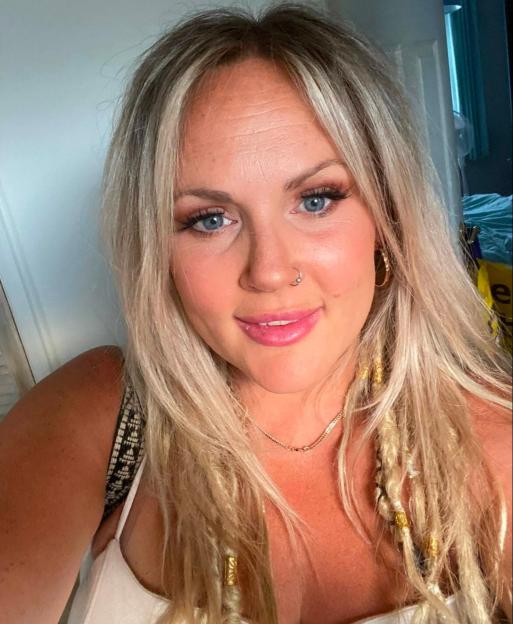 Lucy Winter, 41, has spoken of the horrific abuse she suffered at the hands of her ex-partner Credit: Lucy Winter
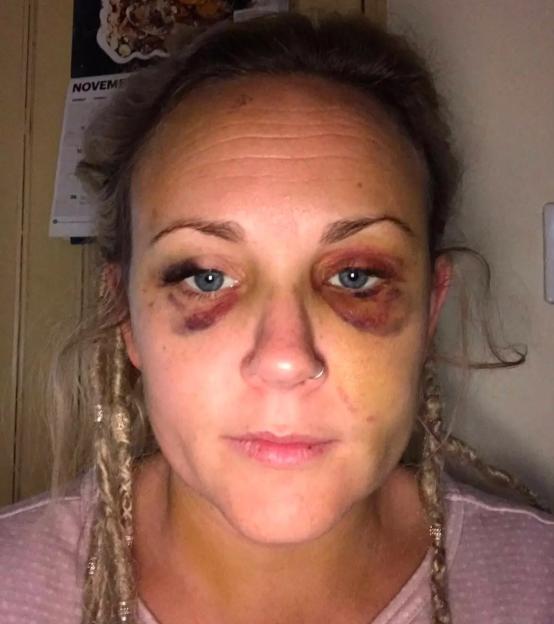 The professional singer said she suffered a brutal hour-long attack that left her fearing for her life Credit: Lucy Winter
The 41-year-old professional singer from met her ex-partner online in 2017, saying he seemed “very normal”.
But it wasn’t long until he started showing small signs of controlling behaviour as he watched Lucy on her phone and accused her of looking at other men.
She says the violence started three months into the relationship before it culminated in a “sustained, controlled, serious attack which felt so different to everything else”.
Lucy told The Sun about the terrifying ordeal as she tried to break free from the relationship in “any way I could”.
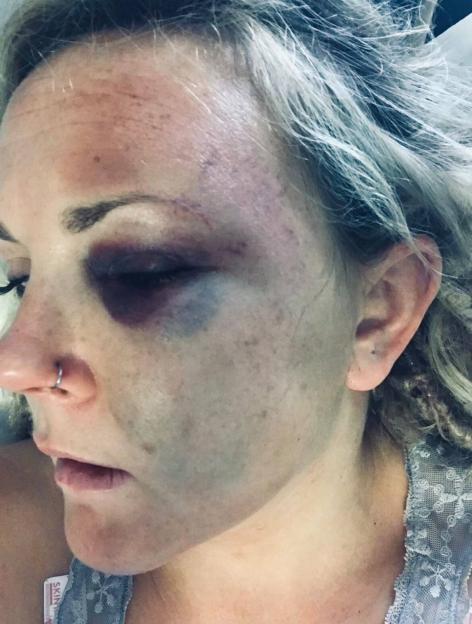 Lucy said her ex-partner stamped on her head and beat her with a banister pole Credit: Lucy Winter
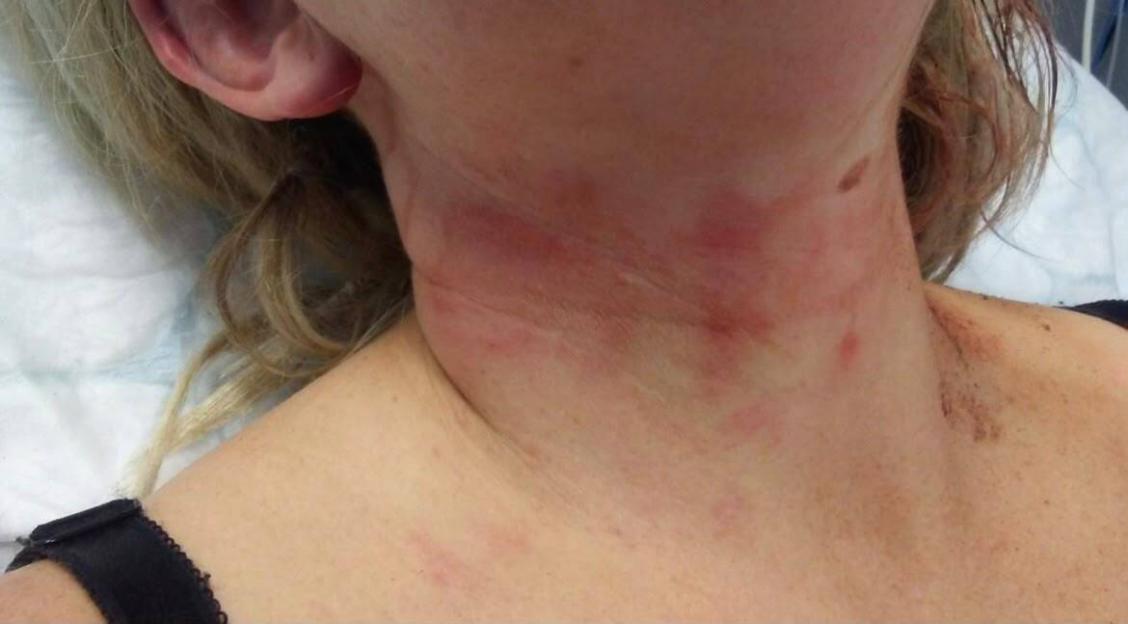 She also said she was strangled to ‘near suffocation’ in the attack Credit: Lucy Winter
She struggled to extricate herself completely from the relationship with months of “back and forth”.
He would turn up at her flat unannounced before subjecting Lucy to a savage attack after he allegedly hacked her Whatsapp and saw “completely innocent” messages with another man.
“He attacked me with a banister spindle, stamped on my head, strangled me to near suffocation,” she recalled.
“It was a really sustained attack and probably went on a good hour or so. I genuinely thought he was going to kill me.
“I don’t actually know why he stopped, I think he’d cut my head open and I was bleeding quite a lot. So maybe he thought he had killed me.
“I’m not sure as I passed out.
“Eventually, he just came out of this rage, told me he loved me and left.
“He asked me if I would give him time to go and kill himself before I called an ambulance or .”
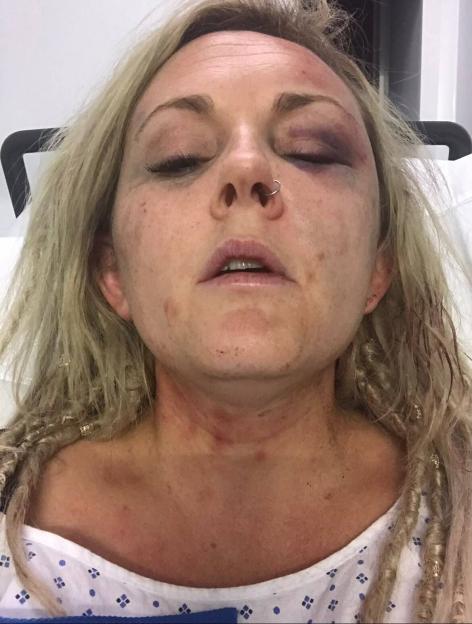 Following the attack, she had five staples put into the back of her head Credit: Lucy Winter
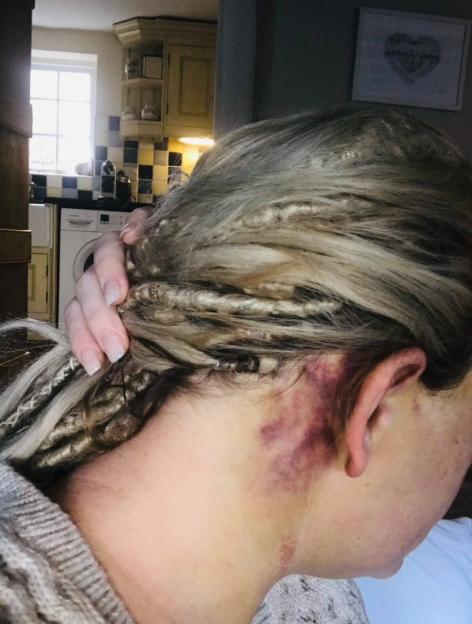 She said ‘I thought he was going to kill me’ Credit: Lucy Winter
Following the attack, she had five staples put into the back of her head and suffered two black eyes, significant bruising across her body and strangulation marks around her throat that were “quite severe”.
“I was sort of green two weeks later with bruising from my chest up. By some grace of God, he didn’t break any bones,” she continued.
“But I did fight back, I fought back as hard as I bloody could.
“I thought he was going to kill me. I genuinely laid on my hallway floor thinking ‘This is it. I’m going to die here’.”
You're Not Alone
EVERY 90 minutes in the UK a life is lost to suicide
It doesn’t discriminate, touching the lives of people in every corner of society – from the homeless and unemployed to builders and doctors, reality stars and footballers.
It’s the biggest killer of people under the age of 35, more deadly than cancer and car crashes.
And men are three times more likely to take their own life than women.
Yet it’s rarely spoken of, a taboo that threatens to continue its deadly rampage unless we all stop and take notice, now.
If you, or anyone you know, needs help dealing with mental health problems, the following organisations provide support:
- CALM, www.thecalmzone.net , 0800 585 858
- Heads Together, www.headstogether.org.uk
- HUMEN www.wearehumen.org
- Mind, www.mind.org.uk , 0300 123 3393
- Papyrus, www.papyrus-uk.org , 0800 068 41 41
- Samaritans, www.samaritans.org , 116 123
Her attacker was subsequently found guilty of wounding with intent following a trial at Bristol Crown Court in 2019 and he was sentenced to 10 years in prison with a restraining order imposed.
Now, Lucy has published a book called “Tough Love” which follows her journey through the relationship and details her experience of domestic abuse.
The pair had met each other online in 2017. She said: “He was quite quiet. He wasn’t a drinker. He just seemed very intelligent and I was quite drawn in, I suppose, with all those things.
“I think there’s a stereotype of what abusive people or partners can look like and he wasn’t those.”
But small signs of controlling behaviour quickly began to surface and “slowly escalated to quite a lot of emotional control”.
“He would walk out on me for no real apparent reason and I’d end up defending myself against some absurd accusation that hadn’t even happened,” she said.
“There was a lot of gaslighting.”
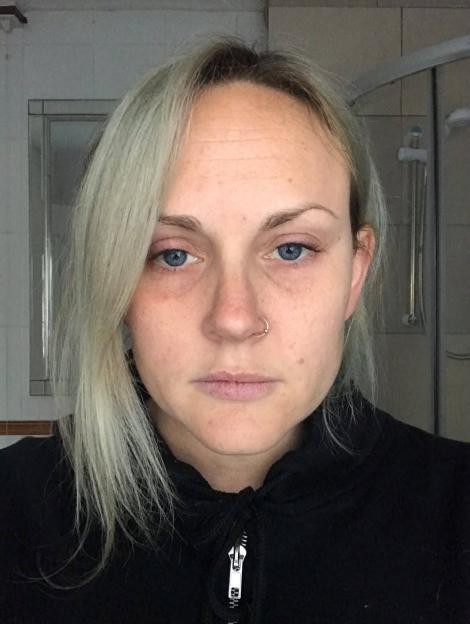 Lucy says she became a ‘shell of a woman’ during the two year relationship Credit: Lucy Winter
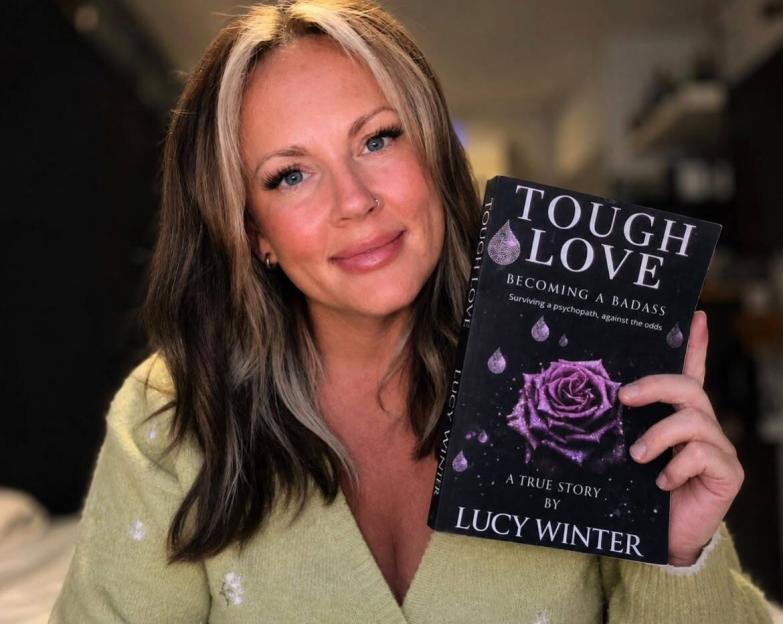 Now she has published a book detailing her journey through the relationship Credit: Lucy Winter
“But by that point, it wasn’t all the time. In between, he was lovely. He made me feel really special. All the things you want to feel when you get into a relationship.”
Lucy says she started to change her behaviour and had to prove who she was messaging by sending screenshots while having to be home within a certain time-frame.
The first sign of his violent nature came three months into the relationship where Lucy says she was “strangled”.
She said: “By that point, I was so ground down with the emotional side of things that I just didn’t have anything left to fight with.
“There was an incident that came out of the blue where he strangled me and held me down. That was the first real glimpse of ‘oh, hold on a minute. This isn’t right.’”
Lucy added that “the threats, the pushing, the shoving, the spitting, the hair pulling” went on for a really long time and would happen in spells.
“I thought, ‘oh it’s fine. He loves me the rest of the time. He’s great.’ From there the violence was just normal,” she added.
Lucy said the emotional and physical toll of the relationship led to her becoming a “shell of a woman”.
Domestic abuse - how to get help
DOMESTIC abuse can affect anyone - including men - and does not always involve physical violence.
Here are some signs that you could be in an abusive relationship:
- Emotional abuse – Including being belittled, blamed for the abuse – gaslighting – being isolated from family and friends, having no control over your finances, what you where and who you speak to
- Threats and intimidation – Some partners might threaten to kill or hurt you, destroy your belongings, stalk or harass you
- Physical abuse – This can range from slapping or hitting to being shoved over, choked or bitten.
- Sexual abuse – Being touched in a way you do not want to be touched, hurt during sex, pressured into sex or forced to have sex when you do not consent.
If any of the above apply to you or a friend, you can call these numbers:
- The Freephone National Domestic Abuse Helpline, run by Refuge on 0808 2000 247 for free at any time, day or night
- Men who are being abused can call Respect Men’s Advice Line on 0808 8010 327 or ManKind on 0182 3334 244
- Those who identify as LGBT+ can ring Galop on 0800 999 5428
- If you are in immediate danger or fear for your life, always ring 999
Remember, you are not alone.
1 in 4 women and 1 in 7 men will experience domestic abuse over the course of their lifetime.
Every 30 seconds the police receive a call for help relating to domestic abuse.
“I’m quite outgoing, bubbly, friendly but I was scared to look up from the ground,” she said.
“I had no personality left. I was just crying all the time. I lost loads of weight. I looked ill. I looked thin and drawn. It affected my work as well, as I’m sure you can imagine being a singer.
“I was good at hiding it from everyone. He convinced me my family pitied me, that they hated me, that I was just a problem they put up with. I pushed a lot of my family away.
“It was easier to be on my own with him than try and pretend around other people that everything was all right.”
Lucy even attempted to take her own life “because I just couldn’t see another way out”.
She then made the decision to leave her partner for good, prompting things to “escalate really badly”.
The brutal attack took its mental toll and she says she probably still has PTSD from it now nearly a decade later.
She said: “I’m quite vigilant all the time. I’m constantly looking for danger, constantly seeing micro-changes in people. I’m thinking ‘is this situation going to become dangerous for me?’”
Lucy’s book emerged from a journal she wrote throughout the relationship to “remind myself of actually what was happening and how bad it was”.
She says one of the biggest questions she faced was “why on earth did you stay?”
“It goes through everything I went through with this person.
“I’ve written it in a way that’s a bit more storytelling to take people on a bit of a journey through the lens of inside the world of domestic violence.
“It’s that understanding of how the trauma bond works because so many victims are blamed for staying and, actually, it’s so much more complex than that.
“This man’s telling me, you’re not good enough. I’m leaving you, you’re crap, all that stuff.
“And you feel so awful that the minute that they show you something other than hatred and aggression, you kind of always grab it.
“It’s almost like a drug addict. It’s the comedown of the drug. And you don’t know what to do with yourself because your life has become so revolved around this person that once they show you kindness or love or an apology, the relief you feel is palpable.
“It’s so strong. You go ‘oh my god, I would do anything to not feel this level of anxiety and fear right now’. So you take them back.
“Then they change for a few days and they’re nice for a few days and then the cycle starts again. And weirdly, the more that the cycle continues, the more you learn and teach yourself to keep going back.”
Asked what advice she would give other women who may be experiencing similar problems in their relationship, she said: “The main thing I would say is the little voice that’s telling you this isn’t right, listen to that.
“And when they tell you they’re reacting to your behaviour with violence, that is not true.
“People don’t go round hurting other people emotionally and physically because they have a reaction to someone’s behaviour.
“Listen to the little voices inside your head that are telling you this isn’t right. And reach out to somebody, anyone, so you’re not alone.”