SUMMER officially draws to a close this week as the autumn equinox arrives in the UK.
The annual astronomical event marks the , a time when the barbecue gathers dust and leaves start to turn shades of yellow, orange, red, purple and brown.

It comes following the with , leaving much of the UK in .
But while the weather has already taken a more autumnal turn, the change of astronomical season does not happen until later this week.
When is the autumn equinox 2026?
This year the equinox takes place on Wednesday, September 23.
According to the Royal Observatory Greenwich, the precise moment of the equinox will be 1.06am.
It officially marks the beginning of in the Northern Hemisphere and the end of astronomical summer.
The autumn equinox normally falls on September 22 or 23, although its exact timing changes from year to year because of the Earth’s orbit around the Sun.
Astronomical autumn then continues until the in December.
What happens during the autumn equinox?
The Earth is tilted on its axis, meaning one hemisphere normally receives more direct sunlight than the other as the planet travels around the Sun.
But during an , neither hemisphere is tilted towards or away from the Sun and both are illuminated roughly equally.
The Sun crosses the celestial equator, moving from the northern half of the sky into the southern half.
The word equinox comes from Latin and refers to “equal night”, but day and night are not actually exactly the same length on the date of the event.
In London on September 23, the Sun will rise at around 6.48am and set at 6.56pm, giving the capital approximately 12 hours and eight minutes of daylight.
says the date when daylight and darkness are actually equal in the UK – known as the equilux – falls two days later on September 25.
After the autumn equinox, the nights continue to get longer than the days until the next year.
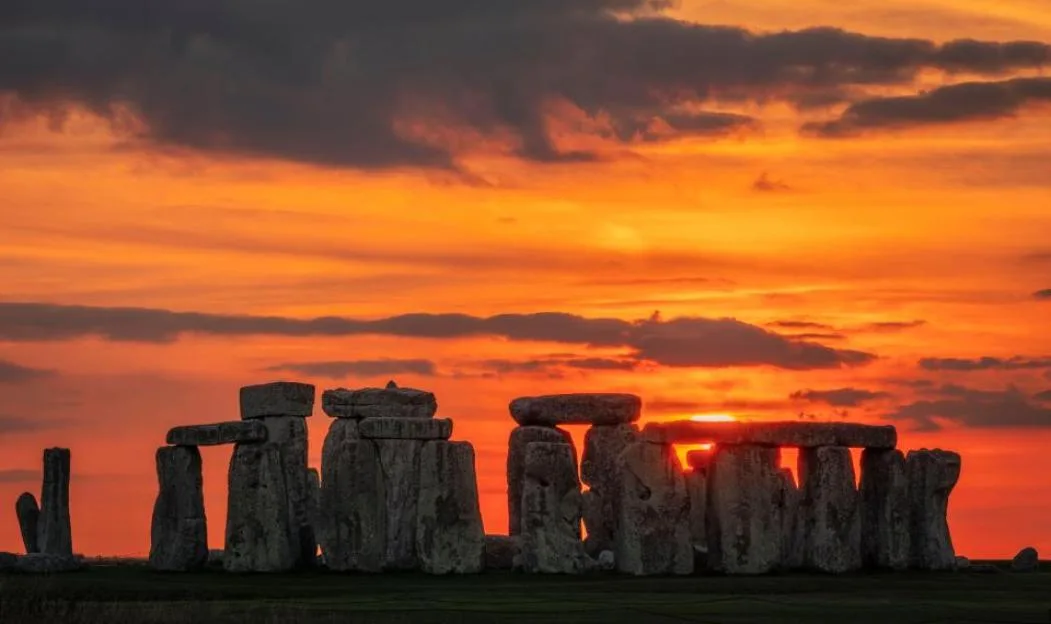
The autumn equinox is celebrated at , with people gathering to watch the sunrise and mark the changing of the seasons.
English Heritage is offering free managed open access to the stone circle on Wednesday, September 23, 2026.
The monument field will open as soon as there is enough light, with sunrise expected at around 6.54am and access ending at 8.30am.
However, while Stonehenge is aligned with the midsummer sunrise and midwinter sunset, there is no clear evidence that the people who built it celebrated the spring or autumn equinoxes.
Modern visitors gather there for the equinoxes, but archaeologists believe these dates were probably not significant to prehistoric users of the monument.
When does autumn officially start in the UK?
There are two commonly used dates for the beginning of autumn.
Astronomical autumn starts at the equinox on September 23 this year.
However, the uses meteorological seasons when compiling weather and climate statistics.
Under that system, autumn has already begun, running from September 1 until November 30 every year.
The fixed dates allow meteorologists to compare seasonal data consistently from one year to another.