A WOMAN has told how she suffers from a rare brain condition – which makes her think total strangers are her friends.
When Jenny Parry, 54, walks outside or down to her local high street, or inside any shop, cafe, or cinema she is left with an overwhelming feeling that she recognises everyone she sees.
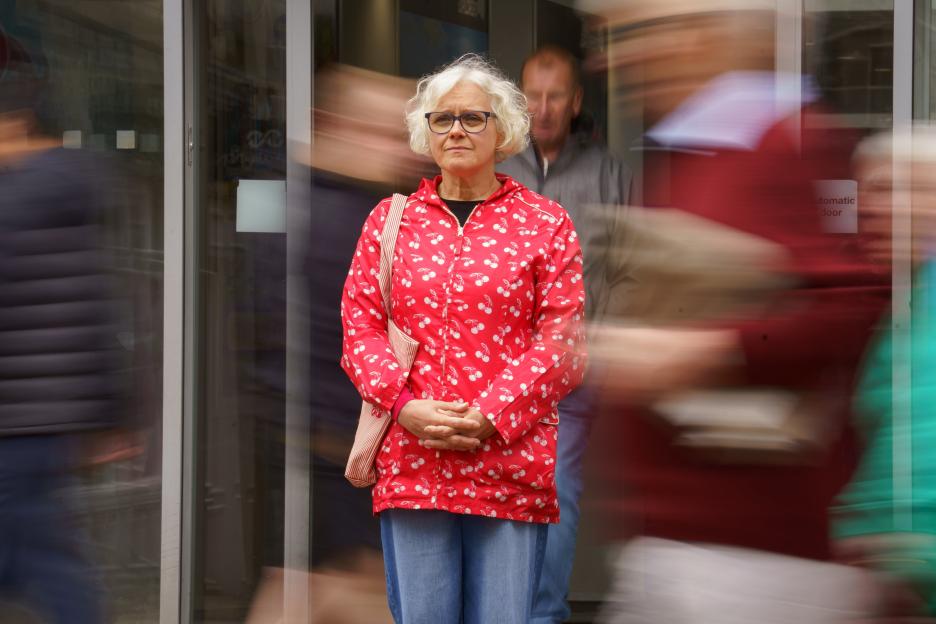 Jenny Parry has a rare condition called hyperfamiliarity for faces Credit: SWNS
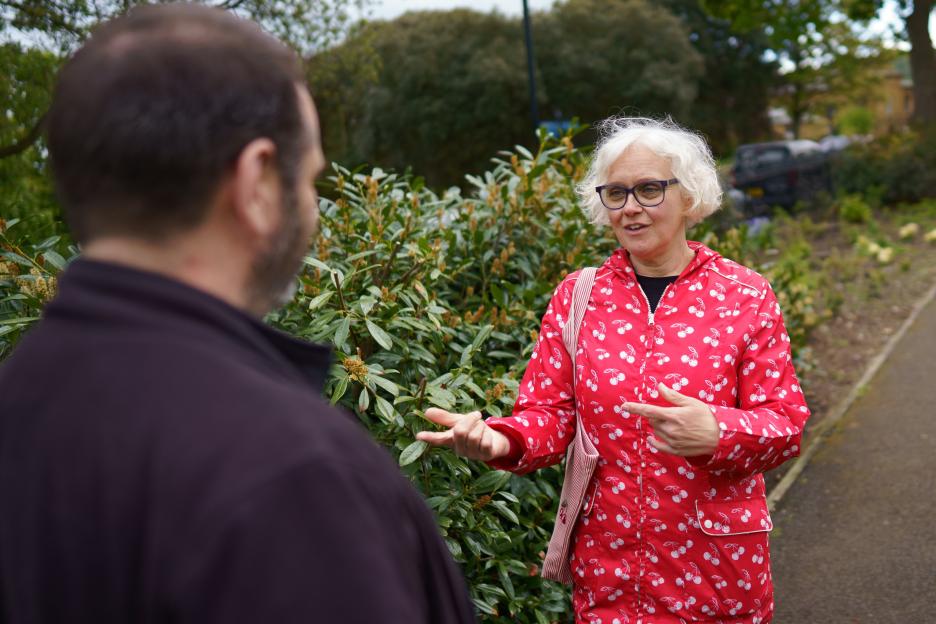 Everyone she sees resembles a friend she has known for years, with accompanying cloudy memories of parties or workplace laughs Credit: SWNS
This is because she suffers from an extremely rare neurological condition called hyperfamiliarity for faces (HFF), where unknown people or strangers appear intensely familiar to her.
Jenny is believed to be one of only a handful of people in Britain suffering from the condition which scientists are still trying to understand.
The mum-of-one, from Scarborough, , said the condition was brought on seven years ago in 2019.
She started experiencing HFF after she suffered a severe migraine while on a walk with her daughter in Painswick Rococo Garden, in Gloucestershire.
And, according to Jenny, the very next person she saw she “instantly recognised”.
The zoo keeper, from Scarborough, North Yorks., describes it as her brain “generating fake memories” when she looks at the faces of total strangers, as if they were a good friend.
Memories are as if they were once work colleagues, or had been to a restaurant for a meal, or had been on holiday together.
But she has revealed it has now left her unable to look at people’s faces due to the fear of being left “embarrassed”.
 Professor Tim Andrews, senior researcher from the Department of Psychology at the University of York Credit: SWNS
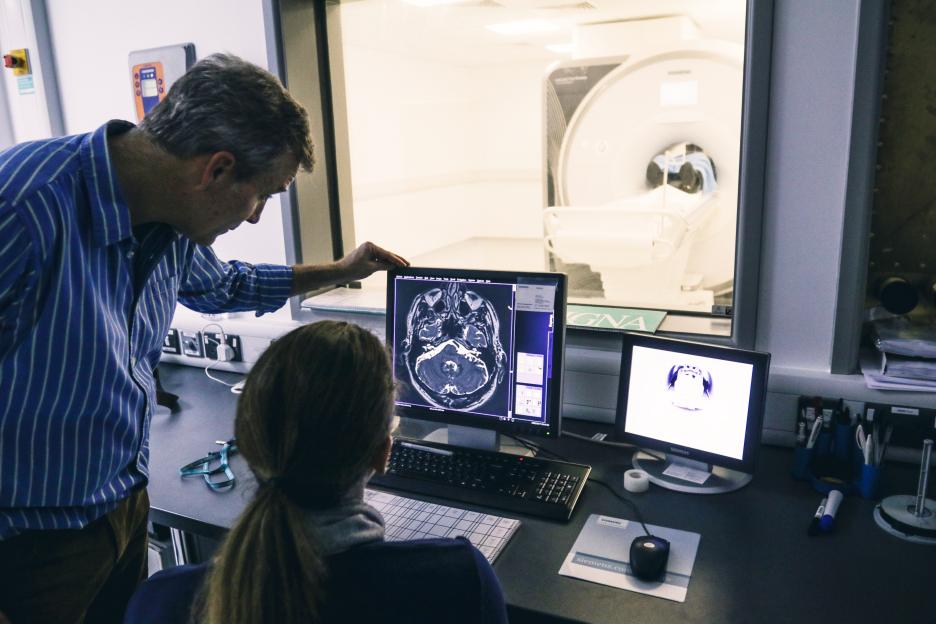 She has a rare neurological condition Credit: SWNS
She said: “I had begun suffering a strong migraine on my usual right and side, but then it spread to the left.
“And I haven’t been the same since.
“After the headache the next person I saw I thought I recognised them and I smiled, when really I had never met them before.
“It has affected my self-esteem on many occasions throughout the years – leaving me now unable to look at people’s faces.
“This one time I was convinced I knew this woman from my old as a circus choreographer.
“I had memories that we had spent a lot of time together and that I had been training her for years.
“I crossed the road and tapped her on the shoulder but she just looked at me bluntly.
“I apologised and went into my friend’s nearby cafe and burst into tears as I was so embarrassed.
What is hyperfamiliarity for faces?
Hyperfamiliarity for faces is a rare neurological condition that gives individuals a sense of familiarity for unknown faces. It is considered to be a memory disorder, typically exclusive to in-person faces. Often it stems from a medical event like temporal lobe epilepsy or severe migraines.
Symptoms include;
- The feeling that a completely unknown person is someone you know well
- Impulsive Greetings
- Acceptance that the person is actually a stranger after a reality check
“Doctors don’t know if the migraine caused the change to my brain or if my brain caused the migraine, it is all a big mystery.
“Now my brain fires off these fake memories when I look at people’s faces.
“My brain tells me I have been to the pub, to a concert, or on holiday when I see them, as if we had spent quality time together.
“But it can also feel very lonely at times because when I’m in a big crowd of people, I feel like I’m the only one there, as if I look around, I feel totally overwhelmed.
“At first, it was unsettling, people have been freaked out and thought I was crazy, but now I am learning to take control.”
Jenny said she was “healthy and confident” before the random life-altering headache.
She told how she became “unnerved” after returning home to , when she thought she recognised everyone at a petrol station while she was filling up her car.
She said: “I stood at the petrol station and I was thinking to myself ‘I’ve only lived here for a couple of years, but I know so many people’.
“It gave me this really warm feeling.
“But then over the next couple of days, I became really unnerved by it and that’s when I decided to do some research.”
In the following years Jenny has had some “embarrassing” encounters with strangers which left he “mentally ruined”.
She said: “I would see someone and have really strong memories and make a beeline for them.
“But when I would stop them and introduce myself they would look at me funny and walk away as if I was some crazy woman.
“I would always feel so shell-shocked afterwards and it would affect me for days – I can see how people who suffer with HHF can become introverted.”
She said it had also affected her previous job where she worked at the reception of a popular attraction in , which she doesn’t want to name.
Jenny said: “It was my first job after I had suffered the migraine.
“And I was put on reception and I was told that because it was so expensive, customers are allowed to come and go throughout the day.
“When I ask if they would have a stamp on their hand so I would know they just told me to ‘look at their faces’ and I would know if they had been in or not.
“But when they came up to the counter, I recognised everyone unless they said otherwise and just let them in.
“I probably lost them a few quid that day.”
During her research Jenny came across Professor Brad Duchaine at Dartmouth University in the , who has studied HFF.
Following this neuroscientists at the University of York, in collaboration with Dartmouth University, recently studied her brain and now believe they have uncovered exactly what causes the condition.
Researchers used neuroimaging to monitor Jenny’s brain activity while she watched clips of the series , which she had never seen before.
They then compared her results to two groups of people – those who were devoted fans of the show and others who were entirely unfamiliar with the characters.
The results revealed that even though the faces were completely new to her, the activity in Jenny’s hippocampus – a region of the brain vital for memory – closely mirrored that of the long-term fans.
They now suggest the condition is caused by an altered connection in the brain between the visual parts of the brain and the medial temporal lobe.
While Jenny’s visual systems and memory perform normally, the communication between the two has become hyperactive to generate a constant false alarm of familiarity.
Professor Tim Andrews, senior researcher from the Department of at the University of York, said: “Our findings show that Jenny’s basic face-processing system is perfectly intact.
“The problem arises because the communication between her visual system and her memory system has become exaggerated.
“Her brain is essentially sending a powerful signal that she knows a person when it should be silent.”
Jenny says the condition has changed her life, now leaving her unable to look at people’s faces.
She said: “I can’t really engage with people anymore.
“I have to make the condition work for me, and to do so I have to control when I look at people’s faces.
“I now look for cues like rings, length, or their dog, which I use to recognise that person.
“I have had to train my friends, as if we are going to a restaurant, we have to be really organised, getting places on time, they have to wear a bright piece of clothing or wave erratically at me so I know it is them.
“It has been difficult, but I had to make a positive change as otherwise it could snowball.”
Jenny is currently a zoo keeper at Filey Zoo, North Yorks., and says staff there have been very understanding of her condition.
She also says it has become a “superpower” as it allows her when she is doing keeper talks.
The animal lover said: “Now I just take one quick glance around and it is as if I am talking to my friends.
“If you could bottle up my condition, it could cure social anxiety.
“I can see why so many people who suffer with the condition become a shell of who they are.
“It can be so demoralising when you speak to someone and they have no idea what you are talking about.
“But I have learnt to take control and try my best to live as normally as possible.”