AN ICEBERG twice the size of London has shattered into pieces almost 40 years after breaking away from Antarctica.
The trillion-tonne hunk of ice ended its reign as the following an almost four-decade ocean odyssey – it crumbled just months before its birthday.
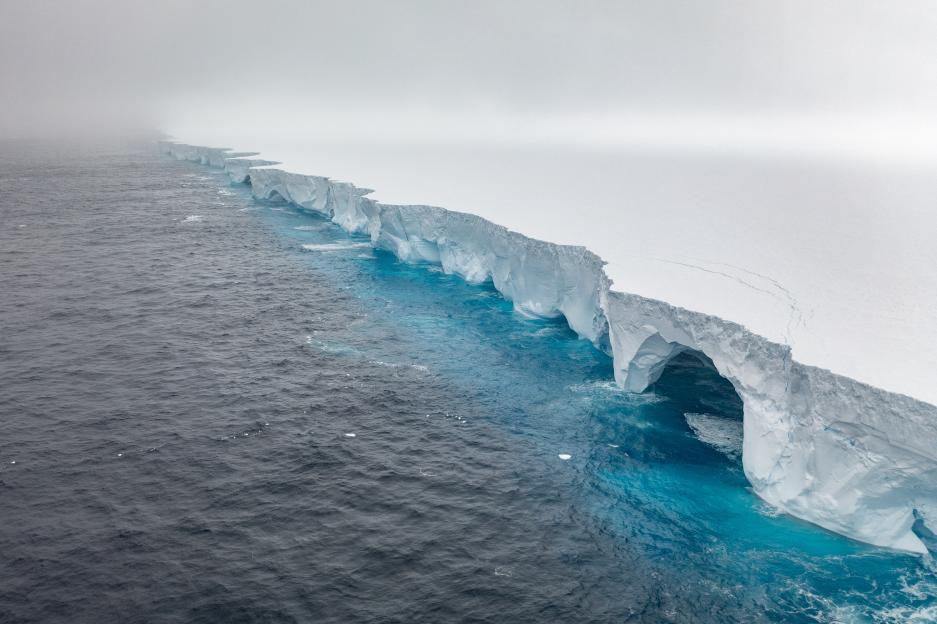 The megaberg, photographed in January 2024 floats in the waters of The Southern Ocean off AntarcticaCredit: AFP
 The iceberg was the world’s largest for almost 40 yearsCredit: NASA/ EARTH OBSERVATORY
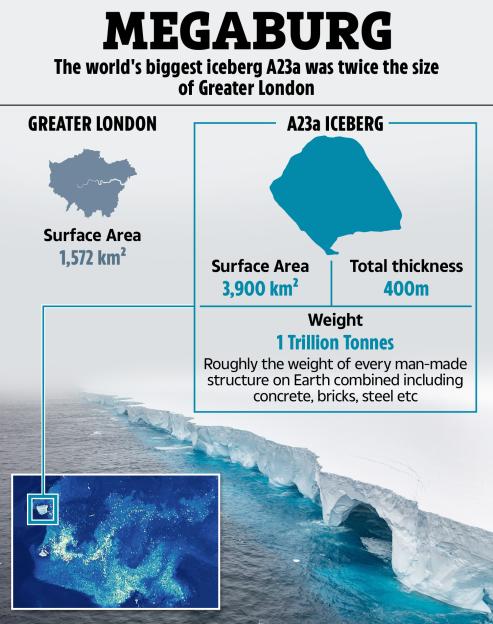
The megaberg “died” from extensive melt and shrinkage after its rapid drift across the Southern Ocean.
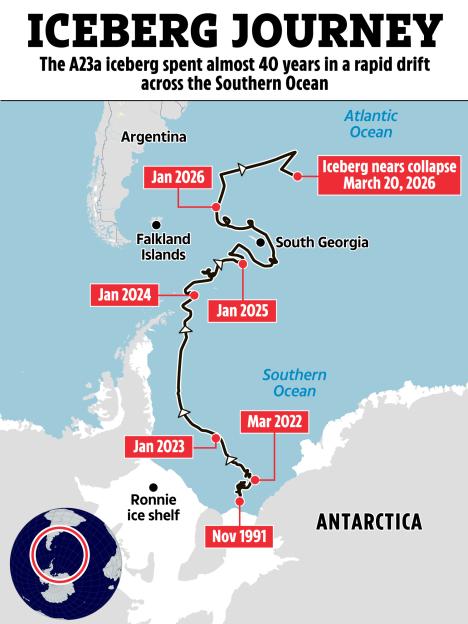
A-23A broke away from four decades ago, weighing nearly a trillion tonnes and measuring 1,540 square miles at its peak.
The enormous block of ice was twice the size of greater London and was roughly the same weight as every combined man-made structure on Earth,
It remained grounded on the Weddell Sea floor for over 30 years, and then started to break away from its position in 2020.
The colossal structure then mysteriously began spinning in the same location for months in 2024 before finally drifting north.
Its remarkable spinning movements were thanks to a natural wonder known as a Taylor Column that trapped the “megaberg”.
They cause rotating waves of water above a seamount to snatch and contain any objects in its path and hold it in place.
, a British isle home to millions of penguins and seals, alarming scientists and fishermen.
But it ended up bypassing the isle to head into a maritime traffic lane south of Argentina.
Jan Lieser of Australian Bureau of Meteorology has been tracking the iceberg for years.
He had noticed the iceberg had shrunk to just over 66 square miles in March.
Large pools of deep-blue meltwater collected on its surface and likely contributed to its ultimate collapse, he explained.
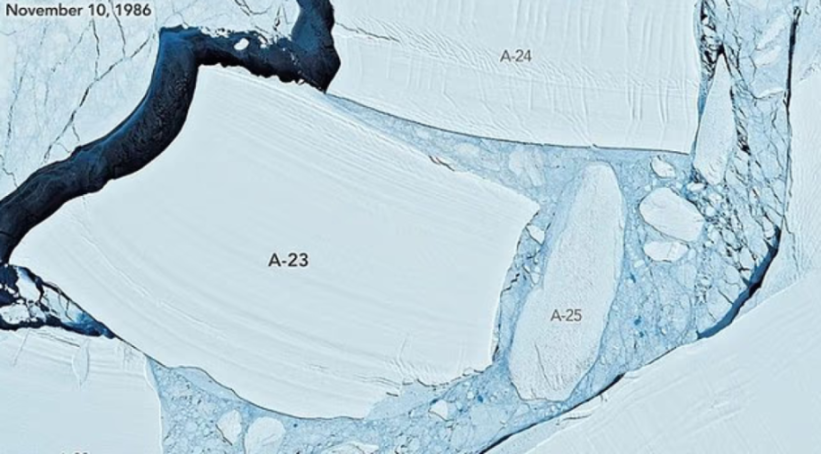 The megaberg when it broke off from Antarctica in 1986Credit: NASA/ EARTH OBSERVATORY
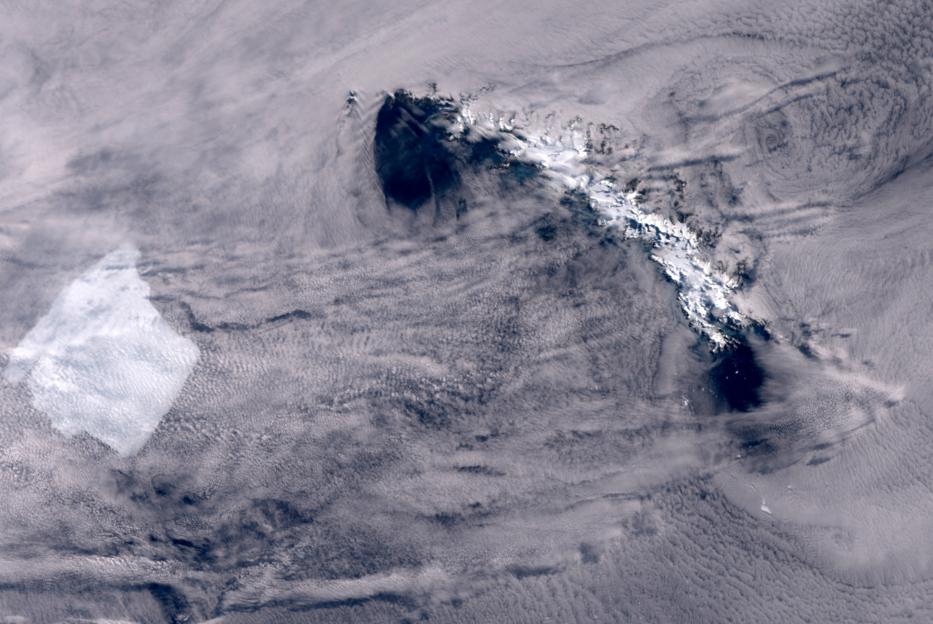
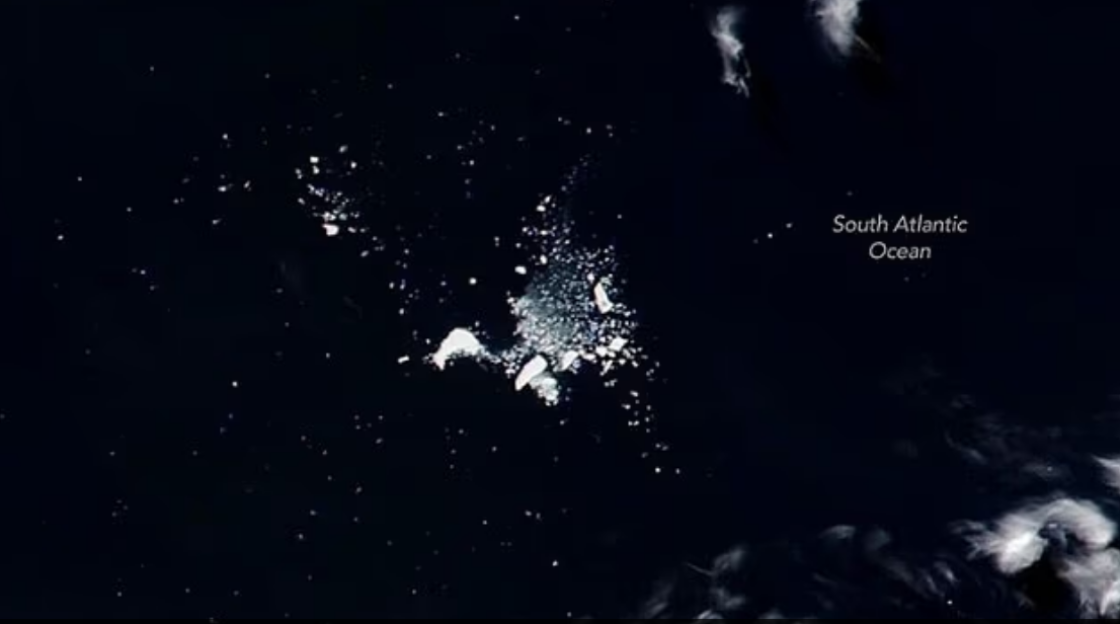 The remains of the iceberg in the South Atlantic Ocean on April 3 2026Credit: NASA/ EARTH OBSERVATORY
“I noticed in recent weeks how Mother Nature seemed to keep a veil (of clouds) over the dying iceberg as if trying to give it some privacy at this stage,” Lieser said.
But there were still enough observations to catch glimpses of the iceberg at the end of its life.
NASA called the iceberg “remarkable for its longevity” – it announced the giant’s “journey came to an end” after outliving all the other bergs it broke off alongside orginally.
The final pieces of the shattered once-giant iceberg can be seen in dramatic images taken by Nasa.
Scientists are still baffled by the many mysteries surrounding ice bergs and their journeys.
Lieser said: “We certainly do know a fair bit about the general drift patterns of icebergs and the general environment. But when it comes to individual pieces – large and small – and their tracks, there’s still a fair bit to learn.”
 The world’s biggest iceberg was on track to collide with South GeorgiaCredit: AFP
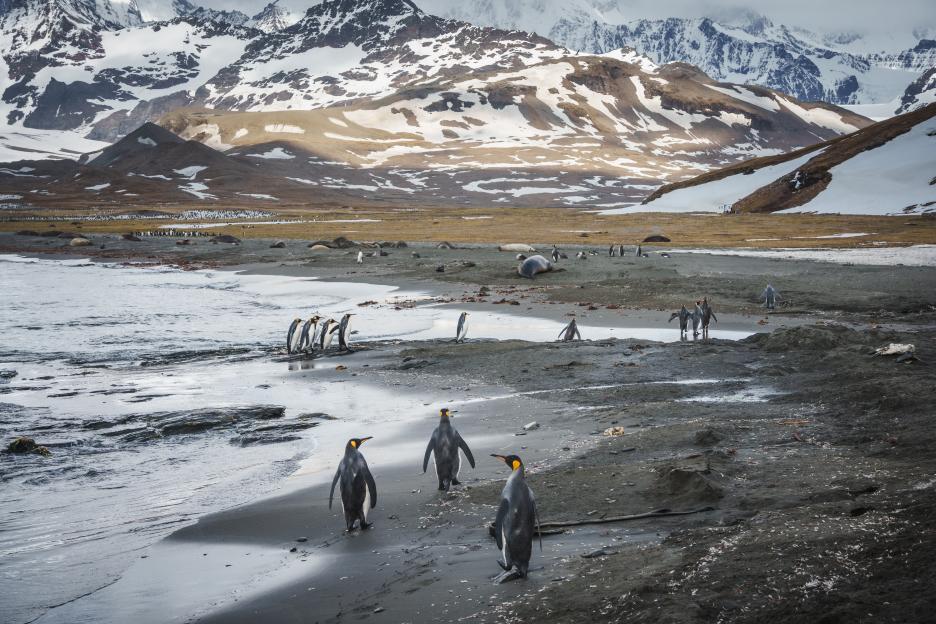 The A23a was heading towards the British island of South Georgia, home to millions of penguins and sealsCredit: Getty