FEARS are rising that the World Cup could be a superspreader event for an Ebola outbreak as millions of fans begin flocking to North America.
Health officials have warned over 2,000 potentially infected carriers are yet to be identified in Central Africa where the at an alarming rate with .
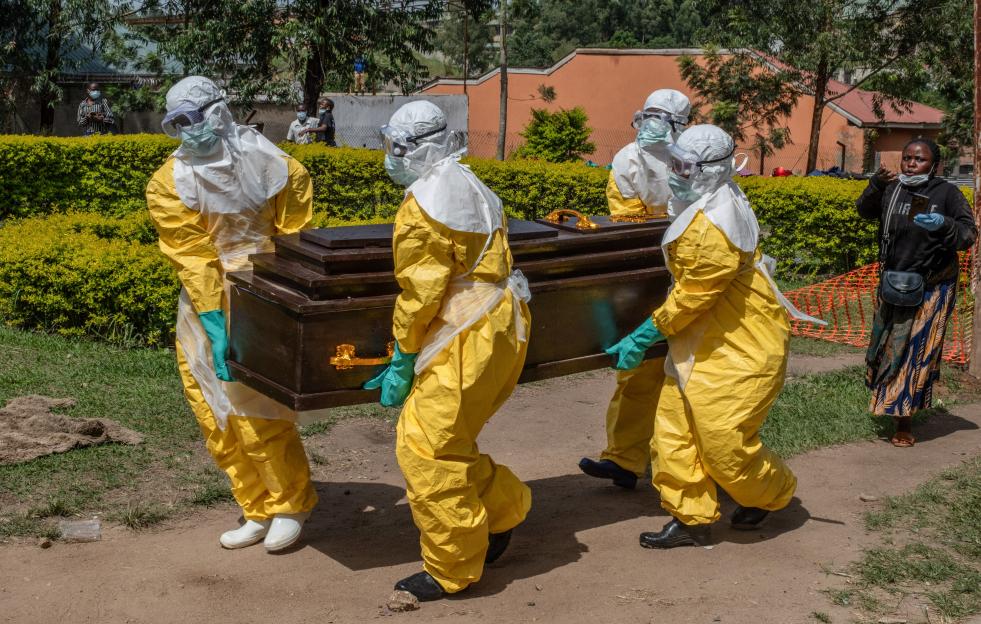 Red Cross workers in PPE carry a coffin with the body of Dr Tibenderana Katho Blaise who died of Ebola virus Credit: Reuters
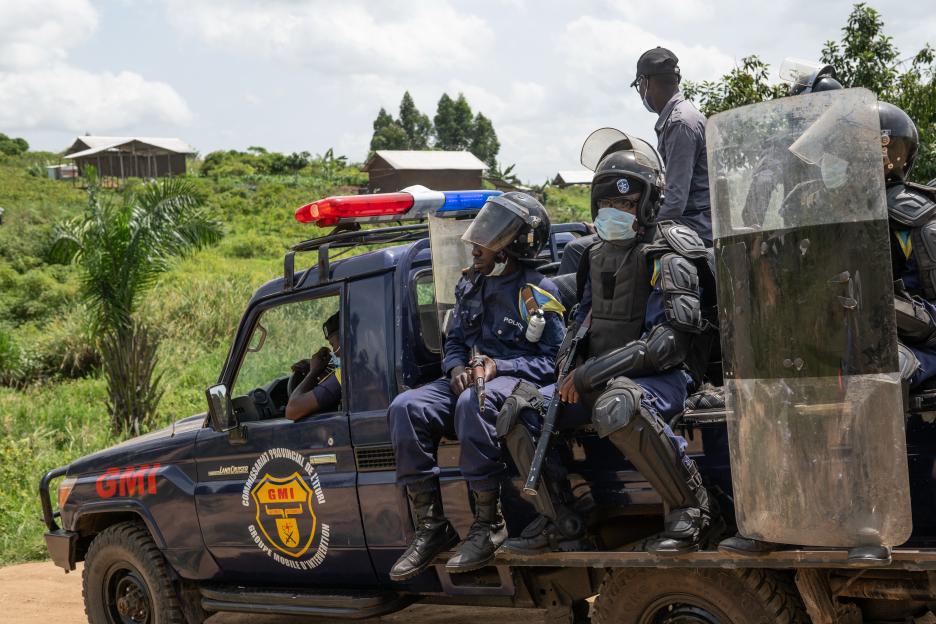 Congolese police provide security for Red Cross workers during a burial for an Ebola victim Credit: AP
Simon Clarke, microbiologist at the University of Reading, told The Sun: “Ebola has spread out of Africa in the past so it’s entirely possible for it to spread this time.
“The question you have to ask, is how many people from the infected part of Africa are going to be able to afford to travel to ?
“Then what are the chances of one infected person being in that relatively small body of people?
“Yes its small but there is a chance it could happen and the more people you have travelling, the more likely an infected person could get through.
“I remember during Covid, all sporting events were closed down to the public with the Gold Cup even being considered to have been a super spreader event.”
Dr Peter Hotez, dean of the Baylor College of National School of Tropical Medicine, also told CNN: “The likelihood of [an outbreak at the World Cup] is not zero, but it’s not high.
“We need to be ready for it if that happens.”
Experts have also told The Sun it takes just a carrying Ebola to cause chaos at the tournament and force organisers to .
 Players from the Democratic Republic of the Congo national team celebrate qualifying for their second ever World Cup Credit: EPA
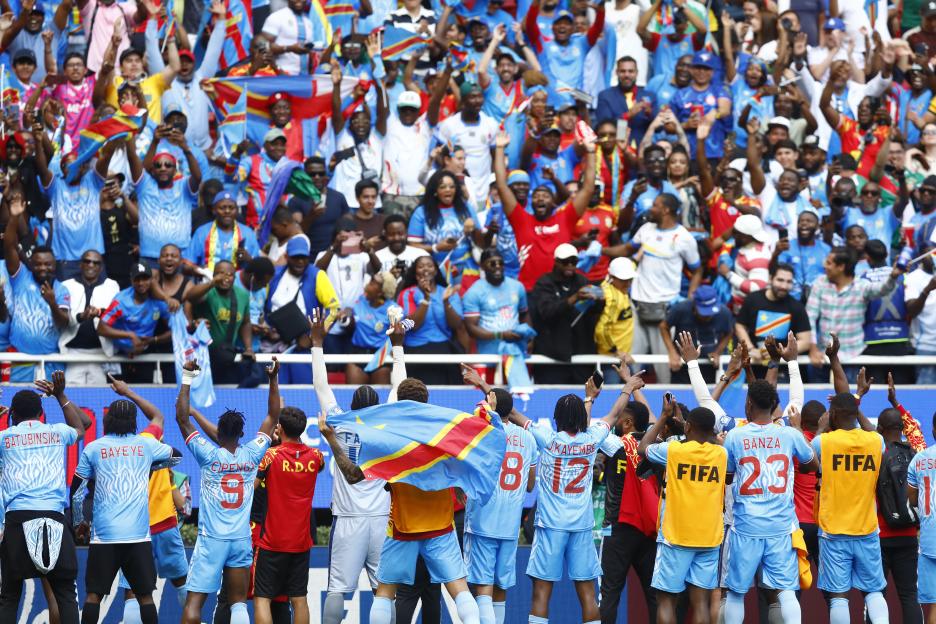 DRC fans watch on from the stands as they celebrate qualifying for the World Cup with the squad Credit: EPA
Dr Katherine O’Reilly, Regional Medical Director at InternationalSOS, says the threat of reaching North America remains low but .
She told The Sun: “Is there potential for spread? Yes. Have measures been put in place? Yes. Will those measures likely contain it? Yes.
“But, in 2014, when we had the West Africa outbreak, we saw a sick person get on a plane and go to Nigeria.
“So there are unknowns and you can’t stop those kinds of situations.”
The rare Bundibugyo strain of Ebola has so far only being recorded in Uganda and the Democratic Republic of Congo (DRC) – with over 220 deaths recorded.
Dr Rebecca Katz, who leads Georgetown University’s Center for Global Health Science and Security, said this year’s World Cup is a really “complicated mass gathering”.
For the first time ever, 48 nations are taking part, making it the biggest and longest version of the famous competition in history.
Across the next two weeks an estimated 5.5 million fans will descend on North America for the biggest sporting spectacle of the year.
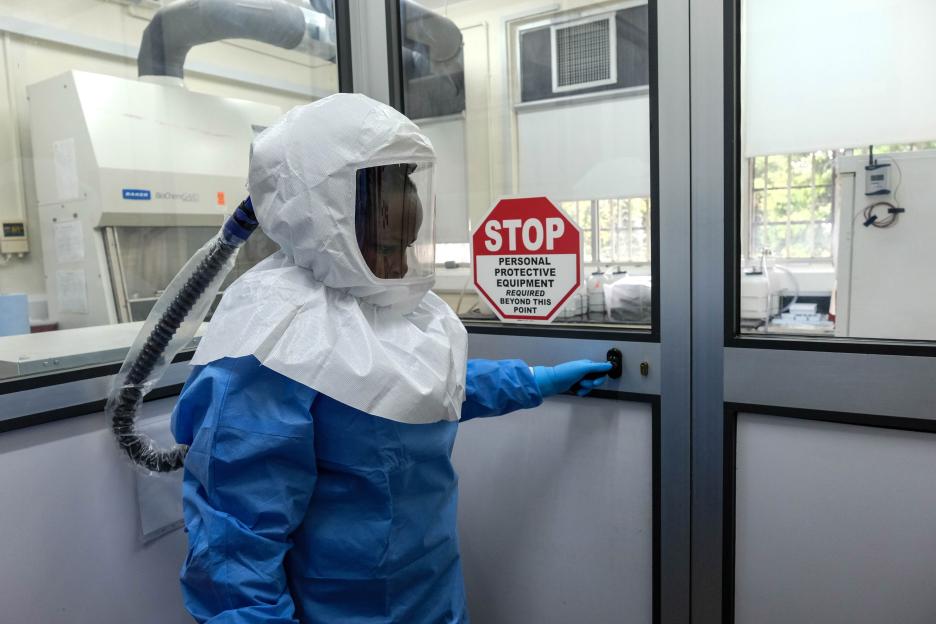 A laboratory technologist wearing protective equipment prepares to enter the Viral Hemorrhagic Fever Laboratory at Uganda Virus Research Institute Credit: Getty
This figure includes thousands of fans from the DRC who are competing in just their second ever World Cup.
A person could travel from the DRC to watch their home nation without knowing they have Ebola.
In a chilling warning on Wednesday, the (WHO) Director-General Tedros Adhanom Ghebreyesus said the outbreak in the DRC is “outpacing the response”.
Thousands of people are also feared to be continuing with their daily lives completely unaware they have been in contact with a person who caught Ebola.
The WHO said that over 2,000 people identified as contacts of suspected infected patients are yet to be tracked down and made to undergo tests.
Robert Dingwall, an academic in medical sociology, added that Ebola can be dangerous due to how fast it can spread.
Speaking ahead of the World Cup, he said: “The worst case really is that a person becomes infected just before they begin the very long journey from this part of the world to North America.
What is the Bundibugyo Ebola strain?
THE Bundibugyo Ebola strain is highly contagious and spreads to humans from wild animals like fruit bats and monkeys.
It can then be transmitted between humans through bodily fluids like blood, faeces, and vomit, or even contaminated surfaces.
Symptoms include high fever, aches, fatigue and a sore throat.
In severe cases, patients can experience liver failure, kidney issues and internal bleeding.
Bundibugyo is a rare strain of Ebola which was first identified during an outbreak in 2007.
A second concerning number of infections was also recorded in 2012 in the DRC.
Bundibugyo kills up to 40 per cent of infected people, health experts say.
WHO chief Tedros Adhanom Ghebreyesus admitted that any vaccine for the Bundibugyo strain is still several months away from being rolled out at the earliest.
This is due to a lack of knowledge around the strain.
“They then get off the plane after potentially infecting one or two others.
“One of the problems with Ebola is that the very early symptoms are really indistinguishable from an awful lot of other things.
“You’re a bit shivery and you’ve got a high temperature and that’s just the most plausible explanation for what’s happened on this plane.
“But the really violent symptoms don’t kick in for about 48 hours so there’s going to potentially be a lot of false alarms.”
A slew of major security measures have been imposed for people leaving the DRC and the surrounding nations.
Last week, the US banned non-citizens who had travelled to the DRC, Uganda or South in recent weeks from entering the country.
The sweeping travel ban means people can’t have stepped foot in any of those nations for at least 21 days.
None of the DRC squad live in Congo, and they are all unlikely to have travelled home recently due to their respective league seasons just ending.
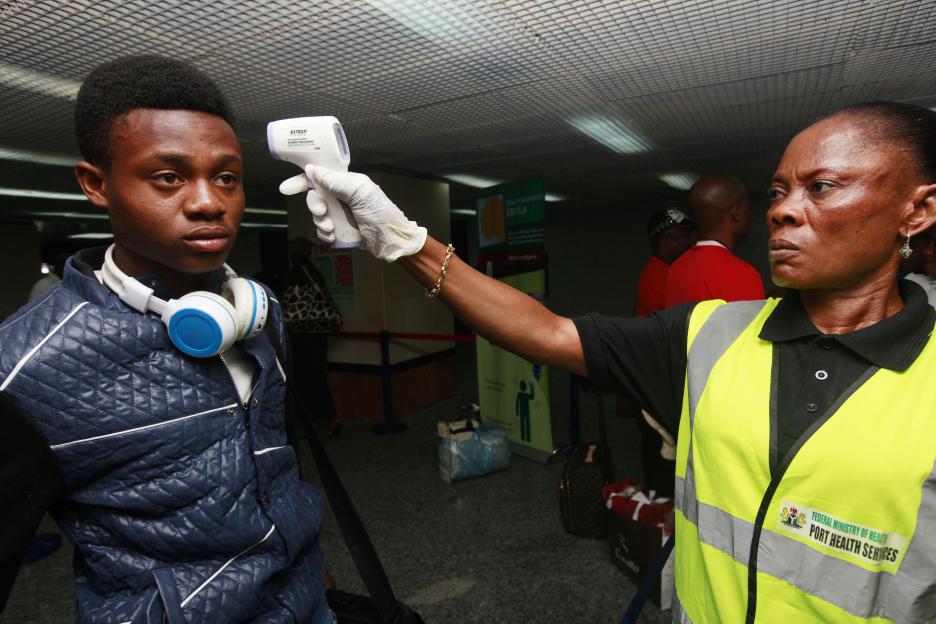 Health port officials use a thermometer to screen passengers upon arrival in Nigeria back in 2014 during a previous Ebola outbreak Credit: AP:Associated Press
 A general view of handwash and infrared thermometers at a health screening area at the Bunia airport in Bunia, DRC Credit: AFP
But some of the DRC coaching staff were in the country in the first few weeks of the outbreak starting in March.
They were all ordered to leave immediately and make their way over to ahead of their final warm up games in and Spain.
None have shown any symptoms and are expected to fly over to the US for their opening match against on June 17.
The Canadian government announced on Tuesday that residents from the DRC, Uganda and South Sudan will be banned from entering for at least 90 days.
DRC fans don’t have to travel to Canada for any group stage games but will have to go across to to play before heading back to the US for a clash with .
All three host nations have already declared every traveller may be subject to health screenings when they arrive at airports.
These tests will be carried out throughout the tournament and will ramp up ahead of games involving nations such as the DRC.
Dr O’Reilly continued: “What we’ve seen since the announcement of the outbreak is many countries putting in surveillance at borders and at points of entry.
“Does there need to be extra vigilance when you’ve got all these visitors to your countries? Absolutely.
“With any sporting event where you’re expecting that number of people visiting your country, there are enhanced measures anyway. Measures are being put in place daily at the moment by different countries.”
Dr O’Reilly explained that in the unlikely scenario a person does test positive for Ebola then measures will already be in place to protect everyone else.
“All countries will have a response plan,” she explained. “And they will have scenario planning within that plan for all possibilities.”
It also comes after made the decision to leave the WHO – meaning his top US scientists no longer work in tandem with the group’s health officials.