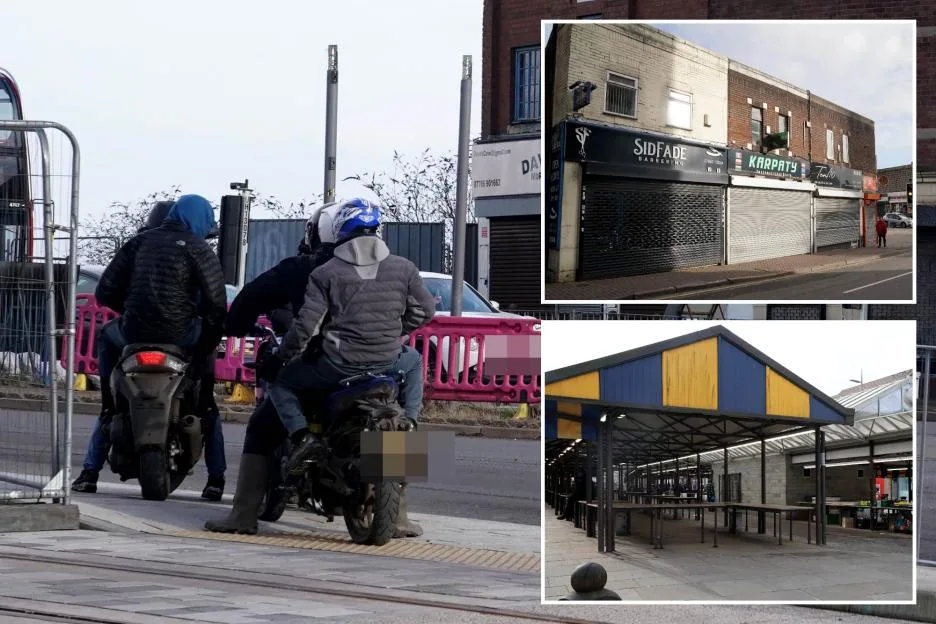
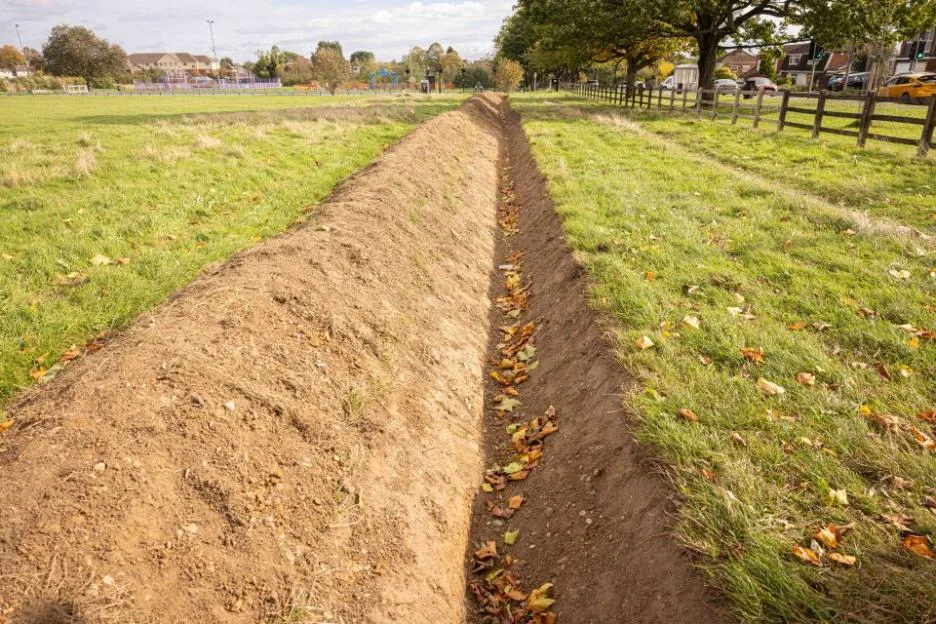
A COUNCIL has dug medieval-style trenches around some of its parks in an attempt to prevent “whack-a-mole” travellers from illegally occupying them.
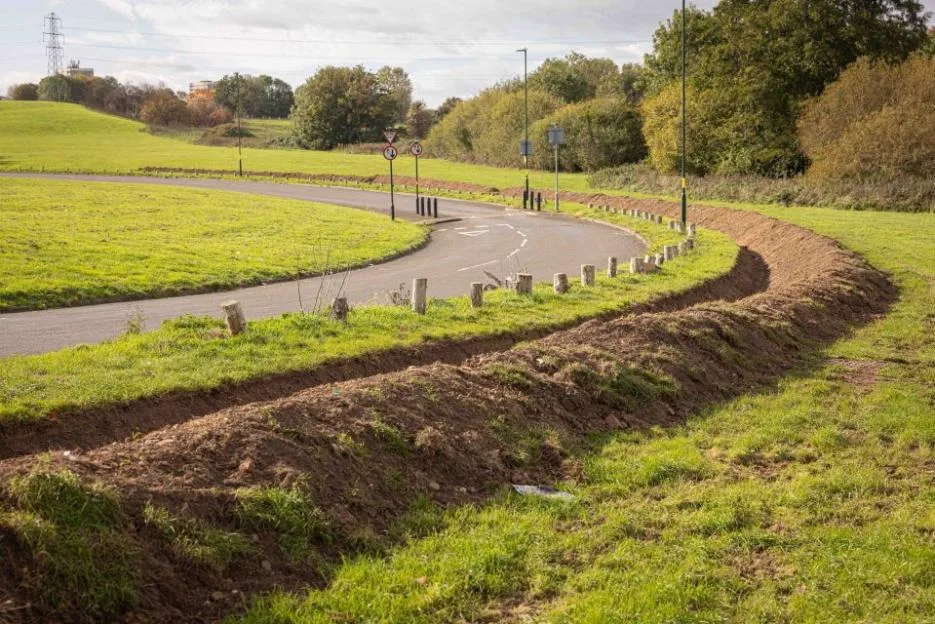
Defensive ditches – reminiscent of moats around the Midlands’ historic castles – have been dug around at least three parks in the last few months.
It followed a of “whack-a-mole”-style problems where officials would invoke legal routes to clear from public land, only for them to quickly pop up somewhere else.
Daisy Farm Park, off Maypole Lane, Highter’s Heath, had trenches dug out around its perimeter in recent weeks.
The same tactic has been employed at Manningford Road in Druids Heath.
Brandwood said a “trench was currently being dug out in Manningford Park to prevent any unlawful encampment”.
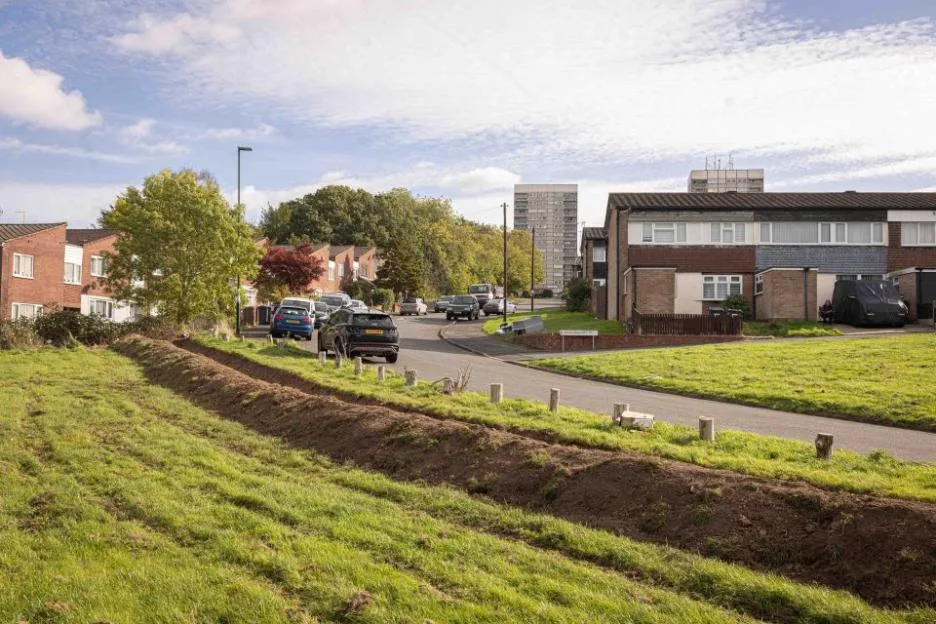
And trenches were also deployed at the entrance of Chinn Brook Recreation Ground, in Yardley Wood in August.
Birmingham has encountered scores of incidents where have arrived in caravans, and vehicles to set up camp across the city throughout the summer.
The city council said it was “committed to safeguarding public open spaces for the benefit of all users”.
It said it would continue to “review and monitor measures at individual locations”.
A council spokeswoman told said: “The council adopts a range of proportionate site-management measures to deter unauthorised vehicle access and unauthorised encampments on parks and open spaces where there is an evidenced history of recurring incidents.
“Increased encampment pressures, together with repeated damage to existing boundary infrastructure and access controls, have required the council to consider a wider range of preventative measures.
“The use of ditches, bunds and other landscape interventions forms part of a broader toolkit of options and is implemented only where considered necessary, appropriate and site-specific.
“The council remains committed to safeguarding public open spaces for the benefit of all users and will continue to review and monitor measures at individual locations.”
One commentator on Facebook said: “What if they shovel the soil on just the part they need to get entry?
“It will take them 5 minutes, job done. They dont have to refill the whole trench.”
While another added: “Why don’t councils just put a blanket ban on illegal traveller camps instead of one at a time.. would save loads of money.”
A third person wrote: “They will soon fill it in, to gain entry to the parks.”
It’s not the first time travellers have settled on .
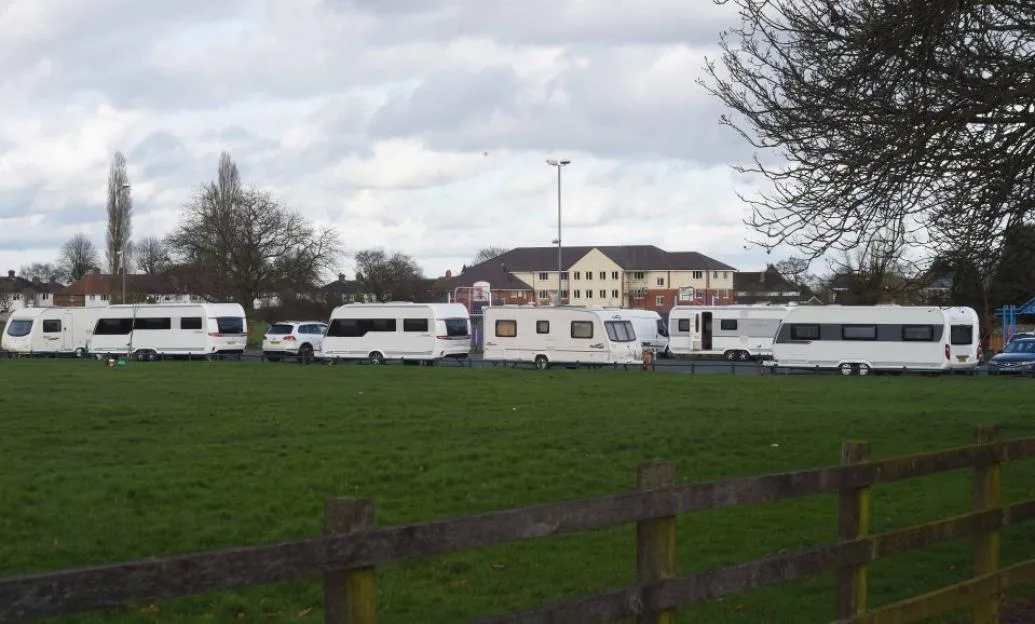
In March 2017, at least 10 caravans and other vehicles were spotted setting up camp.
Trenches have also been dug in the past around the country in an attempt to prevent travellers getting onto the land.
In September 2019, the around the sports fields and children’s playground in Swaffham Bulbeck, near Cambridge.
While , took similar measures when a group of travellers tipped up on a farmer’s field.
Locals near did the same after it became a magnet for travellers who would return again and again.