
Get Ready for the 2026 Summer Solstice: Your Ultimate Guide to the Longest Day of the Year!
THE longest day of the year is almost upon us, with the 2026 solstice arriving on June 21. It marks the , with the season coming to an end on the autumn equinox...
 Written byEze Chidiebere Paul
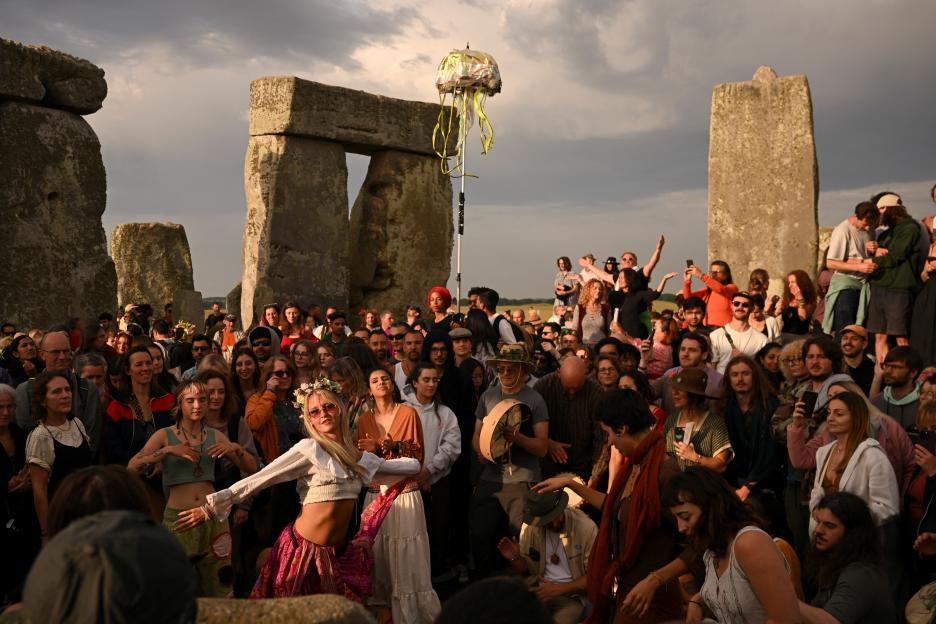
THE longest day of the year is almost upon us, with the 2026 solstice arriving on June 21.
It marks the , with the season coming to an end on the autumn equinox on September 23.
The summer solstice is the moment the sun reaches its highest point in the sky Credit: Reuters
When is the summer solstice 2026?
According to the , the precise moment of this year’s summer solstice in the UK is 9.24am BST on Sunday, June 21.
It is technically an instant rather than a full day – the moment the sun reaches its highest point in the sky, stops climbing higher and begins descending.
On this day, daylight hours are at their maximum and hours of darkness at their minimum, making it not only the longest day, but also the shortest night of the year.
The term solstice derives from the Latin word solstitium, meaning “sun standing still”.
It comes from the Romans’ observation that the Sun’s position in the sky at noon didn’t change much for the entire day.
The in the northern hemisphere always takes place somewhere between June 20 and June 22.
Its date shifts slightly each year due to the Earth taking roughly 365.25 days to orbit the sun.
The summer solstice occurs when the tilt of Earth’s axis is most inclined towards the sun, which is directly above the Tropic of Cancer.
will see 16 hours and 39 minutes of daylight on the day, while in the figure stretches to nearly 19 hours.
Despite being the longest day, it doesn’t necessarily bring the hottest .
The atmosphere and oceans take time to heat up, meaning temperatures typically peak several weeks after the solstice, often in late July or early August.
What happens at Stonehenge on the summer solstice?
is aligned with the direction of the sunrise on the summer solstice.
The day is celebrated by – and plenty of people looking for a good time – with rituals of rebirth and ceremonies linked to the changing of the seasons.
It is one of the few occasions each year when visitors are allowed to walk among the stones, with crowds gathering to watch the moment the sun rises above the .
This year, is providing open access to the site from the evening of Saturday, June 20, through to the morning of Sunday, June 21, with sunrise at Stonehenge expected at around 4.52am.
Parking for the event has already sold out, so visitors are strongly advised to use public transport due to expected heavy traffic from late afternoon on June 20.
It is just one of many throughout the year, which include midwinter and imbolc – the day that traditionally marks the start of spring.
Why is the summer solstice celebrated?
The summer solstice has been marked by civilisations for thousands of years.
Before , ancient Northern and Central European pagans welcomed midsummer with bonfires, believing they would boost the sun’s energy for the growing season and guarantee a good harvest.
Bonfires were also associated with magic, thought to banish evil spirits and lead maidens to their future husbands.
used the period around the summer solstice to meet and settle legal disputes.
Continue reading

Abia Govt denies imposing N50,000 tax on akara sellers
Abia State Government has dismissed allegations that it imposed N50,000 tax on women selling Akara in the streets of the state. The government also denied rep...
Peter Obi breaks silence on Gov Soludo’s borrowed funds allegation
The Nigeria Democratic Congress, NDC, presidential candidate, Peter Obi, says he did not owe any salaries, pensions, gratuities or any money when he was Anambra...

NSCDC arrests ex-AEDC staff, 12 others over N350m electricity cable vandalism
The Nigeria Security and Civil Defence Corps (NSCDC) has arrested a former staff member of the Abuja Electricity Distribution Company (AEDC) and 12 others over...
Ukraine ‘kills Hero of Russia general’ in strike as Trump says Putin & Zelensky agree to halt bombing energy targets
UKRAINE has reportedly killed a top Russian general as Trump claims Putin and Zelensky have agreed to an energy bombing halt. Lieutenant General Sergei Milchako...