NASA’S “Son of Concorde” jet that could fly from the UK to New York in four hours has smashed through the sound barrier without triggering the usual sonic boom.
The experimental X-59 aircraft, built by with Lockheed Martin, has finally hit supersonic speed as part of its mission to .
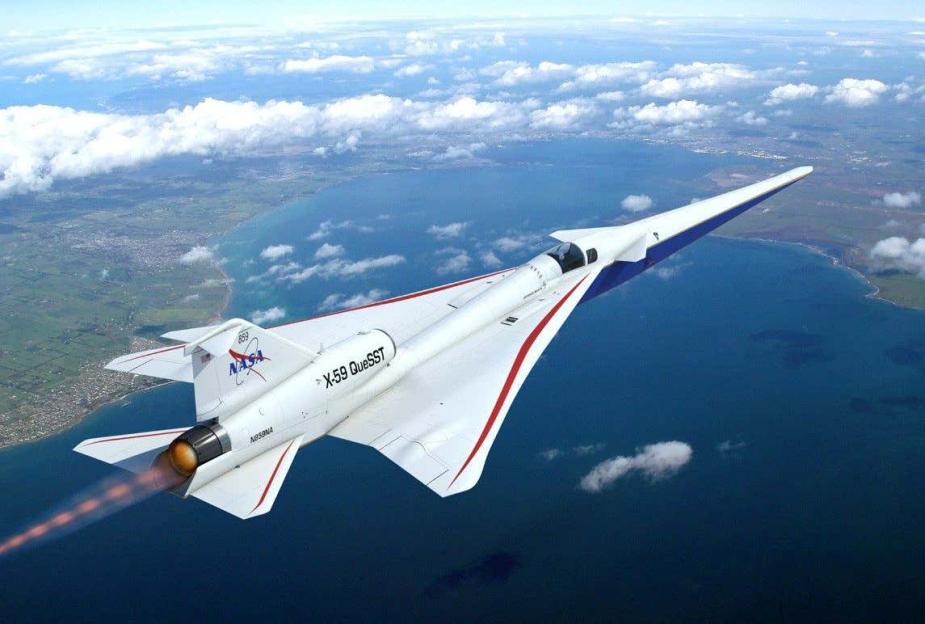 The experimental X-59 aircraft, built by NASA with Lockheed Martin, has finally hit supersonic speed Credit: Lockheed Martin
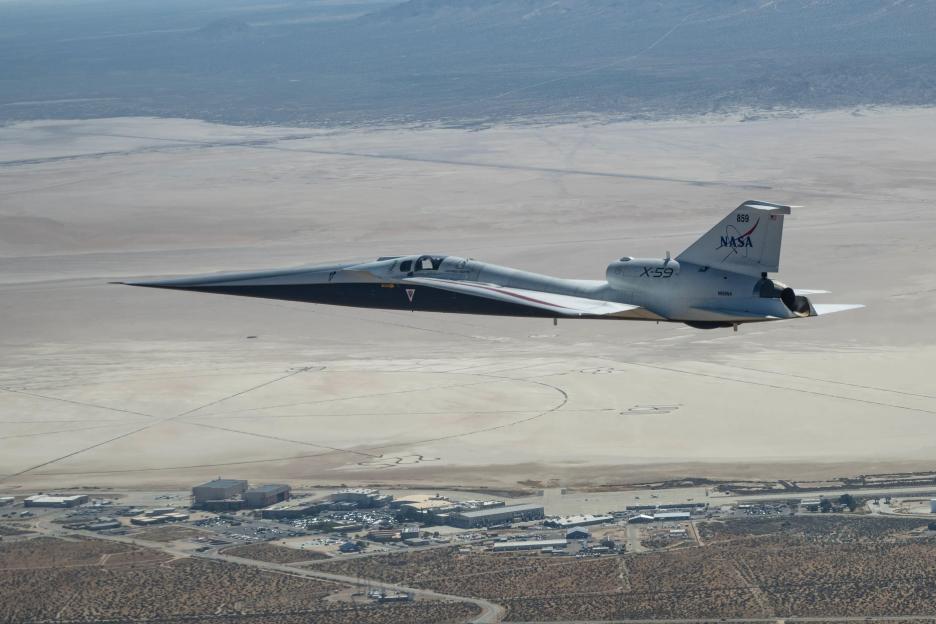 The jet smashed through the sound barrier without triggering the sonic boom Credit: Alamy
Earlier this month the futuristic jet blasted through the sound barrier during an 81-minute test flight, reaching and climbing to 43,400ft.
NASA administrator Jared Isaacman later revealed the aircraft was preparing for its “quiet supersonic debut”.
The X-59 has now gone even further by reaching what engineers call its design test condition.
During a June 12 flight, the aircraft hit Mach 1.4 – around 924mph – at roughly 55,000ft, the speed and altitude it is ultimately designed to cruise at.
“It was a huge deal for us,” said Larry Cliatt, a NASA aerospace engineer leading the second and third phases of the Quesst mission.
The Quesst programme aims to prove aircraft can fly faster than the speed of sound without producing the thunderous sonic boom that has kept supersonic travel off limits over land for decades.
Concorde could cross the Atlantic in less than three-and-a-half hours, but its explosive sonic boom meant it was largely restricted to flying at supersonic speeds over the ocean.
Since the 1970s, civil aircraft have been banned from flying faster than sound over land because the shockwaves can rattle windows and even damage buildings.
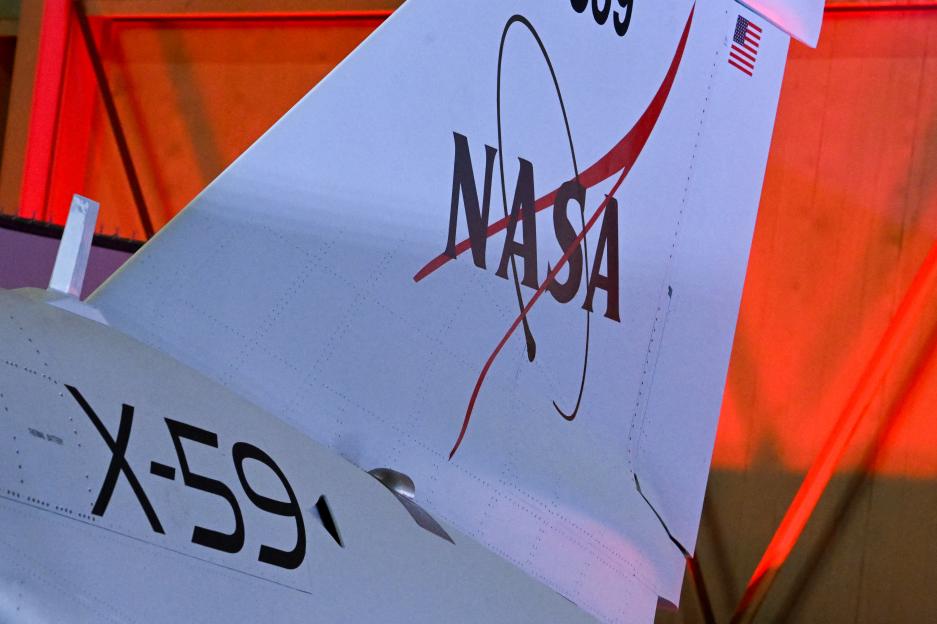 Traditionally, supersonic flight has been banned over land since the 1970s because sonic booms can rattle buildings Credit: AFP
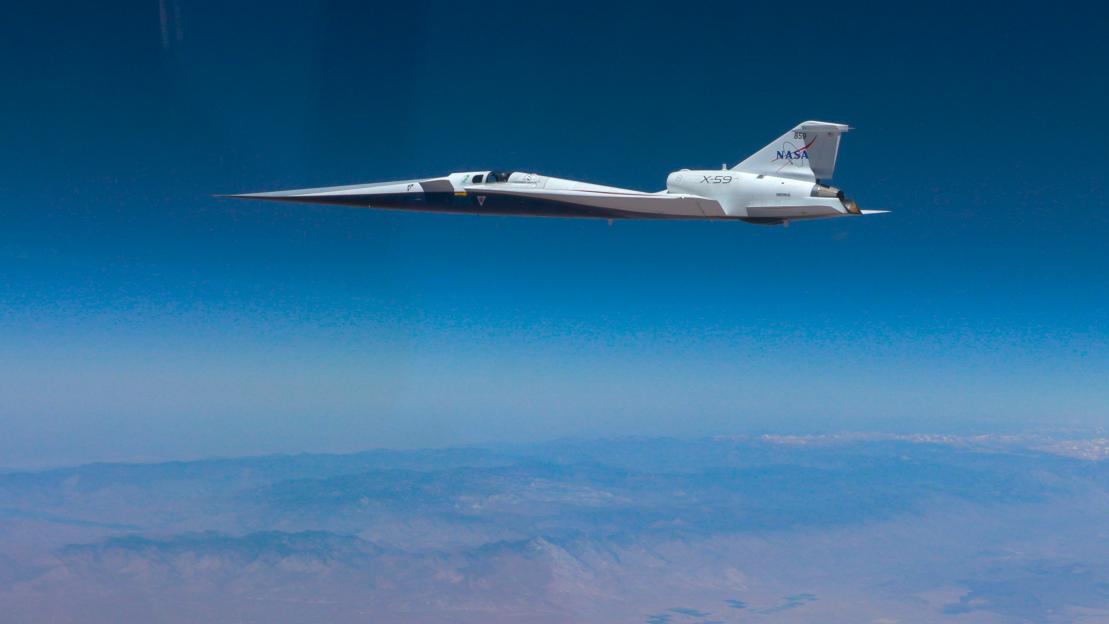 The X-59 has been designed with a long needle-shaped nose and smooth body to break up and control shock waves Credit: NASA/Lori Losey/Cover Images
Many people wrongly believe the sonic boom only happens as a plane breaks the sound barrier.
Cliatt said the shockwave actually follows the aircraft for as long as it remains flying faster than sound.
At 55,000ft, the boom would sweep across a strip of land around 55 miles wide beneath the aircraft.
The loud crack is caused when pressure waves bunch together as an aircraft outruns the speed of sound.
Although the pressure change is small, Cliatt said it is “no different from what you experience when going up two or three flights of stairs”.
But because it happens so suddenly, the human ear hears it as an explosion-like bang.
Traditional sonic booms can be as loud as a nightclub sound system.
NASA believes the X-59 has solved that problem.
The aircraft’s needle-like nose makes up almost a third of its total length and has been specially designed to spread out the shockwaves instead of allowing them to merge into one violent blast.
Its smooth fuselage follows the same principle.
The engine has also been mounted on top of the aircraft so the shockwaves it creates are directed upwards rather than towards the ground.
Engineers have also kept the underside of the jet as smooth as possible to further reduce noise.
NASA says the end result should sound more like a car door closing across a car park than the ear-splitting boom produced by Concorde.
“Something hopefully very benign to our everyday lives,” Cliatt added.
The futuristic aircraft has no forward-facing cockpit window because of its extra-long nose.
Instead, the pilot flies using camera feeds displayed on high-tech video screens with augmented reality.
The X-59 remains in the first stage of testing, known as envelope expansion, where engineers gradually explore the aircraft’s limits.
“The plane is built, the plane is flying. We’re steadily increasing the cadence of our flight tests,” Cliatt said.
“Right now we’re probably on the order of two to three to four flights a week.”
The £189million ($250million) aircraft has already produced the quieter “thump”, but engineers have not yet been able to isolate it properly because conventional supersonic chase jets flying alongside create booms of their own.
Its first solo supersonic flights are expected later this year.
“The whole point of this is to bring faster travel to people like me and you,” Cliatt said.
“We’re trying to get from to New York in three hours instead of five.”
NASA hopes developed on the X-59 will eventually be used in commercial airliners capable of slashing today’s flight times.
Engineers believe a 44-seat “boomless” supersonic passenger jet could be carrying travellers by 2040.
If the technology succeeds, journeys from London to New York could once again take around three hours instead of more than seven.
Concorde entered passenger service with British Airways and Air in 1976 after being developed by British and French manufacturers during the 1960s.
Only 14 Concorde aircraft ever entered service, but they carried more than two million passengers, mainly across the Atlantic to New York.
The luxury jet became the ultimate status symbol, attracting celebrities, business leaders and royalty.
It could cruise at Mach 2.04, or 1,354mph, allowing passengers to reach New York in around three hours.
But the aircraft’s enormous operating costs, small passenger capacity and thunderous sonic boom eventually forced its retirement in 2003.
Dame and Sir were among the famous passengers onboard the final British Airways Concorde flight from New York’s JFK Airport to Heathrow.
The X-59 follows a long line of legendary NASA X-planes dating back to 1947, when Chuck Yeager became the first person to break the sound barrier in level flight aboard the Bell X-1.
“We’re making an X-plane, a plane that’s never been made before, a plane that has no predecessors,” Cliatt said.
“It’s a one-off, one of a kind, and there’s nothing more exciting than that.”