THERE are worse ways to start the day than sipping on a steaming cup of coffee.
Many of us depend on an energising to bring us to life in the mornings or give us a boost during the inevitable afternoon slump.
 From protecting your liver to boosting your brain and heart health, coffee could benefit your health in several ways Credit: Getty
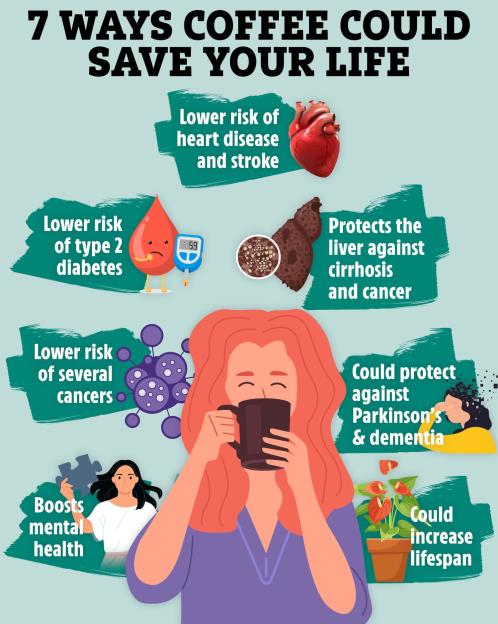 The benefits of coffee extend all across the body
You may despair that you’ll never be able to quit your daily drip-feed of .
But as long as you’re not guzzling too many mugs – and you’re keeping added sugar to a minimum – your daily cup of Joe may actually be boosting your.
New research from the Cedars-Sinai Health Sciences University suggests coffee could lower the risk of liver disease and liver cancer.
Drinking three or four cups of coffee a day was linked to a 35 per cent lower risk of cirrhosis – permanent scarring of the organ caused by liver disease or booze – and a 41 per cent lower risk of cancer.
Similar benefits to liver health were seen in caffeinated and non-caffeinated coffee drinkers.
This suggests that it’s not the beverage’s caffeine content that improves the health of the organ.
The antioxidants in coffee might have something to do with it instead, researchers said.
Coffee is known to contain – antioxidant compounds found in plants, which could help fight inflammation and cellular damage in the liver, as well as other organs.
But it’s not the only reason your coffee-drinking could be good for you.
Writing in The Conversation , Justin Stebbing, a professor of Biomedical Sciences at Anglia Ruskin University explained: “Coffee contains several essential nutrients beneficial to overall health.
“A typical eight-ounce cup of coffee provides small amounts of B vitamins – riboflavin, pantothenic acid, thiamine and niacin – as well as minerals potassium, manganese, and magnesium.”
From slashing your risk of chronic diseases to halting silent killers in their tracks and even extending your lifespan, here’s all the ways your coffee habit could be benefiting your health.
1. It could lower your risk of dementia
 Three cups of coffee a day could lower your risk of dementia Credit: Getty
suggests drinking three cups of coffee – or two cups of tea – per day may reduce the risk of dementia and slow cognitive decline.
Study participants who drank this amount of coffee were 18 per cent less likely to develop the condition, compared to non-tea or coffee drinkers.
Lead author Yu Zhang, from the School of Public Health at Harvard University, said: “Coffee and tea are widely consumed globally, so even modest associations could have meaningful population-level implications.”
Researchers tracked 131,000 health workers for 43 years – finding that coffee drinkers were less likely to develop and performed better in cognitive tests.
The benefits were specifically observed in people who sipped on caffeinated forms of the brew.
People who were at higher risk of developing dementia due to their genes – also known as genetic predisposition – also saw benefits to their cognition.
“Coffee or caffeine is likely equally beneficial for people with high and low genetic risk of developing dementia,” Dr Zhang suggested.
But it should be noted that the study is observational – meaning that it can’t show that coffee-drinking causes the lower dementia risk, only that the two are linked.
Senior author Daniel Wang, MD, ScD, from the Channing Division of Network Medicine in the Mass General Brigham Department of Medicine and Harvard Medical School, said: “While our results are encouraging, it’s important to remember that the effect size is small and there are lots of important ways to protect cognitive function as we age.
“Our study suggests that caffeinated coffee or tea consumption can be one piece of that puzzle.”
Prof Stebbing suggested coffee consumption could also lower your likelihood of developing other neurodegenerative diseases, like Parkinson’s – where parts of the brain become progressively damaged, causing tremors and stiffness.
“Caffeine is associated with a lower risk of developing Parkinson’s disease and may help those with the condition manage their movements better,” he said.
“Additionally, coffee consumption may reduce the risk of Alzheimer’s disease and other forms of dementia.”
Research by the University of Verona also found that can reduce your risk of dementia-causing Alzheimer’s disease.
2. It could slash your risk of heart disease and strokes
 The brew could also help lower your risk of heart disease Credit: Getty
According to Prof Stebbing, moderate coffee consumption has been linked to a reduced risk of and.
“Studies indicate that drinking one to two cups of coffee daily may lower the risk of heart failure,” he said.
“Additionally, coffee consumption has been linked to a lower risk of cardiovascular mortality and disease.
“Interestingly, even when someone has, coffee is not harmful according to recent data.”
Research from 2024 found that people who drink two or three cups of the brew a day have a lower risk of, or.
Experts at Soochow University in China moderate coffee drinkers – two to three cups daily – were half as likely as non-drinkers to develop two or more cardiometabolic diseases.
These are serious but preventable illnesses including heart attacks, strokes, type 2 diabetes, insulin resistance and.
Having more than one is called multimorbidity.
They are among the most common conditions in the UK, affecting millions of people, and are mostly caused by .
Meanwhile Semmelweis University in Hungary found average coffee drinkers had a 21 per cent lower chance of having a stroke and a 17 per cent lower risk of dying of heart disease.
But studies have also indicated that there’s a when it comes to heart health.
Experts from Zydus Medical College in India said more than four cups of coffee a day may strain your ticker by raising your blood pressure and heart rate.
And suggested the time of day you indulge in a cup of Joe can also be important.
People who drank their coffee before lunch had a lower risk of heart disease or dying young than those who guzzled it all day, results showed.
3. It could reduce your risk of type 2 diabetes
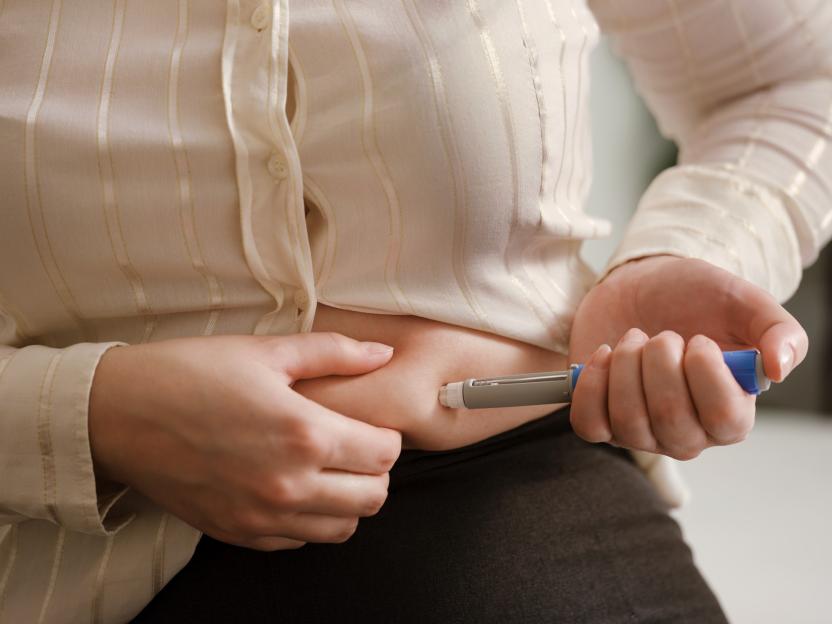 Coffee could lower the risk of type 2 diabetes – as long as you leave out the sugar Credit: Munro
Your daily caffeine kick may also reduce your risk of developing type 2, Prof Stebbing went on.
“Coffee may enhance the body’s ability to process glucose,” he explained, thus improving your chances of avoiding the disease.
The professor pointed to research showing that people who consume more coffee have a lower likelihood of developing type 2 diabetes.
US researchers found that people with diabetes could live longer by.
An estimated have , which raises blood sugar levels and can eventually lead to heart disease and stroke.
4. It could help protect the liver
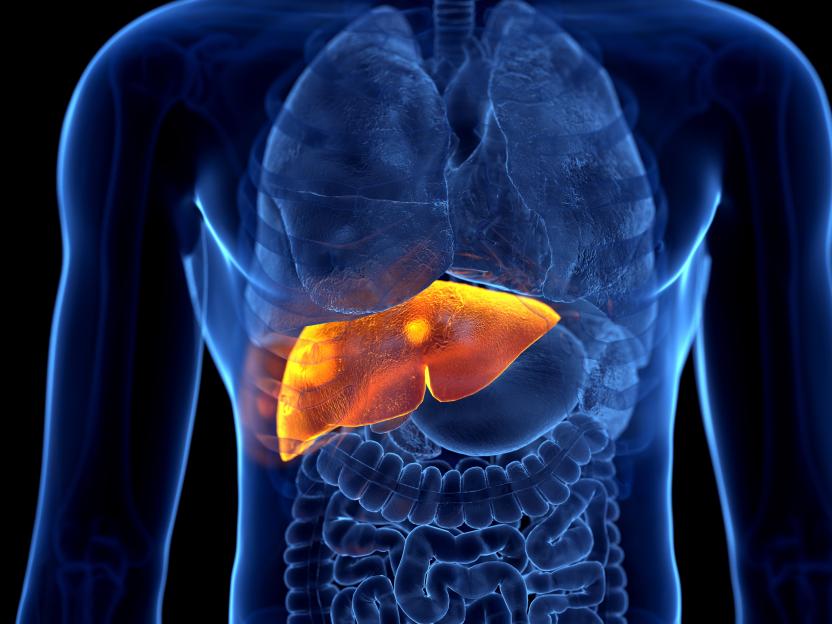 Liver cancer, illustration. Credit: Getty
The benefits of coffee extend across the body, as it could help keep your liver healthy too.
Coffee – both regular and caffeine free – appears to have protective effect on the liver, Prof Stebbing said.
The drinks have been associated with healthier liver enzyme levels, he explained, with coffee drinkers having “a significantly lower risk of and “.
This was backed up by the recent Cedars-Sinai research.
Scientists followed 354,000 participants for more than a decade.
The highest benefit to liver health was observed among those who drank three to four cups of coffee a day.
Meanwhile, one to two cups a day were associated with a 20 per cent lower risk of cirrhosis and a 24 per cent lower risk of liver cancer.
Researchers also observed benefits in people who had five or more cups of the brew a day – but said they wouldn’t necessarily recommend having that much on the daily.
Senior author Ju Dong Yang, medical director of the Liver Cancer Program at Cedars-Sinai said: “Our findings support moderate coffee consumption for people who already enjoy and tolerate it well.
“However, we would not recommend that someone begin drinking coffee solely for liver protection based on this study alone.
“Prevention should continue to focus on maintaining a healthy weight, limiting alcohol, exercising regularly, and managing blood sugar, blood pressure and cholesterol.”
University of South Carolina researchers previously warned that may be harmful to the liver.
When can coffee be bad for you?
THOUGH coffee can offer a number of health benefits, it's important you don't tip over in consuming too much.
A moderate intake of coffee tends to be around three to five cups per day.
Too much caffeine intake can lead to negative side effects such as jitteriness, anxiety and sleep disturbances, according to Prof Stebbing.
“Some people who are especially sensitive to caffeine may need to limit their coffee intake or avoid it altogether, as even decaffeinated coffee contains caffeine,” he added.
The professor also advised that you avoiding adding sugar and cream to your morning brew.
Both can up the calorie content of your coffee and could take away from the brew’s benefits.
5. It could reduce your risk of several cancers
Liver cancer isn’t the only form of the disease that coffee could help protect you from.
The staple brew has been linked to a reduced risk of several other types of cancer, including colorectal and womb cancers, Prof Stebbing noted.
“A systematic review found that high coffee consumption is associated with an 18 per cent lower risk of cancer,” he explained.
In 2023, Italian researchers estimated that drinking up to five cups of coffee a day can.
And in 2024, researchers at the University of Utah School of Medicine and Huntsman Cancer Institute said sipping on three to four cups of coffee a day was linked to . But the temperature of your drink could have the opposite effect, as having coffee too hot has been .
6. It could boost mental health
 Coffee could do more than boost your mood in the mornings Credit: Getty
Does your morning cup of coffee flood you with joy? It turns out that the positive effects of coffee on your can be more wide-ranging.
Prof Stebbing said: “Studies suggest that coffee drinkers have a lower risk of , with some findings indicating a 20 per cent reduced risk of becoming depressed.
“What’s more, coffee consumption has been associated with a decreased risk of .
“Research has found that people who drink four or more cups a day are 53 per cent less likely to .”
7. It could help extend your lifespan
 Coffee could also add years to your life Credit: Getty
“With all these benefits, it’s not surprising that research suggests that coffee drinkers tend to than non-drinkers,” Prof Stebbing concluded.
He referred to a study of over 400,000 people, which found that drinking coffee over 12 to 13 years was linked to a lower risk of death.
This effect was strongest in people who had four to five cups per day.
“This longevity benefit could be due to the cumulative effects of coffee’s protective properties against various diseases,” Prof Stebbing said.
Could coffee one day help alcohol addiction?
Scientists recently discovered caffeine may counteract some of alcohol’s effects on the brain’s reward system by blocking certain dopamine responses typically triggered by alcohol.
Dopamine is often referred to as the ‘feel-good’ hormone.
It plays a role in many bodily functions, including addiction.
Dopamine can encourage you to repeat behaviours that result in pleasure, which can lead to addiction.
The study, published in Translational Psychiatry , offers evidence that caffeine can prevent the production of specific brain chemicals linked to alcohol’s rewarding effects – which highlights caffeine’s potential as a preventative tool in addressing alcohol addiction.
The researchers studied male rats and examined the effects of caffeine on the release of dopamine and other substances in the brain when alcohol was present.
The rats were divided into groups that received different treatments – some were given alcohol alone, some received alcohol and caffeine, and others were given selective drugs that block certain adenosine receptors to compare with the effects of caffeine.
Dopamine levels and brain chemicals were then measured.
The results showed caffeine effectively blocked dopamine surges triggered by alcohol.
Also, caffeine prevented the formation of a chemical called salsolinol, which is associated with alcohol’s rewarding effects.