IT was an image so horrific that people believed it had been AI-generated.
But is just the tip of the iceberg when it comes to .
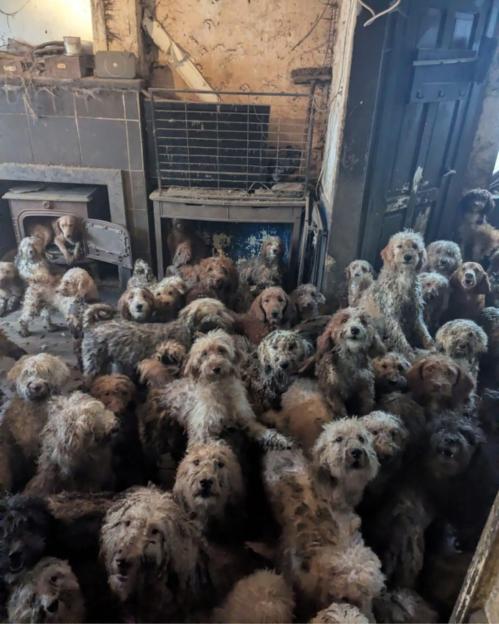 The dogs were rescued by the RSPCA after their elderly owner lost control Credit: Facebook
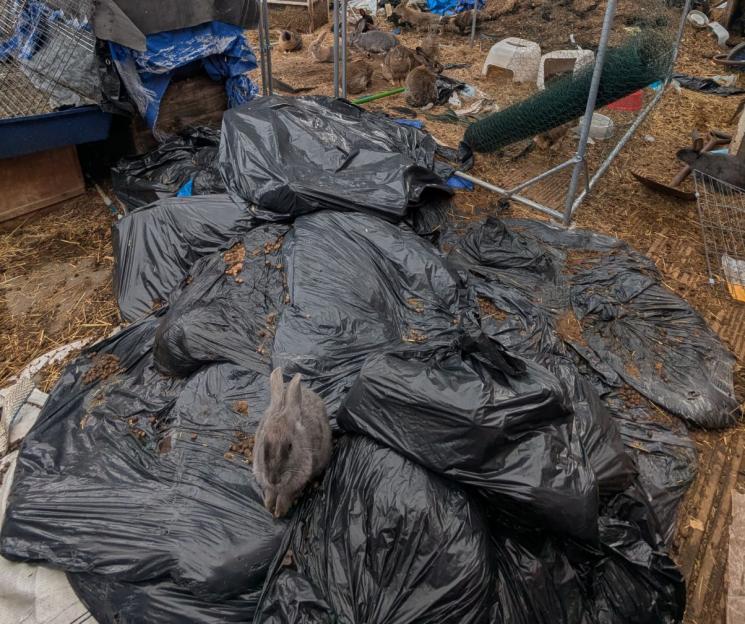 A recent case included an incident of 99 rabbits squeezed into one property – it took the officers four days to remove them all Credit: RSPCA
The Sun can today reveal that animal welfare officers have seen an alarming 70 per cent rise in cases of multiple pets trapped in rundown properties over the past five years.
Figures from the RSPCA reveal that more than 88,000 animals – including dogs, cats, horses, small pets and – have been rescued from overcrowded houses since 2021.
They include cases of 99 rabbits squeezed into one property which took FOUR days to rescue. Almost 30 chickens were housed in a “filthy” pen at another house while 15 guinea pigs were squished into tiny enclosures.
RSPCA Superintendent Jo Hirst said: “We are struggling with rising reports of cruelty and neglect and over recent years more and more of those reports will involve ten, 20, even 100 animals.
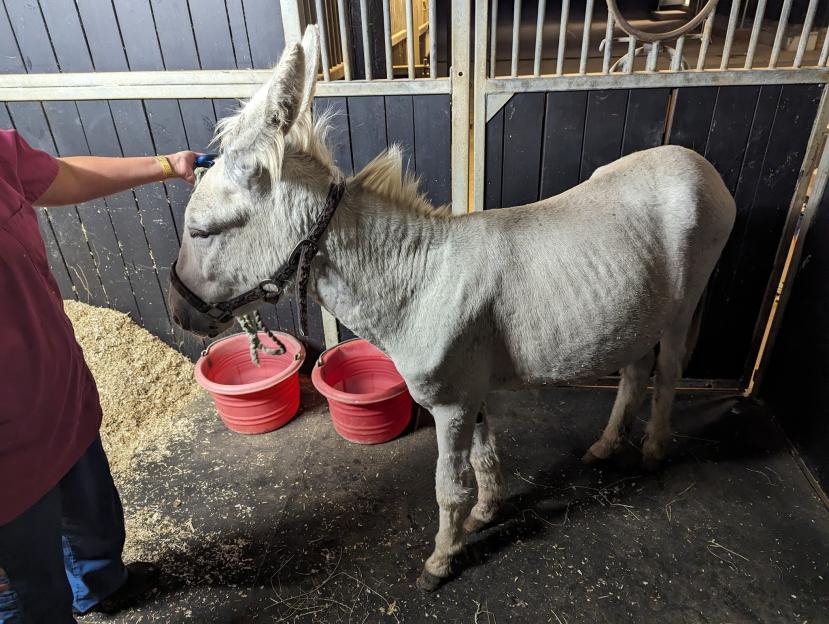 Earlier this month, three Essex women were convicted of a total of 15 welfare offences relating to 58 animals, including a donkey whose ‘ribs and hips were visible from across the field’ Credit: RSPCA
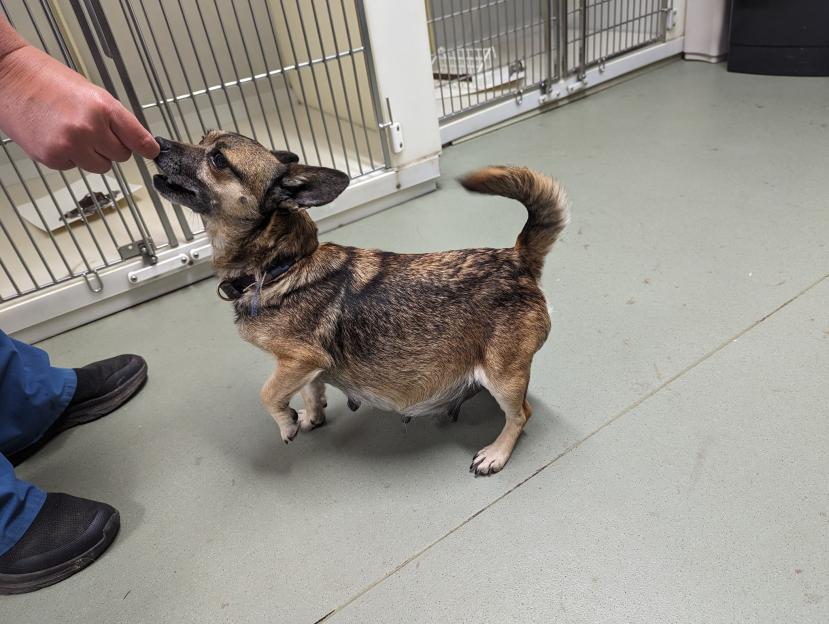 Inside the house, officers also found a heavily pregnant Chihuahua-cross dog who was very underweight Credit: RSPCA
“Rescues involving lots of animals from one address are often very complex and sometimes can include very difficult family circumstances, serious mental health problems, or can be linked to breeding which has spiralled out of control.
“People accumulate animals for a multitude of reasons, but in most cases, the more animals you have the harder it becomes to have the time, money and expertise to keep them happy and healthy, which leads to welfare problems.”
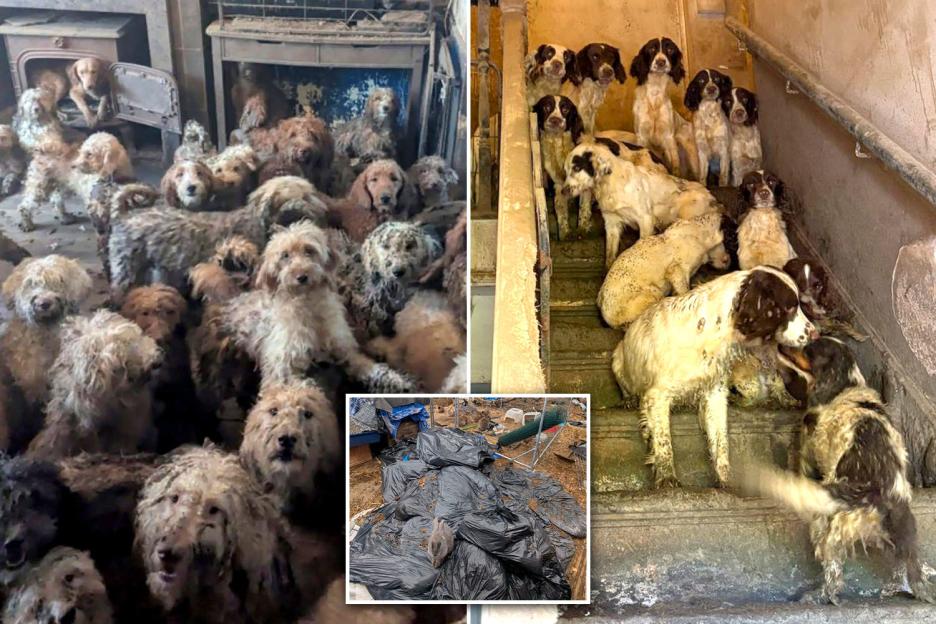
Earlier this year, the charity shared a heartbreaking image of 250 poodle-crosses found cramped in a squalid and dingy home.
The defenceless animals could be seen stuffed into every nook of the decrepit home – even sleeping in an old log-burner.
Every inch of the room was covered in fur with wallpaper peeling from the walls.
The pooches were caked in their own filth, with many of them suffering from sore skin and matted coats.
When they were rescued by the RSPCA, some were so terrified of the outside world that they had to be carried from their kennels to the grass.
It’s far from the only case. Earlier last year, riddled with filth.
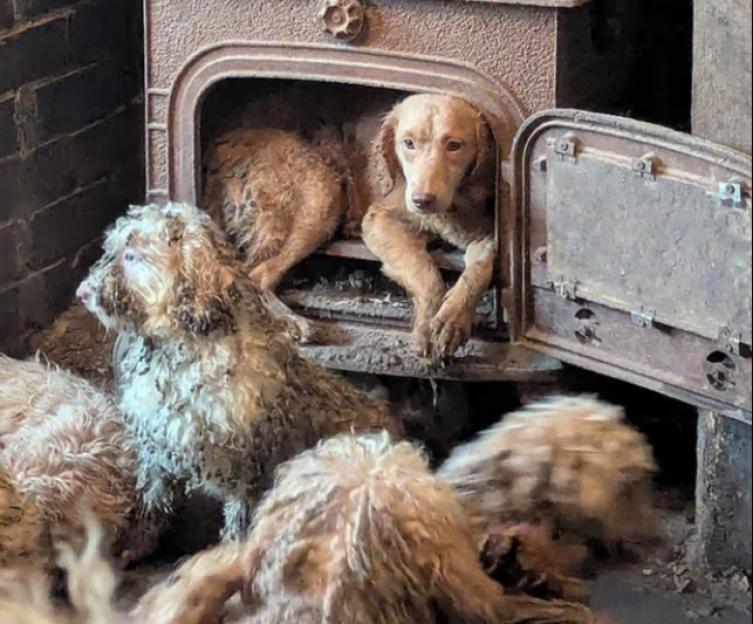 The defenceless animals were stuffed into every nook of the decrepit home Credit: Facebook/RSPCA
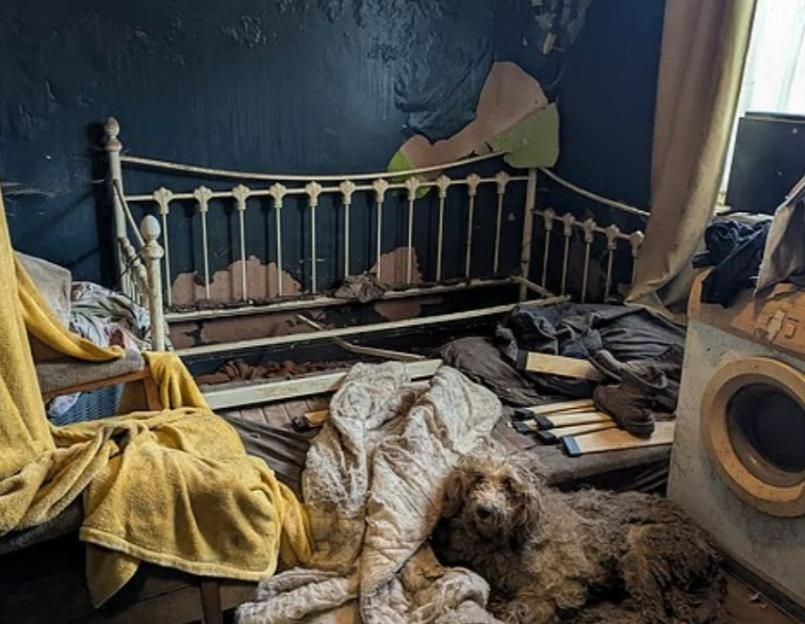 The rescue took place at an undisclosed location Credit: Facebook/RSPCA
The animals, who were found in Tickhill, Doncaster, were removed from the property one by one.
The force told how they were “immediately taken aback by the smell, the conditions and the volume of animals living inside”.
After the rescue, police dog trainer Wes Donnelly told The Sun, the trapped pooches “didn’t know how to eat from a bowl, they’d never seen grass and didn’t have names.
“They had no idea where to go to the toilet and were a bit nervous around other people.”
As shocking as they are, many of these cases don’t result in prosecution because owners suffer mental health issues.
The owner of the rescued rabbits was said to have “acquired them from social media sites over a number of years after they were advertised as unwanted pets”.
RSPCA’s Lucy Bailey said: “The animals were living in hutches and home-made pens, and many were loose. They weren’t neutered and had bred uncontrollably, causing numbers to spiral out of control.”
The operation to get their health checked and transported involved over 20 RSPCA officers and volunteers. Luckily, although their living conditions were poor, the rabbits were all in reasonable health, the charity told us.
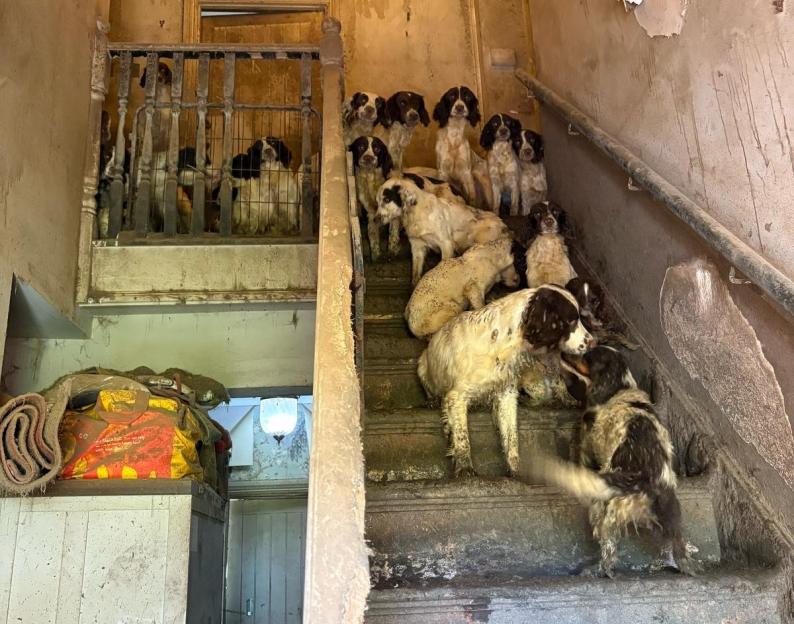 South Yorkshire Police handout photograph shows some of the 80 dogs living in squalid conditions that were rescued from a home in Tickhill, Doncaster, last year Credit: South Yorkshire Police
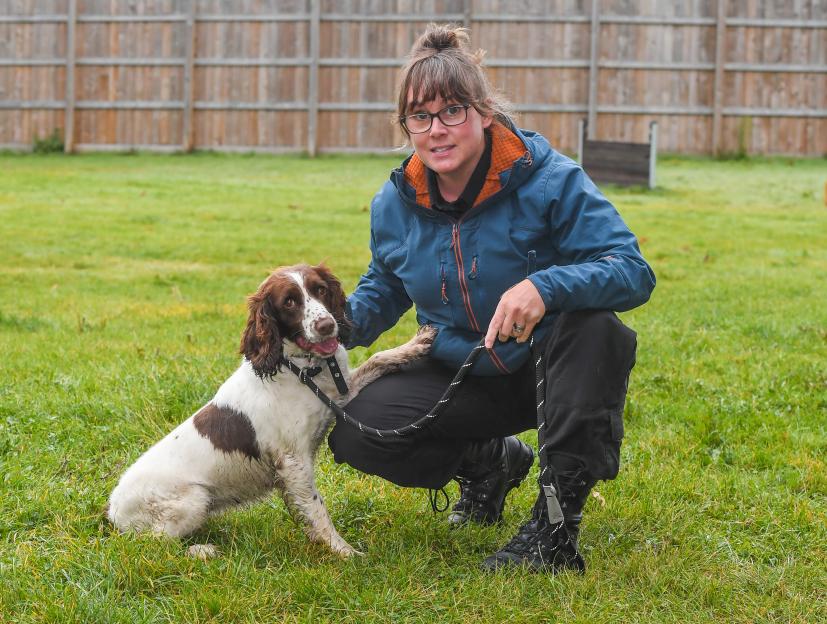 Greater Manchester Police dog unit took in the pups after the RSPCA raid. Pictured is PC Danielle Mannion with Springer Spaniel Lola Credit: Andy Kelvin / Kelvinmedia
The RSPCA told us that “there is no suggestion the rabbits were being bred for commercial purposes” and that “this is not a prosecution”.
RSPCA Superintendent Jo Hirst said the charity was struggling with cases of up to as many as 100 animals.
She said: “We are struggling with rising reports of cruelty and neglect and over recent years more and more of those reports will involve ten, 20, even 100 animals.
“Rescues involving lots of animals from one address are often very complex and sometimes can include very difficult family circumstances, serious mental health problems, or can be linked to breeding which has spiralled out of control.
 One of the pups rescued from the 250 dog house in a new home Credit: Facebook
 One of the rescued pooches relaxing on the sofa next to her new owner and canine friend Credit: Facebook
“People accumulate animals for a multitude of reasons but in most cases, the more animals you have the harder it becomes to have the time, money and expertise to keep them happy and healthy, which leads to welfare problems.”
The poodle crosses rescued from the 250 dog home – the location of which was not disclosed – were sent to centres across the country, including Hertfordshire, Surrey, Norfolk and Nottinghamshire for rehoming.
Radcliffe Animal Centre in said many of the dogs have now been reserved or taken to new homes. Addressing rumours circulating online the picture was AI-generated, RSPCA Superintendent Jo Hirst said: “The public’s disbelief is understandable, but this photo is real.
“Overbreeding and overwhelmed owners can create staggering situations, and our officers are seeing more cases involving 10, 20, even 100 animals.”
The charity said it would not pursue prosecution due to the “extremely vulnerable nature” of the owners.
Sadly, according to the worrying figures shared by the RSPCA, there is a rise in such cases.
The animal welfare charity told The Sun that between 2021 and 2025, there was a 70 per cent increase in incidents involving ten or more animals trapped at a single property.
While in 2021 there were a staggering 2,539 such brutal cases recorded, by 2025 the number had almost doubled, with 4,268 incidents – or nearly 12 every single day.
Even more shockingly, the team responded to 75 incidents about concerns for more than 100 animals at a single address last year – more than one a week.
Earlier this month, three Essex women were convicted of a total of 15 welfare offences relating to 58 animals who were kept at a property in Walton on the Naze.
The animals included one marmoset, one tortoise, one donkey, three horses, 29 chickens and cockerels, five ducks and two ducklings, one dog – who later gave birth to seven puppies in RSPCA care, and two female guinea pigs with their 13 babies in tow.
The court heard that the women had, in the past, run a sanctuary – Silver Cloud Sanctuary – for animals in need and, in mitigation, the Judge was told they were well-meaning but couldn’t cope with so many.
Concerns about conditions at the site were raised to a number of organisations resulting in several visits and animal welfare improvement notices being issued.
But when RSPCA officers were not satisfied that necessary improvements had been made, they returned to the property with police and a vet and 58 animals were removed.
Sharing just some of the horrors she witnessed, inspector Richardson said the birds had no food and many were underweight, had feather-loss, and were suffering from skin problems. The ducks were found in a “dirty’’ and “cramped’’ enclosure with no water or food.
A further enclosure had hutches stacked up on top of each other; the top contained a guinea pig and six babies.
Inspector Richardson added: “The bedding was mixed with mouldy faeces, and the bedding itself was wet to touch. There was an unpleasant musky odour.”
In a field there was a white male donkey said to be three years old.
“The donkey’s ribs and hips were visible from across the field, and he had scabs on his left ear. There was no shelter or shade available,” Inspector Richardson continued in her statement.
District Judge Williams told the trio that they should “hang their heads in shame’’ and called the case “sad’’.
Speaking after the case concluded, Inspector Richardson added: “We always try to work with owners and improve conditions but that doesn’t always work and sometimes we have to take these steps to protect animals.”
Jo Hirst said: “Often, animals rescued from crowded environments have not been socialised properly, so may not have ever been taken for a walk, stroked or groomed. They can require a long period of rehabilitation before being ready to find a new home, which puts even more strain on an already stretched rescue centre.
“We are encouraging people who are struggling to contact a reputable animal charity so they can work with them to bring numbers down to a more manageable number. Often, problems escalate because people are ashamed or worried about asking for help.
“We desperately want to hear from people who have the time, patience and love to care for one of our animals who need more TLC. We urgently need foster carers and forever homes to free up space in our centres so we can continue our vital rescue work.”
If you want to donate to the RSPCA, you can do it here .