
Riyadh Airport Flights Disrupted After Saudi Capital Aerial Alert
Flights at Riyadh’s King Khalid International Airport faced delays and cancellations on 19 September 2026 after Saudi civil defence issued an aerial-danger warning for the capital. Flames and smoke were seen near the airport, but authorities had not publicly established the cause at the time of reporting.
 Written byEze Chidiebere Paul
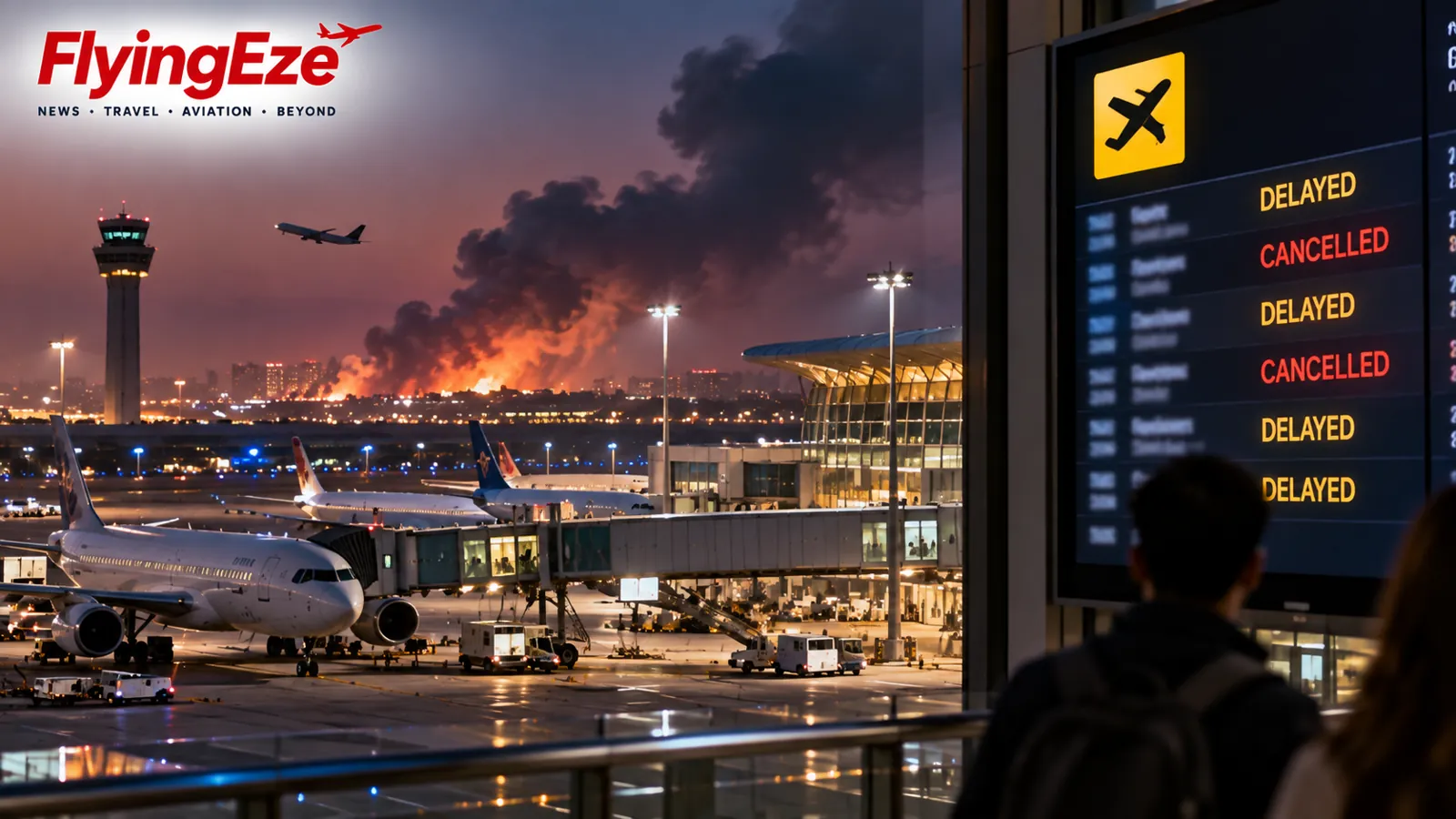
Flights at Riyadh’s King Khalid International Airport were disrupted on Saturday, 19 September 2026, after Saudi civil defence issued an aerial-danger warning for the capital and later announced that the immediate danger had passed.
Reuters reported that residents heard loud booms in Riyadh and that flames and a large plume of black smoke were visible near the city’s main airport. A separate Reuters report said the exact cause of the fire was not clear at the time and that Saudi authorities had not immediately provided a public explanation for what had happened near the airport.
Flight-tracking data cited by several news organisations showed significant disruption at King Khalid International Airport, including delays and cancellations. Flightradar24 listed the airport at its highest disruption level during the incident, indicating long delays and multiple cancelled services.
Saudi civil defence issued an aerial warning
The disruption followed emergency alerts sent by Saudi civil defence warning residents in Riyadh and other areas of a potential aerial threat. The warning was subsequently lifted, with authorities issuing an all-clear.
Associated Press also reported widespread emergency alerts in Saudi Arabia on Saturday amid heightened regional tensions. Explosions were heard in Riyadh, although AP said no casualties or confirmed damage in the capital had been announced in connection with the warning at the time of its report.
The broader regional security situation has intensified in recent days, but the cause of the flames and smoke seen near Riyadh airport had not been formally established when this article was prepared. FlyingEze is therefore not attributing the airport-area fire or every individual flight disruption to a specific attack without an official determination.
Passengers face delays and cancellations
Travellers using King Khalid International Airport should expect schedules to remain fluid while airlines and airport operators work through the disruption. Flight cancellations and late departures can produce knock-on effects even after an immediate security alert has ended, particularly when aircraft and crews are displaced from their original rotations.
Passengers with journeys through Riyadh should check the latest status directly with their airline before travelling to the airport, monitor any rebooking notifications and allow extra time for onward connections.
Where a flight is cancelled, travellers should use the airline’s official channels for rebooking, refund and accommodation information. Policies can vary according to the airline, route and reason for the disruption.
What is confirmed — and what remains unclear
What is confirmed is that Saudi civil defence issued an aerial-danger warning, later gave an all-clear, smoke and flames were seen near King Khalid International Airport, and flight-tracking services reported substantial delays and cancellations.
What remained unclear at the time of publication was the precise cause of the visible fire and smoke near the airport and whether every disrupted flight was directly linked to the same incident. Authorities had not publicly established those details in the reporting reviewed by FlyingEze.
That distinction matters during fast-moving aviation and security events because early reports can combine separate operational, safety and security issues before official investigations establish a complete timeline.
What travellers should do now
Anyone travelling to or from Riyadh should rely on their airline’s live flight-status page and official airport guidance for the latest operational information. Travellers connecting through other Gulf hubs should also check onward sectors individually rather than assume that a delay in Riyadh will automatically affect the rest of their itinerary.
FlyingEze will continue to follow official updates on Riyadh airport operations and any confirmed findings about the incident near the airport.
Sources: Reuters , Reuters , and Associated Press .
Continue reading
SpiceJet Flights Face Delays and Cancellations at Delhi Airport
Several SpiceJet flights at Delhi’s Indira Gandhi International Airport were delayed or cancelled on 19 September 2026 because of an operational disruption. Delhi Airport said teams were coordinating with the airline and other stakeholders to assist affected passengers.

I found Portugal’s top sporting retreat loved by pro footballers with world-class golf, and huge inflatable aqua park
VISITING one of Portugal’s top golfing regions without an ounce of experience of the game was certainly a nerve-racking move. But I needn’t have worried. The...

Jet Financiers Warn Fuel and Borrowing Costs Are Reshaping Aviation
Aircraft financiers and lessors say higher jet-fuel prices and borrowing costs are reshaping aviation economics, cooling parts of the second-hand aircraft market even as passenger demand remains resilient.

Delhi Airport Third Runway Reopens After Seven-Month Upgrade
Delhi Airport’s third runway, 11R/29L, is returning to service on 20 September 2026 after a seven-month rehabilitation programme designed to improve safety, efficiency, resilience and long-term capacity.