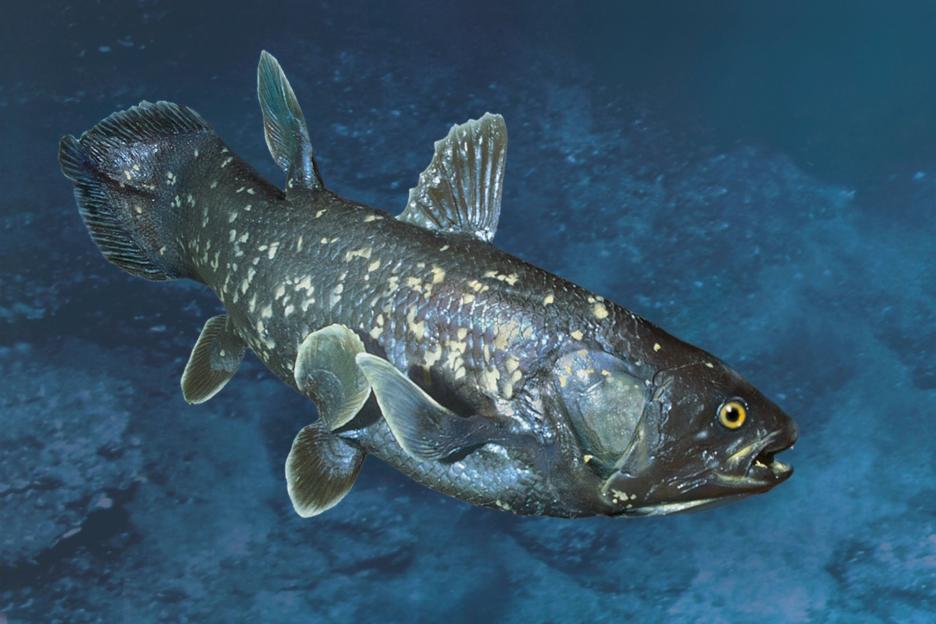
THE remains of a “very rare” 320million-year-old fish have been discovered at a UK beauty spot.
The of the coelacanth was found at Roundhay Park in Leeds by Ru Smith from the Yorkshire Geological Society.
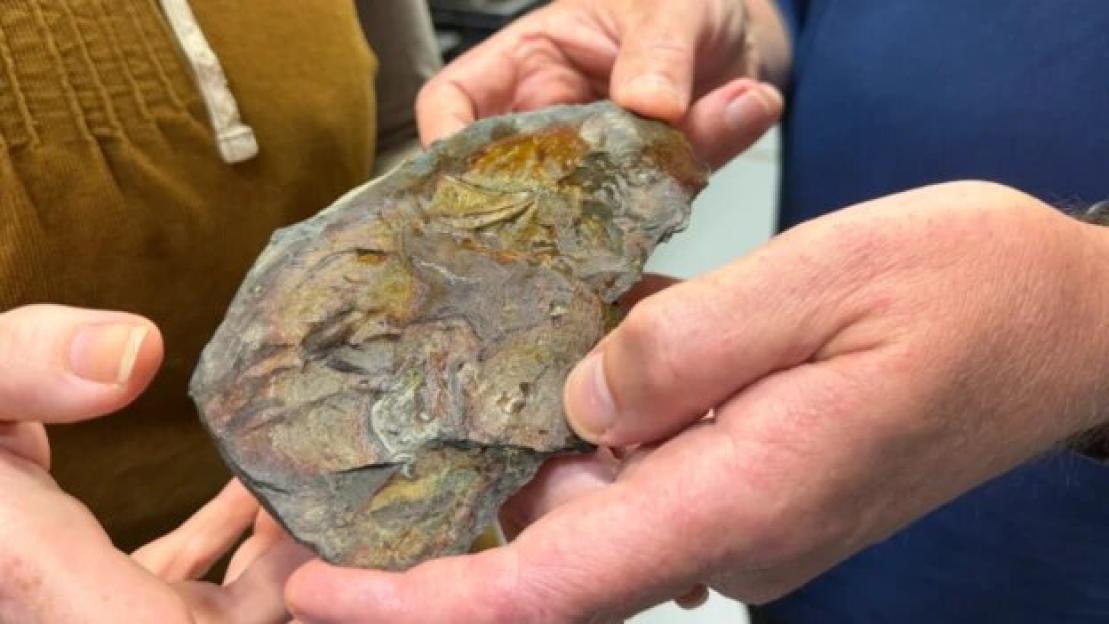 The fossilised skull of a coelacanth was found at a park in Leeds Credit: Leeds Museums And Galleries
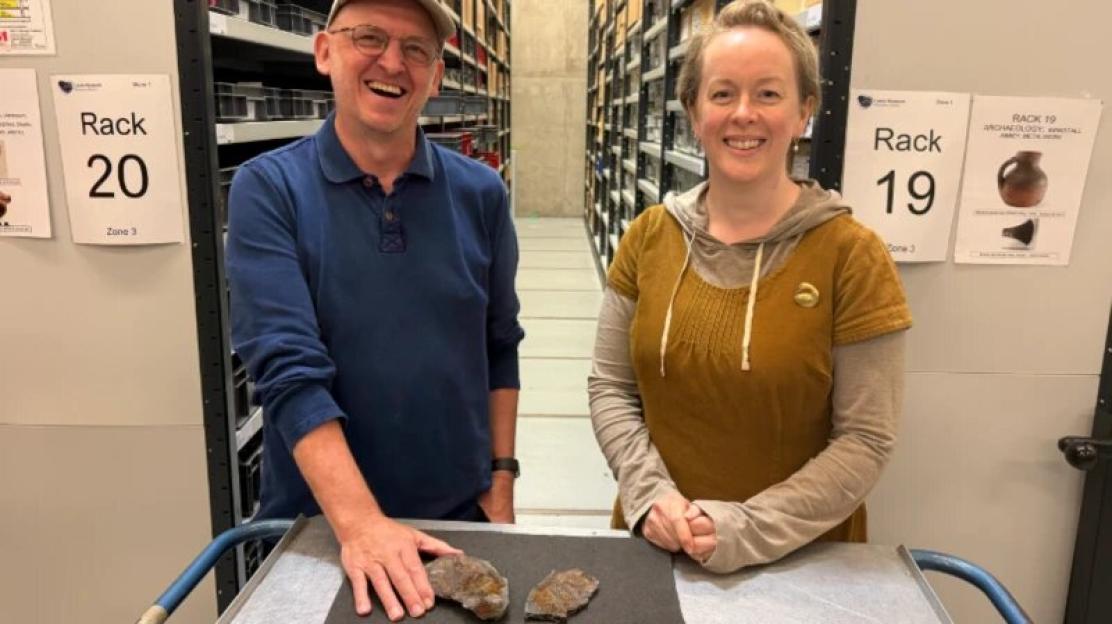 Ru Smith made the discovery while looking through an ancient rock layer Credit: Leeds Museums And Galleries
With only two surviving species of the deep-sea creature, the discovery of the fossilised skull bone is a huge find for the almost extinct fish.
Smith was looking through an ancient rock layer at the park when he cracked open a shale.
He said: “There’s a bed of freshwater mussels called Carbonicola at one level in the rock, and opening a piece of shale from this bed in my hands I saw something unusual – a distinctive skull bone of a large fish.
“I knew straight away this was something different and very rare.”
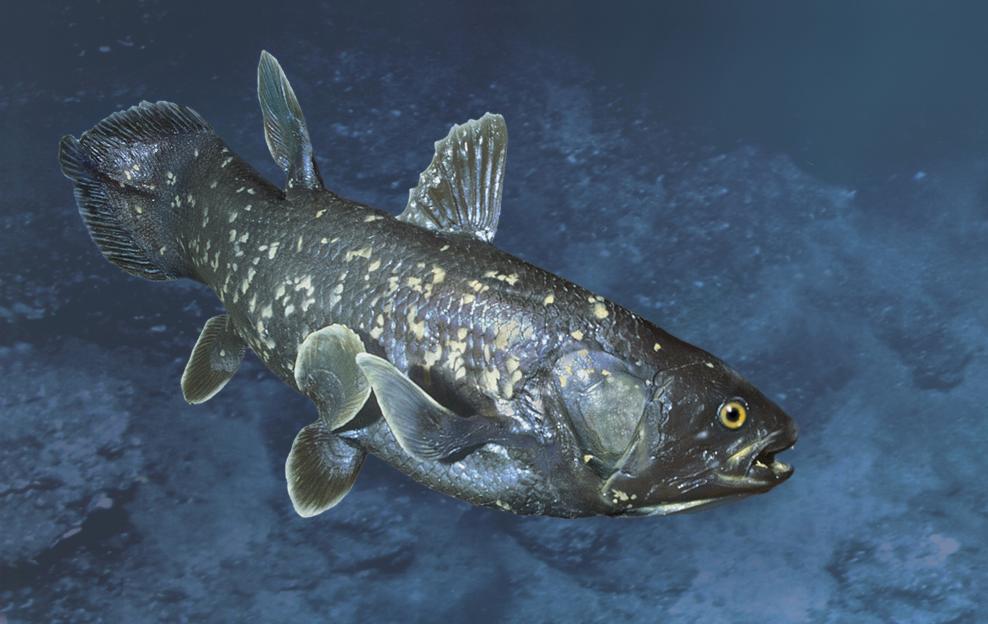 The fossil dates back around 90million years before dinosaurs appeared on Earth. Credit: Getty
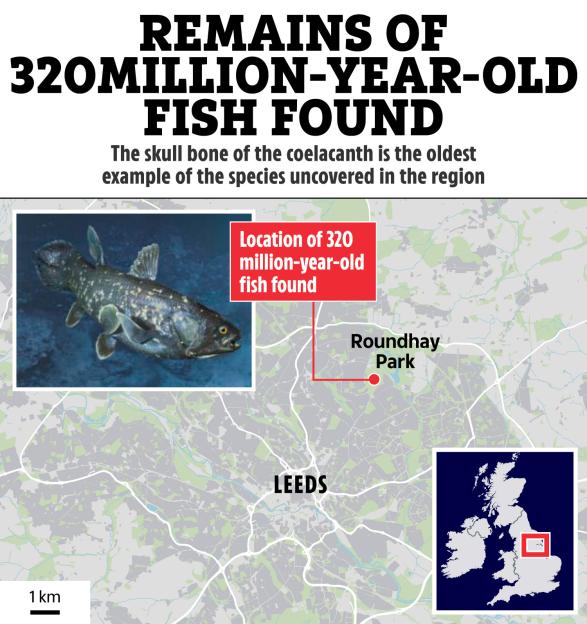
The fossil of the fish’s skull dates back around 90million years before dinosaurs appeared on .
The coelacanth would have been fossilised during the Carboniferous period when Earth was much warmer.
The park where it was found would have lain underneath a tropical lagoon when it began forming.
Looking back at his discovery, Smith continued: “That’s really the wonder of geology, looking at the rock and time travelling in the imagination to what was a very different world.”
The fossil has been donated to Leeds and will appear at the natural sciences collection at the city’s Discovery Centre.
The coelacanth is part of the lobe-finned fish group with uniquely fleshy, stalk-like fins that move in an alternating leg-like pattern.
They are the closest living relative to the first animals that walked out of the water and onto land.
Stretching 6 feet long, the coelacanths can live over 100 years old.
Often dubbed the “living fossil”, the species was thought to have gone extinct alongside the .
But in 1938, a living specimen was caught off the coast of South Africa, making it a rare species.
The exact location of the discovery in the park has not been made public so that geology field work can continue at the site.
Clare Brown, curator of natural sciences, said: “Responsible and ethical fossil hunting and geology can yield some incredible results and really help us to build a picture of life in prehistoric Leeds and the that’s resting beneath our feet no matter where we may be.”