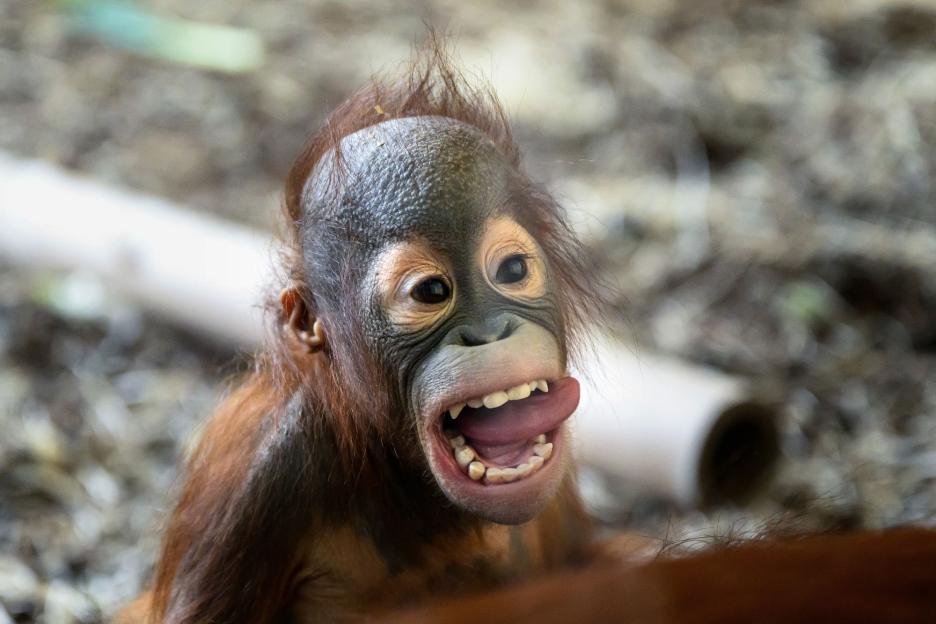
ORANGUTAN mothers are forced to arrange playdates for their infants, a new study has revealed.
Growing up in the jungle is not easy – no high-flying nannies from Norland College, no kindergartens or soft-play centres – so new mums are literally having to go the extra mile for their offspring.
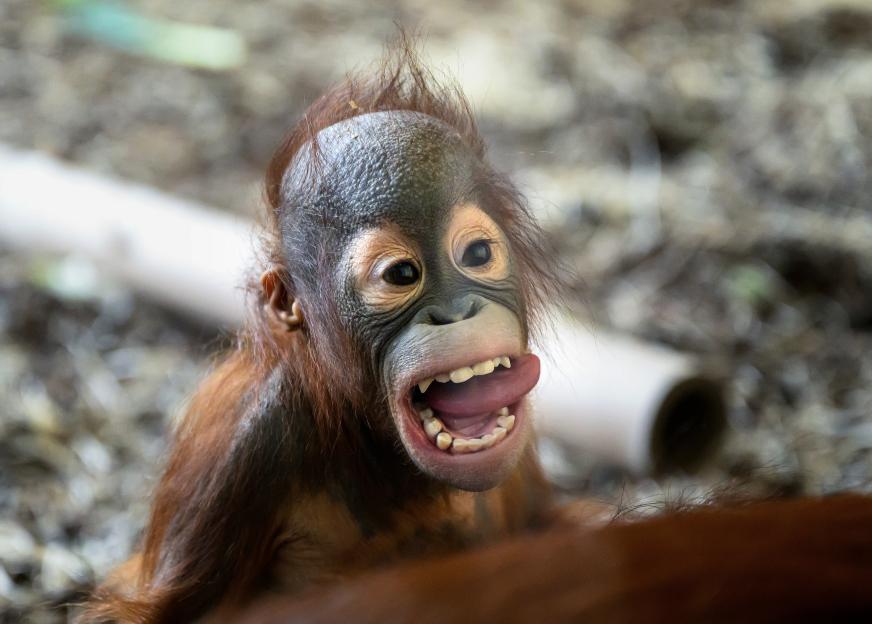 19-month-old Orangutan baby Kendari reacts next to mother Sari in their enclosure at Schoenbrunn Zoo in Vienna, Austria Credit: AFP
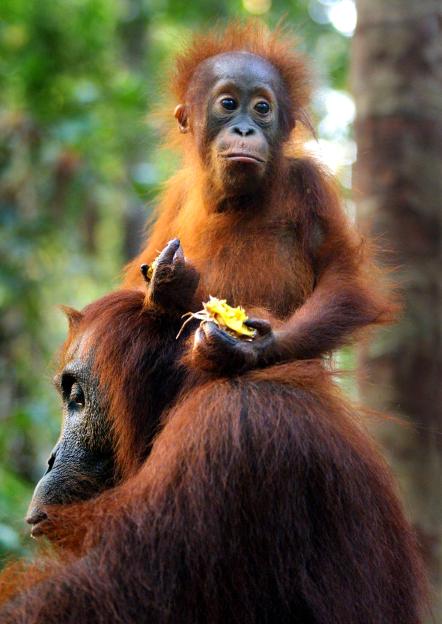 A baby Orangutan sits on the back of its mother while eating fruit September 1, 2001 near Camp Leakey at the Tanjung Puting National Park in Kalimantan on the island of Borneo, Indonesia Credit: Getty
For them, playdates involve travelling through the rainforest for multiple days and even missing lunch.
Now, a study has revealed that females plan ahead and arrange meetings so that their young can play with other infants.
Researchers analysed about 30,000 hours of observations collected over 15 years from 31 mother-and-young pairs in Central Kalimantan, Indonesia.
What they found was striking.
Mothers whose offspring were close in age made more intensive use of the same patches of forest, it revealed.
Their babies were also more likely to play together.
“Mothers plan and actively structure social opportunities for offspring,” said the study led by Odd T Jacobson of the Max Planck Institute of Animal Behavior in .
“These encounters are planned and actively pursued over multiple days rather than arising by chance.”
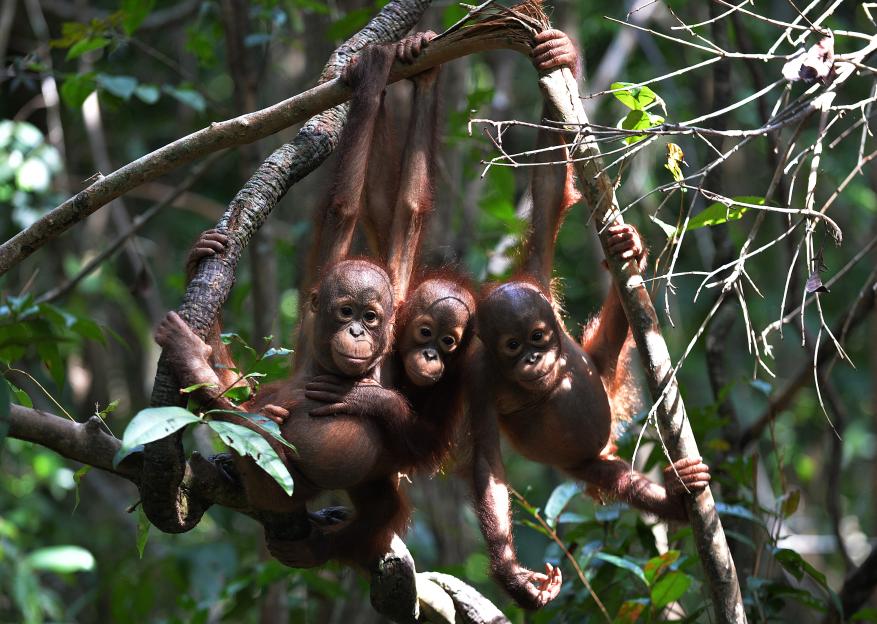 This picture taken on August 4, 2016 shows three orphaned orangutan babies hanging on a tree Credit: AFP
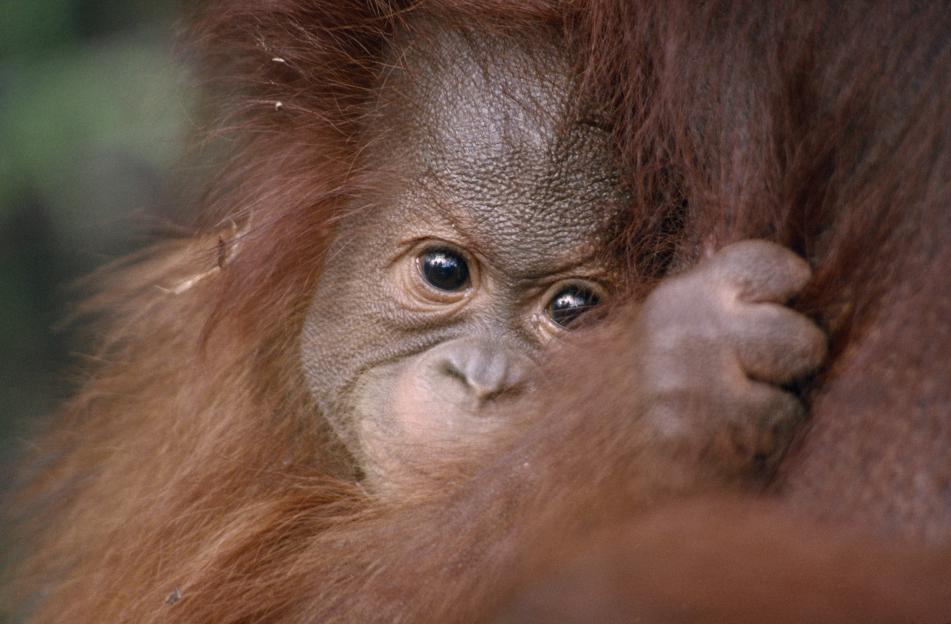 Close view of a baby Orangutan clutching its mother Credit: Getty
The study added: “Mothers also incurred energetic costs; on days their offspring played with peers, mothers travelled farther and spent less time feeding.
“Travel distances were also elevated on the days before and after play, with mothers orienting movement toward play partners’ core areas before play and back toward their own core areas after play.
“This suggests these encounters are planned and actively pursued over multiple days rather than arising by chance.
“These findings reveal that orangutan mothers incorporate their infants’ social needs into daily ranging decisions, at a cost to their own energy budgets.
“This points toward an underappreciated form of maternal investment and illustrates how the social requirements of development can be met even near the solitary extreme of animal social organisation.”
Orangutan mothers share the longest child-nurturing period of any mammal on , seven to nine years raising a single infant.
They provide around-the-clock transportation, nurse their young for up to eight years, and actively teach vital survival skills like foraging and nest building.