NHS patients face worse survival rates than almost any other rich nation, a damning report has revealed.
Only the US ranked worse than the UK in league table comparing 22 rich nations on “treatable mortality” – deaths that could be avoided with timely and effective healthcare.
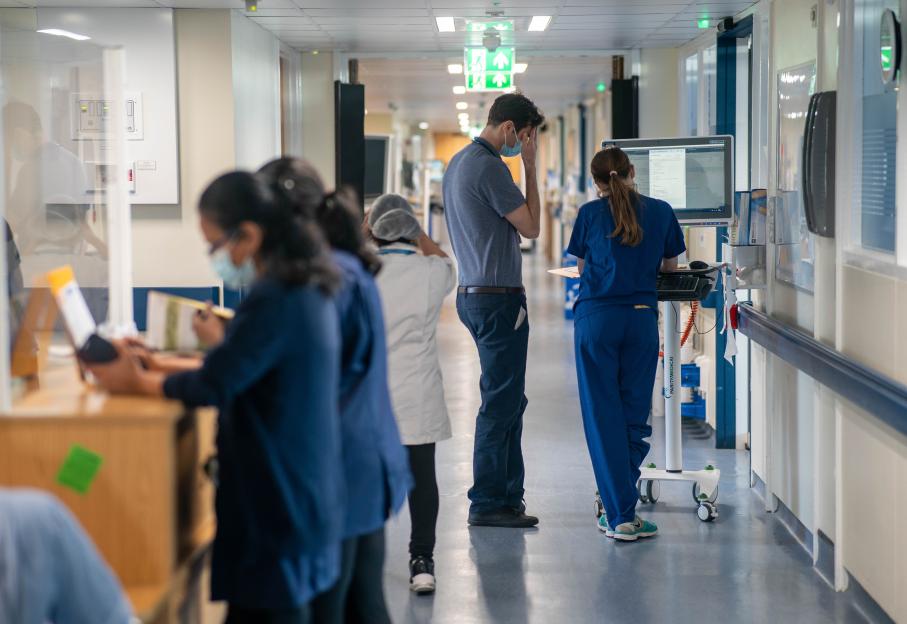 The UK ranks below most other rich nations in preventable deathsCredit: PA
The report, by the Institute for Public Policy Research (IPPR), found years of underinvestment and bad spending choices were to blame for avoidable deaths in the UK.
The IPPR’s analysis scrutinised data from 22 countries across five key performance measures – capacity, access, equity, quality, and efficiency.
While spending has risen in recent years, the IPPR said it had been “poorly targeted”.
It’s mostly been directed towards staff and pay, rather than diagnostic tools like scanners, and infrastructure.
As a result, the UK lags behind comparable countries on the basic capacity needed to treat patients.
Lack of hospital beds and diagnostic equipment may explain why Brits have poorer access to care and worse survival rates, according to the IPPR.
spending in the UK has risen by more than £60billion in a decade, from £179 to £242 billion a year.
And yet, the NHS continues to lag behind comparable countries on a range of health indicators.
Experts from the IPPR said more had been spent on staffing and pay, leaving UK hospitals with fewer scanners and hospital beds than comparable countries.
They found that that spending for buildings, equipment and for the UK health service was at half the level seen in comparable countries.
The IPPR noted that capital investment for the NHS, covering essential assets such as beds, diagnostic equipment, and hospital buildings, is currently lower than it was in 2010.
In the UK, there are 19 MRI, CT and PET scanners per million people.
Meanwhile, other countries with tax-funded health services – such as , and – have about 50 scanners for every million patients.
This rose to an average of 68 in countries with social systems, such as and .
The UK also has fewer hospital beds than many comparable nations, contributing to longer waiting times and delays in diagnosis and treatment.
These pressures are reflected in health outcome measures such as survival within 30 days of a heart attack.
The UK performed below average in this too, according to the report.
Experts addressed the growing debate on whether the UK should switch to a European-style social health insurance system to bolster its health service.
Social health systems typically involve individuals paying a percentage of their salary for healthcare cover from non-profit funds or insurers.
Despite the NHS’s challenges, the IPPR concluded that such a shift would be a “pointless distraction”.
Sebastian Rees, head of health at IPPR, said: “There is no structural silver bullet for the NHS.
“The idea that simply switching to a European-style insurance model would fix its problems is a pointless distraction and not supported by the evidence.
“The NHS’s challenges are real – but they are the result of a decade of chronic underinvestment and choices on how money is spent, not the funding model itself.
“Policymakers should focus on what actually works: in infrastructure, strengthening primary care, and tackling the drivers of poor health.”
The organisation called on the Government to prioritise investment in the NHS estate, shift more care from hospitals into community settings, and address the ongoing crisis in social care to reduce preventable hospital admissions.
Health Secretary has insisted that NHS budgets must be spent more effectively, adding that ministers face difficult choices and must ensure spending is “well spent”.
He said: “This is a timely report, as the arguments against the NHS grow louder.
“It dispels the myth that insurance-based healthcare systems are more efficient.
“While this Government is cutting the back office to reinvest in the front line, those who would rather move to an insurance system would do precisely the opposite.
“The NHS model is also the fairest way to provide care, rather than allowing your wealth to decide your health.
“The founding promise of the NHS is just as relevant today as in 1948: that healthcare should be made available to all, so whenever you fall ill, you never have to worry about the bill.”
It comes after resident doctors staged their fifteenth strike over pay and , amidst efforts from the Government to bring down spiralling waiting lists.
It’s been reported that years of industrial action have cost the NHS £3 billion.