THIS is the exciting moment Navy divers open the hatch on the Artemis capsule after it touched back down on Earth.
Moving footage shows military experts pull open the door as waves break against the side of the capsule.
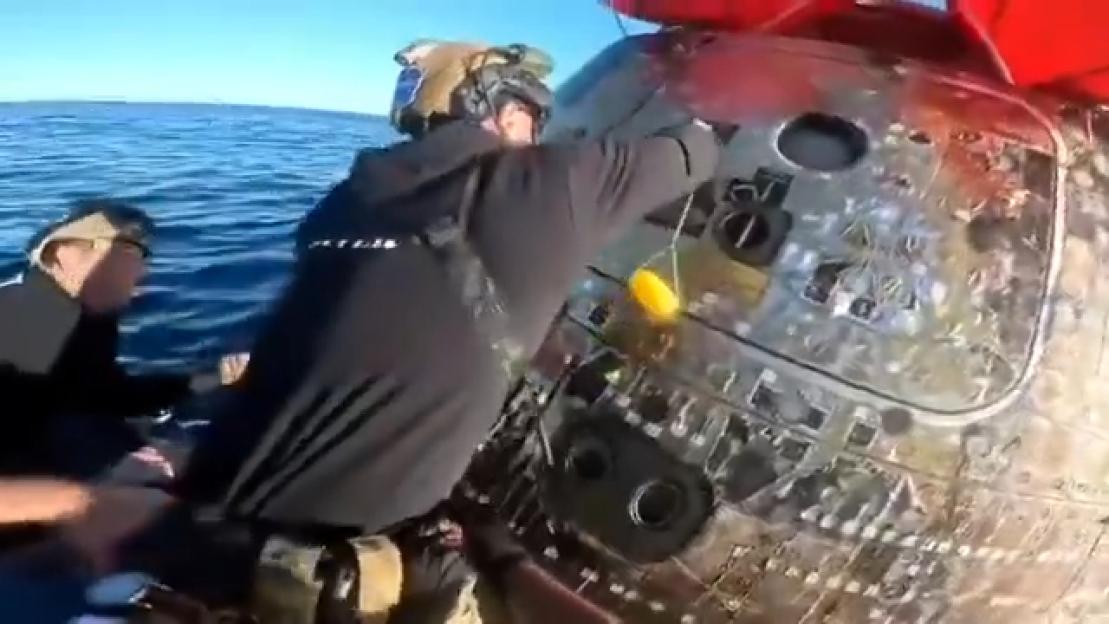 Navy divers get close enough to prise open the Artemis capsuleCredit: X/@sentdefender
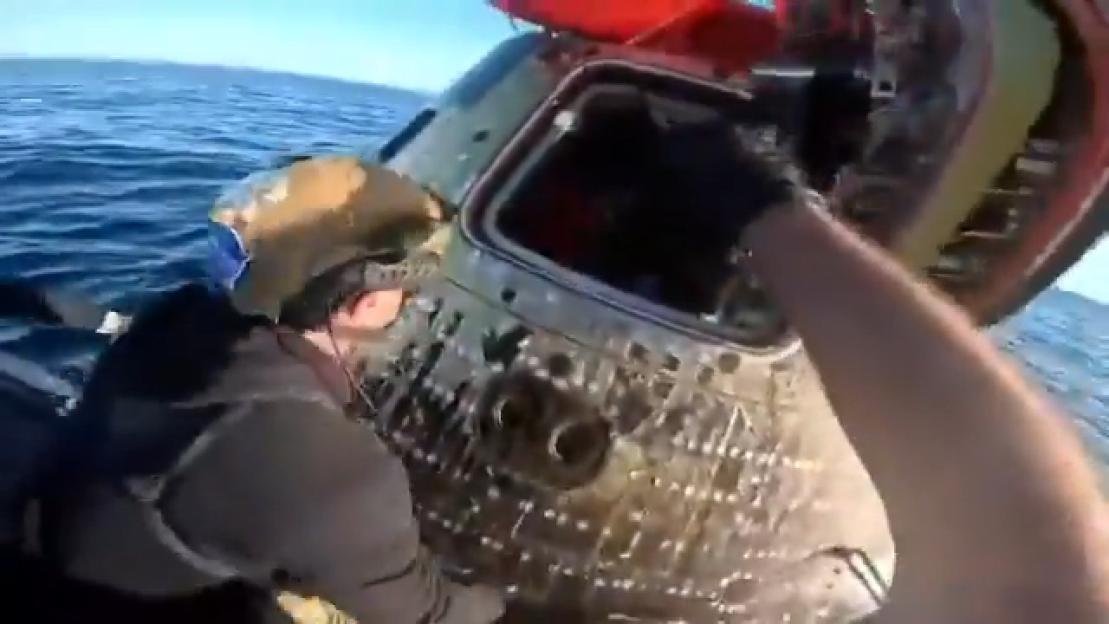 The door slowly creeks open, revealing the crewCredit: X/@sentdefender
 The military divers then board the craft to medically assess each member of the crewCredit: X/@sentdefender
As the crew of Artemis II appear, the rescue team begin to clap and cheer before climbing into the vessel.
Once inside, each astronaut is welcomed home with a fist bump.
The crew of Reid Wiseman, Victor Glover, Christian Koch and Jeremy Hansen were found safe and sound on Friday afternoon.
The crew floated off the coast of until rescuers arriving following a 25,000mph descent through the atmosphere.
This mind-boggling manoeuvre is known as a ““.
called the landing a “textbook touchdown” as a spokesperson confirmed the astronauts were “in great condition” and “all in excellent shape”.
Although the crew did not land on the lunar surface, they travelled farther from Earth than any other human in .
Reaching a whopping 252,756 miles, Artemis II broke the previous record set by Apollo 13 in 1970 – which travelled 248,655 miles from Earth.
President said he “could not be prouder” of the crew’s achievement.
He took the opportunity to congratulate the astronauts, calling their trip “spectacular”.
“We’ll be doing it again and then, next step, Mars!” he added.
To that end, Nasa administrator Jared Isaacman said this daring mission was just the beginning.
“We are back in the of sending astronauts to the Moon, bringing them back safely,” he added.
It took 42 minutes for the splashdown sequence in its entirety, but it was not without its perils.
Upon re-entry, the capsule heated to around 2,760 degrees, which is about half as hot as the Sun.
During a test flight on the first uncrewed Artemis mission in 2022, the heat shield cracked and chunks came off.
The spacecraft was still able to return to in one piece and a subsequent investigation found that people would have been safe.
Consequently, Nasa bosses decided it could still be used for the Artemis II mission.
Instead, experts made some alterations to the flight path.
The crew also had to contend with a tense six-minute communication blackout before parachuting into the sea.
Before prising the capsule open, navy divers circled to check for any hazards before deploying an inflatable “front porch” that attaches to the capsule.
Four medically trained divers then entered the capsule, one assigned to each returning astronaut.
Once checks were complete, all four astronauts stepped out of the craft and were hoisted into a helicopter that flew them to the USS Murtha.
Once aboard, the astronauts posed for photos on the flight deck before undergoing medical evaluations in the ship’s medical bay.
They then travelled back to shore to meet with an aircraft bound for NASA’s Johnson Space Center in Houston.
Nasa is now preparing its next Artemis mission for next year.
After that the Artemis IV mission in 2028 will see astronauts walk on the Moon.
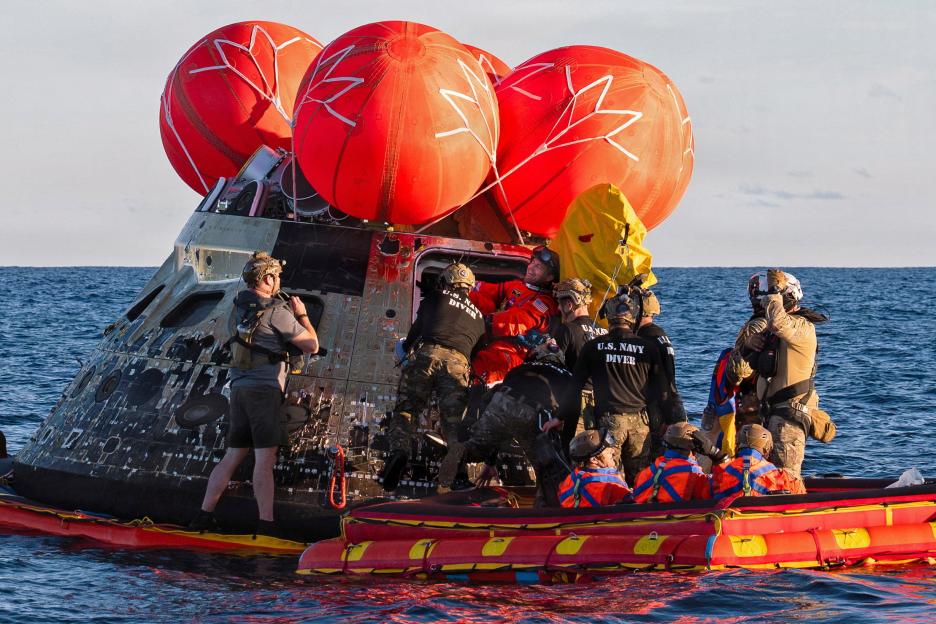 The astronauts were then carefully extracted from the vesselCredit: Reuters
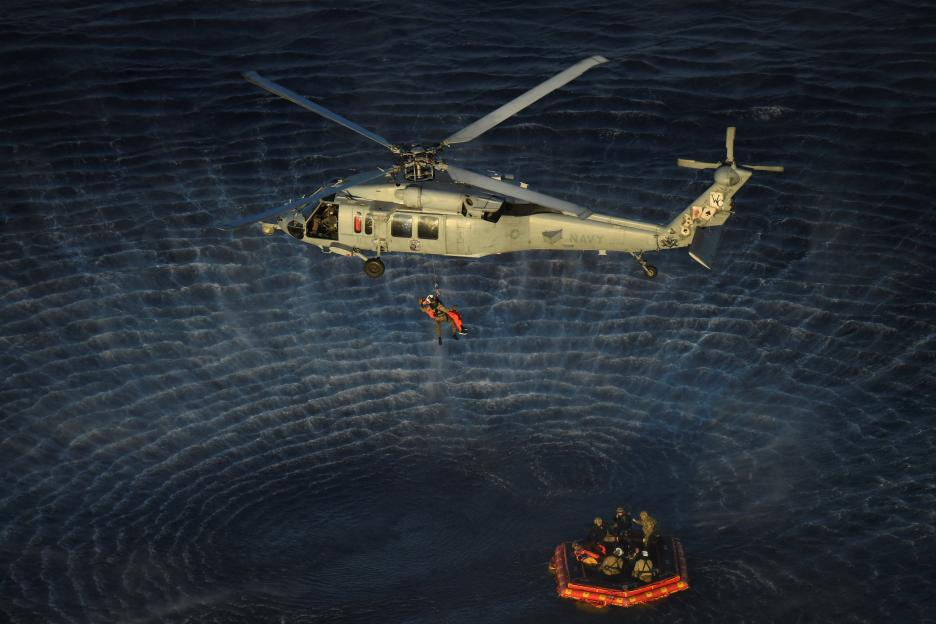 The crew were then airlifted to the USS MurthaCredit: Reuters