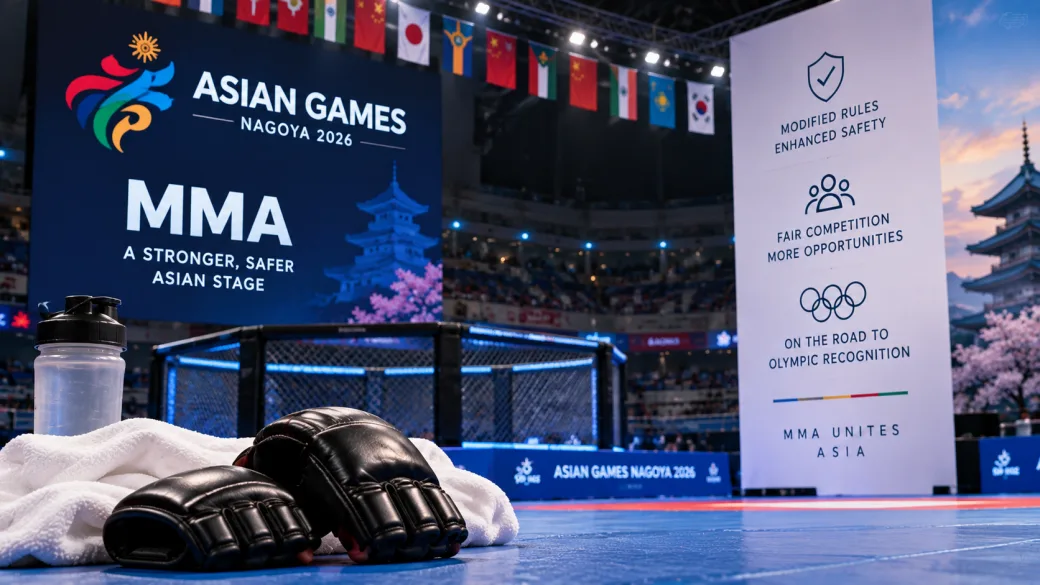
Mixed martial arts has made its Asian Games debut under modified rules designed to place greater emphasis on athlete safety and suitability for a multi-sport environment.
The competition marks a significant step for MMA as its governing bodies continue to pursue broader international recognition and, ultimately, a place in the Olympic movement.
How Asian Games MMA differs
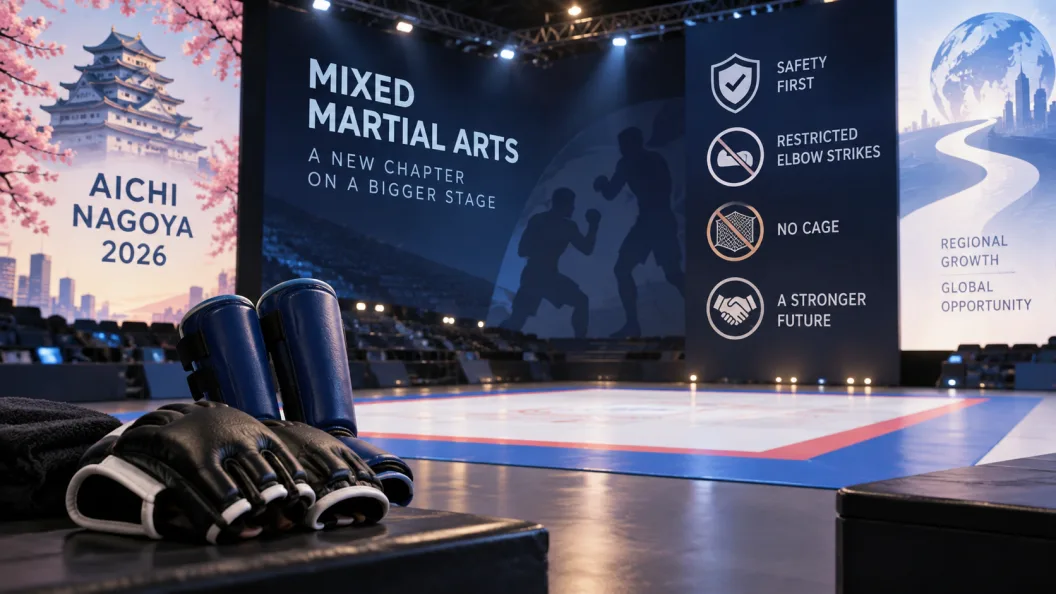
The Asian Games format uses an open competition mat rather than the cage commonly associated with professional MMA promotions.
Competitors also use additional protective equipment, while certain techniques are restricted compared with many professional rulesets.
Safety is central to the format
Elbow strikes and knees to grounded opponents are among the techniques restricted under the competition rules.
The changes are intended to reduce unnecessary injury risk while preserving the sport's combination of striking, grappling and submission skills.
Why the Asian Games debut matters
Inclusion in a major continental multi-sport event gives MMA a platform beyond its established professional promotions and specialist championships.
It also demonstrates that the sport can be adapted to the operational and safety requirements of a large multi-sport programme.
The Olympic ambition
Olympic recognition remains a longer-term objective rather than an immediate outcome.
Successful participation in events such as the Asian Games could strengthen MMA's case by showing standardised rules, international governance and athlete-safety measures in practice.
What comes next
The key test will be whether the Asian Games competition can build sustained support among athletes, national federations and organisers.
If the debut proves successful, it could become an important milestone in MMA's push towards a broader global sporting role.