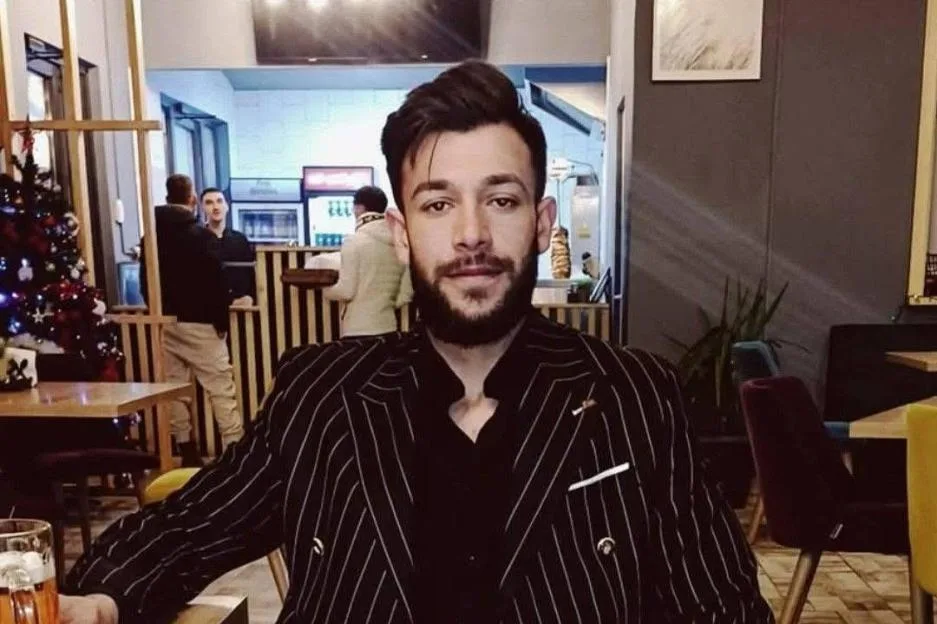
A 25-YEAR-OLD man died from an “irreversible brain injury” after a 14-year-old boy found him near a seaside pier.
Cristi Hurmuzache, was found in Great Yarmouth one June 22 by the teenager who then called for help, an inquest heard.

Emergency services raced to the Norfolk pier and Mr Hurmuzache was taken to hospital in Gorleston where he died days later.
Norfolk Coroner’s Court heard how Mr Hurmuzache was born in Onești Romania and had moved to the UK alone several years earlier.
On June 22, he was just 15m from the shoreline when the three police officers arrived and started performing CPR.
Mr Hurmuzache’s phone rang several times after the officers found him allowing them to establish contact with his Romanian family.
He was soon identified and it was established he had no immedaite family in the UK.
An acute and critical care consultant at the hospital said in a statement Mr Hurmuzache had “profound neurological impairment” and that he had been put into an induced coma.
An examination on June 25 confirmed an absence of brain stem function and brain stem death and medical staff withdrew his life support and mechanical ventilation.
Assistant coroner Maeve Sykes said: “Cristi Hurmuzache was discovered hanging on June 22.
“Emergency services attended, provided emergency treatment and conveyed him to hospital for further treatment.
“Despite appropriate treatment he died on June 25 at the James Paget University Hospital in Gorleston as a result of injuries sustained from self-ligature.
“I am satisfied based on witness evidence that Mr Hurmuzache took the action he took himself and there was no third-party involvement.
“He took the action he did relatively far from any available assistance and on that basis I am satisfied that the evidence meets the threshold for short-form conclusion of suicide.”
How to get help
EVERY 90 minutes in the UK a life is lost to suicide
It doesn’t discriminate, touching the lives of people in every corner of society – from the homeless and unemployed to builders and doctors, reality stars and footballers.
It’s the biggest killer of people under the age of 35, more deadly than cancer and car crashes.
And men are three times more likely to take their own life than women.
Yet it’s rarely spoken of, a taboo that threatens to continue its deadly rampage unless we all stop and take notice, now.
If you, or anyone you know, needs help dealing with mental health problems, the following organisations provide support:
- CALM, www.thecalmzone.net , 0800 585 858
- Heads Together, www.headstogether.org.uk
- HUMEN www.wearehumen.org
- Mind, www.mind.org.uk , 0300 123 3393
- Samaritans, www.samaritans.org , 116 123