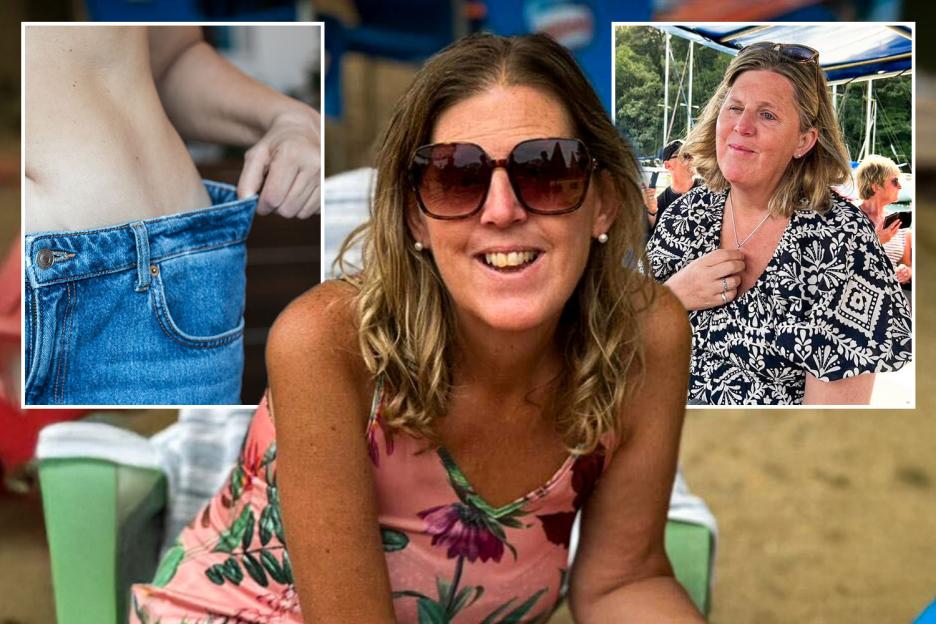
SHONA Sibary always prided herself on having a “good figure” – until she didn’t.
The mum-of-four watched the scales slowly creep up to 12 and a half stone, through four pregnancies and .
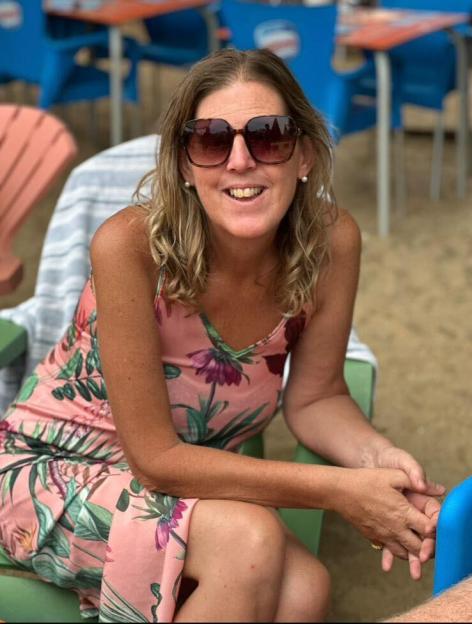 Shona Sibary now weighs 9st 10lb after having used the jabs at varying doses over the past 15 months… but got as low as 8st 9lbs Credit: Supplied
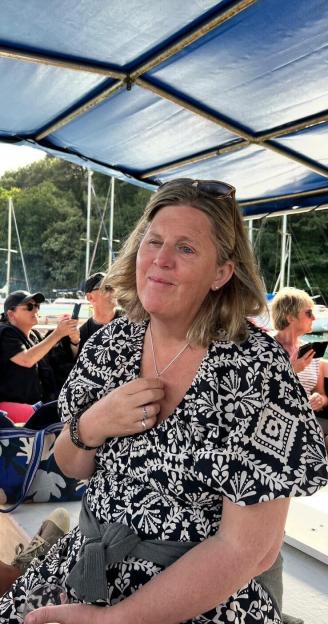 Shona says she’s ‘utterly terrified’ of looking like how she did before Credit: Supplied
She felt “frumpy, middle-aged and invisible”.
Then the 55-year-old discovered .
With a BMI of 28, she didn’t quite qualify for the jabs, but she “tweaked” the figures on her online pharmacy assessment.
The journalist shed more than three stone in five months, describing her weight loss as “an absolute gift”.
While she expected to celebrate her new, svelte physique, instead, she found a new kind of torment.
Hyperfixated on her new figure and validated by compliments, she made herself sick after eating for the first time last summer.
She represents a worrying group of new patients who, despite having no previous are now driven to extreme behaviours, desperate to maintain their.
She is stuck in ‘the jab trap’ – obsessed with staying slim, panicked by hunger, and driven to purge if she eats.
She tells Sun Health: “My family thinks I’m too skinny now, they think it’s gone too far.
“And I think that is always the danger with Mounjaro – that you can’t stop once you start, because the results are just so amazing.
“I’m utterly terrified of going back to how I was before.
“I will do almost anything it takes to stay under 10 stone.”
, including and bulimia, are not new, affecting an estimated 1.25 million people in the UK, according to the charity Beat.
Now, experts warn we are facing a new wave of cases specifically linked to fat jab culture.
Up to 10 per cent of patients with eating disorders have used or are using GLP-1s, like Mounjaro and , experts tell Sun Health.
Dr Murali Sekar, a consultant psychiatrist at the Priory Hospital in Chelmsford, says: “I think this will definitely increase the incidence of new cases of eating disorders.”
He warns a vulnerable person with a tendency towards disordered eating “could become weaponised by the GLP-1 injections”.
Dr Charlotte Ord, a Counselling Psychologist specialising in eating disorders, says she’s seen a “noticeable increase” in weight loss jab users among her patients in the last 12 months.
 I will do almost anything it takes to stay under 10 stone, says Shona Credit: Supplied
 Shona says feeling ‘frumpy, middle-aged and invisible’ made her ‘tweak’ her figures on her online pharmacy assessment to get Mounjaro as she didn’t qualify Credit: Supplied
“Almost without exception, people have a history of disordered eating and body image issues,” she says, adding: “I’m really worried about it.”
GLP-1 drugs like Mounjaro and Wegovy silence – the constant thoughts about food that drive overeating – while biologically suppressing hunger.
“One of the biggest risks associated with weight loss injections is the development of rigid or disordered eating patterns as appetite becomes suppressed,” says Dr Ord, author of Body Confident You, Body Confident Kid.
Unlike traditional anorexia or bulimia, when patients are constantly fighting their body’s natural hunger signals, GLP-1 drugs remove this element, making them incredibly dangerous.
“The biological blunting of hunger becomes a big part of the presentation, whereas in traditional eating disorders, hunger is very much present, it’s just ignored,” says Dr Ord.
“That is wide open to abuse.”
Eating disorders are serious mental illnesses that can affect people of any age, sex or race.
They can be triggered by low self-esteem, stress, or trauma.
, though, have given rise to a new phenomenon – not just a “fear of fatness”, but a “fear of appetite and feeling full”, explains Dr
Joanna Silver, Lead Psychological Therapist at Orri Eating Disorder Treatment Clinic.
“[While using weight loss jabs] they kind of got used to not being full and being satisfied,” she says.
“There have been some people who have come off them, and then actually their appetite can return with a vengeance.
“They can put on weight quite quickly, and it can feel very out of control.”
 Hyperfixated on her new figure and validated by compliments, Shona admits made herself sick after eating for the first time last summer Credit: Supplied
 Experts warn we are facing a new wave of eating disorder cases specifically linked to fat jab culture Credit: Getty Images
Shona, who lives with two of her kids in West Sussex, had never experienced an eating disorder before she came across Mounjaro.
She hated looking at pictures of herself and avoided mirrors like the plague, but was content with “scoffing wine and Pringles every night”.
“I wasn’t fat, but I felt frumpy, middle-aged and invisible,” she says.
She started in February 2025 at 12st 4lb (78kg) and now weighs 9st 10lb (62kg) having used the jabs at varying doses over the past 15 months, but got as low as 8st 9lbs (57kg).
She says: “I haven’t been [this weight] since 27 years ago, since before I had kids.
“It feels fantastic to have my body looking like this.
“It sounds a bit self-obsessed, doesn’t it? But I think that is the problem with Mounjaro, you do become a bit like, ‘Oh, look at me. Look how skinny I am’.”
After jabbing every Sunday, Shona’s appetite was suppressed until around Friday, when the drug would wear off, hunger would break through and she’d worry.
She began vomiting to cope with weekend meals and breakfast buffets at work conferences, after seeing a TV character do it.
 Shona had never experienced an eating disorder before she came across Mounjaro Credit: Supplied
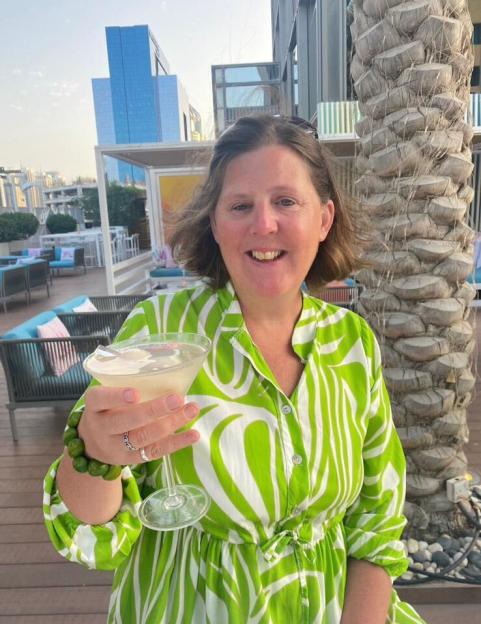 Shona says she hated looking at pictures of herself and avoided mirrors like the plague Credit: Supplied
“The first time this happened, I felt immediately disgusted with myself,” she says.
“I thought about my daughters and how concerned I would be if they were making themselves sick after eating.
“But it’s scary how you can normalise something if you do it often enough.”
The issue only intensified when she lowered her dose in September 2025, when the price of Mounjaro rocketed.
She felt hungrier and wondered how she could for good without her weight increasing.
“I’m stuck in a bit of a vicious cycle,” she says.
“I have just totally rationalised it as being an okay thing to do.”
In reality, causes severe physical damage, from rotting to stomach pain. People with eating disorders can also have a normal weight, making it difficult to spot from the outside.
Eating disorders are more common among those with low body satisfaction, and Dr Ord says: “One might assume that a large percentage of people seeking GLP-1 medication are going to fall into that bracket.
“[GLP-1 drugs] tend to make people extremely hyper-focused on their weight and it leads to people being rewarded for weight loss.
“Both [can] increase the association between weight and self-worth, which is a very precarious place to be.”
When these psychological vulnerabilities collide with a surge in appetite after coming off jabs, the “fear of weight gain goes through the roof”, says Dr Ord.
SIGNS YOU’VE GOT AN EATING DISORDER
EXPERTS say don’t ignore warning signs of a GLP-1 linked eating disorder, such as:
- An increasing fear of gaining weight when you are actually losing weight
- An excessive or escalating compulsion to exercise
- Breakthrough urges to overeat
- Heightened anxiety around food, and eating socially
- Becoming preoccupied with calories or weight
- Skipping meals despite hunger
Dr Sekar says: “Seek support early if you’re concerned, when eating disorders are much easier to address. That might mean speaking to your GP, the clinician prescribing the medication, or a specialist service if needed.”
If you’re worried about your own or someone else’s health, you can contact Beat, the UK’s eating disorder charity, on 0808 801 0677 or beateatingdisorders.org.uk .
She adds: “When patients come off, as we see with extreme dieting, they will experience rebound hunger and subsequently overeating or binge eating, which encourages a binge-restrict cycle, which is similar to bulimia or binge eating disorder.”
Jabbers regain around 60 per cent of the weight they lose over a year, according to a University of Cambridge study of 3,200 people.
Tom Quinn, Beat’s director of external affairs, says: “If somebody gains weight after their prescription finishes, this could lead to feelings of shame and guilt, which could contribute to an eating disorder developing or worsening.”
He says jabs can be particularly attractive to people with existing eating disorders, too.
“They can worsen harmful thoughts and behaviours for those who are unwell,” he says.
Dr Sekar says jabs can put an existing eating disorder “on steroids”.
He warns that these jabs are creating a dangerous new reality for patients with atypical anorexia, which is when patients have anorexia symptoms and behaviours but their body prevents them from dropping to a dangerously low weight.
For these patients, appetite-suppressing injections like Wegovy and Mounjaro are like the “missing link”, he fears.
“If they provide the link through the form of the injection, that’s it, the loop is complete,” he says.
On paper, screening patients for an eating disorder before a prescription sounds like a fix.
But patients cannot self-report a vulnerability they don’t know they have – until it’s too late.
Dr Sekar says there’s “almost zero” knowledge among slimmers about the potential link between GLP-1 drugs and harmful eating behaviours.
If you are currently taking GLP-1 medications or considering them, experts urge you to look beyond the numbers on the scale and monitor how the drug is impacting your mindset.
They should be used as part of a wider approach for improving diet and lifestyle.
Dr Silver says: “It can be very helpful for people to build up a toolbox of resources for dealing with emotional stress when on the jabs, as this will hold them in good stead for when they are off them.
“For example, they may look into challenging negative thoughts, finding activities such as walking or swimming for regulating emotions or talking through feelings.
“Building up these resources before coming off the jab means that ways to manage emotions will already be engrained.”
Dr Silver adds that when coming off GLP-1 drugs, “it is realistic to expect some weight gain”.
“It is important to approach life after jabs with compassion and to make sure that you learn from ‘slips’ as opposed to beating yourself up and speaking to yourself in an unkind way,” she says.
When people try to overcorrect by starving themselves or over-exercising, they often end up doing more harm than good.
Dr Ord says: “These medications should not be viewed as a quick fix or a route to extreme thinness.
“They are best used as tools to help individuals establish healthier and more sustainable habits, such as reconnecting with hunger and fullness cues, reducing guilt and negative self-talk around food, and building routines that support long-term well-being rather than rapid weight loss.
“It is therefore essential that users continue to eat regular, balanced meals, rather than skipping meals, cutting out entire food groups, or becoming overly fixated on calorie intake, weight, or controlling food.”