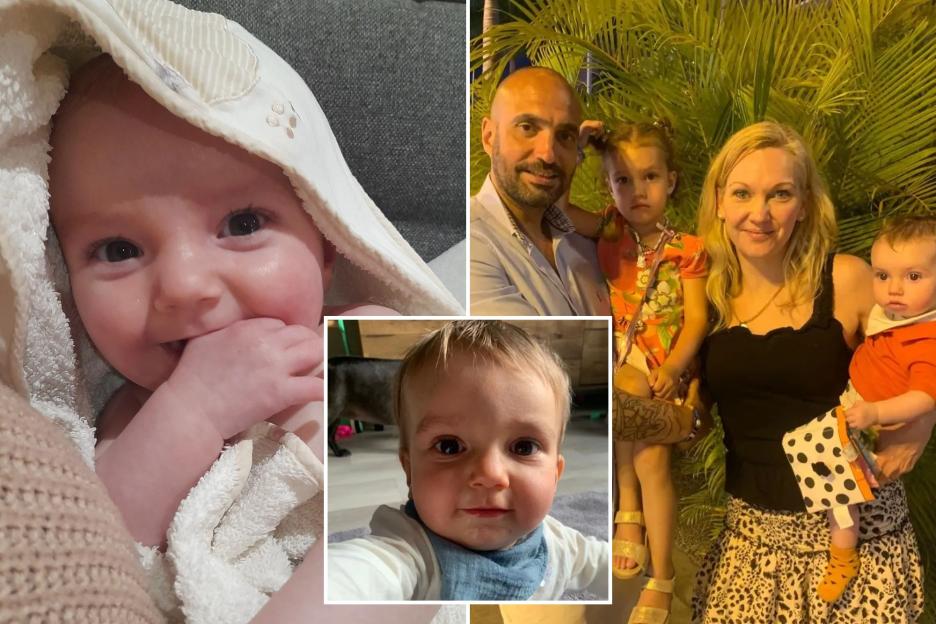
THE parents of a 16-month-old boy who had a runny nose and seemed “under the weather” were left devastated when he suddenly died in his sleep.
Leonardo, better known as Leo, was a “very easy and happy baby” before his death, prior to which the whole family had come down with a cold, including his big sister, Sienna, now six.
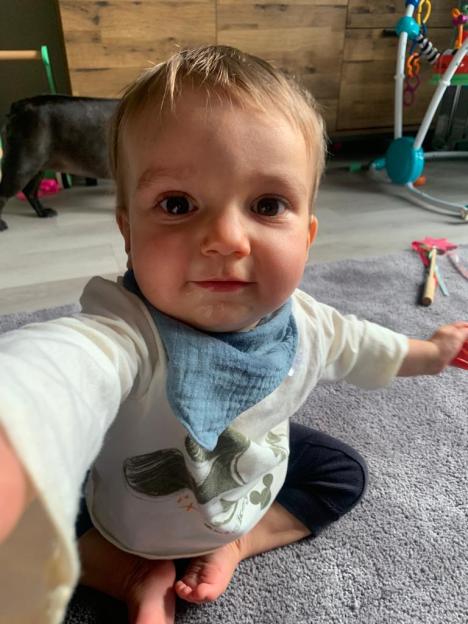 Leo was a “very easy and happy baby”, his parents said Credit: Collect/PA Real Life
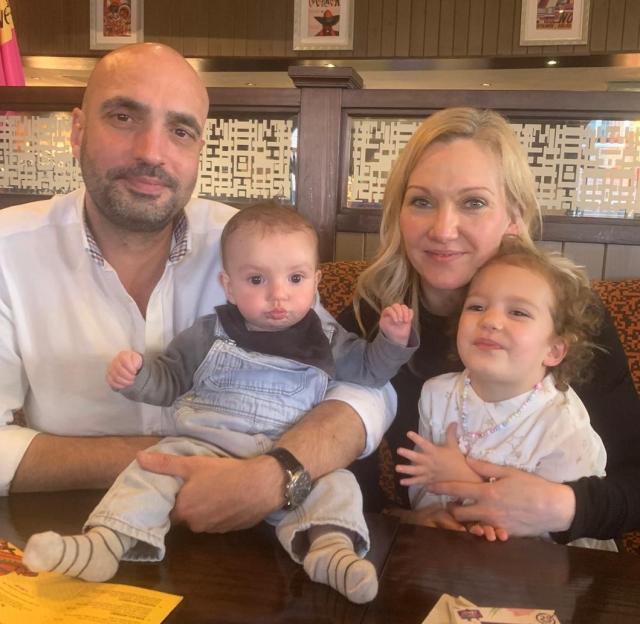 Mum Anya Sousa, 41, and her husband, Hugo Sousa, 45, with children Leo and Sienna, now six, who found her brother dead Credit: Collect/PA Real Life
Mum Anya Sousa, 41, and her husband, Hugo Sousa, 45, a restaurant manager from , added that their son “always wanted to cuddle”.
The family had just been on a Christmas holiday to Portugal in December 2023 when they came home with .
Anya, a beauty therapist from Sheffield, dropped off Leo and Sienna with her mum, Diane Middleton, on New Years Eve, 2023.
She warned her they had all been “poorly” but that nothing seemed out of the ordinary.
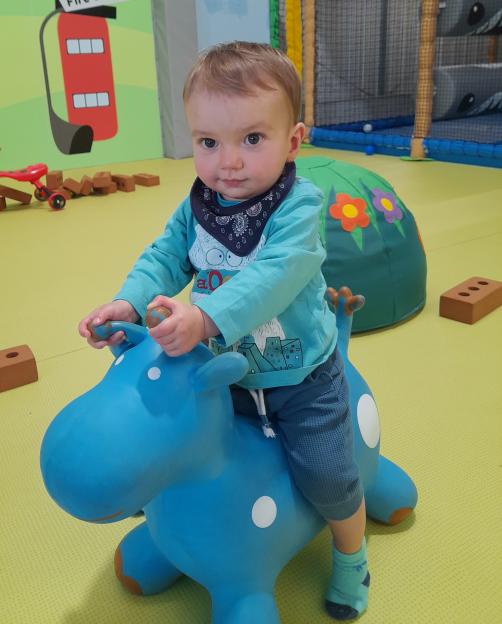 Leo was unwell but had not showed anything out the ordinary – just a runny nose, which Anya’s mum treated with liquid paracetamol Credit: Collect/PA Real Life
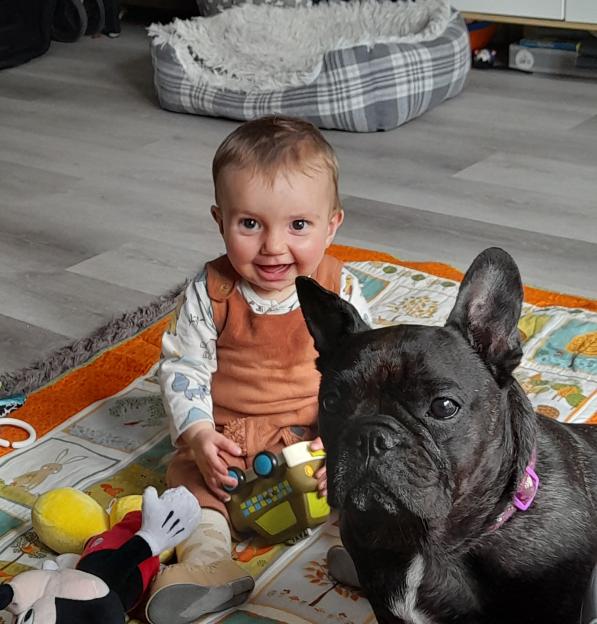 Little Leo was found dead on January 1, 2024, while at his grandma’s house Credit: Collect/PA Real Life
Diane put the children to bed as normal, but by 8am the next day, on January 1, 2024, Sienna came to her and said she could not “wake Leo up”.
Tragically, Diane found Leo “not breathing and cold”. She called emergency services, performed and Anya and Hugo rushed round.
Hugo said they were “not prepared” to see their dead son and Anya added that their “whole world changed” from that day.
A full post-mortem examination in May 2024 showed there were signs of in Leo’s blood.
Anya said a pathologist told her: “He should have been a lot more ill – there should have been a lot more symptoms.”
Symptoms of are most commonly mild, but sometimes it can become more serious, according to the .
It causes flu-like symptoms, a sore throat and a rash. It may also present as scarlett fever.
But Anya says: “Apart from a cold, he didn’t have a temperature, he had nothing.”
In the months after Leo’s death, the couple were supported by the charity Sudden Unexplained Death in Childhood UK (SUDC UK) , and they raised more than £10,000 for the charity through a 50km Ultra Challenge Walk.
Anya says: “The last thing you expect is to find your child dead in the morning.
“Now, usually my daughter’s awake before us, but on occasion, she’s still asleep in bed.
“The walk up to her bedroom is horrendous even today because you’re not going up to wake her up with kisses and cuddles, you’re going up to see if she’s still alive.
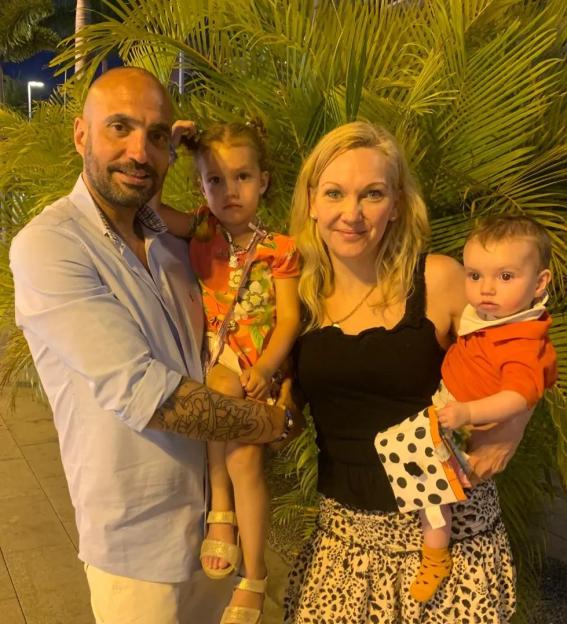 Anya and Hugo said their lives were changed forever once they saw their own child dead Credit: Collect/PA Real Life
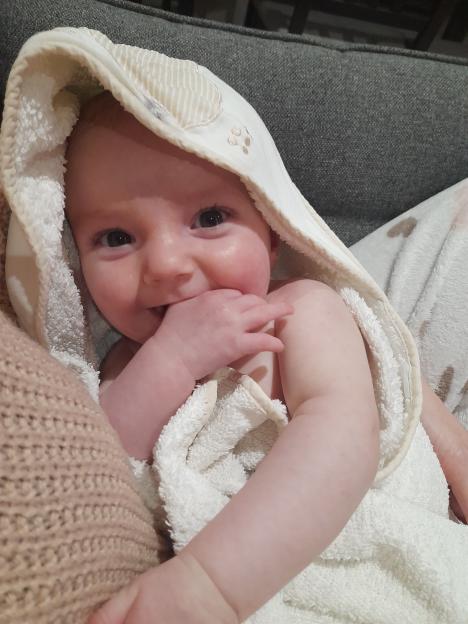 On the potential cause of death, Hugo said “they couldn’t see anything” but found strep A in Leo’s blood Credit: Collect/PA Real Life
“No parents should have to do that.”
Anya said Leo was generally a “happy baby”, other than a staph infection within a couple of months of his birth which led to eczema.
On New Year’s Eve 2023, the family went to the park and Anya noticed Leo was “a bit quiet” before they came home.
Hugo was playing hide and seek with Leo until he had to go to work at 3pm as a restaurant manager.
He shared his last memory of his son: “He was just lying on the living room floor, playing. It was just like any other day.”
That night, Anya said Leo vomited after dinner but that this was not out of the ordinary when he was “so snotty”, so she gave him some milk later, and he was “absolutely fine”.
She took Leo and Sienna to her mother as planned and agreed that Diane would give Leo some liquid paracetamol for his symptoms before bed.
Anya explained what happened next: “Sienna and Leo were sleeping in the same room, so Sienna had gone into my mum’s room and said, ‘I can’t wake Leo up’.
What is strep A?
Group A streptococcus (GAS) is a bacteria that can cause mild illnesses, including sore throats and skin infections, alongside tonsillitis, cellulitis, impetigo (a very contagious infection that starts with blistered skin).
Lots of people actually carry the bacteria without ever developing symptoms or feeling unwell.
However, it can be passed from person to person through close contact, including kissing and touching skin.
It most often affects children but adults can get it too.
Strep A can also cause scarlet fever, which is flu-like and tends to occur in children. It can be serious if not treated swiftly with antibiotics.
In rare cases, the bacteria can trigger invasive strep A disease (iGAS) which can prove life-threatening and even fatal.
The invasive version of the disease happens when the bacteria break through the body’s immune defences.
This can happen if you’re already feeling unwell or have an immune system that’s weakened.
Two of the most severe examples of invasive disease are necrotising fasciitis – a very rare but life-threatening infection also called ‘flesh-eating disease’ – and toxic shock syndrome.
What are the symptoms?
There are four key signs of invasive Group A Strep to watch out for, according to the NHS. These are:
- A fever (meaning a high temperature above 38°C)
- Severe muscle aches
- Localised muscle tenderness
- Redness at the site of a wound
The NHS says you should trust your instincts when your child is unwell. Parents know better than others if their child is seriously sick.
People with strep A infections should get better at home within a few days.
But get an urgent GP appointment or get help from NHS 111 if:
- Your child is unwell and is getting worse or not improving
- Your child is feeding or eating much less than normal
- Your child has fewer wet nappies than usual or is peeing less than usual, or shows other signs of dehydration
- Your baby is under 3 months and has a temperature of 38C, or is 3 to 6 months and has a temperature of 39C or higher
- Your child has a very high or low temperature, feels hot or cold to the touch, or is shivering
- Your child is very tired or irritable
Call 999 or go to A&E if:
- Your child is having difficulty breathing – they may make grunting noises, be breathing very quickly, or you may notice their tummy sucking under their ribs
- There are pauses when your child breathes
- Your child’s skin, tongue or lips are blue or grey – on black or brown skin this may be easier to see on the palms of the hands or soles of the feet
- Your child is floppy and will not wake up or stay awake
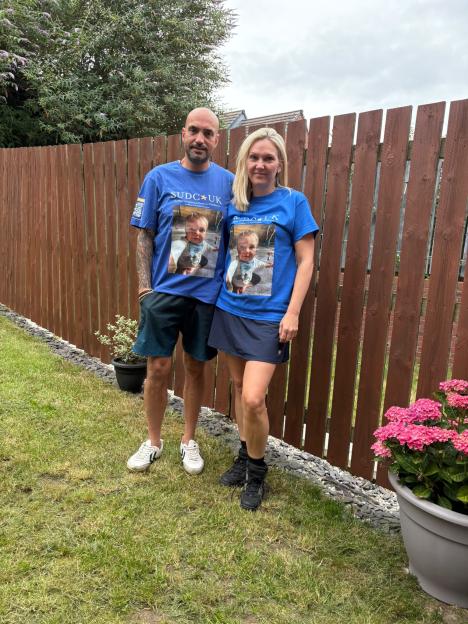 In the months after Leo’s death, the couple were supported by the charity Sudden Unexplained Death in Childhood UK (SUDC UK), and they raised more than £10,000 for the charity through a 50km Ultra Challenge Walk Credit: Collect/PA Real Life
“So my mum went into the room and she found him not breathing and he was cold.
“Deep down, I think she knew that he was already dead, but she rang for an ambulance and they told her to give him CPR.”
When the paramedics arrived, they took over CPR and Anya and Hugo were called.
They arrived within 10 minutes to see the road cordoned off by police and an ambulance with Leo already in the back of it.
Hugo says: “I didn’t know what to do, so I just froze.”
Anya says: “I remember being next to my son and I’ve never seen a dead body before, let alone my own child.”
After checking on Diane, who Anya said was in “complete shock”, police took the parents to hospital, where they were allowed to see Leo again.
Hugo says: “This was my worst nightmare.”
Anya said: “They asked if I wanted to hold my baby and I did, but then I completely freaked out.
“And then I felt guilty that I couldn’t hold my own baby… it was just absolutely horrendous.”
Hugo said telling their family left him “broken” because they were “screaming on the phone”.
Within a week, Anya said an initial post-mortem examination found that Leo did not have obvious life-ending signs like choking, suffocating or a heart problem.
On the potential cause of death, Hugo said “they couldn’t see anything” but found strep A in his blood.
The parents were offered counselling through SIDS UK, which Anya said was “really helpful”.
Two years later, they decided they were mentally prepared to raise money for the charity by completing a 50km Ultra Challenge Walk in the Peak District on July 4.
Anya said the walk was a “real struggle” and “emotional”, especially while carrying Leo’s favourite Mickey Mouse teddy the entire way.
Anya says: “I think the main thing we want to do is to raise awareness, increase funding for research, and for more people to know that support is there.”
To donate, visit the family’s fundraising page here .