WHEN the body of a wealthy banker with links to the Mafia, the Masons and the Vatican was found hanging under a bridge in London, police thought they had an open and shut case.
Roberto Calvi had fled Italy as a marked man after his banking empire had collapsed and he had made some of the most powerful enemies in the world.
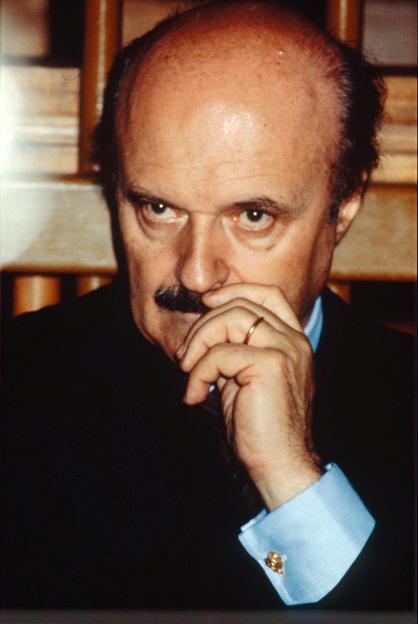 Roberto Calvi had fled Italy a marked man Credit: Shutterstock Editorial
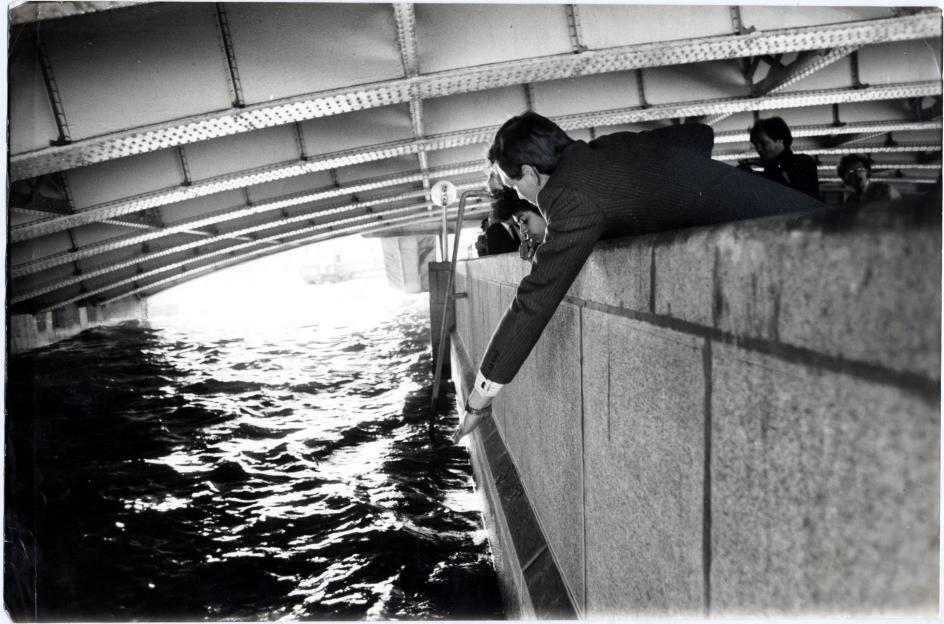 His body was found hanging under Blackfriars Bridge in London Credit: Shutterstock Editorial
So when he was found hanging from scaffolding under in 1982, with his pockets stuffed with bricks and stones, the authorities immediately assumed it was suicide.
But Calvi’s family believed he had been murdered and brought in forensic scientist Dr Angela Gallop to prove it.
Now in a new documentary, Cold Case Forensics – The Death of God’s Banker, Dr Gallop explains how she and her team unravelled a real life mystery to reveal what happened to Roberto Calvi.
Angela Gallop says: “It was such an extraordinary circumstance his body was found in and the awfulness and loneliness of where he was found.
“Huge question – murder or suicide? Absolutely huge”
It was June 18 1982 when an office worker taking a shortcut to work discovered the body of a man hanging from scaffolding under the bridge.
Crime reporter Jeff Edwards recalls: “The victim was a bit out of the ordinary, he was about 60, dressed in an immaculate handmade suit. The inside jacket pocket contained roughly about £7000 in various currencies. Now that was in 1982 – a tremendous amount of money.”
But the cash wasn’t the only strange thing about the body under the bridge – his trousers and jacket were stuffed with stones.
And inside his pocket was a forged Italian passport in the name of Gian Roberto Calvini.
But Italian authorities were quick to realise who the man was – disgraced banker Roberto Calvi who was at the centre of a major financial and criminal scandal involving the mafia and an infamous known as P2.
And he was also the Vatican’s choice when it came to investing their money. Calvi soon became known as ‘God’s Banker.’
Despite his notoriety and shady links, to investigators back in 1982 it was an obvious suicide given he was found hanging by a noose.
 The case has drawn comparisons with the Da Vinci Code Credit: Alamy
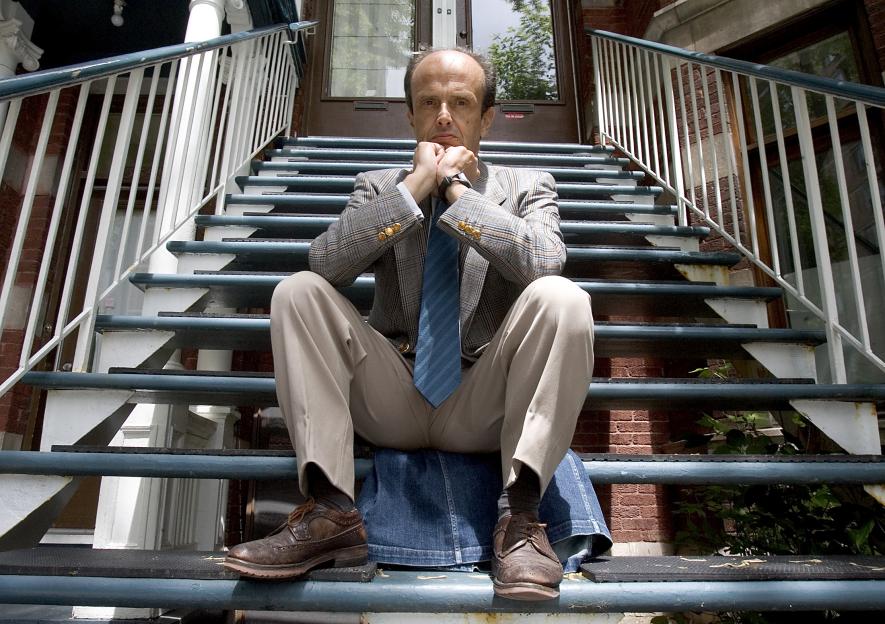 Carlo Calvi, his son, suspected foul play Credit: Reuters
But Calvi’s wife Carla and son Carlo were convinced he had been murdered. And after an inquest recorded an open verdict, the death of God’s Banker remained a mystery.
And ten years later private investigators brought in Dr Angela Gallop to help prove the family’s belief that as a devout Catholic, Calvi would never have taken his own life.
Calvi was the head of a private Italian bank, Banco Ambrosiano which was worth hundreds of millions of pounds and had close connections with the Vatican and the mafia.
But Calvi’s financial empire was crumbling – it owed enormous amounts of money and Calvi had done a runner.
Angela believed the key to the mystery was to work out how Calvi’s body got under the bridge. The bricks and stones that were found in his pockets were thought to have come from a nearby building site.
If Calvi had collected them before going to kill himself, Angela believed there were two possible routes he could have taken.
Angela explains: “Route one would have involved Calvi collecting the stones and then carrying them in some form or another the few hundred yards to the bridge, climbing down the near vertical ladder right next to the scaffolding and then traversing the back of the scaffolding to the far corner, then tying a rope and then suspending himself from there.”
Angela put the first suicide route to the test by tracking down some of the original scaffolding and rebuilding the tower in her garden to test Calvi’s possible last movements.
The experiment revealed that Calvi’s shoes might hold important forensic clues.
Forensic chemist Dr Mike Jenkins, explains: “We knew that the scaffolding under Blackfriar’s Bridge had yellow paint on it and rust particles. When Calvi’s shoes were examined none of this paint or rust particles were found on his shoes.”
Angela’s team recreated the swirling water of the Thames to see if the yellow paint would fall off the soles. But they found that some of the rust and paint remained in the shoe.
Mike Jenkins says: “So the absence of any paint or rust particles on Calvi’s shoes shows that he probably did not climb on the scaffolding before he met his death.”
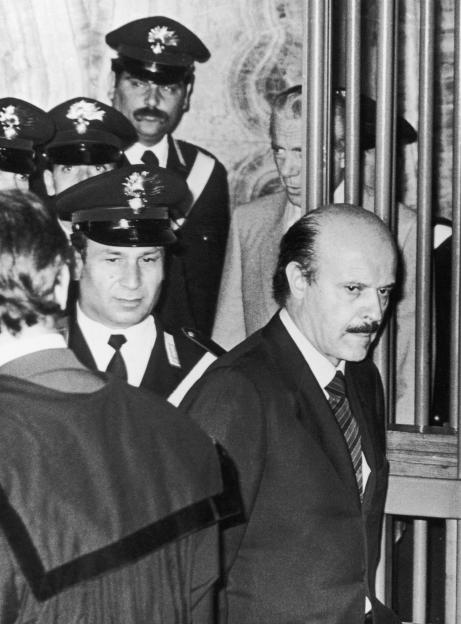 Calvi was the head of a private Italian bank, Banco Ambrosiano which was worth hundreds of millions of pounds and had close connections with the Vatican and the mafia Credit: Getty
 Clara Calvi, his wife, successfully campaigned for the investigation into his death to be reopened Credit: Getty
The second possible suicide route involved Calvi approaching the scaffolding from a different direction, coming down onto the foreshore and walking along until he got to the bottom of the scaffolding.
He would have then had to climb up the metal frame in poor light.
But water marks on his clothes suggested the river water had not risen much further past Calvi’s waist, and a tide chart combined with the time Calvi’s watch had stopped proved that he had been suspended from the scaffold at a time when the tide was so high that the foreshore would have been underwater meaning there was no way he could have used that route.
Angela Gallop says: “It is so vanishingly unlikely that Calvi killed himself. And that leaves you with only one conclusion – that somebody else did it.
“This appeared to be a murder with a message.”
Having at first killed or incapacitated Calvi, there were two routes the killers could have taken to hang him under the Blackfriars Bridge.
The first route was tricky and risky. It would have involved someone getting the stones from the building site then weighting Calvi’s body with them and climbing down the ladder, crossing onto the scaffolding.
The second possible murder route seemed more intriguing.
On the clothes he was wearing when he died Angela found staining from river silt on the back of Calvi’s shirt and the raised pattern on his shirt had been impressed onto his underwear.
Angela believed that could have happened if Calvi’s body was transported to the site by boat.
Angela says: “Of all the four routes we considered, the two suicide routes and the two murder routes, by far the most likely seems to have been the one involving a boat and that meant that he had been murdered.”
And Angela also had to work out whether Calvi was alive or dead when he was suspended from the scaffold.
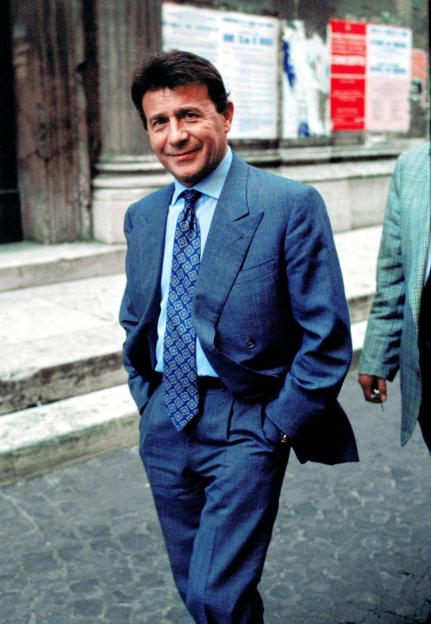 Calvi’s escape from Italy on false papers had been arranged by fixer Flavio Carboni Credit: Shutterstock Editorial
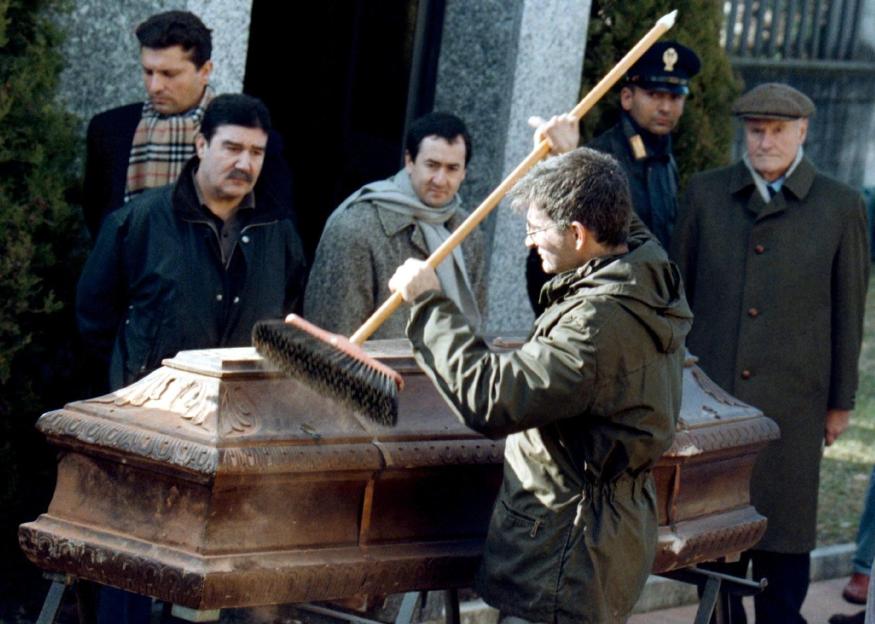 Roberto’s remains were exhumed in 1998 Credit: EPA
Forensic pathologist Dr Richard Shepherd explains: “The ligature mark on the neck is very much inward pressure, the noose is tightening horizontally rather than being pulled upwards by the suspension point and that might point a little bit away from suicide and towards homicide.
“A third party can have a noose and place it over someone’s head and then pull it tight which may resemble the mark of self-suspension and hanging. I think he was dead when they moored that boat against the scaffolding tower, tied the rope onto it, tied the rope around his neck and dropped his body weighted by stones so it would sink and hang until the tide dropped and then the reveal, the discovery of the body of this man looking as though he had hung himself. I think that is what happened.”
In 1981, Calvi had been convicted of illegally moving huge sums of money abroad. He had been sentenced to four years in jail, but was released on bail pending an appeal.
After the collapse of his banking empire, both Calvi’s flat and his escape from Italy on false papers had been arranged by fixer Flavio Carboni who had been linked to a succession of Italian corruption scandals.
Mafia and organised crime expert Alberto Vannucci says: “Roberto Calvi became one of the most powerful men in the Italian financial system, since the Banco Ambrosiano was one of the largest banks with very strong connections with the Vatican bank on one side, and also he was the financier and briber of several politicians and of course also with the mafia through the P2 network of power.”
P2 was a secret masonic network of politicians, businessmen along with senior members of the army and intelligence services which exerted powerful influence over the financial and political life of Italy.
Members wore black cloaks to their highly secretive meetings giving them an intriguing and symbolic link to Calvi’s death.
A secret sign of the P2 lodge was the black friar. Angela says: “Was the fact that he was found under Blackfriar’s bridge a reference to P2?”
The P2 network used the mafia to protect its’ business interests.
Alberto explains: “They needed someone to enter into play to make sure their deals were honoured. So the Mafia role was precisely that. To induce ‘omerta’ as we say in Italy, conspiracy of silence, and to induce, to threaten people and of course to eliminate through killings those who had become dangerous.”
A lawyer investigating a bank owned by a close associate of Calvi was gunned down outside his home.
Calvi mixed closely with Italy’s mafia families, creating shell companies which could be used to launder money abroad.
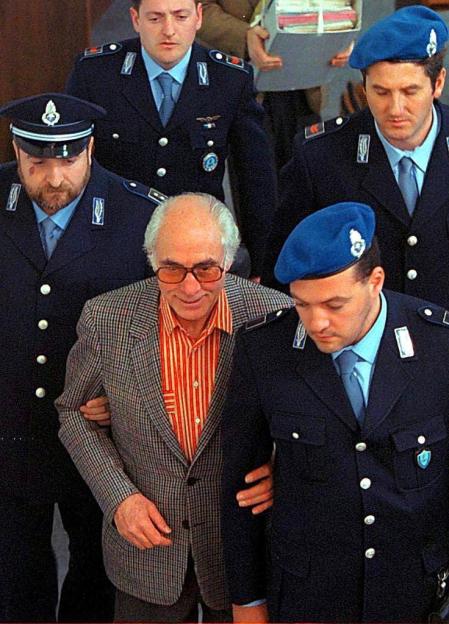 Mafia boss Pippo Calo was accused of ordering Calvi’s murder Credit: EPA
He had helped the Catholic Church fund anti-communist movements in Poland and South America.
But these foreign operations funded by Calvi’s bank were being uncovered by the Italian authorities and money belonging to powerful figures including the mafia were being seized.
Angela says: “This feels a little bit like the Da Vinci Code, but in this case it is real threat, real violence at the end of it. Calvi was a powerful man but his enemies were even more powerful, but they were also dangerous.”
In 1993, Angela reported to Calvi’s family that she believed he did not take his own life, and the Italian authorities eventually reopened the case.
Angela was eventually asked to give evidence in a trial against five people alleged to have organised Calvi’s murder for the mafia.
It was to be Italy’s trial of the decade. The accused included Flavio Carboni, the mysterious fixer who had arranged Calvi’s escape to London, and Italian mobster Pippo Carlo who was already in jail for organising a massive train bombing which killed 16 people two years after Calvi died.
Despite Angela’s evidence that Calvi had been brutally murdered, the court could not prove who had killed him and the accused were found not guilty.
But Angela’s work had provided a major breakthrough – the Italian authorities now accepted that Calvi had been murdered.
Proving Calvi had been murdered helped cement Dr Angela Gallop’s International reputation as a forensic scientist.
But overall she gave the Calvi family the proof that he had not taken his own life.
Cold Case Forensics: The Death of God’s Banker is on ITV1 tonight (Tuesday 28 July) at 9pm