JABS like Wegovy slash the risk of a type of liver disease affecting 2 million Brits, even when people don’t lose weight, scientists say.
Semaglutide – the active ingredient in Wegovy and jab – can improve liver function independent of weight loss, Canadian researchers showed.
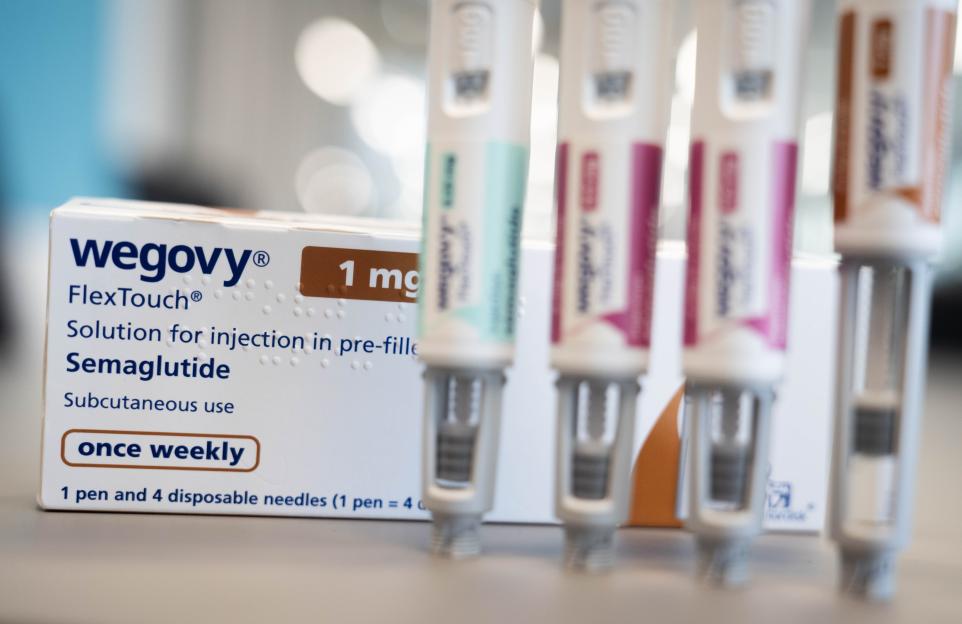 Semaglutide – the active ingredient in Wegovy – can improve liver functionCredit: PA
(MASLD) is a long-term liver condition caused by having too much fat in the liver.
It’s closely linked with being overweight, as well as conditions like type 2 diabetes, and it’s thought to affect one in five people in the UK, according to the British Liver Trust .
Experts fear cases of the disease .
A more serious stage of the disease is metabolic dysfunction-associated steatohepatitis (MASH) – where fat build-up in the organ leads to scarring, liver failure and sometimes cancer.
Treatment typically includes lifestyle interventions to reduce weight, such as eating healthier and exercising more.
Now, scientists from Sinai Health in Toronto have shown semaglutide can reduce inflammation and scarring in the liver and improve organ function, no weight loss needed.
Research published in the journal Cell Metabolism found the appetite-suppressing ingredient has a direct effect on liver cells.
Dr Daniel Drucker, a senior investigator at the Lunenfeld-Tanenbaum Research Institute, who led the study, said: “We’ve seen in clinical trials that patients who lose very little weight see the same reductions in liver inflammation, scarring and enzyme levels as those who lose a great deal of weight.
“Now we know why.”
Researchers said their findings challenged assumptions around how weight loss drugs – medically known as GLP-1s – affect the liver.
It was previously thought that semaglutide didn’t have a direct route to the organ, as the liver cells don’t carry the receptor the ingredient binds to.
But Dr Drucker and his colleagues identified two cells that carry semaglutide receptors.
Conducting tests on mice and analyses on liver cells, postdoctoral fellow Dr Maria Gonzalez-Rellan found that liver sinusoidal endothelial cells (LSECs) and immune T cells carry specialised proteins needed for semaglutide to bind to them.
Although only 3 per cent of cells in the liver are LSECs, they proved to be the key driver of semaglutide’s liver benefits.
Dr Gonzalez-Rellan explained that LSECs line the tiniest blood vessels in the liver and are studded with pores that allow them to act as a molecular sieve, filtering substances passing between the liver and the bloodstream.
She showed that semaglutide reversed MASH in mice.
The rodents didn’t have brain receptors controlling appetite, which according to Dr Gonzalez-Rellan showed that weight loss isn’t required for liver benefits.
In another experiment, mice lacking LSEC receptors showed no liver improvement on semaglutide even after losing 20 per cent of their body weight.
Detailed molecular analyses of liver cell types showed that semaglutide shifts gene activity in LSCEs, prompting them to release anti-inflammatory molecules that improve the health of the liver and lower the risk of disease.
What are the signs of metabolic dysfunction-associated steatotic liver disease (MASLD)?
There are often no specific symptoms, even if the disease is at a later stage.
You may not show any symptoms for many years.
If you have MASLD, you may get:
- Tiredness, fatigue or a general feeling of lethargy or having no energy
- Discomfort on the upper right side of your tummy (where your liver is)
If you develop any of the following symptoms tell a doctor straight away:
- Yellow eyes and skin (jaundice) – this may be harder to notice if you have black or brown skin
- Bruising easily
- Dark urine
- Swelling of the tummy area (ascites)
- Vomiting blood
- Dark black tarry poo
- Periods of confusion, forgetting things, mood changes or poor judgement
- Itching skin
Source: British Liver Trust
Dr Drucker, also a professor of medicine at the University of Toronto, said: “It turns out that the receptor responsible for these benefits is in a very specialised population of liver cells.
“And this receptor orchestrates the production of molecules that talk to many different types of liver cells to calm down the inflammatory environment that is the problem in metabolic disease.”
Dr Drucker said knowing that semaglutide improves liver health independently of weight loss could influence how people treat liver disease.
It may also affect the weight loss jab doses clinicians prescribe to patients – as the injections have been approved for the treatment of MASH in the US, but not in the UK.
Doctors may choose to give liver disease patients lower doses to avoid the side effects associated with the higher doses needed for significant weight loss.
Dr Drucker added: “We’re not saying weight loss isn’t important because many things improve when patients lose weight.
“But we now know that weight shouldn’t be the only measure of success, because GLP1 medicines will improve liver health whether or not the patient loses weight.”
It follows a study by King’s College London, which last year found that in two thirds of patients with .
More recently, scientists warned that in the next 25 years – affecting as many as 1.8 billion people globally.
In most cases, MASLD is only spotted during routine blood tests or liver function tests carried out for unrelated issues.
People with MASLD have excess fat in their liver and one or more metabolic risk factors, which can include obesity, high blood sugar and high blood pressure.
Roughly one in four patients has MASH, the more advanced form of the disease.
Up to one in five people with MASH will progress to cirrhosis — advanced, irreversible scarring of the liver — which can lead to liver failure and increase the risk of liver cancer.