FOR the majority of people, changing the clocks is an inconvenience.
But for those living with it can be disorientating and even trigger anxiety and distress, leading charities have warned.
 The clocks will go forward on March 29Credit: Alamy
The clocks will go forward at 1am on March 29, as the UK returns to British Time, also known as Daylight Saving Time.
Evenings will suddenly become noticeably brighter, with the sunset pushed further into the night.
But, according to the Society and Dementia UK, the change can cause patients’ symptoms to worsen, triggering “sundowning”.
The term is used to describe common behaviours some dementia patients experience in the evening or around dusk such as intense confusion, anxiety, pacing and agitation.
It is normally thought to affect about 20 per cent of people.
They may believe they are in the wrong place or have forgotten to do something important.
Disrupted on the night of the clock change can also impact their circadian biological clock, causing low mood and affecting their ability to think clearly.
Dementia is associated with an ongoing decline of brain functioning – symptoms include problems with memory loss and mental sharpness.
Alzheimer’s disease is a type of dementia and one of the most diagnosed forms.
Angelo Makri, Senior Knowledge Officer for Wellbeing at Alzheimer’s Society, told Sun Health: “Although having to work out how to reset the clock on the oven and in the car is nobody’s idea of fun, for people living with dementia it can disrupt their body clock and cause confusion and anxiety.”
Sundowning, however, can often be managed through a range of strategies and calming techniques.
Here, experts at both charities explain how carers can using strategies and calming techniques to overcome the challenges that patients may face.
Prepare on Saturday evening
According to the Alzheimer’s Society, preparing on Saturday is key.
Angelo Makri told Sun Health: “Think about having your evening meal and going to bed an hour earlier on Saturday, so that the person can still get their usual amount of sleep and wake up at their usual time on Sunday.
“This way, the person’s routine will only be different for an evening rather than a full day.”
Avoiding a large evening meal too on Saturday evening can help prevent disrupted sleep.
Eating earlier and not consuming large meals before bed have also been linked to healthier gut bacteria, which aids the immune system and .
Get outside on Sunday
After the , going outside in the morning can help to set a person’s body clock and can make them sleepier in the evening.
This should help “them go to bed at their usual time”, Ms Makri says.
“If the person is unable to go outside, helping them keep active during the day can have a similar effect,” she adds.
“Think about using blackout curtains to reduce sunlight in the evenings too.”
Limiting dementia patients’ daytime naps also helps encourage them to sleep well at night, Dementia UK say.
“Try to limit their intake of caffeinated and alcoholic drinks – and offer them caffeine and alcohol-free alternatives,” they add.
 Limiting coffee and caffeinated drinks may help prevent sundowning, Dementia UK saysCredit: Getty
Continue routines
Ensuring patients can continue to follow routines they’re comfortable with, is vital to regulating their disrupted body clock, experts also say.
“Doing regular activities at the same time each day – for example going for a walk after breakfast, can help a person with dementia make sense of the time,” Ms Makri says.
Evening routines which involve activities that the patient enjoys, can also help maintain calmness, Dementia UK adds.
Equally, keeping and stations set to something they enjoy, may reduce the risk of sundowning.
Meanwhile, closing the curtains and turning on lights before dusk may ease the transition into night-time.
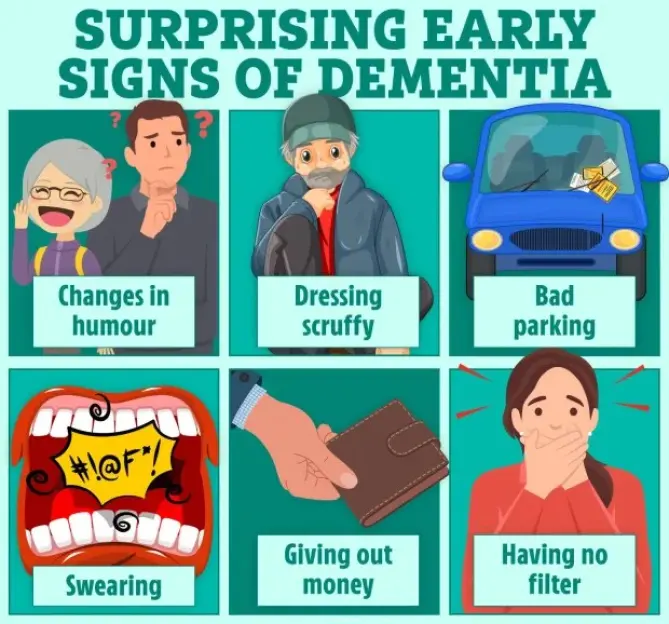
Early signs of dementia
It's not unusual for your memory to lapse a bit as you get older.
But dementia is different from ‘just getting old’ as it will cause noticeable – rather than gradual – changes to mental abilities and make managing everyday tasks and activities increasingly difficult.
The symptoms of dementia may be small to start with, but get worse over time.
Below are some examples of possible signs.
Memory loss
Memory loss is a key sign of dementia. This can include:
- Forgetting something you were only recently told. You may ask for the same information repeatedly – for example, ‘Are the doors locked?’
- Putting objects in unusual places – for example, putting your house keys in the refrigerator.
- Being unable to learn new tasks, like how to use a new washing machine.
Planning and decision making issues
People with dementia can have difficulty with planning and decision making. This can include:
- Getting very confused when planning or thinking things through.
- Struggling to stay focused on a single task.
- Not making informed, careful decisions when dealing with money or looking at risks.
- Finding it hard to manage regular payments, budgets or monthly bills.
Problems with language and understanding
In people with dementia, this can manifest as:
- Having frequent problems finding the right word or regularly referring to objects as ‘that thing’.
- Finding it hard to take part in conversations.
- Regularly being unable to follow what someone is saying even without distractions.
Losing sense of time and place
Dementia can cause problems with orientation, including:
- Losing track of the date, season or the passage of time.
- Getting lost in a place that is familiar or that should be easy to find your way around – for example, a supermarket.
- Regularly being unable to follow what someone is saying even without distractions.
Problems with vision and perception
This can mean having problems making sense of what you see.
For example, having difficulty judging distances on stairs, or mistaking reflections or patterns for other objects.
Mood and behavioural changes
Finally, dementia can also make people act differently or shift their mood. This can mean:
- Becoming withdrawn and losing interest in work, friends or hobbies.
- Feeling unusually sad, anxious, frightened or low in confidence.
- Getting easily upset at home, at work, with friends or in places that usually feel comfortable or familiar.
Source: Alzheimer’s Society