JUST one fall after the age of 40 could significantly increase your risk of developing dementia, experts have warned.
Researchers have found that a single fall after this age has been linked to a 20 per cent higher risk of a future diagnosis, compared to those with no of falls.
 A single fall after 40 could increase your risk of dementia Credit: Getty
 It has been linked to a 20 per cent higher risk of future dementia Credit: Getty
Researchers from Changchun University of Chinese also found that for people who experienced multiple falls, the risk increased to a shocking 74 per cent.
“Recurrent falls may serve as a potential clinical marker for identifying individuals at higher risk,” the research in The Journal of Post-Acute and Long-Term Care Medicine said.
The research – which reviewed numerous studies involving almost three million people aged 40 or older – isn’t explicitly declaring that falls cause dementia.
But falls can be potentially lethal, either signifying an early symptom of the disease or possibly leading people to behaviours that increase the risk of dementia.
 For people who experienced multiple falls, the risk increased to 74 per cent
 The research reviewed studies involving almost three million people Credit: Getty
There’s already evidence that older adults with dementia have been found to have more frequent falls than those without, but up until now it has been less clear if falls precede dementia.
Admittedly, some falls may only result in a minor injury, but often they can be much more dangerous.
They can lead to a loss of mobility and if people hit their heads, it can leave them confused.
What’s more, if a person cuts themself when they fall, an open wound could be a breeding ground for some nasty infections.
One study the scientists reviewed found that participants who were injured in a fall had a 21 percent higher chance of being diagnosed with dementia within a year.
Another found that in the four years before a dementia diagnosis, the risk of falls causing an injury rose steadily and peaked in the year of diagnosis.
These findings suggest that “falls are not merely coincidental but serve as an early clinical marker of accelerating neurodegenerative decline,” the researchers said.
So why would falls and dementia be connected?
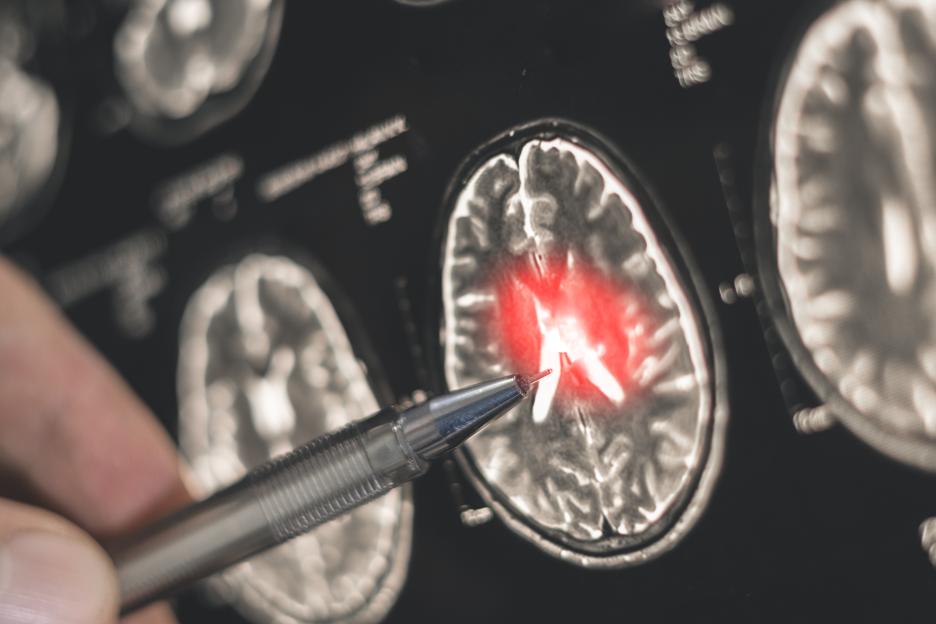 If people hit their heads when they fall, it can lead to confusion Credit: Getty
 What are the early symptoms of cognitive decline?
WE all notice a natural decline in memory and thinking as we age.
This will be more pronounced in some people, as they experience memory and thinking problems that are mild but still noticeable.
This is described as mild cognitive impairment (MCI). Unlike dementia sufferers, people with MCI can still get on with day-to-day life.
Research suggests that two out of 10 people over the age
of 65 have MCI, according to Alzheimer’s Research UK.
About one in 10 people who’ve received an MCI diagnosis will go on to develop dementia.
Symptoms of MCI include:
Memory – Misplacing items or having trouble
remembering recent conversations.
- Attention problems – finding it difficult to concentrate,
e.g. while watching a TV programme or carrying out
duties at work - Disorientation – confusion about time, date or place
- Thinking skills – problems with planning or completing
tasks, e.g. managing money, or cooking a meal - Problems with communication and finding the right words
- Mood and behaviour changes – becoming irritable, anxious,
or feeling low
These symptoms may affect someone with MCI all the
time, or they might come and go.
There are steps we can take to keep our brains as healthy as possible. These include:
- Not smoking
- Doing regular physical activity
- Staying mentally and socially active
- Eating a healthy balanced diet
- Limiting the amount of alcohol we drink
- Having your hearing checked regularly
- Keeping blood pressure, blood sugar and cholesterol
levels in check
Most obviously, falls cause injuries that could lead to dementia, with some head injuries already linked to an increased risk of the disease.
Alternatively, neurodegeneration may already be underway long before a formal dementia diagnosis, and these issues can increase the risk of falls too.
A third consideration is that older adults who have a fall often develop a fear of further falls, which can lead them to reduce physical and social activities – both of which can be protective against cognitive decline.
Without those activities, dementia can progress faster, which leads to further falls, which leads to greater fear, which leads to more withdrawal from protective activities, and so on.
Of course, scientists say that no single factor is likely the sole explanation for all links between falls and dementia.