PENNY Saltmarsh says her son was “48 hours from death” after a GP dismissed her son’s sudden weight loss and struggle to breathe as “asthma” and “anxiety”.
The mum took her “healthy and football-mad” son Arthur Saltmarsh, 10, to the in January 2025 when he became breathless.
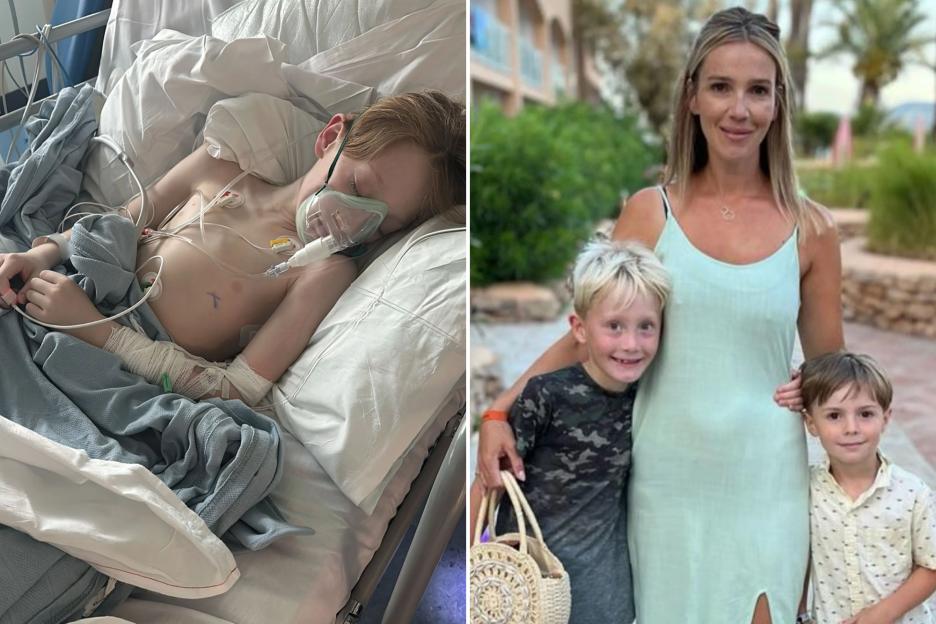
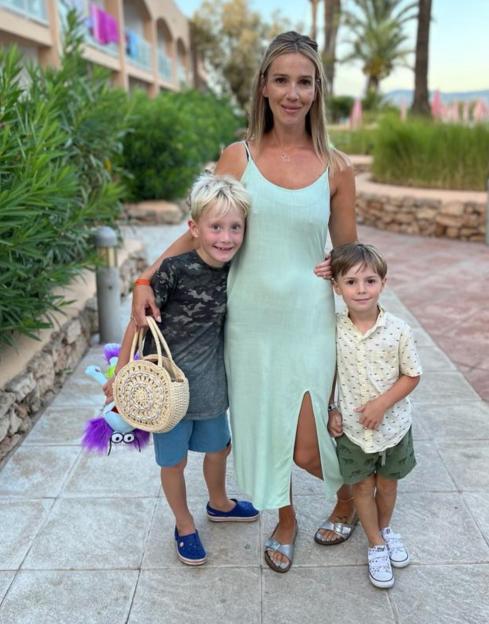 Penny Saltmarsh with her son Arthur and his brother Credit: Kennedy News
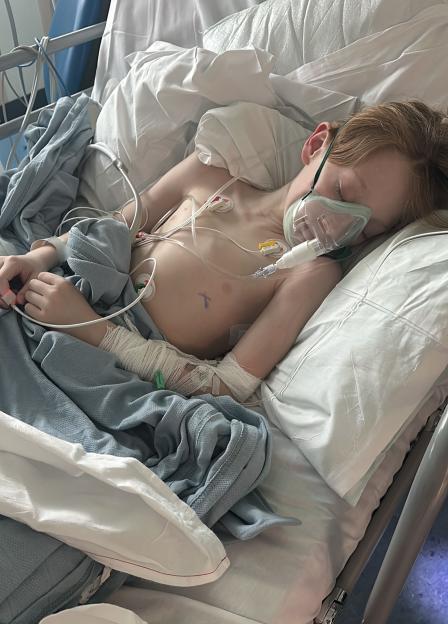 A GP dismissed Arthur’s sudden weight loss and struggle breathing as ‘anxiety’ – only for it to turn out to be cancer Credit: Kennedy News
But she was told he just had a viral infection that would clear up.
The 41-year-old took her child to the GP twice more, after he began losing weight and “gasping for air” walking to school.
When a GP saw that Arthur struggled to make eye contact, Penny claims his sudden weight loss was dismissed as and she was told he was just an “anxious child”.
Just days later, the mum-of-six and her husband “panicked” when they noticed one side of Arthur’s chest was four times bigger than the other and rushed him to hospital.
There, an ultrasound revealed Arthur had a large build-up of fluid around his lungs causing them to collapse.
His heart was also under strain due to a mass on his thymus, a small gland in the chest.
Penny felt like she was in a “nightmare” when she was told in February 2025 that her child had T-cell lymphoblastic , a rare and fast-growing type of blood cancer.
The full-time carer says she is “grateful” she trusted her gut as she claims a doctor said her son was just 48 hours away from death when they took him to hospital.
 Arthur used to be ‘healthy and football mad’ Credit: Kennedy News
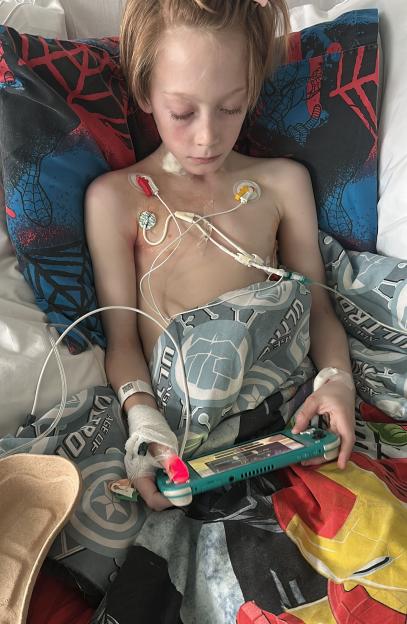 But he lost weight and became breathless and tired Credit: Kennedy News
Penny, from Ely, Cambridgeshire, said: “It happened in two or three weeks that he went from being healthy and fit to being two days away from dying.
“He started off with just becoming really breathless so even walking up the stairs he would stop halfway and just be struggling to catch his breath.
“That concerned us a little bit because prior to that he was the most fit, active, healthy football-mad boy.
“I took him to the GP. She said she thought it was viral and that ‘he’ll get better in about a week’.
“A week later he was getting worse and he’d also lost weight as well. It got to 5.30pm and he’d be taking himself to bed and that definitely rang alarm bells because he’s never been like that ever.
“We took him back to the GP and I said ‘if it was viral he’d be getting better but we’ve noticed he’s losing weight, he’s out of breath so much and walking to school he’d have to stop gasping for air’.
“She said it could be and sent us home with a peak flow kit and a diary. We did it for about a day but he couldn’t even blow the peak flow.
“They invited us on Saturday to a respiratory clinic to do an asthma check. The reading came back that it was very unlikely to be asthma.
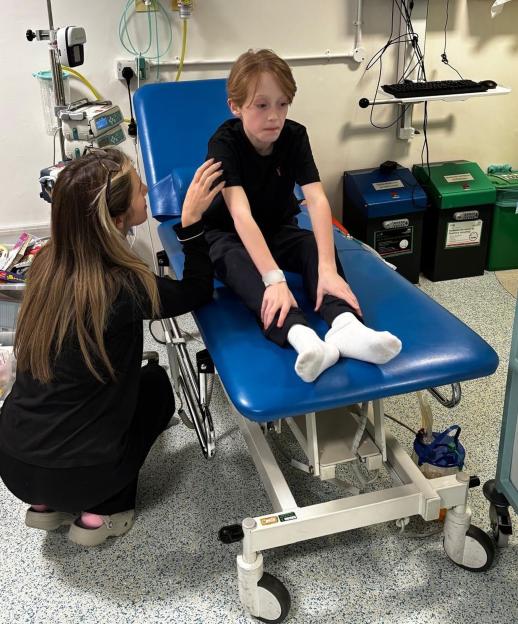 Penny took Arthur back to the GP multiple times Credit: Kennedy News
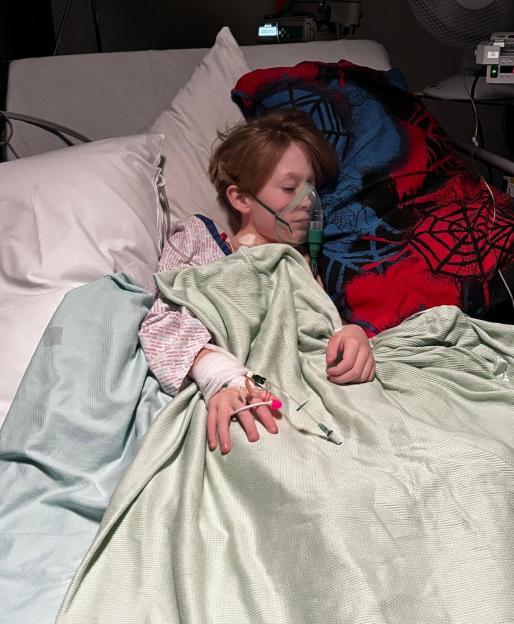 Each time she was dismissed she grew increasingly worried Credit: Kennedy News
“We took him home and a few days went past and we started to really worry at this point – but I never in a million years thought about cancer.
“It’s just something you think happens to other people. You don’t ever think it’s going to be your child.
“We took him back to the GP and she said it was anxiety because he was not able to keep eye contact.
“Arthur can be a bit of an anxious child and has inattentive and . He’s really popular at school and is really good at fitting in but he doesn’t like to stand out from anybody.”
Days later, the parents walked into Arthur’s bedroom and saw “the level of effort he was having to do just to breathe”.
“We started to panic at this point and his dad said ‘we’re taking him to hospital’ and he turned around and one side of his chest was four times the size of the other,” Penny said.
In hospital an ultrasound revealed that over three litres of fluid had built up around Arthur’s lungs and an urgent CT scan showed the pressure had pushed his heart to the other side of his body.
Penny said: “I honestly thought I was in a dream. I thought ‘this isn’t real life‘, it was like a nightmare. It was really, really hard.
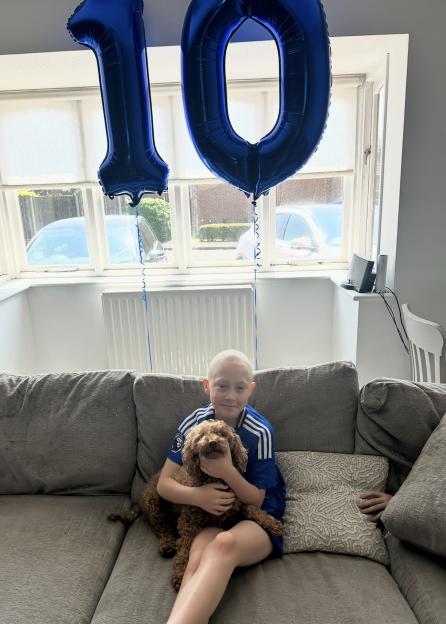 Arthur after losing his hair during chemotherapy Credit: Kennedy News
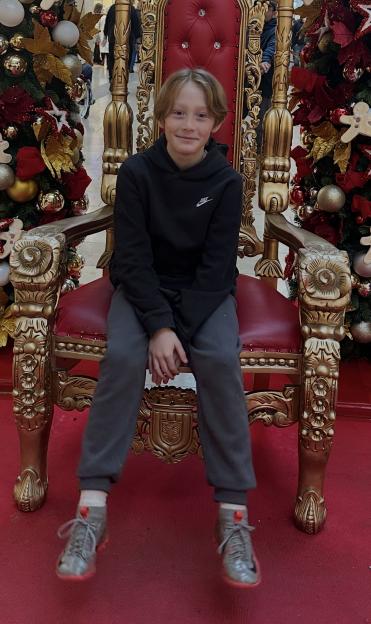 He received four intensive rounds and will need to continue getting treatment until 2028 Credit: Kennedy News
“[Arthur’s] always been quite stoic so puts on the brave ‘I’m fine’. How do you tell your child they have cancer?”
Arthur received four rounds of intensive chemotherapy between February and October 2025 and the mass in his chest has now gone, but he will continue receiving treatment until June 2028.
Penny had to quit being a student midwife to care for her son.
A family member has set up a GoFundMe account to help support Arthur’s family, whose lives have completely changed since the diagnosis.
She said: “He’s been through a lot and is so tough. The lasting mental impact that it’s had is what we’re struggling with now.
“He’s missed a year of school and he just wants to be like everybody else at his school. Just getting him back to being Arthur before all of this has been a real challenge.”
“I look back and think I should have requested to see another doctor. We saw the same GP and there’s nothing I can do about it now.
“You do put your trust in GPs. They’re authoritative figures and you feel like they know what they’re talking about.
“If you feel in your gut that you’re not happy or if you have alarm bells going off in your head you push. That’s your child and you’re there to advocate for them.”
What is T-cell lymphoblastic lymphoma?
Lymphoma is a type of blood cancer that develops when white blood cells called lymphocytes grow out of control.
Lymphocytes are part of your immune system. They travel around your body in your lymphatic system, helping you fight infections.
T-cell lymphomas are non-Hodgkin lymphomas that develop from a type of white blood cell, called a T lymphocyte or T cell.
Around 1,000 people are diagnosed with T-cell lymphomas in the UK each year.