
Delhi Airport Third Runway Reopens After Seven-Month Upgrade
Delhi Airport’s third runway, 11R/29L, is returning to service on 20 September 2026 after a seven-month rehabilitation programme designed to improve safety, efficiency, resilience and long-term capacity.
 Written byEze Chidiebere Paul

Delhi’s Indira Gandhi International Airport is set to bring Runway 11R/29L back into service on 20 September 2026 after a seven-month rehabilitation programme, restoring the airport’s third runway following a wide package of airside upgrades.
Delhi International Airport Limited (DIAL), the operator of the airport, said the runway has completed the required inspections, validations and regulatory clearances needed before operations can resume. The runway, commonly known as Delhi Airport’s third runway, had been undergoing rehabilitation since February.
What was upgraded on Runway 11R/29L?
The programme covered more than routine resurfacing. DIAL said the works included runway resurfacing, pavement strengthening, upgrades to airfield ground-lighting systems, a permanent threshold displacement on Runway 29L, construction of a new Rapid Exit Taxiway identified as RET Z1, and associated civil and electrical infrastructure improvements.
The airport operator says the changes are intended to improve runway efficiency, reduce runway occupancy time, optimise aircraft movement and strengthen operational reliability in different weather conditions.
Hindustan Times reported that the runway had remained in continuous service since it was commissioned in 2008, apart from regular maintenance and smaller rehabilitation work. That long operating history made the latest programme a significant infrastructure intervention rather than a short maintenance closure.
Why the reopening matters for Delhi Airport
Indira Gandhi International Airport is one of India’s busiest aviation gateways. Returning the third runway to service gives controllers and airport operators additional flexibility in managing departures and arrivals, especially during periods of heavy demand or when weather and operational constraints affect the use of other runways.
The reopening does not mean every flight will automatically operate faster or that delays will disappear. Airline schedules, air-traffic restrictions, weather, aircraft availability and other operational factors can still affect individual journeys. However, an additional operational runway increases the airport’s available infrastructure and can give air-traffic managers more options when balancing traffic flows.
DIAL said the rehabilitation was carried out in coordination with the Directorate General of Civil Aviation, the Airports Authority of India, air traffic control, airlines and other stakeholders to meet safety, operational and regulatory requirements.
New rapid-exit taxiway designed to reduce runway occupancy
One of the most important additions is the new Rapid Exit Taxiway Z1. Rapid-exit taxiways are designed to allow landing aircraft to leave a runway more efficiently after touchdown. Reducing the amount of time an aircraft occupies the active runway can help controllers create more efficient spacing between movements when conditions permit.
The upgraded lighting and navigation-related infrastructure are also intended to strengthen reliability, while the pavement works are aimed at supporting long-term use of the runway under sustained traffic.
Reopening follows final approvals
DIAL said the upgraded runway was ready only after prescribed inspections and regulatory processes had been completed. That distinction is important: major runway projects typically require technical validation and regulatory clearance before the infrastructure can return to normal commercial operations.
Times of India likewise reported that all required inspections, validations and regulatory clearances had been completed ahead of the 20 September reopening.
What passengers should expect
For travellers, the runway reopening is primarily an infrastructure and capacity development rather than a change that requires any action at check-in. Passengers should continue to monitor their airline’s live flight information because terminal assignments, departure times and individual flight operations remain subject to normal airline and airport procedures.
The key change happens behind the scenes: Delhi Airport regains another fully operational runway, giving the airport greater flexibility to handle traffic while supporting future passenger and aircraft-movement growth.
DIAL has described the recommissioning as part of its effort to build future-ready aviation infrastructure, with the new taxiway, lighting improvements and strengthened runway designed to support safety, efficiency and resilience over the long term.
FlyingEze will continue to monitor major airport, airline and travel developments that could affect passengers.
Continue reading

Jet Financiers Warn Fuel and Borrowing Costs Are Reshaping Aviation
Aircraft financiers and lessors say higher jet-fuel prices and borrowing costs are reshaping aviation economics, cooling parts of the second-hand aircraft market even as passenger demand remains resilient.
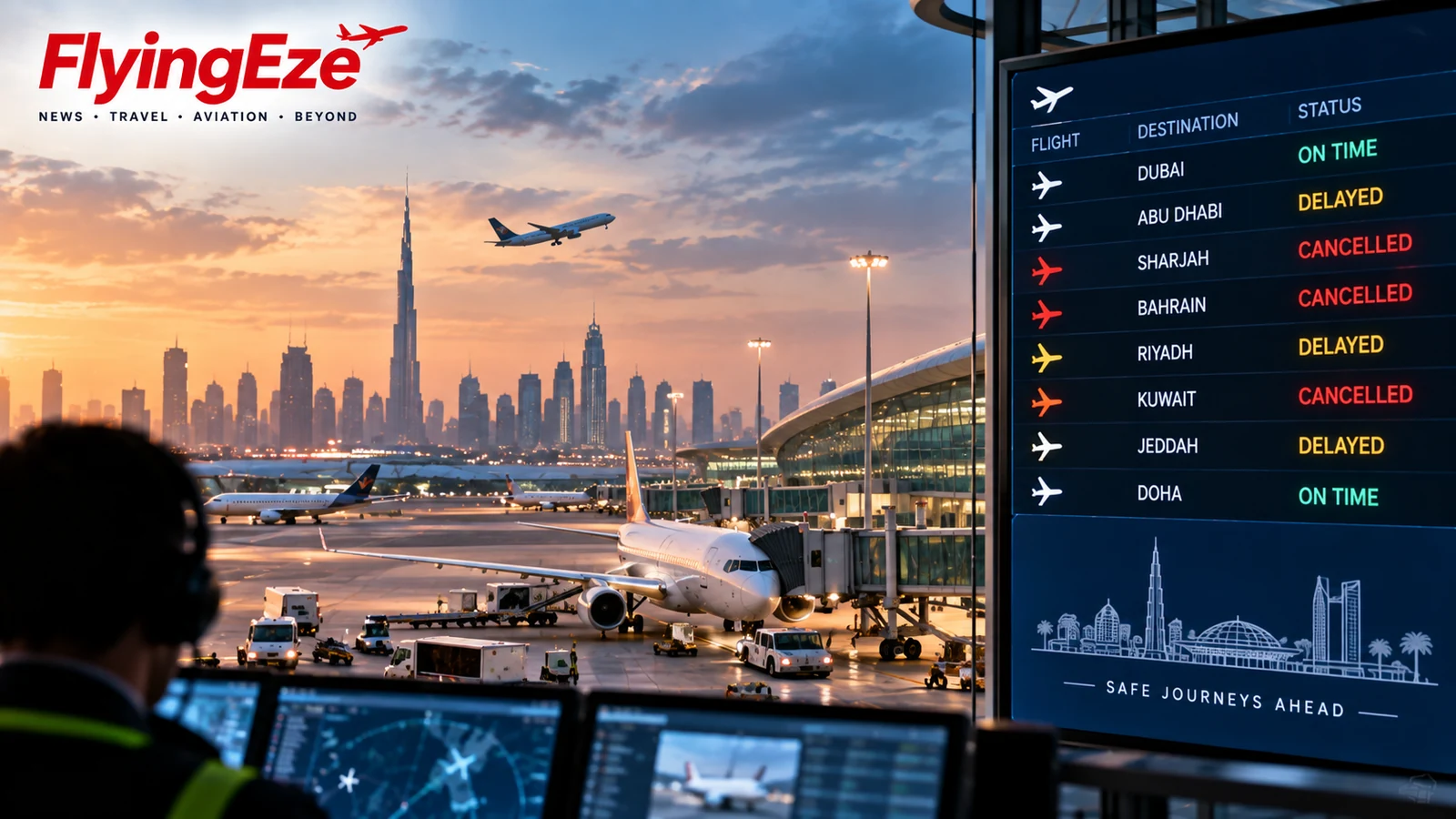
UAE Flight Disruptions Continue as Dubai, Abu Dhabi and Sharjah See Cancellations
Travellers using Dubai, Abu Dhabi and Sharjah airports are seeing selected cancellations, delays and revised departure times on 19 September 2026, while most UAE airline operations continue.

Air Peace Challenges NCAA August Delay Data, Says 700 Flights Were Omitted
Air Peace has challenged NCAA August 2026 delay statistics, saying more than 700 of its flights were omitted from the dataset and the published figures distort its performance.

UK Air Traffic Control Outage: Software Defect Blamed for 2,000 Flight Cancellations
NATS says a software defect caused the 8 September UK air traffic control outage that led to more than 2,000 flight cancellations and widespread delays.