Historical retrospective — researched 6 November 2026. This newly written article reconstructs the disruption at Lagos State University Teaching Hospital (LASUTH) during Nigeria's August 2021 resident doctors' strike. It draws on dated reporting and government records; it does not describe a current strike or reproduce the original FlyingEze article. The original FlyingEze publication date has not been established.
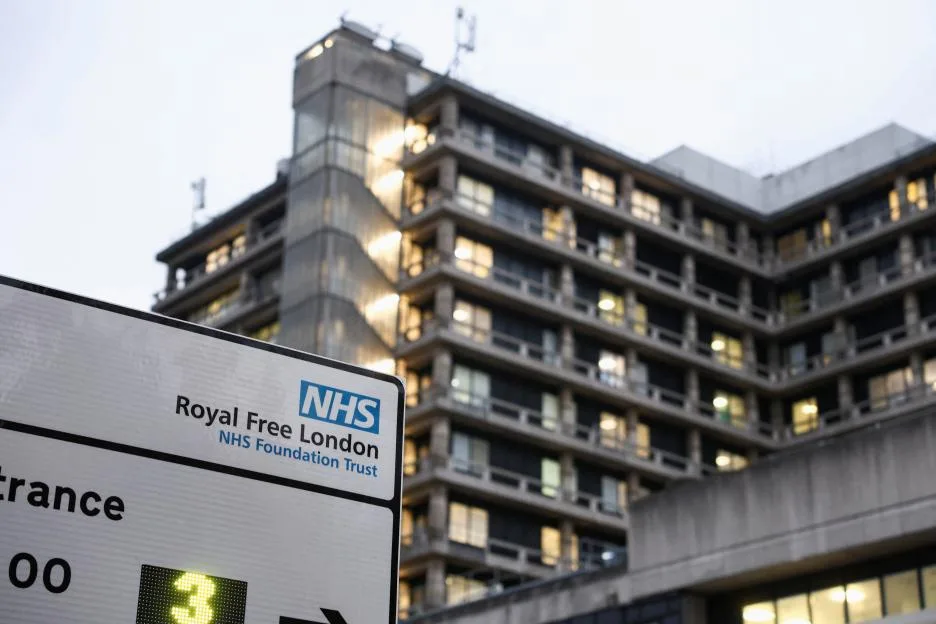
On 3 August 2021, patients arriving at Lagos State University Teaching Hospital (LASUTH) in Ikeja faced sharply reduced medical services as resident doctors participated in a nationwide strike. Consultants and nurses continued offering limited care, but senior doctors warned that they could not replace the large number of resident doctors who normally handled much of the hospital's clinical workload. Some patients were unable to obtain appointments or treatment, while others faced prolonged uncertainty about their care.
The incident was documented by health journalist Lara Adejoro in a PUNCH report published on 4 August 2021 . That article carries the same headline as the lost FlyingEze URL and establishes the historical subject. A Galaxy TV report dated 2 August independently confirms LASUTH resident doctors' participation, while later reporting on 6 August explains the disagreement between the doctors and the Lagos State Government.
The impact of the stoppage was not limited to a single hospital. The National Association of Resident Doctors (NARD) had directed a nationwide indefinite strike to begin on Monday, 2 August 2021, citing unresolved disputes about salaries, training, welfare and employment rules. Understanding the LASUTH disruption means understanding both the immediate problems faced by patients and the underlying dispute that led doctors to withdraw their services.
What happened at LASUTH in the first days of the strike?
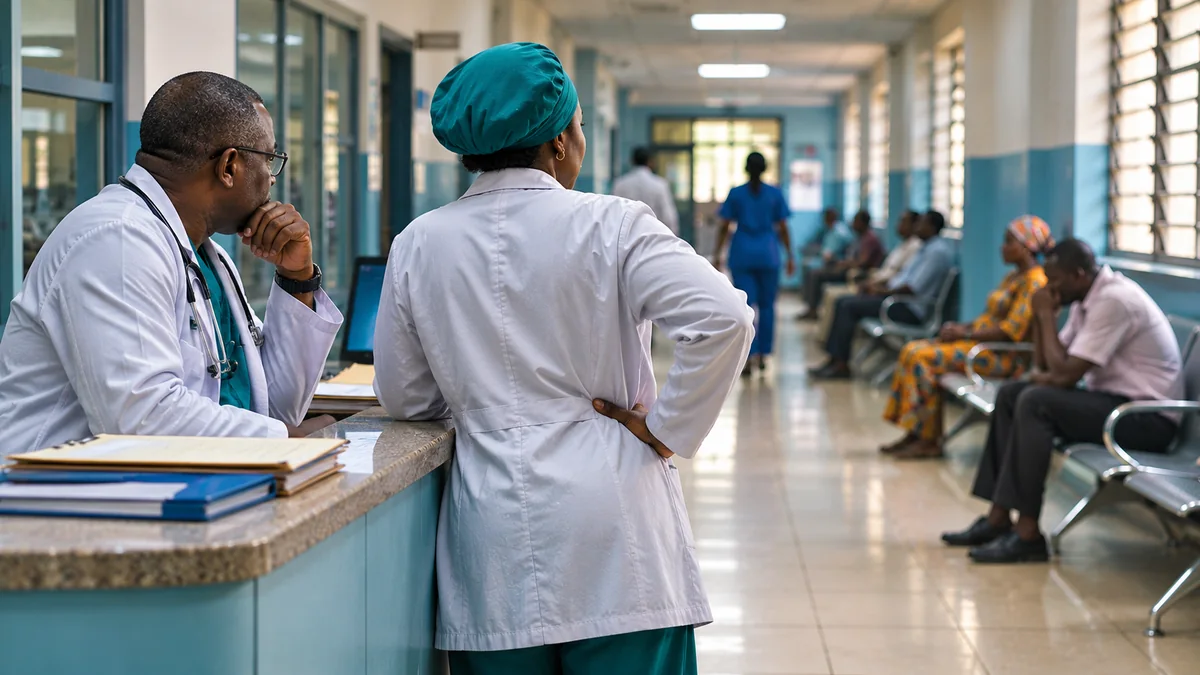
Reporters visiting LASUTH on Tuesday, 3 August, described resident doctors staying away from duty in compliance with the industrial action. Consultants and nurses were still working, but the hospital was not operating at its normal capacity. Patients seeking new consultations or outpatient appointments were particularly affected. The contemporaneous account describes people who arrived from elsewhere in Lagos and were told they could not be attended to as expected.
This is more precise than saying that every service at LASUTH stopped. Senior clinicians were providing some care, but the withdrawal of resident doctors sharply constrained what could be delivered. “Paralysed” in the original headline described substantial disruption, not proof that the entire hospital had closed. It is important not to confuse a reduced-service hospital with one that had completely shut its doors.
Independent reporting over the following days supports the description of sustained disruption. In an 8 August 2021 New Telegraph investigation , patients at LASUTH described delayed or unavailable attention, while consultants' workloads were described as overwhelming. Those observations occurred several days after the initial PUNCH visit and should be treated as later corroboration, not as events witnessed by FlyingEze.
Why were the consultants overwhelmed?
Resident doctors are qualified medical practitioners undergoing postgraduate specialist training. They are not the same as medical students; their clinical duties often include assessing patients, assisting with procedures, managing wards, responding to emergencies and supporting the work of consultants. Consultants are senior specialists with supervisory, diagnostic and treatment responsibilities, but there are usually fewer of them than resident doctors in a teaching hospital.
In the 4 August PUNCH account, Dr Oluwajimi Sodipo, a consultant family physician at LASUTH and chairman of the Medical Guild, described the importance of resident doctors to daily hospital operations. He estimated that the working relationship could involve one consultant supported by roughly four senior resident doctors and explained why consultants working alone could not maintain full service levels.
The shortfall was not only about numbers of individuals. A single consultant may make critical decisions for several patients while relying on residents, nursing staff, laboratory professionals and other workers to carry out coordinated treatment. Reassigning consultants to cover routine duties may help keep essential services running, but it does not automatically recreate the staffing needed for clinics, theatre lists, ward rounds and specialist procedures.
The original report also quoted Dr Clement Oluwarotimi, then chairman of the Medical and Dental Consultants' Association of Nigeria chapter at Lagos University Teaching Hospital (LUTH), who warned of growing workloads for consultants. LUTH and LASUTH are separate institutions: LUTH is the federal teaching hospital at Idi-Araba, whereas LASUTH is the Lagos State teaching hospital at Ikeja. His remarks supported the nationwide staffing concern, but they should not be presented as if he was speaking for LASUTH's management.
How serious was the existing staffing shortage at LASUTH?
Two days after the initial report, LASUTH Association of Resident Doctors president Dr Azeez Ojekunle described a larger structural shortage. According to PUNCH's 6 August 2021 interview , Ojekunle said the hospital had approximately 150 consultants and 312 resident doctors, compared with the 450 residents he considered desirable under his stated staffing ratio.
Those are the union representative's reported staffing estimates from August 2021, not an independently audited headcount or a description of staffing in 2026. Ojekunle described a deficit of more than 150 resident and house-officer positions when discussing training needs and the appropriate doctor-to-patient balance. The precise categories of vacant positions and the reference standard were not independently reconciled in the source.
He linked recruitment difficulties to Nigerian doctors leaving for opportunities overseas. The concern was broader than the strike itself: if a hospital was already short of trained staff, an organised withdrawal of much of its remaining resident workforce could make an existing capacity problem immediately visible to patients.
That structural issue explains why a brief disruption could have large effects. Health services depend on the availability of different clinical professionals working together; specialists cannot simply compensate indefinitely for every absent team member while maintaining the same throughput and supervision.
Why did Nigeria's resident doctors go on strike on 2 August 2021?
NARD directed the nationwide action after a meeting in Umuahia, Abia State, on 31 July 2021. Its then-president, Dr Uyilawa Okhuaihesuyi, told reporters that prior commitments by the federal authorities had not been implemented adequately. Channels Television's 31 July report and The Guardian's 1 August account confirm that the intended start date was 2 August.
Issues raised by the doctors included inconsistent payment of salaries to some house officers, problems with payroll enrolment, outstanding hazard allowances, benefits for families of doctors who had died in the course of their duties during the COVID-19 pandemic, and funding for specialist training. Some of the disagreements concerned how doctors were recorded and paid through federal government personnel and financial systems.
Doctors also objected to administrative moves affecting the status of house officers and other young medical practitioners within public-service employment arrangements. These policy concerns were particularly contentious in Lagos, where state-level implementation became part of the dispute.
The union's case was that agreed conditions and benefits had been delayed or inconsistently implemented. The authorities disputed parts of that assessment and later defended their efforts to meet payment obligations. The disagreement should be reported as a labour and health-policy conflict, not reduced to an assertion that either side had already been proven wholly right.
What was the disagreement between LASUTH doctors and Lagos State?
At LASUTH, doctors emphasised a circular affecting the treatment of house officers and National Youth Service Corps doctors within the scheme of service. They also sought implementation of residency training support and resolution of local employment concerns. According to a News Agency of Nigeria report published by PUNCH on 3 August , Ojekunle called on Lagos officials to address those issues.
The public positions diverged. Lagos State Commissioner for Health Professor Akin Abayomi said the government had been engaging medical staff and argued that Lagos doctors had joined the strike primarily in solidarity with the national association. Ojekunle disagreed in a 6 August PUNCH follow-up , saying that outstanding Lagos-specific matters were important causes of the action, not merely expressions of sympathy with colleagues elsewhere.
The union president specifically cited the disputed circular and the implementation of residency training support. The state said it had been addressing complaints and making commitments. These positions show why the issue could not be resolved simply by saying a nationwide directive applied automatically to every hospital regardless of local circumstances.
This distinction is important for anyone studying the historical dispute: **a national strike and hospital-specific grievances existed at the same time**. Neither the federal negotiating process nor the Lagos State response alone explains every decision made by LASUTH doctors.
What did the service disruption mean for patients?
The most immediate consequences were delays, interrupted appointments and uncertainty. Reporting from LASUTH described patients who had arrived expecting consultations but were told services were limited. For families referred from smaller clinics or private hospitals, travelling to a major teaching hospital only to face a staffing shortage could create additional financial and emotional pressure.
The original 4 August account included people describing their difficulty securing care; the later 8 August report documented continuing delays. These are contemporaneous journalists' interviews with patients. The available reports do not establish that every emergency at LASUTH was refused, or provide audited counts of people affected, surgeries postponed or deaths attributed to the strike.
It would be irresponsible to invent such numbers. The documented harm is substantial enough without speculation: people seeking publicly provided specialist care faced reduced access precisely when they needed help. Consultants and nurses were also asked to maintain essential functions with fewer colleagues than normal.
The wider public-health situation added pressure. Nigeria was confronting COVID-19 infections, and hospitals could not separate routine clinical work entirely from pandemic-related responsibilities. The Guardian's 2 August coverage warned about the implications of a national walkout during the pandemic, while officials continued appealing for services to resume.
Were emergency services completely shut?
No source reviewed justifies a blanket claim that every clinical service at LASUTH ceased. Contemporary accounts describe consultants and nurses maintaining skeletal services — a reduced level of care rather than normal operations. The particular departments able to provide treatment and the waiting times varied.
Patients were nonetheless turned away or asked to return later in individual cases. It would also be misleading to present the presence of a few consultants as evidence that the strike had little impact. Specialist care often requires teams, equipment, supporting clinicians and scheduled staffing. A hospital may physically remain open but lack the capacity to provide normal treatment to everyone arriving.
This distinction matters whenever older healthcare stories are republished. The historically accurate description is that the strike severely constrained services, leaving some patients stranded and consultants overstretched, not that all care was universally unavailable.
How did the federal government respond?
Government representatives entered negotiations with medical associations while criticising the timing of the walkout. On 12 August 2021, then-health minister Osagie Ehanire said consultants and other available medical personnel had been mobilised to help cover gaps, according to TheCable's contemporaneous report . That intervention was a mitigation measure, not proof that services had returned to full capacity.
The legal dispute later reached the National Industrial Court of Nigeria. On 23 August 2021, Justice John Targema issued an order directing the union to suspend the action pending further proceedings. The ruling is recorded on the court's official website and was reported by the Federal Ministry of Information . The order did not, by itself, mark the end of the stoppage.
Negotiations continued amid disagreement about pay, benefits and legal obligations. Some doctors remained away from work into September. Reporting about these events needs to distinguish a court direction, the union's response and the actual date when the nationwide action was suspended.
When did the 2021 strike end?
NARD announced the suspension of its nationwide strike in early October 2021. The Guardian reported on 4 October that members were scheduled to return to duty on Wednesday, 6 October, after roughly two months of industrial action. The union gave the government additional time to fulfil outstanding commitments.
A 7 October statement by the Federal Ministry of Labour and Employment welcomed the suspension and referred to proposed funding for hazard allowances. The government statement disputed aspects of the union's account of unpaid obligations, underscoring that the cessation of the strike did not mean all underlying disagreements had been settled to everyone's satisfaction.
At the Lagos level, reporting on 8 September had already documented a proposed understanding between the state government and medical representatives. Ojekunle said a local arrangement would not automatically terminate a strike declared nationally. This explains why local negotiations and the eventual national suspension should not be treated as the same event.
Why does the August 2021 LASUTH episode matter?
The episode exposed an operational vulnerability of specialist hospitals. A relatively small number of senior consultants cannot always replace resident doctors responsible for a large share of day-to-day clinical activities. Where staffing is already insufficient, an industrial dispute can quickly result in treatment backlogs and difficult choices about which patients receive priority.
It also showed the importance of distinguishing among doctors' employment conditions, patients' immediate needs and the government's financial commitments. Salary systems and residency training arrangements may appear administrative, but they influence whether hospitals can recruit, retain and deploy skilled clinical workers.
The events should not be confused with later industrial actions at LASUTH. FlyingEze has separately reported on a subsequent warning from the Nigerian Medical Association about a LASUTH doctors' strike . That is a different dispute, not a continuation of the August 2021 event. FlyingEze has also covered NARD's later training of healthcare workers in basic life support , offering broader context on the professional activities of the association outside industrial action.
Those later developments are useful background for readers interested in Nigeria's medical workforce, but they should not be inserted into the 2021 timeline as though they were contemporaneous.
Timeline of the LASUTH resident doctors' strike
- 31 July 2021: NARD announces a nationwide indefinite strike scheduled to begin on 2 August.
- 2 August 2021: Resident doctors begin the action; a Galaxy TV report confirms participation at LASUTH.
- 3 August 2021: Reporters visit LASUTH and describe reduced services and patients waiting for care.
- 4 August 2021: PUNCH publishes the report matching the lost FlyingEze headline.
- 6 August 2021: Further reporting documents the disagreement between Lagos officials and LASUTH resident doctors, along with staffing concerns.
- 23 August 2021: The National Industrial Court orders suspension of the action pending further proceedings.
- September 2021: Federal negotiations continue and Lagos doctors discuss a local agreement without immediately ending the national action.
- 4–6 October 2021: NARD suspends the strike and members are scheduled to resume work.
Frequently asked questions
When did the LASUTH resident doctors' strike begin in 2021?
LASUTH resident doctors participated in the nationwide action that began on Monday, 2 August 2021. The original report about overwhelmed consultants appeared on 4 August.
Why did consultants struggle to handle patient care?
Resident doctors carry out a substantial share of daily hospital work under specialist supervision. With those doctors absent, fewer consultants and other staff were left to provide reduced services.
Who was the LASUTH resident doctors' leader?
In August 2021, Dr Azeez Ojekunle was identified in contemporary reporting as president of the hospital's Association of Resident Doctors chapter.
What were the doctors demanding?
The nationwide dispute involved salary-payment problems, hazard allowances, death benefits, payroll arrangements and residency training support. Lagos doctors also objected to a circular concerning house officers and public-service employment.
Did LASUTH shut completely?
Contemporary reports describe severe disruption, stranded patients and skeletal services performed by consultants and nurses, not a verified complete shutdown of every clinical department.
When was the nationwide strike suspended?
The union announced a suspension in early October 2021, with doctors scheduled to return on 6 October 2021.
Conclusion
The August 2021 LASUTH story was about more than an industrial dispute between resident doctors and public authorities. It showed how quickly patient access can deteriorate when teaching hospitals lose the clinicians who provide much of their everyday care. Consultants and nurses tried to keep essential services available, but contemporary reporting documented delays and patients unable to receive their expected treatment.
A reliable retrospective must preserve both sides of the controversy. Doctors raised pay, welfare, training and employment concerns; Lagos officials disputed how much of the strike reflected unresolved local issues; and the federal government continued negotiating while taking legal steps. The nationwide stoppage was eventually suspended in October, but the early disruption at LASUTH remained an example of the close relationship between healthcare staffing and patient access.
Editorial disclosure: This is an original FlyingEze historical reconstruction using PUNCH's August 2021 reporting, independent contemporaneous coverage, an official industrial-court record and later government and union statements. It is not the original lost FlyingEze article or a copy of PUNCH's reporting. The date of the original FlyingEze publication has not been recovered.