AS Luis Arroyo’s son screamed down the phone begging for help after being attacked on the way home from a football game, he raced to find his two boys and their friends.
But when he arrived his children and their two pals — aged between 11 and 15 – had vanished. Weeks later, their bodies were found stripped, tortured and burned near a military base. The deaths shocked this Brit backpacking hotspot, but their case is far from the only disappearance haunting a country ravaged by violence.
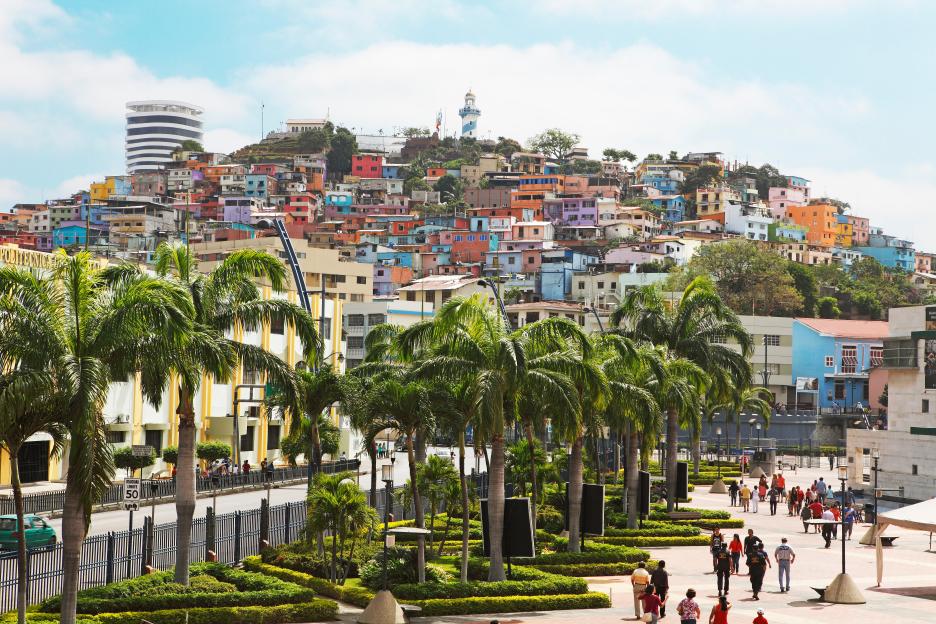 The Las Penas district in Ecuador, a popular backpacking hotspot that has been plagued by violence Credit: Alamy
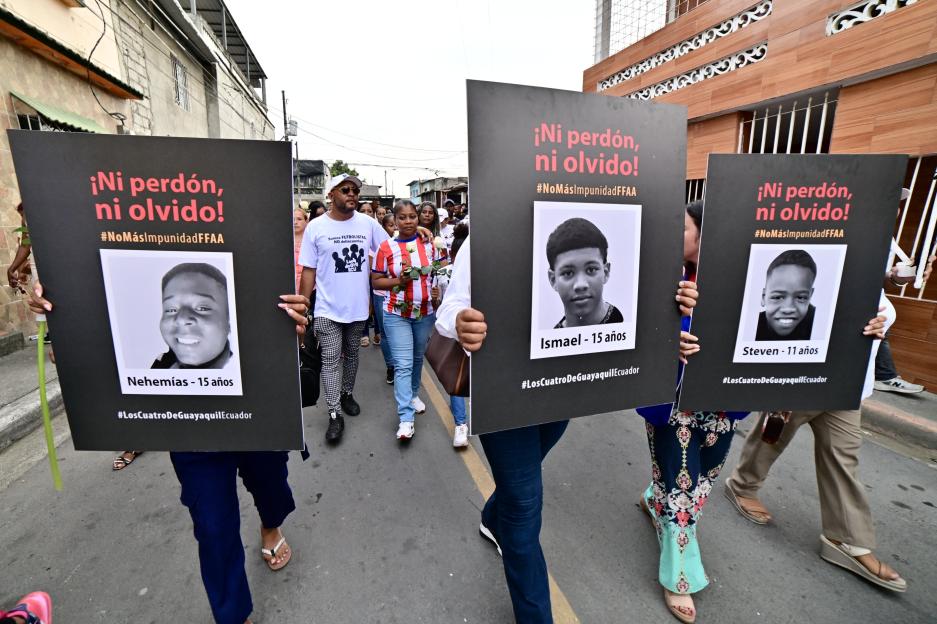 The parents of Ismael and Josue Arroyo, two of the teenagers found dead near a military base, attend a march after their deaths Credit: AFP
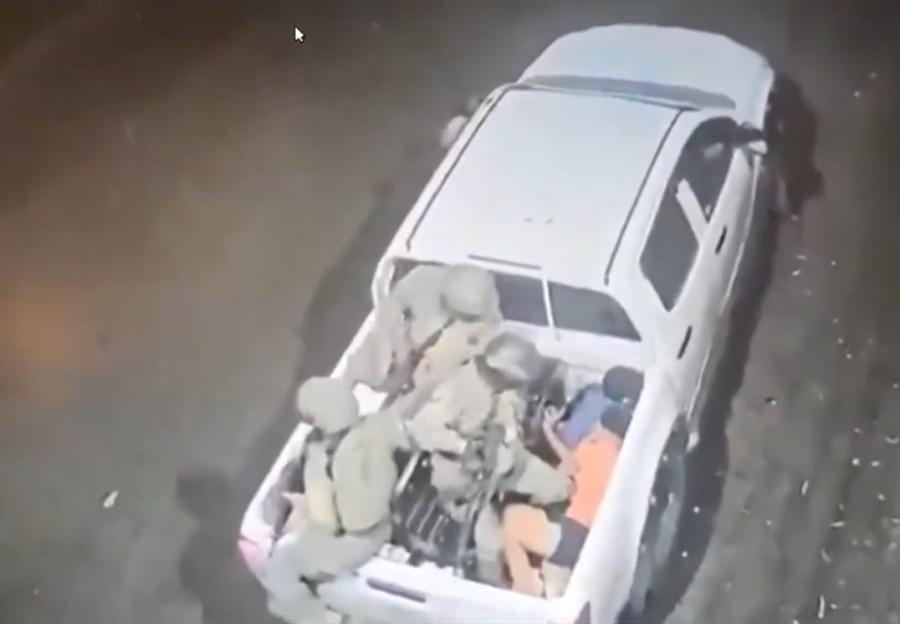 Shocking CCTV footage showed a group of boys being hauled into the back of a truck before they were found dead Credit: X/@RadioMorena640
 One of the boys seen being arrested in terrifying footage Credit: X/@RadioMorena640
Boasting wildlife attractions like the Galápagos Islands and the Amazon Rainforest, is known for its natural beauty and diverse cultural heritage.
It has made the stunning South American nation a magnet for tourism and backpacking – with 1.3m tourists in 2025 including 30,000 Brits.
But a growing wave of gang violence has rocked the country in recent years.
Camila Ruiz Segovia, a Human Rights Defender at Amnesty International, told The Sun: “Ecuador is really dramatic. It was one of the safest countries in the Americas, and suddenly it became extremely violent.
“If you go to a place that has a homicide rate that is about 100 in 100,000, like Guayaquil or many of the cities in the coast, anyone is at risk of getting caught in the crossfire of criminal violence.”
In April 2025, a British man was allegedly lynched and burned alive in Cuyabeno Wildlife Reserve in Ecuador’s Amazon region, after being accused of killing a local.
Additionally, Brit businessman Colin Armstrong, 78, was kidnapped from his farm in Guayaquil in 2023 alongside his partner, before later being freed that December.
This January, in Puerto López – an area plagued by drug traffickers forcing fisherman to help smuggling operations – in what appeared to be a gruesome intimidation act between rival gangsters.
In April after attackers stormed the pitch.
Last year was the most violent year in Ecuador’s history, Segovia said.
Since 2023, Ecuador has been pushed to the brink of civil war at times, with civilians increasingly caught in the crossfire of the chaos.
Segovia added: “Ecuador became one of the most violent countries in South America because of the rise in power of organized crime.”
The biggest driver of carnage has been Ecuador’s transformation from a relatively peaceful tourist hotspot into one of Latin America’s main cocaine trafficking routes, experts say.
Sandwiched between Colombia and Peru – the world’s two biggest cocaine producers – Ecuador has become a battlefield for gangs, even against narco gangs.
Criminal groups including Los Choneros, Los Lobos and Los Tiguerones have turned kidnappings, executions and forced disappearances into tools of terror.
In 2023 alone, the country saw more than 8,000 homicides, an eight-fold rise compared to 2018.
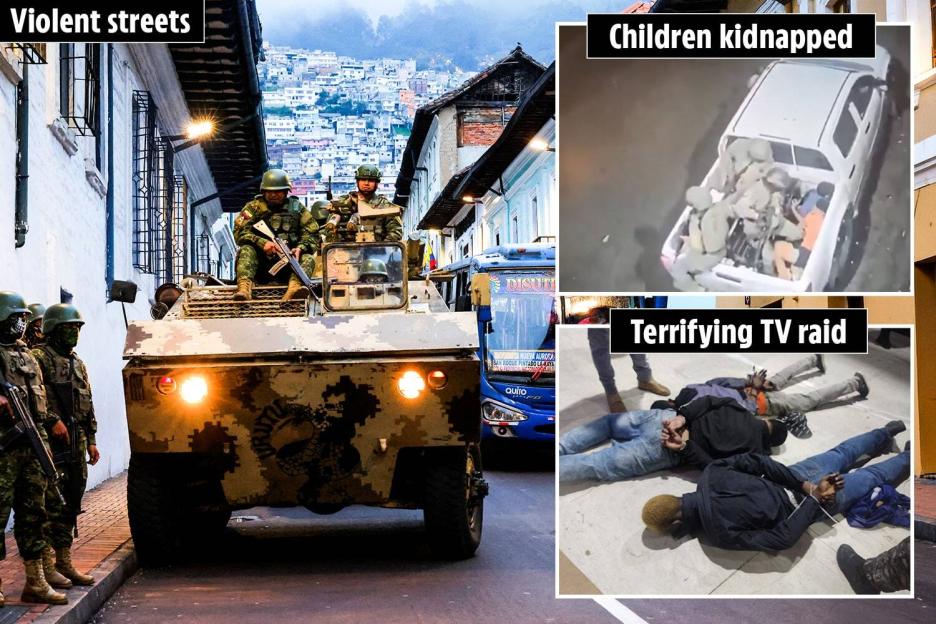
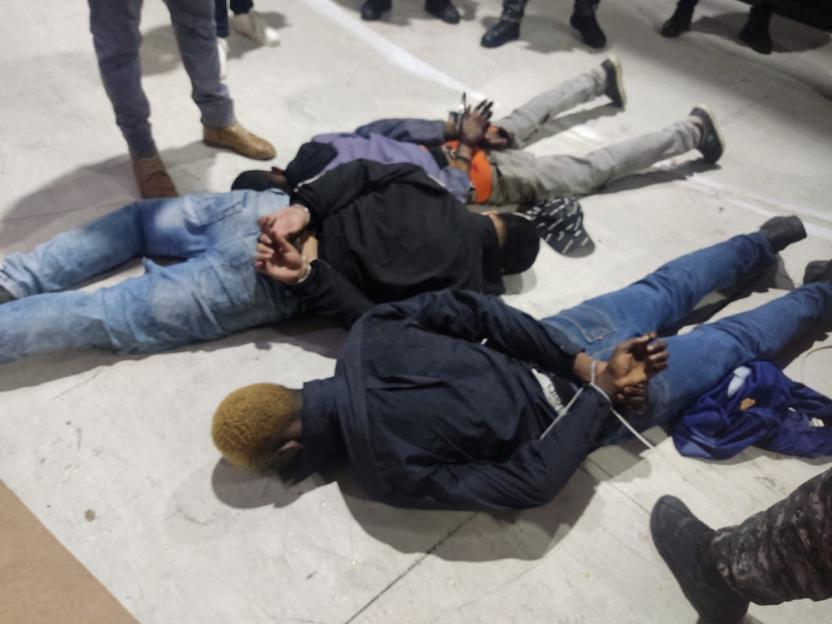 Suspects arrested following a terrifying television station raid in Guayaquil, Ecuador, January 9, 2024 Credit: Reuters
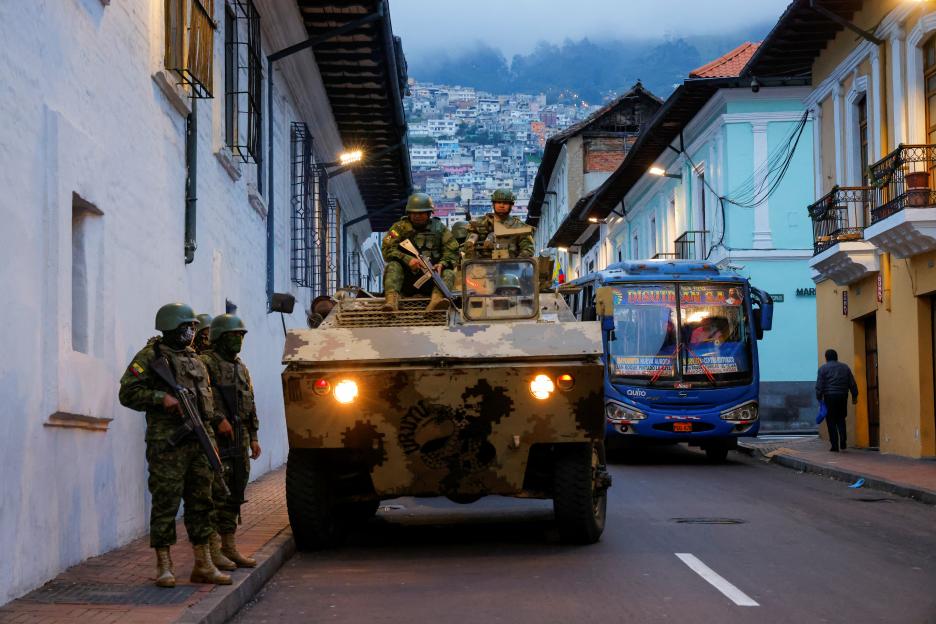 Soldiers patrol Quito in Ecuador following an outbreak of violence Credit: Reuters
This horrifying statistic puts it above other nations famed for their cartel violence – including even Mexico and Colombia.
And the crisis gripping the country has sparked a shocking rise in missing people – including thousands of children.
Last year, 7,459 people were reported missing, according to Ecuadorian authorities. Of those, 854 people have still not been found.
This figure – covering both enforced disappearances and other missing persons cases – marked a 10-fold increase from the previous decade.
Human rights groups fear the real toll could be far higher – warning that many families never report loved ones missing at all.
Segovia said the rise in missing people has been the result of an “explosion of violence”.
Ecuador analyst at International Crisis Group, Glaeldys González Calanche, told The Sun: “The problem of disappearances in Ecuador is getting worse. The country’s security crisis has deepened over the past five years and the state has increasingly militarised public security.”
She said violence against children had “risen sharply” – with 16,000 kids vanishing in Ecuador from 2022 to 2025, according to the country’s interior ministry.
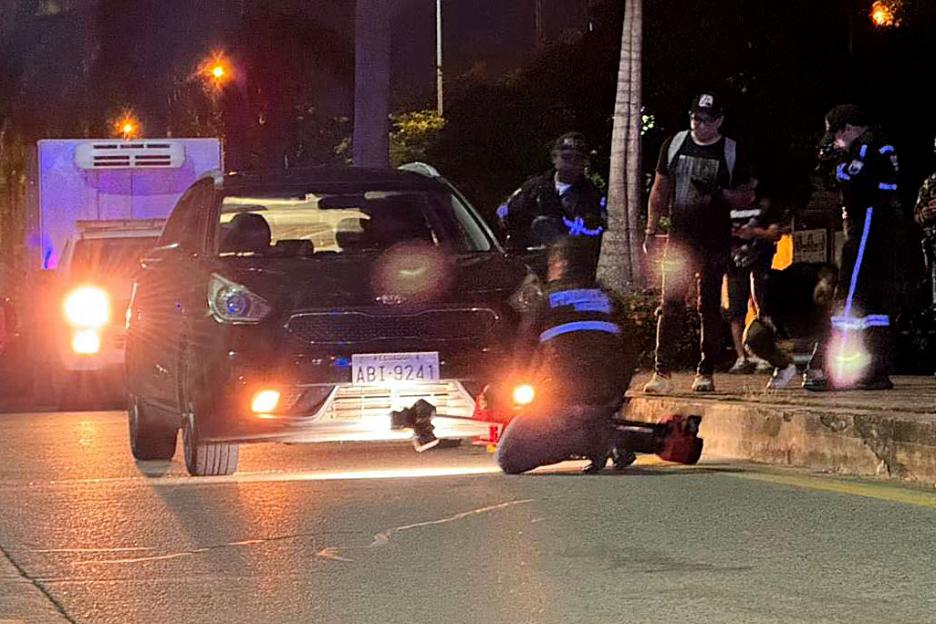 Ecuadorian police at a crime scene in Machala following a shooting in May Credit: AFP
 Ecuador is known for its idyllic beaches on the Galapagos Islands Credit: Alamy
Not only are children at risk of becoming targets of the government, but also of criminal gangs.
“Adolescents aged 13 to 18 are particularly vulnerable, as criminal groups often target them for recruitment, sexual exploitation and other forms of abuse,” she warned.
It has disproportionately affected poorer areas, especially the Guayas province, its capital Guayaquil, and the country’s coastal regions.
Two years ago, Ismael Arroyo, 15, his 14-year-old brother Josue, 15-year-old Nehemías Arboleda, and 11-year-old Steven Medina from Las Malvinas were found dead.
The boys were taken to a remote area where they were subjected to racist insults, beatings and even a simulated execution, a court heard.
In December last year, 11 Ecuadorian soldiers were jailed for 34 years each after being found guilty over the “forced disappearance” of the four boys, a court heard.
The soldiers had been on patrol as part of the government’s crackdown on gang violence and said they had stopped the boys because the youngsters were suspects in a robbery.
It remains unclear who exactly killed the boys out of the 11 convicts, but they were found to have punched, kicked and hit the youngsters with belts and gun barrels before one of them managed to call their dad for help.
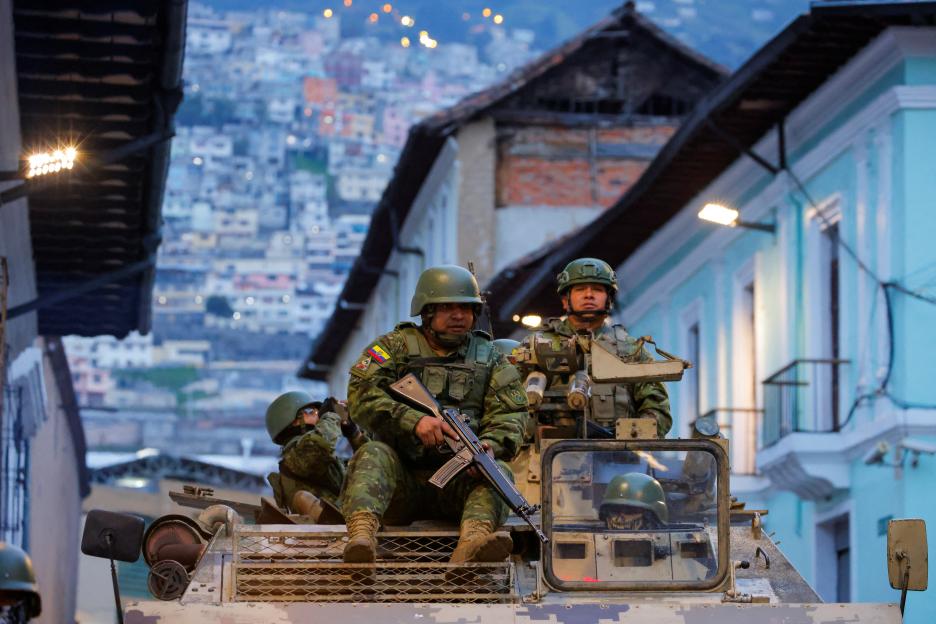 Violence erupted after the disappearance of Adolfo Macias, leader of the Los Choneros criminal gang, from prison Credit: Reuters
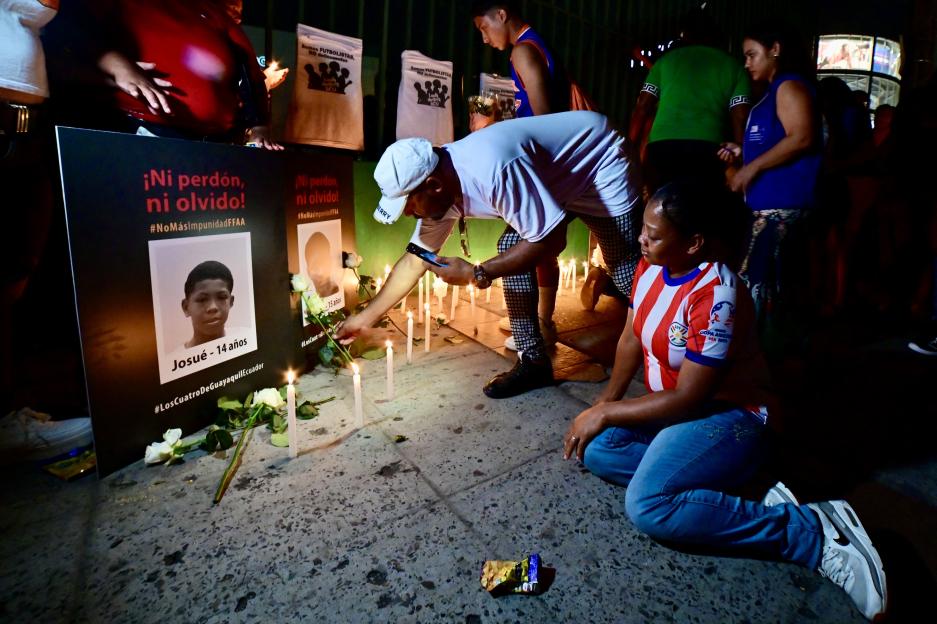 Ismael and Josue Arroyo were found dead near a military base Credit: AFP
Five were given reduced sentences for cooperating with the prosecution, while a lieutenant-colonel who had not been on patrol with the rest of the group was declared not guilty.
Terrifying footage showed the armed men approaching the boys before hauling them into the back of a truck in the night.
Despite the story sparking fury, one silver lining was that those responsible were held accountable, Segovia said.
She said: “There has been justice, which, to put into context, is very hard to get justice for military cases. It’s very obvious that they were just children playing soccer, their innocence is very hard to deny.”
Calanche said it was one of the clearest examples of “enforced disappearance”.
She said: “An enforced disappearance is when someone is taken or detained by state authorities, or by people acting with their support, and then the authorities deny it or refuse to say where the person is.”
Between 2024 and 2025, 51 people, including children, became victims of enforced disappearances in Ecuador, according to International Crisis Group.
Calanche highlighted how these acts can be carried out by the army or even criminal gangs linked to the state.
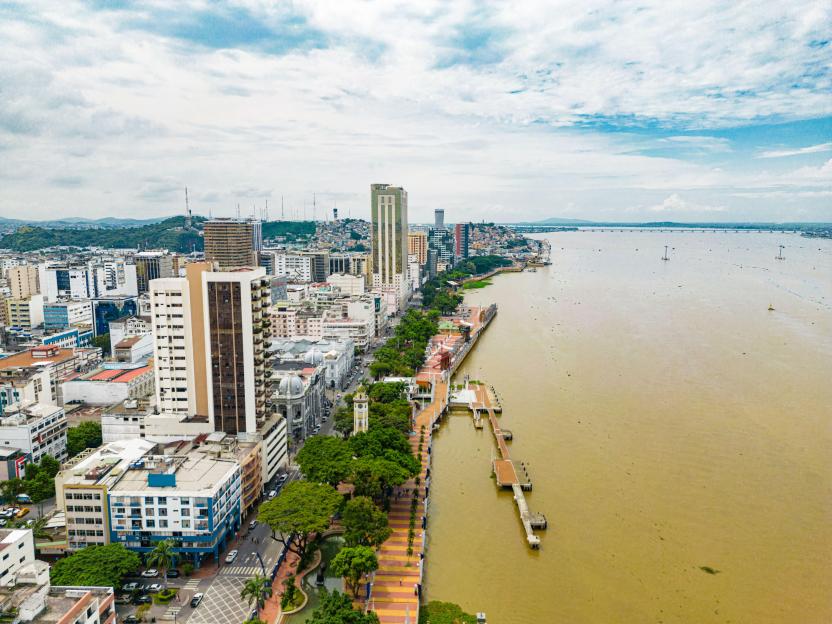 Sandwiched between Colombia and Peru, Ecuador has become a battlefield for gangs Credit: Alamy
 Ismael Arroyo, 15, his brother, Josué, 14, Steven Medina, 11, and Nehemías Saúl Arboleda, 14 Credit: Handout
The expert said: “Children are increasingly at risk as Ecuador’s security crisis has worsened.”
Although children were being targeted, she said the army mainly focuses on people from poor backgrounds, Segovia said.
“There’s definitely a situation in which children are going missing, but in general… the area that deserves attention is that it’s all people from very marginalised communities,” she said.
After being elected president in 2023, Daniel Noboa introduced an iron-fist clampdown on organised crime dubbed the “Phoenix Plan”.
But groups say his security services have been given broad powers and extensive immunity.
Disappearances have become one of the darkest side effects of a drug war tearing through the nation.
In January 2024, high-profile cartel boss, José Adolfo Macías Villamar, known as Fito, escaped from prison – sparking across the country.
He had been the leader of Los Choneros, one of Ecuador’s most powerful prison gangs.
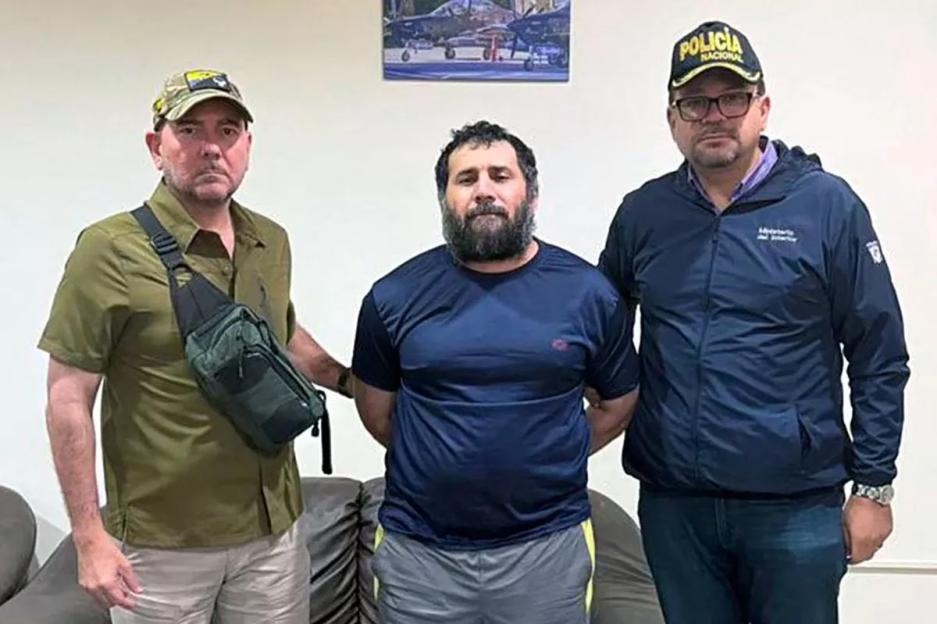 Cartel boss Jos Adolfo Macas Villamar or ‘Fito’ after his arrest Credit: Jam Press/@EjercitoECU
 Staff flee Ecuador’s TC television channel after gunmen burst in during a live TV show Credit: AFP via Getty Images
The sudden surge in carnage culminated when in Guayaquil, threatening the presenter live on air and trying to force him to read out a warning to police.
President Daniel Noboa hit back by declaring a state of emergency and calling for criminal gangs to be “neutralised”.
He has deployed tens of thousands of troops to quash the mayhem since – with security services even running prisons, Segovia added.
She said: “The army functions as the police in many regions in Ecuador, particularly those regions that are at the coast, which are the most affected by violence, by organised crime.”
But Noboa’s sweeping crackdown and war on organised crime never really ended.
Many disappearances are linked directly to the cartel warfare unfolding between gangs and the government.
Segovia said: “People were before afraid of being the victim of organised crime, and now they are afraid of being victims of the army.”
Calanche said: “Ecuador’s security crisis has continued to deepen despite President Noboa’s crackdown.
“The government has relied heavily on military-led operations, but these have brought only limited and short-lived results.”
“Security forces have failed to curb criminal violence, as gangs continue to control prisons, expand into new areas and fragment into rival factions that fuel further violence,” the expert noted.
“At the same time, allegations of abuses by the security forces during the military campaign have continued to mount.”
Despite attempts by the country’s government and armed forces to crack down on the cartels, Ecuador remains the world’s number one exporter of cocaine.
Ecuador does not produce the drug, unlike its neighbours, but 70 per cent of the world’s cocaine flows through its ports, Noboa has said.
Murders in Ecuador jumped by 30 per cent in 2025 from the year before – recording 9,216 killings.
A new record for the most killings in a single month was even broken in January 2025, with 781 suspected murders.
Segovia explained that a lot of enforced disappearance cases are never resolved because the military refuses to cooperate with investigations.
She added: “Family members try for a very long time to find them, and then they just don’t.
“And then they go to hospitals, they go to prisons, they start asking around, and nobody knows anything beyond when there are some videos of the army taking them away.”
Families who try to find their relatives are at risk of being targeted by the army, Segovia added.
“These communities are living in a contest of extreme violence,” she said.

![Lagos 2027 gets hot as Hamzat, Rhodes-Vivour make INEC final list [FULL LIST]](https://image.flyingeze.com/posts/file/4567c6/1000392201-457x1024.webp)