AS the summer sun gradually starts to fade and welcome chills creep into the evening air, people across the UK are reaching for their jackets.
But when does actually end and begin?
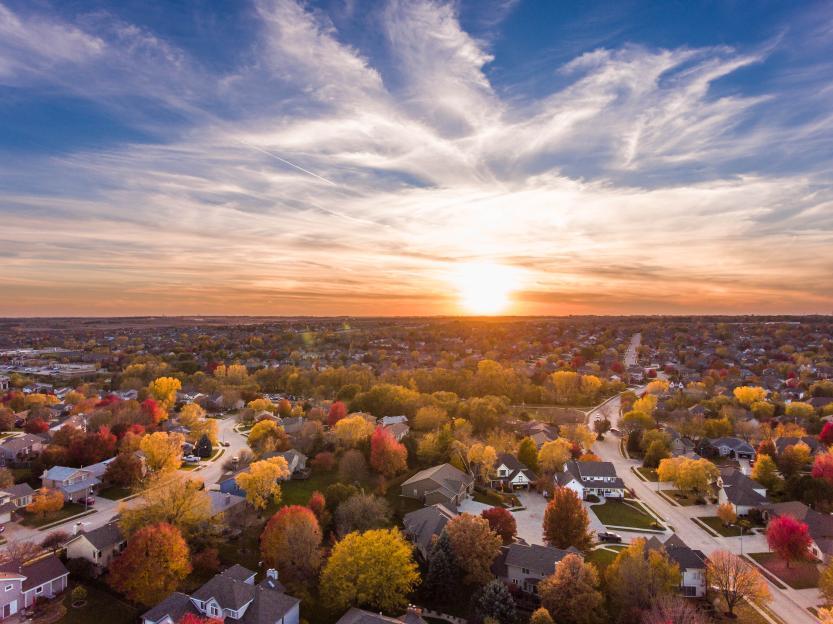 Autumn can have two start dates depending on who you ask Credit: Getty
 Autumn also brings the end of British Summer Time as the clocks go back one hour Credit: Alamy
If you’re trying to figure out when autumn officially begins, the answer depends on who you ask.
Meteorologists have a fixed date on the calendar, while astronomers follow the movement of the and stars.
When does autumn start?
Autumn can have two start dates depending on whether you follow climate records or the night sky.
There is no single “correct” answer as to which system you want to define the start of autumn by.
Meteorological autumn always starts on September 1 and finishes on November 30.
Astronomical autumn starts on the Autumnal Equinox – which in 2026 lands on September 23, and finishes on December 21.
What is Meteorological autumn?
Meteorologists split the year into four equal seasons made up of three full calendar months each.
This system relies on annual temperature trends rather than astronomical events.
Under this definition, the calendar splits into four clean, three-month blocks.
covers March, April, and May, followed by summer across June, July, and August.
Autumn takes over for September, October, and November, before closes out the year through December, January, and February.
By fixing these dates to months, forecasters and climate scientists can easily compare rainfall, temperature stats, and weather patterns.
What is Astronomical autumn?
Astronomical autumn is governed by the Earth’s orbit around the Sun.
It officially kicks off on the Autumnal Equinox – the exact moment when the Earth’s equator lines up directly with the centre of the Sun.
On the day of the equinox, day and night are almost equal in length across the globe.
Once this moment passes, the Northern Hemisphere tilts further away from the Sun.
That is when the days start shrinking, the nights draw in, and the temperatures drop.
Because the Earth takes roughly 365.25 days to complete a full orbit around the Sun, the astronomical date shifts slightly each year.
But it almost always lands between September 21 and 24.
When do the clocks change?
Autumn also brings the end of British Summer Time (BST).
The clocks go back one hour on the last Sunday of October – in 2026, that’s Sunday, October 25 – returning the UK to Greenwich Mean Time (GMT).
While we lose an hour of evening daylight, the trade-off is an extra hour of sleep on Sunday morning and slightly brighter starts to the day.