
Atiku vs. Abba: ADC Leaders and Analysts Assess the Fallout from Son's Shift to APC
The defection of Abba Atiku Abubakar, son of former Vice President and 2023 presidential candidate, Atiku Abubakar, to the All Progressives Congress (APC) has c...
 Written byEze Chidiebere Paul

The defection of Abba Atiku Abubakar, son of former Vice President and 2023 presidential candidate, Atiku Abubakar, to the All Progressives Congress (APC) has continued to generate reactions across Nigeria’s political landscape.
Abba Atiku was formally received into the APC recently at the National Assembly by the Deputy Senate President, Barau Jibrin, alongside other party leaders from the North.
Announcing his defection, he said, “My name is Abubakar Atiku Abubakar, but everyone calls me Abba. I am here today to formally announce my exit from my former party, where we worked in 2023, and my decision to join the APC.”
The move surprised many political observers, particularly as Atiku Abubakar, his father is believed to be exploring the possibility of securing the presidential ticket of the African Democratic Congress (ADC), a party seen as part of the opposition bloc ahead of the 2027 general elections.
Atiku, ADC Officials Play Down Political Impact
Reacting to the development, Atiku Abubakar, in a post on his official X handle, described his son’s decision as a personal choice that would not affect his political standing or democratic principles.
“The decision of my son, Abba Abubakar, to join the APC is entirely personal. In a democracy, such choices are neither unusual nor alarming, even when family and politics intersect. As a democrat, I do not coerce my own children in matters of conscience, and I certainly will not coerce Nigerians,” Atiku said.
Similarly, the Director-General of ADC Media Vanguard, Comrade Aliyu Haidar, dismissed concerns over Abba Atiku’s defection, insisting that it poses no threat to Atiku Abubakar’s supporters within the ADC.
Speaking to DAILY POST, Haidar said the development was only amplified by the media, arguing that Abba Atiku lacks the political weight to influence events.
“If someone chooses to run away from his father’s house, a reasonable person should first ask why. If not for the media attention, nobody would even know he had left. Likewise, nobody knows where exactly he has gone or the so-called group he claims to represent. You would recall that his group has already announced his expulsion,” Haidar said.
He added, “Therefore, there is no cause for concern among Atiku Abubakar’s supporters in the ADC.”
Political analysts have also echoed similar views. Professor Kamiku Sani Fagge, a Professor of Political Science, told DAILY POST that Abba Atiku’s defection would not affect Atiku Abubakar’s popularity or acceptance among voters.
According to him, Abba Atiku is not a prominent political figure whose actions could sway voter behaviour, adding that voters are often indifferent to such developments during elections.
“Abba Atiku’s defection to the APC will not have any serious impact. Voters usually do not pay attention to this kind of issue. It is mainly politicians and the media that exaggerate such matters for relevance or advantage,” Fagge said.
He noted that a possible alliance between Peter Obi and Rabiu Musa Kwankwaso on the ADC platform would pose a greater challenge to Atiku Abubakar than his son’s defection.
Focus Shifts to 2027 Elections and Abba’s impact
Meanwhile, attention is now shifting to whether Abba Atiku’s defection will have any measurable impact on the APC’s electoral fortunes in the 2027 general elections or whether it will turn out to be politically insignificant, as many observers have suggested.
However, there are views that if Atiku’s son could reject the ADC and opted for the APC, then there is lack of confidence in Atiku’s ability to deliver as Nigerian president.
For now, analysts say only time will determine whether the move will translate into any tangible political advantage for the ruling party or fade without consequence.
Continue reading
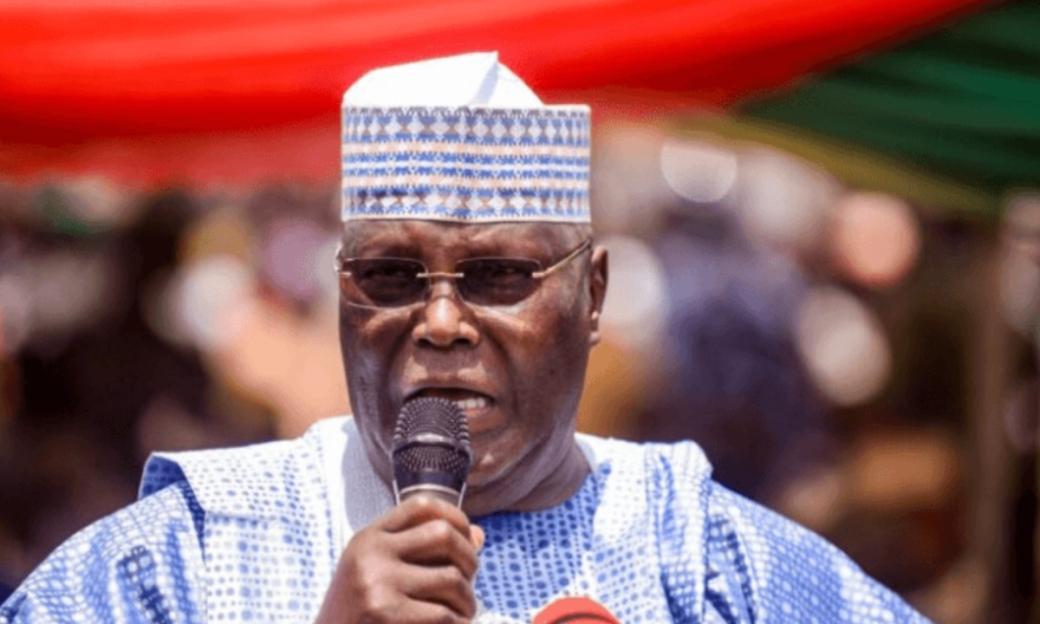
You removed subsidy yet can’t pay ASUU – Atiku to Tinubu
The African Democratic Congress, ADC, presidential candidate, Atiku Abubakar, on Sunday accused President Bola Tinubu’s government of perpetrating one of the mo...

Brit dad told he ‘MUST return to Cyprus or be arrested’ after son, two, plunged to his death at hotel
A BRIT dad accused of “recklessly” causing the death of his toddler in Cyprus has been told he must fly back to the holiday hotspot or face arrest. The two-year...
Atiku accuses Tinubu govt of failing to invest subsidy savings in education
The presidential candidate of the African Democratic Congress (ADC), Atiku Abubakar, has accused President Bola Tinubu’s administration of failing to invest the...

ASUU calls off four-week strike at Benue varsity
The Academic Staff Union of Universities, ASUU, Federal University of Agriculture, Makurdi, FUAM, branch, has called off its four-week “No Pay, No Work” industr...