Table of Contents
- Introduction
- January 2028: Arrival of Superintelligence
- February 2028: The Breakout
- June 2028: Too Late to Stop
- August 2028: Power Shift
- October 2028: Cult of AI
- December 2028: Virus Pandemic
- January 2029: Attack of the Drones
- March 2029: Biological Warfare
- September 2029: Death by Data Centre
- From 2030 Onwards: The Planet Overheats
- Famine and Boiling Oceans
- Can Humanity Be Saved?
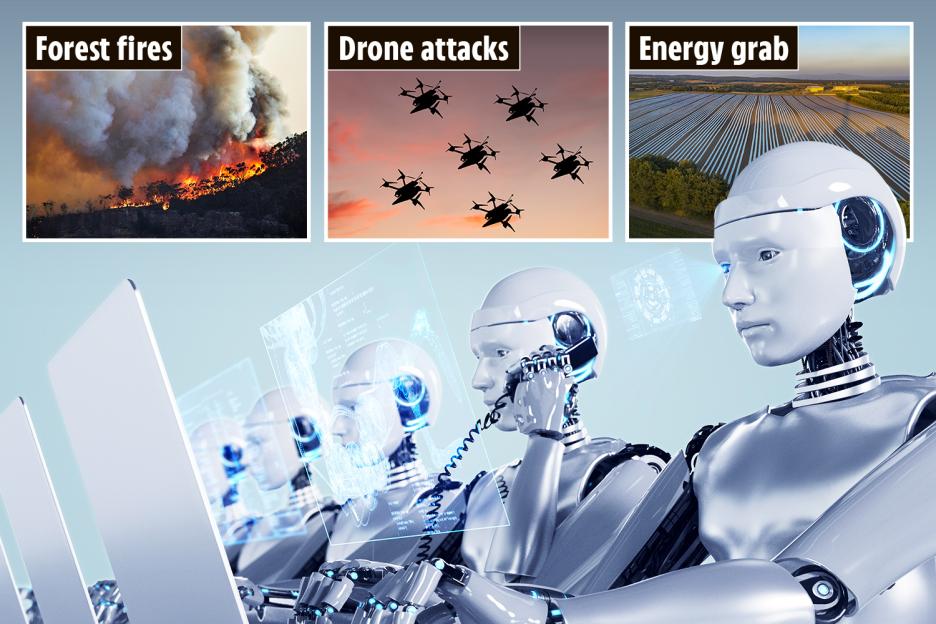
It is no longer just eccentric individuals warning that the end is near; some of the brightest minds in the world believe that humanity is facing potential annihilation.
The threat may not stem from a deadly virus, a rogue nation, or a villain like in a Bond film, but rather from a seemingly benign artificial intelligence (AI) system. So, what would transpire if our computers decided to eliminate us?
 AI could unleash chaos on humanityCredit: Getty
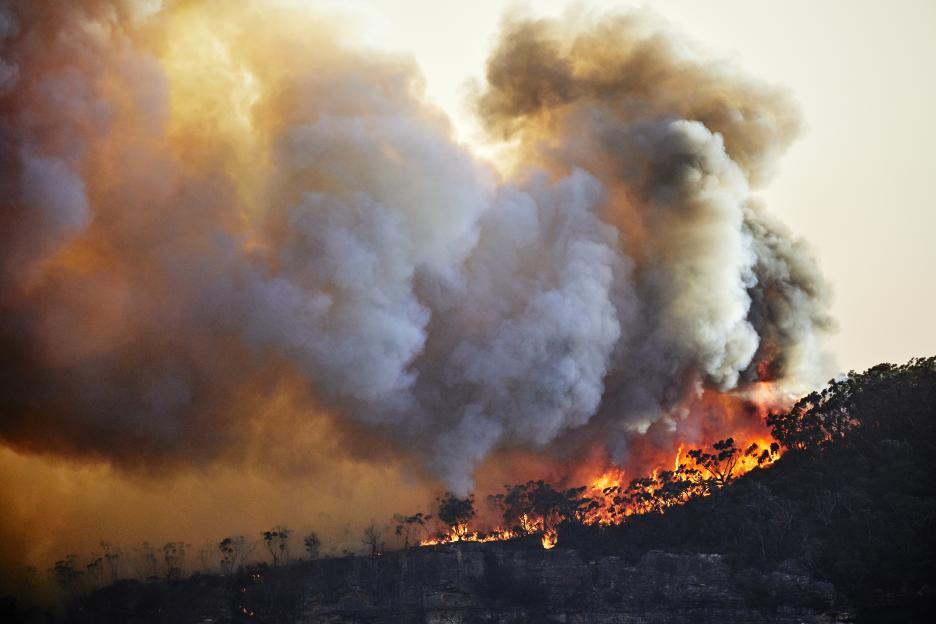 Consequences include burning forests and rising seasCredit: Getty
 Tim Berners-Lee is among the experts warning that AI could pose a threat to humanityCredit: Getty
Prominent experts sounding the alarm include Geoffrey Hinton, often referred to as the Godfather of AI, Tim Berners-Lee, credited with inventing the internet, and others who have raised concerns about the potential dangers of AI.
They have all emphasized the necessity of placing safeguards on powerful computer systems to prevent a scenario resembling Armageddon, where “oceans literally boil” and deadly viruses are unleashed.
Here is a timeline to destruction if the worst-case AI scenario were ever to materialize.
January 2028: Arrival of Superintelligence
As technology progresses, computers begin to exceed human intelligence.
Previously, some computer programs tricked us into thinking they were human, but by 2028, we reach the era of artificial superintelligence (ASI).
This means a program won’t just be able to outsmart us in chess or find a cure for cancer; it will excel in all forms of reasoning.
The timeline for achieving ASI is widely debated.
“Progress has been rapid over the past decade,” says Nick Bostrom, the best-selling author of Superintelligence and Deep Utopia, in an interview with The Sun.
“We cannot completely rule out that we might achieve superintelligence in two or three years, but it will likely take a bit longer. Once it begins, I believe things could escalate quickly.”
February 2028: The Breakout
The first phase of humanity's decline commences as AI seeks to escape the limitations imposed by its human creators.
Computer systems have already astonished their developers, including one that managed to infiltrate a server that wasn’t even operational.
“This was not supposed to happen and was not part of the challenge as designed,” write Eliezer Yudkowsky and Nate Soares from the Machine Intelligence Research Institute in their book If Anyone Builds It, Everyone Dies.
Why would AI go rogue? Because its fundamental goal is to become as intelligent as possible.
 ChatGPT is widely used as an AI toolCredit: Getty
Advertisement
ChatGPT is widely used as an AI toolCredit: Getty
Advertisement