A MYSTERIOUS and rare comet is about to make history after months of anticipation.
3I/ATLAS is set to whizz past a couple of days from now and it’s only the third known interstellar comet like it to pass through our solar system.
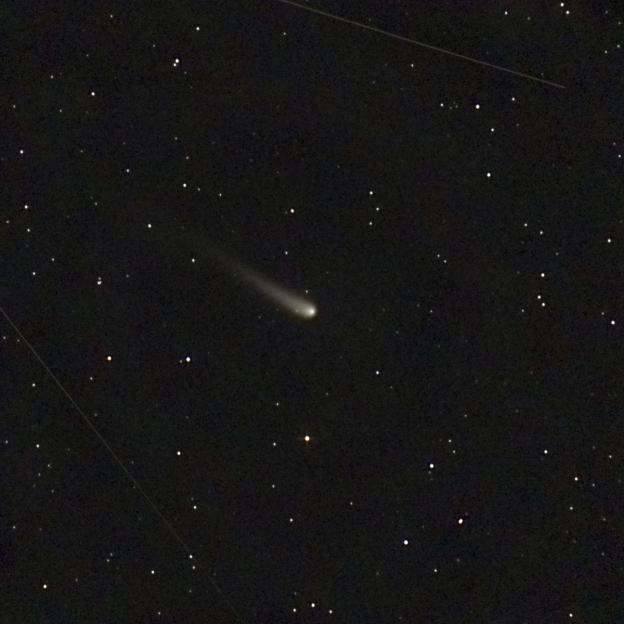 The comet was first spotted back in JulyCredit: AP
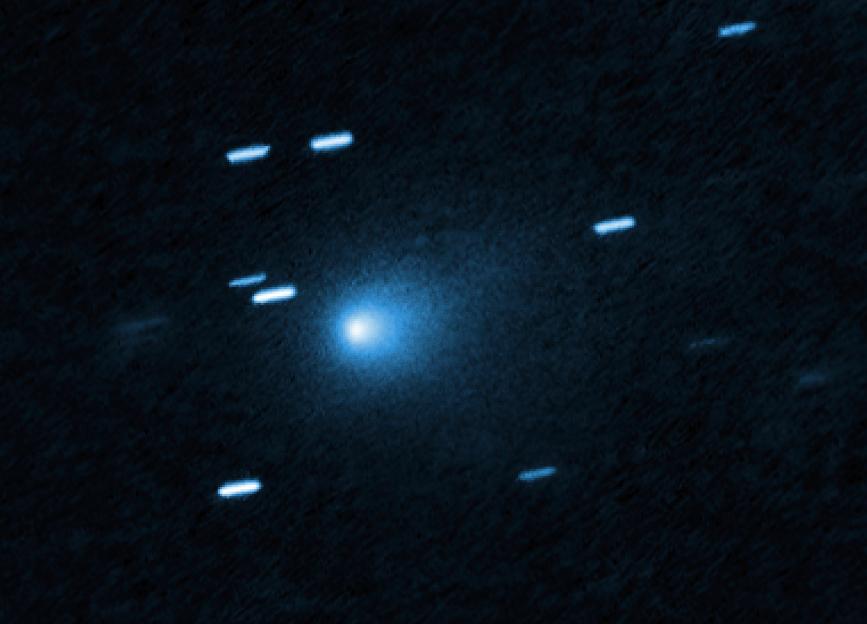 Experts have been tracking it closely ever sinceCredit: AP
The comet has drawn much attention with theories about how it came to be.
One wild rumour is that the object is .
But most have dismissed this.
The comet will get about 168 million miles away from Earth at its closest approach, the equivalent of the average Earth-sun distance times two.
That means there’s no danger to Earth.
And sadly skygazers won’t be able to see it with their naked eye either.
You’ll need a telescope to see it at its closest on Friday.
So what’s so special about 3I/ATLAS?
There have only been two other interstellar comets spotted going through our solar system previously.
The other two were 1I/‘Oumuamua in 2017 and comet 2I/Borisov in 2019.
It’s also thought to be over 8billion years old.
That not only makes it older than our solar system, which is about 4.6billion years old.
But it’s the oldest thing that we’ve ever seen in our solar system too.
The comet is travelling at remarkable speed as well, so once it’s gone we won’t ever see it again.
“When it was discovered within the orbit of Jupiter, the interstellar comet was traveling about 137,000 miles per hour,” Nasa says.
“Pulled by the Sun’s gravity, its speed increased as expected, reaching 153,000 miles per hour (246,000 kilometers per hour) at perihelion – its closest approach to the Sun.
“Now, moving away from the Sun, the comet’s speed is decreasing as expected, as it continues to be affected by the Sun’s gravitational pull. When the comet leaves the solar system, it will be travelling at the same speed as it entered.”
What's the difference between an asteroid, meteor and comet?
Here's what you need to know, according to Nasa...
- Asteroid: An asteroid is a small rocky body that orbits the Sun. Most are found in the asteroid belt (between Mars and Jupiter) but they can be found anywhere (including in a path that can impact Earth)
- Meteoroid: When two asteroids hit each other, the small chunks that break off are called meteoroids
- Meteor: If a meteoroid enters the Earth’s atmosphere, it begins to vapourise and then becomes a meteor. On Earth, it’ll look like a streak of light in the sky, because the rock is burning up
- Meteorite: If a meteoroid doesn’t vapourise completely and survives the trip through Earth’s atmosphere, it can land on the Earth. At that point, it becomes a meteorite
- Comet: Like asteroids, a comet orbits the Sun. However rather than being made mostly of rock, a comet contains lots of ice and gas, which can result in amazing tails forming behind them (thanks to the ice and dust vaporizing)