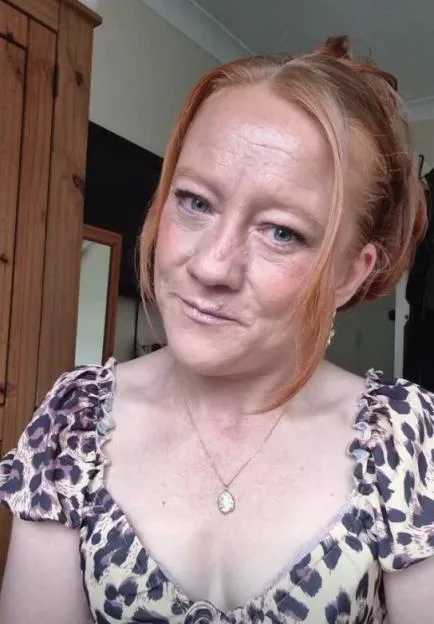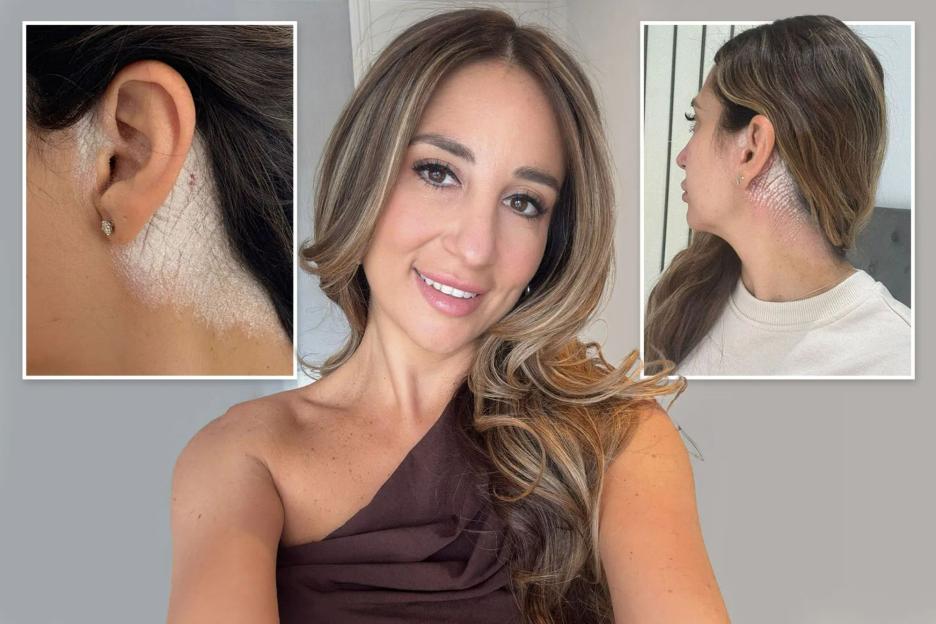
ELLENA George hoped sharing details of her battle with psoriasis online would help others with the condition – but she never expected the cruel comments from trolls.
The severity of the 37-year-old’s condition means she sheds that she has to hoover up on a daily basis, and she avoids wearing black or tying her hair up.
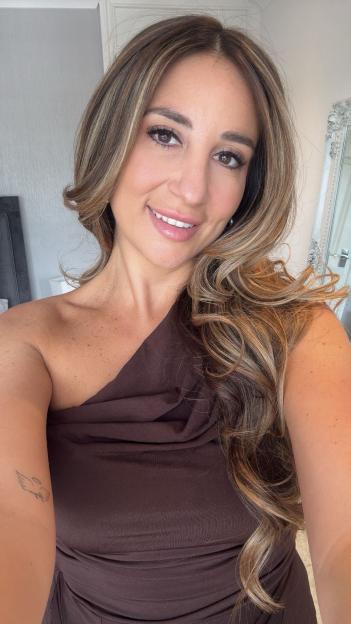 Ellena George, 37, has plaque psoriasis, which causes sore and itchy white plaques on her scalp and neckCredit: Elena George
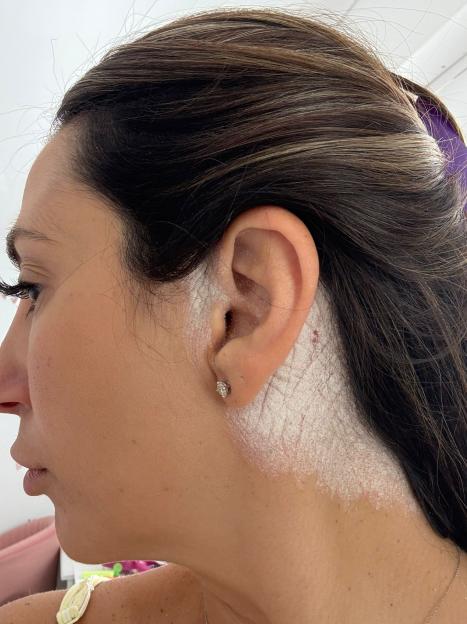 The mum has suffered from condition since she was a teen and been subjected to cruel commentsCredit: Elena George
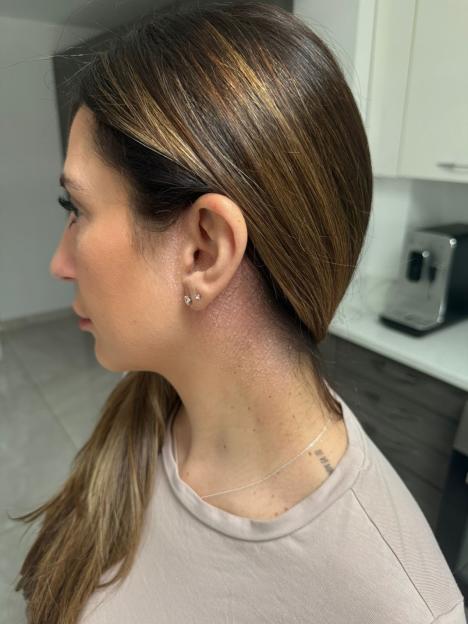 Ellena says a £12 shampoo has been a gamechangerCredit: Elena George
Around 1.8 million Brits suffer from the chronic skin condition, for which there is no cure.
Chronic plaque is the most common type, affecting at least 80 per cent of those who have it, including Ellena.
It causes severe ‘plaques’ that are caused by build-up of skin cells.
They can be very red, itchy and sore with white or silvery scales. In severe cases, the skin may crack or bleed.
Ellena, a mum-of-three, decided to share her journey online, where she posts on TikTok and Instagram as @girliemum, to help others know they are not alone.
“I was shocked by the trolling,” Ellena, from Hertfordshire, tells Sun Health.
“People I’d never met came out of the woodwork to slate my appearance.
“I was called a snake because of my shedding skin. Another said I looked like a ghost because the plaques are white.”
But Ellena is no stranger to cruel comments, having suffered from psoriasis since she was a child.
Aged 10, she noticed skin flakes on her school jumper and not long after, the started.
“Not only was it incredibly itchy and sore, but kids would joke that I was peeling and call me ‘flaky’,” she says.
“My mum took me to the doctors but initially we didn’t know what it was.
“It was probably a year before a dermatologist diagnosed me with psoriasis.
“By the age of 11, it was severe, and even at that young age, I was .
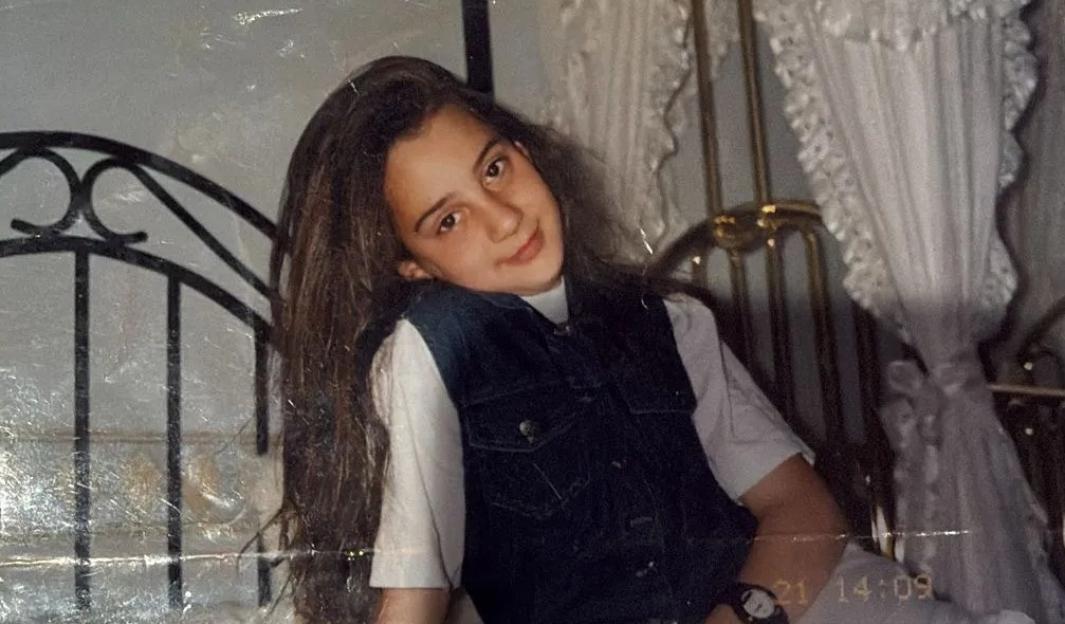 Ellena as a child, when she started noticing skin flakes on her school jumperCredit: Ellena George
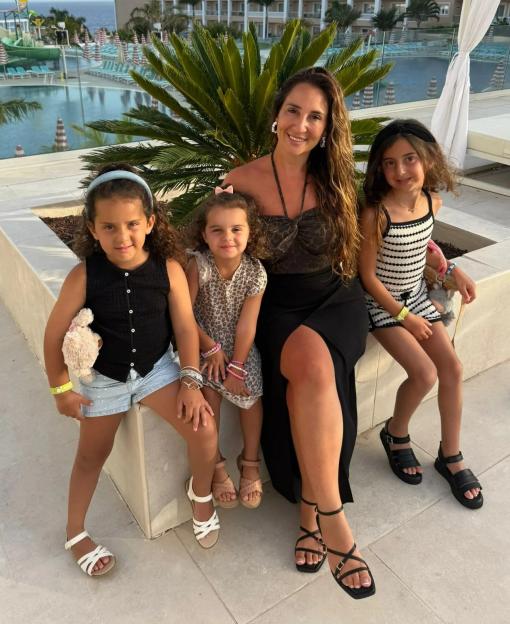 Ellena hopes her daughters Emilia, seven, Gabriella, five and Sofia, four, are never diagnosed with psoriasisCredit: Elena George
“No treatment seemed to work and I found it difficult spending time with friends.”
Laura Stevenson, of The Psoriasis Association , explains that psoriasis is an immune-mediated inflammatory disease, which “simply means the immune system is not functioning correctly”.
“The immune system is overactive and this causes symptoms on the skin and can sometimes affect the joints,” she tells Sun Health.
“When a person has psoriasis, their skin replacement process speeds up, taking just a few days to replace skin cells that usually take 18-21 days.
“This results in a build-up of immature skin cells seen as raised patches of flaky skin covered with silver scales (known as plaques) which can be itchy.
“There is currently no cure but it is possible to live well with psoriasis and there are many treatments available.”
Psoriasis affects both men and women and can develop at any age, Laura goes on.
“But there are two main peaks when the condition first occurs; from late teens to early adulthood and then between the ages of 50 and 60,” she explains.
What is psoriasis?
Roughly two per cent of the population – both men and women – are affected by psoriasis.
Prominent figures that deal with the skin problem are model Cara Delevingne and singer Cyndi Lauper.
TV personality Kim Kardashian has also described psoriasis as , always “hoping for a cure”.
Sadly, there is no cure for the skin condition.
Patients have to learn to live with it, by finding a treatment that works for them.
But some have also found that modifying their diet helps.
Treatments
The NHS says: “A wide range of treatments are available for psoriasis, but identifying the most effective one can be difficult.”
Treatments fall into three categories.
First, topical creams and ointments applied to the skin are usually the first option to help with mild psoriasis.
If the condition has spread to the scalp, there are also shampoos and ointments that can help.
Examples include:
- Emollients to keep the skin moist and reduce water loss
- Steroid creams – which are only available on prescription – to calm the skin
- Vitamin D analogues to slow the production of skin cells and reduce inflammation
- Calcineurin inhibitors to dampen inflammation and the immune system, sometimes in sensitive areas
- Coal tar to reduce scales and itchiness
- Dithranol to suppress the production of skin cells
Symptoms
Plaque psoriasis is the most common form of psoriasis.
Its symptoms are dry skin lesions, known as plaques, covered in scales.
They normally appear on your elbows, knees, scalp and lower back, but can appear anywhere on your body.
The plaques can be itchy or sore, or both. In severe cases, the skin around your joints may crack and bleed.
Scalp psoriasis is a type of plaque psoriasis. It can occur on parts of your scalp or on the whole scalp. It causes patches of skin covered in thick scales.
Some people find scalp psoriasis extremely itchy, while others have no discomfort.
In extreme cases, it can cause hair loss, although this is usually only temporary.
At secondary school, Ellena learnt to better hide her condition by always wearing her hair down – that way, skin flakes showed up less on her new blue school jumper.
She’d dust off her chair when people weren’t looking and hide in the toilets at breaktimes to brush off her clothes.
As she got older, Ellena says people were ‘less mean’, but remembers one time a man approached her in the gym to say she had paint on her neck.
She is often told she hasn’t rubbed moisturiser in properly.
Symptoms worsen during winter, when the air is dryer and cold, causing irritation.
“I’m struggling with this condition daily,” she says.
“I have it on my scalp but it is spreading to my neck and my face. It’s in my ears.
“It’s also on my knees and elbows, though those areas are more receptive to treatment.
“I’m very self-conscious. I can’t wear anything black as it shows up more.
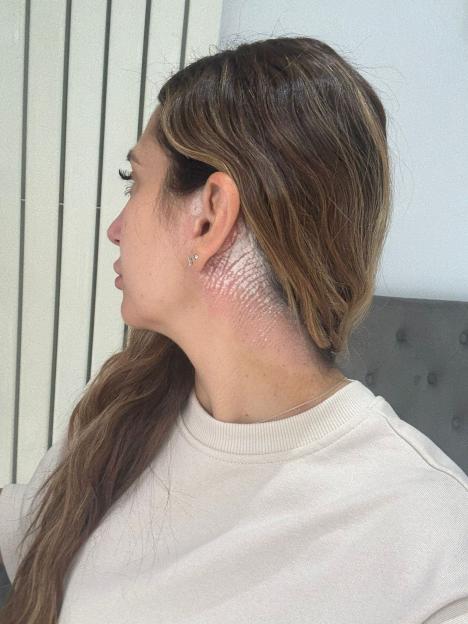 Ellena’s condition influences her mental health, as well as the clothes she chooses and how she wears her hairCredit: Elena George
 Ellena on her wedding day – she wanted to wear her hair up that day but couldn’tCredit: Elena George
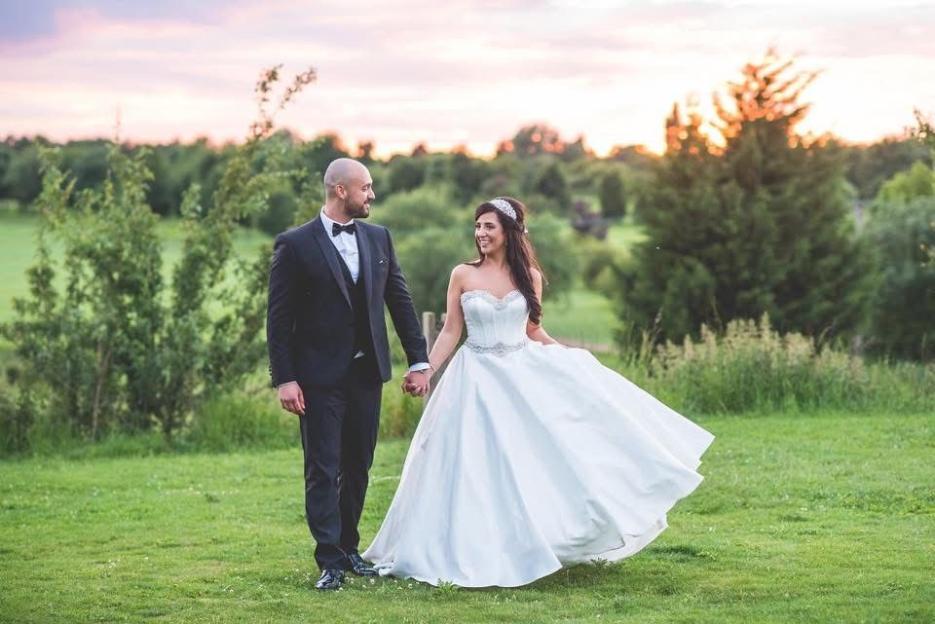 Ellena with her husband Alex, 37, who she tried to hide her psoriasis from at firstCredit: Elena George
“This condition changes the way you dress, it knocks your confidence.
“I am often depressed because of it. There have been countless occasions that I’ve cancelled social plans as I just can’t face going out.
“Every morning I wake up and there are flakes all over my pillow.
“My husband Alex, 37, is used to it now but for years I hid it from him. I’d try and brush the bed off before he woke up or quickly hoover it up.
“I hoover every day because of the amount of flaking.
“On my wedding day I wanted to wear my hair up, but couldn’t.”
Laura says: “For some people, psoriasis may not have a huge impact on day to day life but for others its impact can be significant.
“Many things can be disrupted, from work to relationships, getting a good night’s sleep and being able to wear what you want.
“The effect it can have on a person’s physical appearance can be profound, meaning low self-esteem, anxiety and emotional distress are common among people with the condition.”
‘Game-changer’
Over the years, she has tried dozens of treatments, but little has worked.
Ellena is about to try her fourth biological medication, an injection called Bimzelx.
The theory is that it reduces inflammation by targeting overactive cells in the immune system.
Side-effects include severe infections, , , fungal infections and suicidal thoughts and behaviour.
But Ellena is in so much pain, she is willing to give it a go.
She is one of the 30 per cent of psoriasis sufferers who also experience arthritis alongside it.
It’s called psoriatic and causes joint pain, stiffness and swelling.
My girls are young and sometimes they ask if they will get. I hope not, as that is my biggest fear
Elena George
In the meantime, a £12 bottle of shampoo has eased the symptoms of psoriasis on her scalp.
Polytar costs £11.99 at Boots and is formulated with coal tar and may offer relief to those with psoriasis.
The formulation helps to slow excessive skin cell production, reducing inflammation, itching and scaling.
“I’ve tried so many shampoos,” Ellena says.
“I’ve had some prescribed by the doctor, and I’ve paid quite a lot of money for medicated shampoos over the counter. None of them really made any difference.
“But Polytar has really eased the itching on my scalp. It’s been a game-changer.”
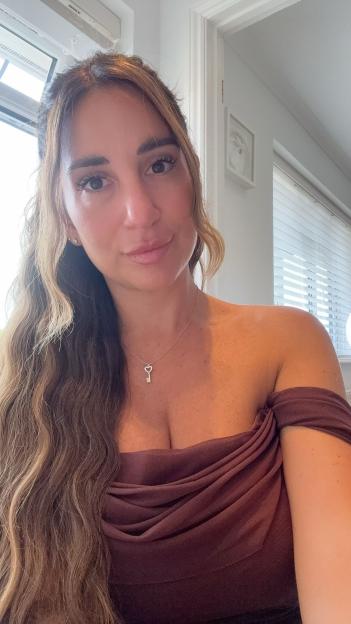 Ellena also has arthritis as well as psoriasisCredit: Elena George
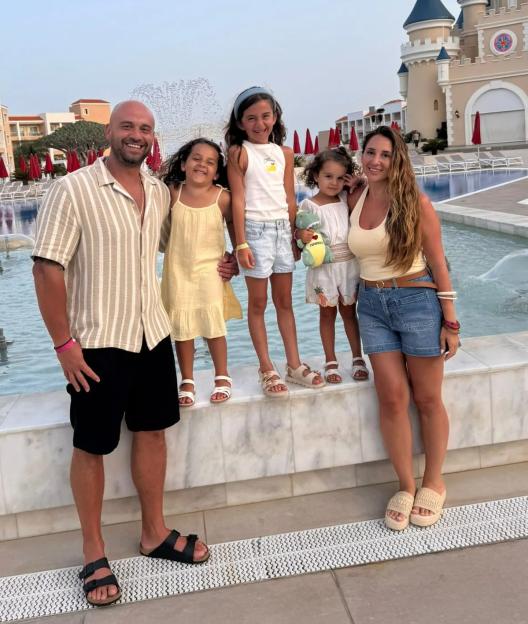 She says the skin condition is misunderstood and hopes to write a children’s book about itCredit: Elena George
Laura says: “Psoriasis is a condition people may not be aware of until it impacts them or someone they know so it’s a positive move that so many people now use social media to share their experiences of being diagnosed, starting new treatments and having particular types,
“It can help remove some of the isolation that can come from having the condition.
“Polytar shampoo is product that contains coal tar and may be prescribed for scalp psoriasis.
“Coal tar applications are known to have a descaling effect, making them good for removing some scaling and reducing dandruff-like flaking.
“Many coal tar applications and shampoos are available to buy without a prescription, making them a good option for people with mild scalp psoriasis who want to manage their treatment without going to the doctor.
“However, thicker or more severe scalp psoriasis will often require other treatments, or a combination of treatment types.”
‘You’re not alone’
Ellena says psoriasis is misunderstood, though she has also had a positive response to her videos online.
She says: “I had one woman message to say she had finally built up the courage to leave her house after seeing my video.
“I want others to know they are not alone.”
Ellena hopes her daughters Emilia, seven, Gabriella, five and Sofia, four, are never diagnosed with the condition.
But in the future, she hopes to write a children’s book to educate kids about psoriasis.
“People often think it’s ‘just skin’ or they think I have ,” she says.
“But this affects my life every day.
“My girls are young and sometimes they ask if they will get it. I hope not, as that is my biggest fear.
“But in the meantime, I will continue to try and raise awareness of this condition to help the millions of others around the world who have it.
“Psoriasis should not define who we are.”
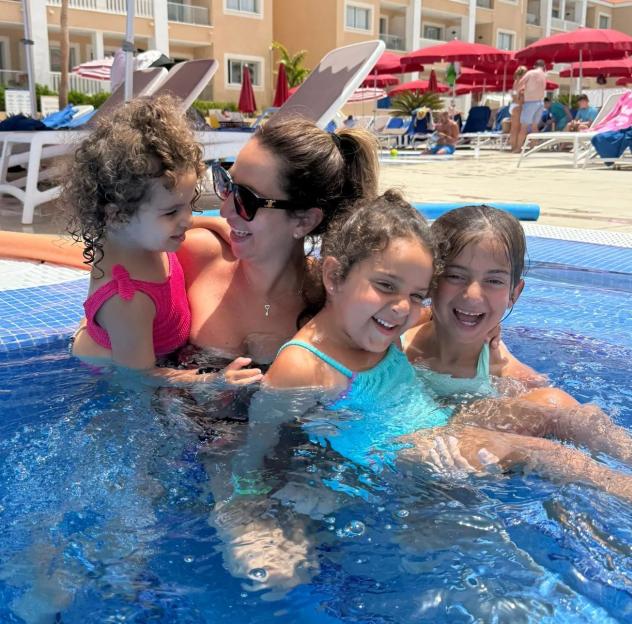 Ellena wants others with psoriasis to know they’re not aloneCredit: Ellena George